Disulfiram (DS) has been shown to have potent anti-cancer activity; however, it is also characterised by its low water solubility and rapid metabolism in vivo. Biodegradable polylactic-co-glycolic acid (PLGA) polymers have been frequently employed in the manufacturing of PLGA nano-carrier drug delivery systems. Thus, to develop DS-loaded PLGA nanoparticles (NPs) capable of overcoming DS’s limitations, two methodologies were used to formulate the NPs: direct nanoprecipitation (DNP) and single emulsion/solvent evaporation (SE), followed by particle size reduction. The DNP method was demonstrated to produce NPs of superior characteristics in terms of size (151.3 nm), PDI (0.083), charge (−37.9 mV), and loading efficiency (65.3%). Consequently, NPs consisting of PLGA and encapsulated DS coated with mPEG2k-PLGA at adjustable ratios were prepared using the DNP method. Formulations were then characterised, and their stability in horse serum was assessed. Results revealed the PEGylated DS-loaded PLGA nano-carriers to be more efficient; hence, in-vitro studies testing these formulations were subsequently performed using two distinct breast cancer cell lines, showing great potential to significantly enhance cancer therapy.
Lithium metal batteries are prone to subtle defects such as internal dendrites, which can cause internal short circuits and lead to catastrophic ignition. These defects are often undetectable by battery management systems, prompting the need to advance the development of nondestructive evaluation (NDE) techniques for battery applications. Ultrasonic inspection techniques are being evaluated as a means of identifying flaws and irregular lithium plating that can be a precursor to dendrite formation and, ultimately, battery failure. Two ultrasonic approaches were compared in this study to assess their relative merits for battery inspection. The first was local ultrasonic resonance spectroscopy (LURS), which measures the local through-thickness resonances of the battery to detect changes in structure. The second technique was guided wave ultrasound, which was assessed for its potential for in situ monitoring. Guided wave testing was performed via pitch-catch testing using piezoelectric electric wafer active sensors (PWAS), as well as line scans via laser Doppler vibrometry (LDV). Both measurement modes were applied to lithium metal pouch cell batteries seeded with lithium chips emulating localized plating. The results show the ability to detect and monitor the internal structure of batteries for relatively coarse defects and highlight use cases for each of the two inspection modalities.
The use of multi-agent robotics for space exploration creates the need for verification and validation using formal methods and simulation-based testing of such systems. This paper presents an asteroid exploration simulation and visualisation tool that can facilitate agent research in an approximated space setting. The software is able to simulate and visualise multiple spacecrafts navigating a customisable asteroid field environment under the control of either user or agent commands and abiding to space physics constraints. A built-in autopilot system implements Lambert’s algorithm to allow autonomous orbital entry/transfer manoeuvres, and collision-free long-range path-finding if the objective is distant. A simulated scenario is described, involving two agents observing multiple asteroids during a debris strike.
Purpose of Review The deployment of hardware (e.g., robots, satellites, etc.) to space is a costly and complex endeavor. It is of extreme importance that on-board systems are verified and validated through a variety of verification and validation techniques, especially in the case of autonomous systems. In this paper, we discuss a number of approaches from the literature that are relevant or directly applied to the verification and validation of systems in space, with an emphasis on autonomy. Recent Findings Despite advances in individual verification and validation techniques, there is still a lack of approaches that aim to combine different forms of verification in order to obtain system-wide verification of modular autonomous systems. Summary This systematic review of the literature includes the current advances in the latest approaches using formal methods for static verification (model checking and theorem proving) and runtime verification, the progress achieved so far in the verification of machine learning, an overview of the landscape in software testing, and the importance of performing compositional verification in modular systems. In particular, we focus on reporting the use of these techniques for the verification and validation of systems in space with an emphasis on autonomy, as well as more general techniques (such as in the aeronautical domain) that have been shown to have potential value in the verification and validation of autonomous systems in space.
When studying the use of assistive robots in home environments, and especially how such robots can be personalised to meet the needs of the resident, key concerns are issues related to behaviour verification, behaviour interference and safety. Here, personalisation refers to the teaching of new robot behaviours by both technical and non-technical end users. In this article, we consider the issue of behaviour interference caused by situations where newly taught robot behaviours may affect or be affected by existing behaviours and thus, those behaviours will not or might not ever be executed. We focus in particular on how such situations can be detected and presented to the user. We describe the human–robot behaviour teaching system that we developed as well as the formal behaviour checking methods used. The online use of behaviour checking is demonstrated, based on static analysis of behaviours during the operation of the robot, and evaluated in a user study. We conducted a proof-of-concept human–robot interaction study with an autonomous, multi-purpose robot operating within a smart home environment. Twenty participants individually taught the robot behaviours according to instructions they were given, some of which caused interference with other behaviours. A mechanism for detecting behaviour interference provided feedback to participants and suggestions on how to resolve those conflicts. We assessed the participants’ views on detected interference as reported by the behaviour teaching system. Results indicate that interference warnings given to participants during teaching provoked an understanding of the issue. We did not find a significant influence of participants’ technical background. These results highlight a promising path towards verification and validation of assistive home companion robots that allow end-user personalisation.
A drive to reduce costs, carbon emissions, and the number of required personnel in the offshore energy industry has led to proposals for the increased use of autonomous/robotic systems for many maintenance tasks. There are questions over how such missions can be shown to be safe. A corollary exists in the manned aviation world for helicopter–ship operations where a test pilot attempts to operate from a ship under a range of wind conditions and provides subjective feedback on the level of difficulty encountered. This defines the ship–helicopter operating limit envelope (SHOL). Due to the cost of creating a SHOL there has been considerable research activity to demonstrate that much of this process can be performed virtually. Unmanned vehicles, however, have no test pilot to provide feedback. This paper therefore explores the possibility of adapting manned simulation techniques to the unmanned world to demonstrate that a mission is safe. Through flight modelling and simulation techniques it is shown that operating envelopes can be created for an oil rig inspection task and that, by using variable performance specifications, these can be tailored to suit the level of acceptable risk. The operating envelopes produced provide condensed and intelligible information regarding the environmental conditions under which the UAS can perform the task.
The advent of sophisticated robotics and AI technology makes sending humans into hazardous and distant environments to carry out inspections increasingly avoidable. Being able to send a robot, rather than a human, into a nuclear facility or deep space is very appealing. However, building these robotic systems is just the start and we still need to carry out a range of verification and validation tasks to ensure that the systems to be deployed are as safe and reliable as possible. Based on our experience across three research and innovation hubs within the UK’s “Robots for a Safer World” programme, we present an overview of the relevant techniques and challenges in this area. As the hubs are active across nuclear, offshore, and space environments, this gives a breadth of issues common to many inspection robots.
The goal of the presented activity is to integrate an existing model checking engine – SPIN1 – with the TASTE2 MBSE environment. For this purpose, the modelling languages used in TASTE – ASN.1, AADL and SDL need to be translated into PROMELA, a language for modelling and verification of concurrent systems. This paper describes the current achievements of the activity – proposal of a TASTE model checking workflow, formalization of requirement specification and established PROMELA translation patterns. Finally, the development of SDL models for validation of the tools and exploration of their utility in the design of space systems is discussed.
Diethyldithiocarbamate Copper II (DDC-Cu) has shown potent anticancer activity against a wide range of cancer cells, but further investigations are hindered by its practical insolubility in water. In this study, inclusion complexes of DDC-Cu with hydroxypropyl beta-cyclodextrin (HP) or sulfobutyl ether beta-cyclodextrin (SBE) were prepared and investigated as an approach to enhance the apparent solubility of DDC-Cu. Formulations were prepared by simple mixing of DDC-Cu with both cyclodextrin (CDs) at room temperature. Phase solubility assessments of the resulting solutions were performed. DDC-Cu CD solutions were freeze-dried for further characterisations by DSC, thermogravimetric analysis (TGA) and FT-IR. Stability and cytotoxicity studies were also performed to investigate the maintenance of DDC-Cu anticancer activity. The phase solubility profile deviated positively from the linearity (Ap type) showing significant solubility enhancement of the DDC-Cu in both CD solutions (approximately 4 mg/mL at 20% w/w CD solutions). The DSC and TGA analysis confirmed the solid solution status of DDC-Cu in CD. The resulting solutions of DDC-Cu were stable for 28 days and conveyed the anticancer activity of DDC-Cu on chemoresistant triple negative breast cancer cell lines, with IC50 values less than 200 nM. Overall, cyclodextrin DDC-Cu complexes offer a great potential for anticancer applications, as evidenced by their very positive effects against chemoresistant triple negative breast cancer cells.
Chapter Contents: 11.1 Formal specification and verification techniques 11.1.1 Formal specification and verification for autonomous robotic systems 11.1.1.1 Methodology 11.1.1.2 Answering RQ1: challenges 11.1.1.3 Answering RQ2: formalisms, tools and approaches 11.1.1.4 Answering RQ3: limitations 11.1.1.5 Application to space robotics 11.2 Theorem proving for space robotics using modal and temporal logics 11.2.1 The multi-modal logic K 11.2.2 Metric temporal logic 11.3 Verifiable space robot architectures 11.3.1 FOL contract specifications 11.3.2 Measuring confidence in verification 11.3.3 Related work 11.4 Case study 1: Simulation and verification of the Mars Curiosity rover 11.4.1 Simulation 11.4.2 Model checking 11.4.3 Runtime verification 11.5 Case study 2: Verification of astronaut—rover teams 11.6 Modelling and verification of multi-objects systems 11.6.1 Motivation 11.6.2 Logics for parameterised systems 11.6.3 Translating broadcast protocols to MFOTL 11.7 Conclusions, recommendations and future trends References
The issue of explainability for autonomous systems is becoming increasingly prominent. Several researchers and organisations have advocated the provision of a “Why did you do that?” button which allows a user to interrogate a robot about its choices and actions. We take previous work on debugging cognitive agent programs and apply it to the question of supplying explanations to end users in the form of answers to why-questions. These previous approaches are based on the generation of a trace of events in the execution of the program and then answering why-questions using the trace. We implemented this framework in the agent infrastructure layer and, in particular, the Gwendolen programming language it supports – extending it in the process to handle the generation of applicable plans and multiple intentions. In order to make the answers to why-questions comprehensible to end users we advocate a two step process in which first a representation of an explanation is created and this is subsequently converted into natural language in a way which abstracts away from some events in the trace and employs application specific predicate dictionaries in order to translate the first-order logic presentation of concepts within the cognitive agent program in natural language. A prototype implementation of these ideas is provided.
We present an approach for the verification and validation (V&V) of robot assistants in the context of human–robot interactions, to demonstrate their trustworthiness through corroborative evidence of their safety and functional correctness. Key challenges include the complex and unpredictable nature of the real world in which assistant and service robots operate, the limitations on available V&V techniques when used individually, and the consequent lack of confidence in the V&V results. Our approach, called corroborative V&V, addresses these challenges by combining several different V&V techniques; in this paper we use formal verification (model checking), simulation-based testing, and user validation in experiments with a real robot. This combination of approaches allows V&V of the human–robot interaction task at different levels of modeling detail and thoroughness of exploration, thus overcoming the individual limitations of each technique. We demonstrate our approach through a handover task, the most critical part of a complex cooperative manufacturing scenario, for which we propose safety and liveness requirements to verify and validate. Should the resulting V&V evidence present discrepancies, an iterative process between the different V&V techniques takes place until corroboration between the V&V techniques is gained from refining and improving the assets (i.e., system and requirement models) to represent the human–robot interaction task in a more truthful manner. Therefore, corroborative V&V affords a systematic approach to “meta-V&V,” in which different V&V techniques can be used to corroborate and check one another, increasing the level of certainty in the results of V&V.
This paper describes an approach to assuring the reliability of autonomous systems for Astronaut-Rover (ASRO) teams using the formal verification of models in the Brahms multi-agent modelling language. Planetary surface rovers have proven essential to several manned and unmanned missions to the moon and Mars. The first rovers were teleor manually-operated, but autonomous systems are increasingly being used to increase the effectiveness and range of rover operations on missions such as the NASA Mars Science Laboratory. It is anticipated that future manned missions to the moon and Mars will use autonomous rovers to assist astronauts during extravehicular activity (EVA), including science, technical and construction operations. These ASRO teams have the potential to significantly increase the safety and efficiency of surface operations. We describe a new Brahms model in which an autonomous rover may perform several different activities including assisting an astronaut during EVA. These activities compete for the autonomous rover's “attention” and therefore the rover must decide which activity is currently the most important and engage in that activity. The Brahms model also includes an astronaut agent, which models an astronaut's predicted behaviour during an EVA. The rover must also respond to the astronauts activities. We show how this Brahms model can be simulated using the Brahms integrated development environment. The model can then also be formally verified with respect to system requirements using the SPIN model checker, through automatic translation from Brahms to PROMELA (the input language for SPIN). We show that such formal verification can be used to determine that mission- and safety-critical operations are conducted correctly, and therefore increase the reliability of autonomous systems for planetary rovers in ASRO teams.
Wireless communication protocols are often used in critical applications, e.g., urban water supply networks or healthcare monitoring within the Internet of Things. It is essential that control software and protocols for such systems are verified to be both robust and reliable. The effects on the hardware caused by environmental conditions and the choice of parameters used by the protocol are among the largest obstacles to robustness and reliability in wireless systems. In this paper we use formal verification to verify that a wireless sensor network synchronization and dissemination protocol is not adversely affected by these factors.
This data set contains examples used to test an initial implementation of Explainability for Gwendolen programs reported in Vincent J. Koeman, Louise A. Dennis, Matt Webster, Michael Fisher and Koen Hindriks, The ``Why did you do that?'' Button: Answering Why-questions for end users of Robotic Systems that appears in the pre-proceedngs of the 7th International Workshop on Engineering Multi-Agent Systems and will be submitted to the Post-proceedings. The results in the data set are as will be reported in the post-proceedings.
Robots are increasingly used to carry out critical missions in extreme environments that are hazardous for humans. This requires a high degree of operational autonomy under uncertain conditions, and poses new challenges for assuring the robot's safety and reliability. In this paper, we develop a framework for probabilistic model checking on a layered Markov model to verify the safety and reliability requirements of such robots, both at pre-mission stage and during runtime. Two novel estimators based on conservative Bayesian inference and imprecise probability model with sets of priors are introduced to learn the unknown transition parameters from operational data. We demonstrate our approach using data from a real-world deployment of unmanned underwater vehicles in extreme environments.
Ensuring that autonomous space robot control software behaves as it should is crucial, particularly as software failure in space often equates to mission failure and could potentially endanger nearby astronauts and costly equipment. To minimise mission failure caused by software errors, we can utilise a variety of tools and techniques to verify that the software behaves as intended. In particular, distinct nodes in a robotic system often require different verification techniques to ensure that they behave as expected. This paper introduces a method for integrating the various verification techniques that are applied to robotic software, via a First-Order Logic (FOL) specification that captures each node's assumptions and guarantees. These FOL specifications are then used to guide the verification of the individual nodes, be it by testing or the use of a formal method. We also outline a way of measuring our confidence in the verification of the entire system in terms of the verification techniques used.
The Internet of Things (IoT) promises a revolution in the monitoring and control of a wide range of applications, from urban water supply networks and precision agriculture food production, to vehicle connectivity and healthcare monitoring. For applications in such critical areas, control software and protocols for IoT systems must be verified to be both robust and reliable. Two of the largest obstacles to robustness and reliability in IoT systems are effects on the hardware caused by environmental conditions, and the choice of parameters used by the protocol. In this paper we use probabilistic model checking to verify that a synchronisation and dissemination protocol for Wireless Sensor Networks (WSNs) is correct with respect to its requirements, and is not adversely affected by the environment. We show how the protocol can be converted into a logical model and then analysed using the probabilistic model-checker, PRISM. Using this approach we prove under which circumstances the protocol is guaranteed to synchronise all nodes and disseminate new information to all nodes. We also examine the bounds on synchronisation as the environment changes the performance of the hardware clock, and investigate the scalability constraints of this approach.
We describe an extension to the AJPF agent program model-checker so that it may be used to generate models for input into other, non-agent, model-checkers. We motivate this adaptation, arguing that it potentially improves the efficiency of the modelchecking process and provides access to richer property specification languages. We illustrate the approach by describing the export of AJPF program models to both the SPIN and Prism model-checkers. We also investigate, experimentally, the effect the process has on the overall efficiency of model-checking.
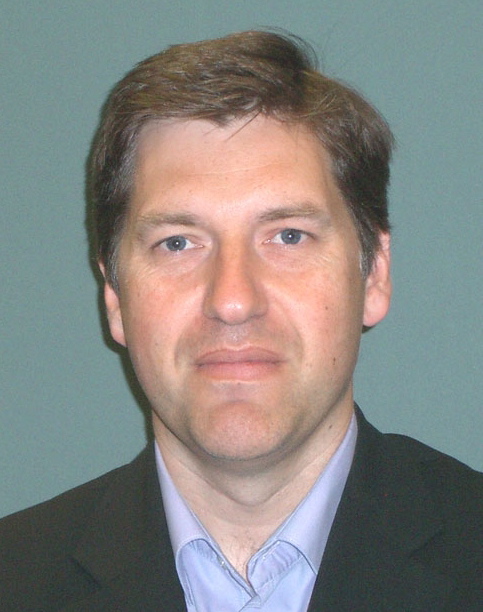 Michael Fisher合作论文数Department of Computer Science, The University of Manchester;University of Liverpool34
 Clare Dixon合作论文数Department of Computer Science, School of Engineering, Faculty of Science and Engineering, The University of Manchester19
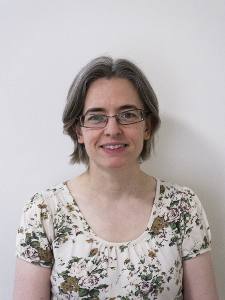 Louise A. Dennis合作论文数Department of Computer Science, Room 117, Ashton Building ,University of Liverpool18
 Grant Malcolm合作论文数10
 Kerstin Dautenhahn合作论文数Department of Electrical and Computer Engineering, University of Waterloo;Social and Intelligent Robotics Research Laboratory, University of Waterloo7
 Neil Cameron合作论文数6
 Walter Lempert合作论文数Aerospace Research Center, College of Engineering, The Ohio State University;Department of Mechanical and Aerospace Engineering, The Ohio State University;Department of Chemistry, The Ohio State University6
 Michael Jump合作论文数6Alexei Lisitsa合作论文数Department of Computer Science;University of Liverpool6Mike Jump合作论文数6
 Vincent Page合作论文数5Kheng Lee Koay合作论文数Adaptive Systems Research Group|School of Computer Science|University of Hertfordshire5
 Joe Saunders合作论文数School of Computer Science, University of Hertfordshire5Naibo Jiang合作论文数E445 Scott Laboratory, The Ohio State University5
 Georgios Kourtis合作论文数4
 Mahabadr Salem合作论文数Fac Sci, Tanta Univ4
 Marie Farrell合作论文数Univ Liverpool, Dept Comp Sci, Liverpool, Merseyside, England4
 Rafael Caue Cardoso合作论文数PUCRS4
 Michael Breza合作论文数4
 Julie A. McCann合作论文数Department of Computing, Imperial College London;Data Centric Engineering Theme, Alan Turing Institute4
 Fateme Dinmohammadi合作论文数Heriot Watt Univ, Sch Engn & Phys Sci, Smart Syst Grp, Edinburgh EH14 4AS, Midlothian, Scotland3Joe Collenette合作论文数Univ Liverpool, Dept Comp Sci, Liverpool L69 3BX, Merseyside, England3
 Matt Luckcuck合作论文数3
 Valentin Robu合作论文数Intelligent and Autonomous Systems Department, Centrum Wiskunde and Informatica3
 David Flynn合作论文数Heriot-Watt University3
 Joseph D. Miller合作论文数Department of Biological Sciences, Stanford University3
 Brett Bathel合作论文数University Turbine Systems Research Industrial Fellowship Recipient;University of Iowa;Department of Mechanical and Industrial Engineering;Department of Mechanical and Industrial Engineering, University of Iowa3
 Kerstin Eder合作论文数Department of Computer Science, University of Bristol3
 Paul M. Danehy合作论文数National Aeronautics and Space Administration3
 Anthony Pipe合作论文数Department of Robotics and Autonomous Systems, Faculty of Environment and Technology, University of the West of England;Bristol Robotics Laboratory, University of the West of England3
 Chris Dadswell合作论文数2Elisa Cucco合作论文数2
 jennifer a inman合作论文数NASA Langley Research Center2Charles Patchett合作论文数2
 Paul Gainer合作论文数Department of Computer Science, University of Liverpool2
 Vincent Koeman合作论文数Delft University of Technology2
 Magid, E.合作论文数ROBOKEN Intell. Robot Lab., Univ. of Tsukuba;c;ROBOKEN Intell. Robot Lab., Univ. of Tsukuba2Emily C. Collins合作论文数The University of Sheffield2
 Christopher Ivey合作论文数2
 Xingyu Zhao (赵星宇)合作论文数School of Cyber Science and Engineering, Faculty of Information Sciences, Wuhan University2
 Shao Fei合作论文数2
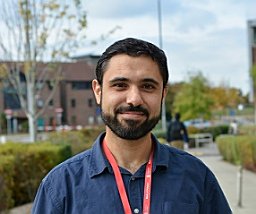 Tolaymat Ibrahim合作论文数2
 Mike Fisher合作论文数Geo-Solutions Inc.2
 Katie Atkinson合作论文数School of Electrical Engineering, Electronics and Computer Science, Faculty of Science and Engineering, University of Liverpool;Interdisciplinary Centre for Sustainability Research, University of Liverpool2Stephen B. Jones合作论文数2
 Rick Williams合作论文数Department of Earth and Ocean Sciences, University of Liverpool2
 Karl Tuyls合作论文数Department of Computer Science, School of Electrical Engineering, Electronics and Computer Science, University of Liverpool;DeepMind2
 Mohammad Najlah合作论文数School of Pharmacy and Pharmaceutical Sciences, University of Manchester2




