The Canadian Cardiovascular Society/Canadian Heart Rhythm Society cardiac implantable electronic device (CIED) guidelines program was developed to aid clinicians in the management of patients with a CIED, as well as to provide direction to policy makers and health care systems regarding issues related to CIEDs. There has never before been a comprehensive Canadian Cardiovascular Society/Canadian Heart Rhythm Society guideline to address the management of patients with CIEDs. This guideline is intended to be used by practicing clinicians across all disciplines who care for patients with CIEDs. We used the Grading of Recommendations, Assessment, Development and Evaluations (GRADE) system to grade recommendation strength and the quality of evidence. Areas of focus include bradycardia, syncope, cardiac resynchronization therapy, and conduction system pacing, sudden death prevention, and defibrillator therapy, the role of leadless devices, perioperative considerations and complications, lead extraction, postimplant CIED management, and competency and training standards. Extensive use is made of tables and figures to synthesize important material and present key concepts. This document should be an important aid for knowledge translation and a valuable reference tool to help improve the clinical management of patients who are assessed for possible CIED implantation or to improve decision-making for those who already have CIEDs.
Background:Achieving the target doses of indicated medications after myocardial infarction (MI) is associated with improved outcomes and is a marker of the quality of care. We studied the use and follow-up dosing of core cardiac medications among patients with MI complicated by depressed left ventricular ejection fraction (LVEF). Our objective was to determine whether adherence to evidence-based medication dosing is associated with receipt of follow-up LVEF imaging or progression of LVEF within 6 months of follow-up care. Methods:The Acute Myocardial Infarction Quality Assurance (AMIQA) Canada study enrolled 501 patients (mean age 63 years; 22.6% female) with acute MI and LVEF ≤ 45%, from 14 Canadian centres. Patients were followed for 6 months to determine their adherence to post-MI follow-up recommendations. We assessed use and dosing of beta-blockers, angiotension-converting enzyme inhibitors, angiotensin II receptor blockers, mineralocorticoid receptor antagonists (MRAs), and statins, and compared changes in LVEF among those taking ≥50% vs < 50% of the target dose in the follow-up period. Results:At 6 months, the mean percent target dose was ≤ 50% for beta-blockers, angiotension-converting enzyme inhibitors, and angiotensin II receptor blockers, but it was 70.8% ± 46.9% for MRAs, and 86.8% received high-intensity statin. Only use of MRA was associated with follow-up LVEF reassessment (P < 0.001). Receiving ≥ 50% of the target dose was not associated with changes in LVEF. Conclusions:Except for statins, most patients were not receiving target doses of indicated medications after MI with reduced LVEF. Follow-up dosing was not associated with LVEF reassessment or improvement in LVEF. Future quality-improvement initiatives may require distinct strategies for improving adherence to recommendations for medication dosing vs follow-up imaging.
BACKGROUND The results of pulmonary vein isolation (PVI) are limited by arrhythmia recurrence, which is most often due to failure to effectuate a durable contiguous circumferential transmural lesion around the pulmonary vein ostia. OBJECTIVE We sought to determine if enhancing the index ablation line through the use of multiple cryoballoon diameters would be superior to standard ablation with bonus freeze. METHODS We enrolled 226 consecutive patients referred for cryoballoon-based PVI. Patients underwent PVI either with the 28-mm Arctic Front Advance (Medtronic, Minneapolis, Mn) cryoballoon using two 4-minute freezes (standard group) or with the PO-LARx FIT (Boston Scientific, Marlborough, Ma) cryoballoon using 3-minute freezes in both the 28-and 31-mm-diameter config-urations (double stack group). Patients were followed for up to 1 year. The primary outcome was atrial tachyarrhythmia recurrence, with peri-procedural complications, cardioversion, emergency department visit, hospitalization, and repeat ablation being secondary outcomes. RESULTS A total of 226 patients were included (70% male; 47% with persistent atrial fibrillation [AF]). Patients in the double stack group had a significantly greater freedom from recurrent AF/atrial tachycardia/atrial flutter at 1 year (87.2% vs 68.9%; hazard ratio 0.41; 95% confidence interval 0.24-0.71; P=.008). Periprocedural complications were similar between the groups (5.2% vs 3.4%; P=.50). At 1 year, there was no difference in cardioversion (12.8% vs 20.3%; P=.20), emergency department visit (9.0% vs 15.5%; P=.22), or all-cause hospitalization (1.3% vs 2.7%; P=.66). Significantly less patients treated with double stack underwent repeat ablation (1.3% vs 13.5%; P=.002). CONCLUSION In a mixed cohort of patients with paroxysmal and persistent AF, cryoballoon ablation using the double stack technique is associated with lower rates of AF recurrence, aggregate healthcare utilisation, and lower rates of repeat ablation.
Background The long-term natural history of autonomic alterations following catheter ablation of drug-refractory paroxysmal atrial fibrillation is poorly defined. Objectives The authors sought to define the long-term impact of thermal catheter ablation on the cardiac autonomic system. Methods The study included 346 patients with drug-refractory paroxysmal atrial fibrillation undergoing pulmonary vein isolation using thermal ablation energy (radiofrequency or cryoballoon ablation). All patients underwent insertion of a Reveal LINQ implantable cardiac monitor prior to ablation. The implantable cardiac monitor continuously recorded physical activity, heart rate variability (HRV) (measured as the standard deviation of the average normal-to-normal), daytime heart rate, and nighttime heart rate (NHR). Longitudinal autonomic data in the 2-month period prior to the date of ablation were compared with the 3 years following ablation. Results Following ablation, there was a significant decrease in HRV (10-20 ms; P < 0.0001) and significant increases in daytime heart rate and NHR (10 beats/min [P < 0.0001] and 7 beats/min [P < 0.0001], respectively). Changes in autonomic parameters were greatest in the first 3 months following ablation but remained significantly different from baseline for 36 months following ablation. Greater changes in NHR and HRV were associated with improved freedom from recurrent arrhythmia. The type of thermal ablation energy had no influence on the heart rate and autonomic parameters. Conclusions Pulmonary vein isolation using thermal ablation energy results in significant sustained changes in the heart rate parameters related to autonomic function. These changes are independent of the ablation technology employed and are associated with procedural success. (Cryoballoon vs Irrigated Radiofrequency Catheter Ablation: Double Short vs Standard Exposure Duration [CIRCA-DOSE]; NCT01913522).
Background and Aims Atrial fibrillation (AF) is a chronic progressive disorder. Persistent forms of AF are associated with increased rates of thromboembolism, heart failure, and death. Catheter ablation modifies the pathogenic mechanism of AF progression. No randomized studies have evaluated the impact of the ablation energy on progression to persistent atrial tachyarrhythmia.Methods Three hundred forty-six patients with drug-refractory paroxysmal AF were enrolled and randomly assigned to contact-force-guided RF ablation (CF-RF ablation, 115), 4 min cryoballoon ablation (CRYO-4, 115), or 2 min cryoballoon ablation (CRYO-2, 116). Implantable cardiac monitors placed at study entry were used for follow-up. The main outcome was the first episode of persistent atrial tachyarrhythmia. Secondary outcomes included atrial tachyarrhythmia recurrence and arrhythmia burden on the implantable monitor.Results At a median of 944.0 (interquartile range [IQR], 612.5-1104) days, 0 of 115 patients (0.0%) randomly assigned to CF-RF, 8 of 115 patients (7.0%) assigned to CRYO-4, and 5 of 116 patients (4.3%) assigned to CRYO-2 experienced an episode of persistent atrial tachyarrhythmia (P = .03). A documented recurrence of any atrial tachyarrhythmia >= 30 s occurred in 56.5%, 53.9%, and 62.9% of those randomized to CF-RF, CRYO-4, and CRYO-2, respectively; P = .65. Compared with that of the pre-ablation monitoring period, AF burden was reduced by a median of 99.5% (IQR 94.0%, 100.0%) with CF-RF, 99.9% (IQR 93.3%-100.0%) with CRYO-4, and 99.1%% (IQR 87.0%-100.0%) with CRYO-2 (P = .38).Conclusions Catheter ablation of paroxysmal AF using radiofrequency energy was associated with fewer patients developing persistent AF on follow-up. Structured Graphical abstract Atrial fibrillation progression after cryoablation versus radiofrequency ablation. AF, atrial fibrillation; AFL, atrial flutter; AT, atrial tachycardia; PVI, pulmonary vein isolation; CF-RF, standard RF ablation guided by tissue contact force; CRYO-4-4-minute, cryoballoon ablation duration; CRYO-2-2-minute, cryoballoon ablation duration.
BACKGROUND:Holter monitoring may raise suspicion of an underlying catecholaminergic polymorphic ventricular tachycardia (CPVT) diagnosis. Although not a primary investigation for CPVT, Holter monitoring is ubiquitously used as a diagnostic tool in the heart rhythm clinic. OBJECTIVES:The objective of this study was to explore Holter monitoring in CPVT diagnosis. METHODS:This retrospective cohort study analyzed off-therapy Holter monitoring from 13 ryanodine receptor 2-positive CPVT and 34 healthy patients from the Canadian Hearts in Rhythm Organization national registry. Using the Edwards method, the ratio of ambient-maximum heart rate during Holter monitoring was correlated with exertion level to separate premature ventricular contractions (PVCs) during periods of adrenergic and nonadrenergic stress. A receiver operating characteristic curve analysis determined the optimal threshold for isolating CPVT-induced PVCs during adrenergic states. RESULTS:PVC burden differed between groups (P = 0.001) but was within population norm, suggesting ambient PVCs are uncommon in CPVT. CPVT patients had higher PVC counts than healthy controls (P = 0.002), with a different distribution based on adrenergic state. The optimal threshold for separating PVCs into periods of adrenergic and nonadrenergic stress in CPVT patients was 76% of the maximum heart rate during the monitoring period. Compared with healthy controls, CPVT patients had a higher PVC count, limited to periods of adrenergic stress, defined by >76% maximum heart rate threshold (P = 0.002; area under the receiver operating characteristic curve: 0.84). Below this threshold, there was no significant PVC difference (P = 0.604). CONCLUSIONS:Holter monitor PVC counts alone are inadequate for CPVT diagnosis, owing to the adrenergic nature of the disease. Quantifying PVC prevalence at a heart rate threshold >76% identified CPVT with moderate sensitivity (69%) and high specificity (94%).
Background Unlike tachyarrhythmias, which are common in pregnancy, there is a paucity of data regarding maternal bradycardias. Our objective was to describe the characteristics, associated conditions, and prognosis of women who develop bradycardia post-partum. Method We conducted a retrospective chart review of patients referred to the Obstetrical Medicine service at British Columbia Women's Hospital from January 2012 to May 2020 for post-partum maternal bradycardia. Results Twenty-four patients with post-partum bradycardia were included (age 34.2 ± 4.8 years; heart rate 40.4 ± 8.1 beats per minute; blood pressure 131/72 mm Hg). Sinus bradycardia (79.2%) was the most common rhythm. Dyspnea (29.4%) and chest pain (23.5%) were common symptoms. Mean time to resolution of bradycardia was 3.6 ± 3.8 days. Associated conditions potentially explaining the bradycardia were preeclampsia (54.1%), underlying (16.7%), medications (8.3%), and neuraxial anesthesia (8.3%). Conclusions Maternal bradycardia is an uncommon condition complicating the post-partum period, that is generally self-limiting, with the majority only require clinical observation.
Background: Surgically repaired Tetralogy of Fallot (rTOF) is associated with progressive right ventricular hypertrophy (RVH) and dilation (RVD). Accurate estimation of RVH/RVD is vital for the ongoing management of this patient population. The utility of the ECG in evaluating patients with rTOF with pre-existing right bundle branch block (RBBB) has not been studied. We aimed to determine the sensitivity/specificity of currently established ECG criteria in detecting RVH/RVD in this patient population. Methods: We included consecutive patients diagnosed with rTOF who underwent CMR performed at our regional referral centre between January 2012 and December 2019. Each CMR was assessed for LVH, LVD, RVH and or RVD. The ECG corresponding to the CMR was then used to determine RVH/LVH for specificity and sensitivity analysis. Results: Our study included 163 consecutive rTOF patients. The specificity for ECG -based criteria for LVH was 100.00% (95% C.I. (87.75, 100.00)), and the sensitivity was 7.19% (95% C.I. (3.15, 12.83)). When RBBB was present, specificity for RVH was 100.00% (95% C.I. (84.56, 100.00)), and sensitivity was 7.69% (95% C.I. (3.75, 13.69)). When RBBB was absent, specificity for RVH was 100.00% (95% C.I. (15.81, 100.00)), and sensitivity was 0.00% (95% C.I. (0.00, 33.63)). A regression model with the entire group of 163 ToF patients, based on the Sokolow-Lyon criterion (sum of R in V1 + S in V5/V6), produced a new suggested criterion for the diagnosis of RVH in patients with rTOF, which was a sum of R in V1 + S in V5/V6 greater than 13.25 mm. This model 's sensitivity for RVH detection was 69.1%, and specificity was 36.8%. Conclusions: Standard ECG voltage criteria have poor sensitivity for detecting right and left ventricular chamber hypertrophy and dilatation in patients with rTOF, so current ECG criteria should not be used to monitor RVH/RVD in this patient population.
 Andrew Krahn合作论文数Department of Medicine, Faculty of Medicine, University of British Columbia82
 Jason Andrade合作论文数Divisions of Cardiology & Cardiovascular Surgery, Department of Medicine, Faculty of Medicine, The University of British Columbia54
 Marc Deyell合作论文数Departments of Medicine and Community Health Sciences, University of Calgary46
 Santabhanu Chakrabarti合作论文数Bristol Congenital Heart Centre;Bristol Royal Hospital for Children and Bristol Royal Infirmary;Bristol Congenital Heart Centre, Bristol Royal Hospital for Children and Bristol Royal Infirmary45
 Nathaniel M. Hawkins合作论文数Aintree Cardiac Centre, University Hospital Aintree32John A. Yeung-Lai-Wah合作论文数25Ratika Parkash合作论文数24
 Jeffrey Sean Healey合作论文数Department of Health Research Methods, Evidence, and Impact, Faculty of Health Sciences, McMaster University;Department of Medicine, Faculty of Health Sciences, McMaster University;Population Health Research Institute24
 David Birnie合作论文数University of Ottawa Heart Institute;School of Epidemiology and Public Health, Faculty of Medicine, University of Ottawa;Division of Cardiology, Department of Medicine, University of Ottawa23
 Zachary Laksman合作论文数School of Biomedical Engineering, Faculty of Applied Science, The University of British Columbia/School of Biomedical Engineering, Faculty of Medicine, The University of British Columbia22Raymond Yee合作论文数22
 Vidal Essebag合作论文数Division of Cardiology, Department of Medicine, Faculty of Medicine and Health Sciences, McGill University21Steinberg Christian合作论文数20
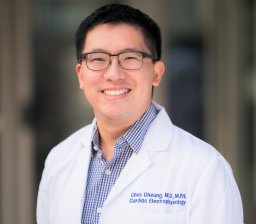 Cheung Christopher C合作论文数Department of Medicine, University of British Columbia19
 George Klein合作论文数Department of Medicine, Schulich School of Medicine & Dentistry, Western University19Stanley Tung合作论文数19Allan C. Skanes合作论文数Division of Cardiology, University of Western Ontario16
 Francois Philippon合作论文数16Bernard Thibault合作论文数15
 Charles Kerr合作论文数Cardiology Division, University of British Columbia15
 Jamil Bashir合作论文数Divisions of Cardiology & Cardiovascular Surgery, Department of Medicine, Faculty of Medicine, The University of British Columbia14Nery Pablo B合作论文数14Jean Champagne合作论文数14John L. Sapp合作论文数QEII Health Science Centre13Shubhayan Sanatani合作论文数13
 Laurence Sterns合作论文数12
 Paul Angaran合作论文数Division of Cardiology, University of Toronto;St. Michael’s Hospital12Peter Leong-Sit合作论文数12
 Derek Vincent Exner合作论文数Department of Cardiac Sciences and Community Health Sciences, Faculty of Medicine, University of Calgary12
 Mario Talajic合作论文数Département de Médecine, Faculté de Médecine, Université de Montréal;Cardiac Genetics Centre, Montreal Heart Institute, Université de Montréal11Manlucu Jaimie合作论文数10
 Laurent Macle合作论文数Hôpital Cardiologique du Haut-Lévêque10
 Martin Gardner合作论文数Division of Cardiology, Department of Medicine, Faculty of Medicine, Dalhousie University;Department of Physiology and Biophysics, Faculty of Medicine, Dalhousie University;Inherited Heart Disease Clinic, QEII Health Sciences Centre10
 Blandine Mondesert合作论文数9
 Lorne Gula合作论文数Department of Medicine, Western University9Benoit Coutu合作论文数9
 Vijay Chauhan合作论文数Department of Physiology, Temerty Faculty of Medicine, University of Toronto;Toronto General Hospital Research Institute8
 Atul Verma合作论文数Institute of Medical Science, Temerty Faculty of Medicine, University of Toronto;McGill University Health Centre;Southlake Regional Health Care Centre8Kenneth Gin合作论文数8
 George A. Wells合作论文数School of Epidemiology and Public Health, Faculty of Medicine, University of Ottawa;Department of Medicine, University of Ottawa;Ottawa Hospital Research Institute, The Ottawa Hospital;Cardiovascular Research Methods Centre, Heart Institute, University of Ottawa8Richard Leather合作论文数8Claus Rinne合作论文数8Virani Sean A合作论文数7Roston Thomas M合作论文数7
 Stephen B Wilton合作论文数Libin Cardiovascular Institute, University of Calgary7
 Brenda Gerull合作论文数7
 Chris Simpson合作论文数Department of Medicine, Faculty of Health Sciences, Queen's University;Ontario Health;Institute for Clinical Evaluative Sciences7Ishvinder S. Chattha合作论文数6John LeMaitre合作论文数6




