Aquatic invasive species (AIS) create costly, detrimental effects when established. Recognition of this in the United States reached a threshold in 1990 with the federal passage of the Nonindigenous Aquatic Nuisance Prevention and Control Act. This act created six regional panels, the national Aquatic Nuisance Species Task Force, and incentivized state-level AIS planning. The management of the Ohio River basin fell under the Mississippi River Basin Panel and the state-led Mississippi Interstate Cooperative Resource Association, which developed a joint action plan in 2010 to prevent, contain, and manage AIS. All Ohio River basin states besides West Virginia created aquatic nuisance species plans between 1999 and 2021. This study aims to utilize the best available data, the USGS Nonindigenous Aquatic Species (NAS) database, to examine how legislative and planning milestones have influenced the rate of new AIS arrivals and the spread of existing and new AIS. Arrival and spread of AIS were assessed at the HUC-8 scale (8-digit hydrological unit code) along the Ohio, Wabash, Cumberland, Alleghany, Monongahela, and Tennessee rivers. A near-linear increase in new AIS across all rivers was determined. Most AIS species (35-55%) did not spread beyond the HUC they were first detected in, while less than 10% spread to all HUCs in a river. The findings indicate no clear correlation between legislative and planning milestones and changes in AIS spread. More work could help to fill data gaps in detecting and monitoring AIS through coordinated local and regional programs, as expanding the quality and quantity of data collection efforts can improve understanding of AIS dynamics, assessments of management effectiveness, and inform future policy. Future work could expand the analysis to evaluate the effectiveness of policy and planning programs in reducing AIS, considering the variability in on-the-ground approaches and spread prevention efforts across states.
Flooded areas can create temporary connections between adjacent drainages and are a relatively understudied pathway for the spread of aquatic invasive species. The Nonindigenous Aquatic Species Database’s Flood and Storm Tracker maps were developed to help natural resource managers with post-storm aquatic invasive species detection and assessment efforts. As of the summer of 2023, 16 Flood and Storm Tracker maps have been published from hurricanes and flooding events in the United States and territorial islands. Three regions along the coasts of the Gulf of Mexico and Atlantic Ocean had overlapping areas of repeated flood impacts, and fifteen pairs of adjacent river basins were potentially connected during floods. Each map had a median of 77 non-native freshwater taxa and a median of 3 U.S. prohibited species within their respective flood-impacted area. The Flood and Storm Tracker maps provide resource managers with information about new aquatic invasions due to potential flood dispersal that can assist with early detection and rapid response systems.
The spread of non-native freshwater mussels in North America is a growing threat that has already resulted in substantial ecological and economic damage to infested areas. A primary vector by which invasive mussels spread is watercraft that are transported over land from an infested waterbody to an uninfested waterbody. Management efforts such as watercraft inspection and detection programs that attempt to intercept infected watercraft can help limit this type of spread, but optimizing the effectiveness of these programs under limited resources is complicated. Studies have looked at developing watercraft inspection and decontamination program strategies that focus on policy-specific objectives such as maximizing the number of infested watercraft interceptions. However, there is limited work that has considered the heterogeneous impact of protection efforts across different regions and waterbodies. Knowledge about this heterogeneity can highlight regions that would benefit the most from protection as well as regions that would require less effort to protect, e.g., areas with naturally unsuitable water quality for dreissenids. To this end, we construct a composite relative risk index (CRR) for watersheds within the Missouri River Basin, a region in the United States on the front line of dreissenid spread. The CRR uses a model that mirrors an expected value model but uses relative indexing as a proxy for the model components. The CRR incorporates a wide array of data sets to account for the direct and indirect damages from a potential infestation along with the risk of an infestation occurring. Our results suggest that the relative priority of a specific watershed—measured through CRR—can depend on whether we consider the entire Missouri River Basin or just the watersheds in the same state. This also indicates substantial state-level heterogeneity in the CRR. Another contribution is that the CRR index includes user-specified weights for certain parameters so that a user can adjust the relative importance of various factors to match their specific context. An accompanying web tool allows users to view the CRR results and adjust multiple parameters to see the resulting impacts on the CCR for watersheds in the Missouri River Basin.
IntroductionQuality of care (QoC) remains a persistent challenge in countries with low Human Development Index scores (LHDIS) despite global efforts to promote universal health coverage. Addressing root causes and systematically implementing improvement interventions in LHDIS countries require a better understanding and use of QoC data. We aim to describe the data gaps and illustrate the state of quality in health services across a small set of countries. We demonstrate how we can leverage currently available, although imperfect, public data sources to compile quality metrics across multiple LHDIS countries.MethodsUsing public data sources, the Demographic Health Survey (DHS) and Service Provision Assessment (SPA), we selected relevant quality metrics and categorised them within a QoC matrix. We based the selection of metrics on the quality of care in fragile, conflict-affected and vulnerable settings framework domains and the Donabedian model. Criteria for our retrospective cross-sectional study included a LHDIS and recent availability of both DHS and SPA data for data relevance.ResultsThe approach was feasible, with relevant indicators distributed across various QoC categories. However, some cells in the indicator matrix lacked suitable indicators from SPA and DHS data. We selected the Democratic Republic of the Congo, Haiti, Afghanistan and Senegal for a snapshot of QoC in LHDIS countries. Comparisons highlighted areas of positive performance and shared challenges across these countries, with notable variability in certain categories. Senegal ranked highest overall, while Afghanistan ranked lowest across all matrix categories. Senegal had the most comprehensive data, with 94.7% of metrics available. Missing data existed for two specific metrics in all four countries, particularly within the improving clinical care domain.ConclusionThe results are a clarion call for advancing efforts to develop standardised, publicly available, routinely collected and validated data sets to measure and publicly report LHDIS countries’ state of quality to marshal global attention and action in pursuit of more significant health equity.
Hundreds of fish species enter the United States through human intervention (e.g., importation) and some of these fishes pose a substantial risk to the nation's assets and ecosystems. Prevention, early detection, and rapid response (EDRR) are vital to stop species invasions, but time and resources to manage the large suite of fish species that enter the nation are limited. Evaluating the risk of a species' invasion in a location is one way to prioritize among many species for management action. Species risk assessments are often associated with information systems or are published within grey literature or peer -reviewed journal articles. Improving access to available risk assessments could help in prioritizing management action for the most potentially invasive fish species. We aggregated fish species risk assessments, synthesizing the current knowledge on the risk of fish invasions in the United States. To accomplish this, we searched information systems and conducted a literature review. We then summarized risk assessment results along with the importation statuses of fish species and identified if imported, high -risk species are managed under federal or state policy. Within the scope of the conterminous U.S., we found 98 high -risk fish species. Eighteen of these species are imported to the country, but only three species have been recently prohibited from importation according to the Lacey Act. We observed similar patterns at the scales of the Great Lakes region and Florida. Collectively, our work provides a baseline estimate of the high -risk fish invaders that enter the U.S. through importation, underscoring species to consider for priority management action, as well as a benchmark of species that lack risk assessments. Insights from this work can be enriched when joined with other invasive species information, which could be accomplished through a national EDRR information system, an information sharing hub in development by the U.S. Geological Survey.
Managing invasive species with prevention and early-detection strategies can avert severe ecological and economic impacts. Horizon scanning, an evidence-based process combining risk screening and consensus building to identify threats, has become a valuable tool for prioritizing invasive species management and prevention. We assembled a working group of experts from academic, government, and nonprofit agencies and organizations, and conducted a multi-taxa horizon scan for Florida, USA, the first of its kind in North America. Our primary objectives were to identify high-risk species and their introduction pathways, to detail the magnitude and mechanism of potential impacts, and, more broadly, to demonstrate the utility of horizon scanning. As a means to facilitate future horizon scans, we document the process used to generate the list of taxa for screening. We evaluated 460 taxa for their potential to arrive, establish, and cause negative ecological and socioeconomic impacts, and identified 40 potential invaders, including alewife, zebra mussel, crab-eating macaque, and red swamp crayfish. Vertebrates and aquatic invertebrates posed the greatest invasion threat, over half of the high-risk taxa were omnivores, and there was high confidence in the scoring of high-risk taxa. Common arrival pathways were ballast water, biofouling of vessels, and escape from the pet/aquarium/horticulture trade. Competition, predation, and damage to agriculture/forestry/aquaculture were common impact mechanisms. We recommend full risk analysis for the high-risk taxa; increased surveillance at Florida's ports, state borders, and high-risk pathways; and periodic review and revision of the list. Few horizon scans detail the comprehensive methodology (including list-building), certainty estimates for all scoring categories and the final score, detailed pathways, and the magnitude and mechanism of impact. Providing this information can further inform prevention efforts and can be efficiently replicated in other regions. Moreover, harmonizing methodology can facilitate data sharing and enhance interpretation of results for stakeholders and the general public.
Dysregulation of the PI3K/AKT pathway is a common occurrence in high‐grade serous ovarian carcinoma (HGSOC), with the loss of the tumour suppressor PTEN in HGSOC being associated with poor prognosis. The cellular mechanisms of how PTEN loss contributes to HGSOC are largely unknown. We here utilise time‐lapse imaging of HGSOC spheroids coupled to a machine learning approach to classify the phenotype of PTEN loss. PTEN deficiency induces PI(3,4,5)P 3 ‐rich and ‐dependent membrane protrusions into the extracellular matrix (ECM), resulting in a collective invasion phenotype. We identify the small GTPase ARF6 as a crucial vulnerability of HGSOC cells upon PTEN loss. Through a functional proteomic CRISPR screen of ARF6 interactors, we identify the ARF GTPase‐activating protein (GAP) AGAP1 and the ECM receptor β1‐integrin (ITGB1) as key ARF6 interactors in HGSOC regulating PTEN loss‐associated invasion. ARF6 functions to promote invasion by controlling the recycling of internalised, active β1‐integrin to maintain invasive activity into the ECM. The expression of the CYTH2‐ARF6‐AGAP1 complex in HGSOC patients is inversely associated with outcome, allowing the identification of patient groups with improved versus poor outcome. ARF6 may represent a therapeutic vulnerability in PTEN‐depleted HGSOC.
Objective This case study examines the enabling factors, strengths, challenges and lessons learnt from Timor-Leste (TLS) as it sought to maintain quality essential health services (EHS) during the COVID-19 pandemic.DesignA qualitative case study triangulated information from 22 documents, 44 key informant interviews and 6 focus group discussions. The framework method was used to thematically examine the factors impacting quality EHS in TLS.SettingNational, municipal, facility levels in Baucau, Dili and Ermera municipalities in TLS.ResultsBased on the TLS National Health Statistics Reports, a reduction in outpatient, emergency department and primary care service delivery visits was observed in 2020 when compared with 2019. However, in contrast, maternal child health services simultaneously improved in the areas of skilled birth attendants, prenatal coverage and vitamin A distribution, for example. From the thematic analysis, five themes emerged as contributing to or impeding the maintenance of quality EHS including (1) high-level strategy for maintaining quality EHS, (2) measurement for quality and factors affecting service utilisation, (3) challenges in implementation of quality activities across the three levels of the health system, (4) the impact of quality improvement leadership in health facilities during COVID-19 and (5) learning systems for maintaining quality EHS now and for the future.ConclusionThe maintenance of quality EHS is critical to mitigate adverse health effects from the COVID-19 pandemic. When quality health services are delivered prior to and maintained during public health emergencies, they build trust within the health system and promote healthcare-seeking behaviour. Planning for quality as part of emergency preparedness can facilitate a high standard of care by ensuring health services continue to provide a safe environment, reduce harm, improve clinical care and engage patients, facilities and communities.
Background Infiltration of glioblastoma (GBM) throughout the brain leads to its inevitable recurrence following standard-of-care treatments, such as surgical resection, chemo-, and radiotherapy. A deeper understanding of the mechanisms invoked by GBM to infiltrate the brain is needed to develop approaches to contain the disease and reduce recurrence. The aim of this study was to discover mechanisms through which extracellular vesicles (EVs) released by GBM influence the brain microenvironment to facilitate infiltration, and to determine how altered extracellular matrix (ECM) deposition by glial cells might contribute to this. Methods CRISPR was used to delete genes, previously established to drive carcinoma invasiveness and EV production, from patient-derived primary and GBM cell lines. We purified and characterized EVs released by these cells, assessed their capacity to foster pro-migratory microenvironments in mouse brain slices, and evaluated the contribution made by astrocyte-derived ECM to this. Finally, we determined how CRISPR-mediated deletion of genes, which we had found to control EV-mediated communication between GBM cells and astrocytes, influenced GBM infiltration when orthotopically injected into CD1-nude mice. Results GBM cells expressing a p53 mutant (p53(R273H)) with established pro-invasive gain-of-function release EVs containing a sialomucin, podocalyxin (PODXL), which encourages astrocytes to deposit ECM with increased levels of hyaluronic acid (HA). This HA-rich ECM, in turn, promotes migration of GBM cells. Consistently, CRISPR-mediated deletion of PODXL opposes infiltration of GBM in vivo. Conclusions This work describes several key components of an EV-mediated mechanism though which GBM cells educate astrocytes to support infiltration of the surrounding healthy brain tissue.
Environmental DNA (eDNA) sampling provides sensitive early detection capabilities for recently introduced taxa. However, natural resource managers struggle with how to integrate eDNA results into an early detection rapid response program because positive eDNA detections are not always indicative of an eventual infestation. We used a structured decision making (SDM) framework to evaluate appropriate response actions to hypothetical eDNA early detections of an introduced aquatic plant in Sebago Lake (Maine, USA). The results were juxtaposed to a recent study that used a similar SDM approach to evaluate response actions to hypothetical eDNA early detections of introduced mussels in Jordanelle Reservoir (Utah, USA). We found that eDNA early detections were not actionable in Sebago Lake because the plant's invasion potential was spatially constrained and the current management activities provided acceptable levels of mitigation. In Jordanelle Reservoir, eDNA detections were actionable due to high invasion potential and analyses supported management actions to contain the invasion. The divergent outcomes of the two case studies are related to the unique attributes of the habitats and species, highlighting the utility of the SDM approach when considering an eDNA monitoring program. We use these two case studies to present a general SDM framework and a set of heuristics that can be efficiently applied to eDNA early detection rapid response scenarios and other instances associated with indeterminant eDNA detections, especially when there is an imperative to make decisions as quickly as possible.
School of Public Health, Yorkshire and the Humber Postgraduate Deanery, Leeds, UK Department of Integrated Health Services, World Health Organization, Geneva, Switzerland Alliance for Health Policy and Systems Research, Formerly, Department of Social Determinants of Health, World Health Organization, Geneva, Switzerland The Special Programme on Primary Health Care, Formerly, Quality of Care, Integrated Health Services, World Health Organization, Geneva, Switzerland Department for Gender, Equity and Human Rights, World Health Organization, Geneva, Switzerland
Objectives To assess key elements of the design for Meso-ORIGINS (Mesothelioma Observational study of RIsk prediction and Generation of paired benign-meso tissue samples, Including a Nested MRI Substudy), an ambitious, UK-wide, prospective study that will collect ≥63 matched benign-mesothelioma tissue pairs through longitudinal surveillance and repeat biopsy of patients with asbestos-associated pleural inflammation (AAPI). Design A multicentre, mixed-methods feasibility study, comprising a prospective observational element, evaluating recruitment feasibility, technical feasibility of repeat local anaesthetic thoracoscopy (LAT) and patient acceptability, and a retrospective cohort study focused on AAPI-mesothelioma evolution rate, informing sample size. Setting 4 UK pleural disease centres (February 2019–January 2020). Participants Patients with AAPI (history or typical imaging plus appropriate pleural histology) were eligible for both elements. In August 2019, eligibility for the prospective element was broadened, including addition of radiological AAPI for technical feasibility and patient acceptability endpoints only. Retrospective cases required ≥2 years follow-up. Outcome measures A prospective recruitment target was set a priori at 27 histological AAPI cases (or 14 in any 6 months). Technical feasibility and patient acceptability were determined at 6-month follow-up by thoracic ultrasound surrogates and questionnaires, respectively. Retrospective malignant pleural mesothelioma evolution rate was defined by proportion (95% CI). Baseline predictors of evolution were identified using logistic regression. Results 296 patients with AAPI (39 prospective, 257 retrospective) were recruited/selected. 21/39 prospective recruits were histologically diagnosed (target n=27). Repeat LAT was technically feasible and acceptable in 13/28 (46%) and 24/36 (67%) cases with complete follow-up data. Mesothelioma evolution was confirmed histologically in 36/257 retrospective cases (14% (95% CI 10.3% to 18.8%)) and associated with malignant CT features (OR 4.78 (95% CI 2.36 to 9.86)) and age (OR 1.06 (95% CI 1.02 to 1.12)). Conclusions Our initial eligibility criteria were too narrow. Meso-ORIGINS will recruit a broader cohort, including prevalent cases, any biopsy type and patients with malignant CT features. A range of rebiopsy techniques will be allowed, accounting for technical and patient factors. The sample size has been reduced to 500. Trial registration number ISRCTN12840870 .
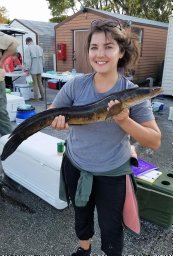
We report on the discovery of a wild, reproducing population of Channa aurolineata (Pisces: Channidae) in west-central Florida (USA), and first documented occurrence of snakeheads in the Gulf Coast region. Channa aurolineata is a large, predatory fish of the bullseye snakehead "Marulius group" species complex from Asia. Adult and juvenile specimens were captured in June 2020 in a 1.8-hectare pond that connects during high water to a small stream within the Manatee River-Tampa Bay Basin. The pond site is 250-km from the only other wild C. aurolineata population in the USA (present in southeast Florida since ca. 2000) and is considered a separate introduction and not the result of natural dispersal. Morphological and molecular comparisons revealed high overlap between the two Florida populations, evidence humans may have transported fish between sites. To verify identification, we compared Florida samples to C. aurolineata from Thailand and found mtDNA-COI barcode sequences to be identical or to differ by only a single base pair. Life body coloration of Florida samples matched their Asian counterparts, but Florida specimens averaged fewer dorsal fin rays (53.6 vs. 56.0), anal fin rays (34.2 vs 36.1), lateral line scales (65.3 vs. 67.4), and vertebrae (62.1 vs. 64.3), differences implying possible founder effect or sampling bias. Existence of this invasive predator is a concern because of the risk of spread and negative ecological effects, including an observation of removed from the pond by nets and electrofishing, and surveys suggested the population had not spread to nearby waters. In May 2021 the pond was treated with rotenone and 48 more specimens were recovered. No additional snakeheads have been sighted since the piscicide operation, although verification of eradication will
Environmental (e)DNA tools are sensitive and cost-effective for early detection of invasive species. However, the uncertainty associated with the interpretation of positive eDNA detections makes it challenging to determine appropriate natural resource management responses. Multiple sources of error can give rise to positive detections of eDNA in a sample when individuals of that species are not present at the site or a widespread infestation is not imminent. Acting on an erroneous eDNA inference could result in needless costs or reductions in desirable resources. Alternatively, failure to rapidly act on eDNA results that truly indicate invader presence could compound negative impacts and lead to high, long-term costs to manage infestations. We used a structured decision making (SDM) process, which incorporates tradeoffs and uncertainties, to evaluate appropriate response actions following hypothetical eDNA detections of invasive dreissenid mussel (Dreissena spp.) eDNA in Jordanelle Reservoir, Utah (USA). We worked with decision-makers and stakeholders to identify objectives and discrete management action alternatives to assess consequences and tradeoffs. Alternatives ranged from no action to intensive and expensive control efforts. The best performing alternative was delayed containment described by immediate attempts to confirm the eDNA detections using non molecular sampling techniques followed by mandatory watercraft exit inspections to prevent dreissenid mussel spread to regional water bodies. Non-molecular sampling increased public support for management by demonstrating a commitment to monitor the invasion state before action, whereas containment decreased likelihood of regional spread to other waters. Delayed containment had the lowest downside risk, and the highest upside gains relative to other alternative actions. Sensitivity analyses showed our results to be robust to parameter and outcome uncertainty.
To advance national efforts for the detection and biosurveillance of aquatic invasive species (AIS), we employed a community consensus process to enable the incorporation of environmental DNA (eDNA) detection data into the U.S. Geological Survey's (USGS) Nonindigenous Aquatic Species (NAS) database (https://nas.er. usgs.gov/eDNA/). Our goal was to identify minimum standards and best practices for the verification of eDNA data by working closely with AIS eDNA community practitioners and natural resource managers across government, private and academic sectors. To better inform management decisions, verified AIS eDNA data will be displayed on a separate mapping layer alongside visual sighting data with the inclusion of additional information on the eDNA methods employed to collect and produce the data. To allow for eDNA data display, we produced consensus derived online documents including a submission application and data submission template and are developing a guidance document for detailing the eDNA data submission process. We also developed a communication plan including a mechanism for reporting detections to appropriate managers for consideration prior to display. The products of these efforts are an application and data submission process that will be used in the new environmental DNA data layer on the Nonindigenous Aquatic Species (NAS) database. Herein, we detail how we engaged the eDNA community for consensus of our standards, share lessons learned from the process, and describe the benefits of such an approach at instilling confidence among the research and decision-maker community.
Single cell profiling by genetic, proteomic and imaging methods has expanded the ability to identify programmes regulating distinct cell states. The 3-dimensional (3D) culture of cells or tissue fragments provides a system to study how such states contribute to multicellular morphogenesis. Whether cells plated into 3D cultures give rise to a singular phenotype or whether multiple biologically distinct phenotypes arise in parallel is largely unknown due to a lack of tools to detect such heterogeneity. Here we develop Traject3d (Trajectory identification in 3D), a method for identifying heterogeneous states in 3D culture and how these give rise to distinct phenotypes over time, from label-free multi-day time-lapse imaging. We use this to characterise the temporal landscape of morphological states of cancer cell lines, varying in metastatic potential and drug resistance, and use this information to identify drug combinations that inhibit such heterogeneity. Traject3d is therefore an important companion to other single-cell technologies by facilitating real-time identification via live imaging of how distinct states can lead to alternate phenotypes that occur in parallel in 3D culture.
Invasive alien species (IAS) are a rising threat to biodiversity, national security, and regional economies, with impacts in the hundreds of billions of U.S. dollars annually. Proactive or predictive approaches guided by scientific knowledge are essential to keeping pace with growing impacts of invasions under climate change. Although the rapid development of diverse technologies and approaches has produced tools with the potential to greatly accelerate invasion research and management, innovation has far outpaced implementation and coordination. Technological and methodological syntheses are urgently needed to close the growing implementation gap and facilitate interdisciplinary collaboration and synergy among evolving disciplines. A broad review is necessary to demonstrate the utility and relevance of work in diverse fields to generate actionable science for the ongoing invasion crisis. Here, we review such advances in relevant fields including remote sensing, epidemiology, big data analytics, environmental DNA (eDNA) sampling, genomics, and others, and present a generalized framework for distilling existing and emerging data into products for proactive IAS research and management. This integrated workflow provides a pathway for scientists and practitioners in diverse disciplines to contribute to applied invasion biology in a coordinated, synergistic, and scalable manner.
ObjectivesTo test for evidence of statin‐mediated effects in patients with castration‐resistant prostate cancer (CRPC) as post‐diagnosis use of statins in patients with prostate cancer is associated with favourable survival outcome.Patients and MethodsThe SPECTRE trial was a 6‐weeks‐long proof‐of‐concept single‐arm Phase II treatment trial, combining atorvastatin and androgen deprivation therapy in patients with CRPC (regardless of metastatic status), designed to test for evidence of statin‐mediated effects in patients with CRPC. The primary study endpoint was the proportion of patients achieving a ≥50% drop from baseline in prostate‐specific antigen (PSA) levels at any time over the 6‐week period of atorvastatin medication (PSA response). Exploratory endpoints include PSA velocity and serum metabolites identified by mass spectrometry .ResultsAt the scheduled interim analysis, one of 12 patients experienced a ≥50% drop in PSA levels (primary endpoint), with ≥2 patients satisfying the primary endpoint required for further recruitment. All 12 patients experienced substantial falls in serum cholesterol levels following statin treatment. While all patients had comparable pre‐study PSA velocities, six of 12 patients showed decreased PSA velocities after statin treatment, suggestive of disease stabilization. Unbiased metabolomics analysis on serial weekly blood samples identified tryptophan to be the dominant metabolite associated with patient response to statin.ConclusionsData from the SPECTRE study provide the first evidence of statin‐mediated effects on CRPC and early sign of disease stabilization. Our data also highlight the possibility of altered tryptophan metabolism being associated with tumour response.
Introduction: Malignant pleural mesothelioma (MPM) is difficult to diagnose. An accurate blood biomarker could prompt specialist referral or be deployed in future screening. In earlier retrospective studies, SOMAscan proteomics (Somalogic, Boulder, CO) and fibulin-3 seemed highly accurate, but SOMAscan has not been validated prospectively and subsequent fibulin-3 data have been contradictory.Methods: A multicenter prospective observational study was performed in 22 centers, generating a large intention-to-diagnose cohort. Blood sampling, processing, and diagnostic assessment were standardized, including a 1-year follow-up. Plasma fibulin-3 was measured using two enzyme-linked immunosorbent assays (CloudClone [used in previous studies] and BosterBio, Pleasanton, CA). Serum proteomics was measured using the SOMAscan assay. Diagnostic performance (sensitivity at 95% specificity, area under the curve [AUC]) was benchmarked against serum mesothelin (Mesomark, Fujirebio Diagnostics, Malvern, PA). Biomarkers were correlated against primary tumor volume, inflammatory markers, and asbestos exposure.Results: A total of 638 patients with suspected pleural malignancy (SPM) and 110 asbestos-exposed controls (AECs) were recruited. SOMAscan reliably differentiated MPM from AECs (75% sensitivity, 88.2% specificity, validation cohort AUC 0.855) but was not useful in patients with differentiating non-MPM SPM. Fibulin-3 (by BosterBio after failed CloudClone validation) revealed 7.4% and 11.9% sensitivity at 95% specificity in MPM versus non-MPM SPM and AECs, respectively (associated AUCs 0.611 [0.557-0.664], p = 0.0015) and 0.516 [0.443-0.589], p = 0.671), both inferior to mesothelin. SOMAscan proteins correlated with inflammatory markers but not with asbestos exposure. Neither biomarker correlated with tumor volume.Conclusions: SOMAscan may prove useful as a future screening test for MPM in asbestos-exposed persons. Neither fibulin-3 nor SOMAscan should be used for diagnosis or pathway stratification. (C) 2021 International Association for the Study of Lung Cancer. Published by Elsevier Inc.
 Wesley Daniel合作论文数10
 Pam L Fuller合作论文数6
 Hedley Ann合作论文数6Lilla Sergio合作论文数6
 Carol A. Stepien合作论文数Smithsonian Institution, Museum of Natural History;Dept. of Fisheries and Wildlife, Oregon State University;University of Toledo6
 Gabriela Kalna合作论文数5Lynn McGarry合作论文数CRUK Beatson Inst, Glasgow G61 1BD, Lanark, Scotland5
 Karen Blyth合作论文数Institute of Comparative Medicine, University of Glasgow Veterinary School5
 Shamsuzzoha B Syed合作论文数5Crispin J. Miller合作论文数5Jim C. Norman合作论文数5Mondher Letaief合作论文数4
 Louise Mitchell合作论文数4
 Margaret E. Hunter合作论文数Wetland and Aquatic Research Center4Adam J. Sepulveda合作论文数Division of Biological Sciences;University of Montana;Division of Biological Sciences, University of Montana4
 Sheila Leatherman合作论文数School of Public Health,University of North Carolina4
 Sara Zanivan合作论文数Institute for Cancer Research and Treatment (IRCC),, University of Torino Medical School;Department of Proteomics and Signal Transduction, Max-Planck Institute for Biochemistry;Institute for Cancer Research and Treatment (IRCC),, University of Torino4Erin M Cumming合作论文数3Ian A. Pfingsten合作论文数3
 cayla r morningstar合作论文数US Geol Survey, Cherokee Nat Technol3
 Eva Clare Freckmann合作论文数The CRUK Beatson Institute3Linda Tawfik合作论文数3Konstantina Nikolatou合作论文数3Robin Shaw合作论文数Canc Res UK Beatson Inst, Glasgow, Lanark, Scotland3Mark Salji合作论文数Univ Glasgow, Inst Canc Sci, Glasgow G61 1QH, Lanark, Scotland3
 Alvaro Roman-Fernandez合作论文数Univ Glasgow, Inst Canc Sci, Glasgow, Lanark, Scotland3Hing Y Leung合作论文数Cancer Research UK Beatson Institute;Urology and Surgical Oncology, University of Glasgow;NHS Greater Glasgow & Clyde3
 Robert Insall合作论文数Institute for Cancer Sciences, School of Cancer Sciences, Glasgow University3
 Owen Sansom合作论文数School of Cancer Sciences, University of Glasgow;Institute of Cancer Sciences, Beatson Institute for Cancer Research3
 David Strachan合作论文数Population Health Research Institute, St. George's, University of London3
 David Bryant合作论文数Department of Physiology, University of Adelaide3Laura M. Machesky合作论文数3Emma Sandilands合作论文数3Madeleine Moore合作论文数2Dominika A Rudzka合作论文数2Grace Jaworski合作论文数2
 Laura J Alexander合作论文数2
 Susan Mason合作论文数2James C. Norman合作论文数2Selina Tsim合作论文数2
 Christine E. Dumoulin合作论文数US Geol Survey, Eastern Ecol Sci Ctr2Loic Fort合作论文数Dept Cell & Dev Biol, Vanderbilt Univ2Amélie Juin合作论文数INSERM2Yvette W H Koh合作论文数2Lori Buetow合作论文数Deparment of Cancer Metabolism, Growth and Survival, Beatson Institute for Cancer Research2
 Holly Hall合作论文数Canc Res UK Beatson Inst, Glasgow, Lanark, Scotland2
 Dilshad Jaff合作论文数Gillings School of Global Public Health, University of North Carolina at Chapel Hill2
 Kirsty J Martin合作论文数2
 Michael F. Olson合作论文数Department of Pharmacology and Toxicology, Temerty Faculty of Medicine, University of Toronto2




