This paper reports the development of a new underwater robotic vehicle, Nereid-UI, with the goal of being capable of deployments in polar ocean regions traditionally considered difficult or impossible to access such the ice-ocean interface in marginal ice zones, in the water column of ice-covered seas, and the seas underlying ice shelves. The vehicle employs a novel lightweight fiber-optic tether that will enable it to be deployed from a ship to attain standoff distances of up to 20 km from an ice-edge boundary under the real-time remote-control of its human operators, providing real-time high-resolution optical and acoustic imaging, environmental sensing and sampling, and, in the future, robotic intervention.
Few methods presently exist for routine benthic survey and sampling operations under permanent moving ice in high latitudes. Many benthic survey and sampling techniques commonly employed for blue-water oceanography are unsuitable for operations in ice covered seas due to the constrined maneuverability inherent in icebreaker operations. Over-theside deployments with lowered instruments prohibit ice-breaking and constrain the ship to the wind-driven motion of the ice. We propose that hybrid remotely operated vehicles (HROVs) with light data-only tethers could provide significantly enhanced under-ice scientific access to the world's high-latitude oceans. This paper identifies operational obstacles to benthic survey and sampling operations posed by permanent moving ice cover and proposes solutions to these obstacles.
This paper reports the results of sea trials of the Nereus hybrid underwater robotic vehicle (HROV) conducted in May and June 2009 in the Challenger Deep of the Mariana Trench, where the vehicle successfully performed scientific observation and sampling operations at hadal depths of 10,903 m. The Nereus underwater vehicle is designed to perform scientific survey and sampling to the full depth of the ocean significantly deeper than the depth capability of all other present-day operational vehicles. For comparison, the second deepest underwater vehicle currently operational worldwide can dive to 7,000 m maximum depth. Nereus operates in two different modes. For broad-area survey, the vehicle can operate untethered as an autonomous underwater vehicle (AUV) capable of exploring and mapping the sea floor with sonars and cameras. Nereus can be converted at sea to become a remotely operated vehicle (ROV) to enable close-up imaging and sampling. The ROV configuration incorporates a lightweight fiber-optic tether for high-bandwidth, real-time video and data telemetry to the surface enabling high-quality teleoperation. A manipulator, lightweight hydraulic power unit, and sampling instruments are added to provide sampling capabilities. This paper reports a brief overview of the Nereus vehicle design, and reviews the initial results of the eight dives conducted on this expedition, including two dives to more than 10,900 m depth. The Nereus vehicle is designed to render all parts of the Earth's seafloor reachable and the sea trials of its full-ocean depth capability in May and June 2009 were successful.
This paper reports an overview of the new Nereus hybrid underwater vehicle and summarizes the vehicle's performance during its first sea trials in November 2007. Nereus is a novel operational underwater vehicle designed to perform scientific survey and sampling to the full depth of the ocean of 11,000 meters - almost twice the depth of any present-day operational vehicle. Nereus operates in two different modes. For broad area survey, the vehicle can operate untethered as an autonomous underwater vehicle (AUV) capable of exploring and mapping the sea floor with sonars and cameras. For close up imaging and sampling, Nereus can be converted at sea to operate as a tethered remotely operated vehicle (ROV). This paper reports the overall vehicle design and design elements including ceramic pressure housings and flotation spheres; manipulator and sampling system; light fiber optic tether; lighting and imaging; power and propulsion; navigation; vehicle dynamics and control; and acoustic communications.
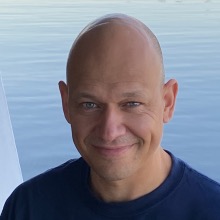 Michael Jakuba合作论文数Woods Hole Oceanographic Institution6
 James C. Kinsey合作论文数Department of Applied Ocean Physics and Engineering;Department of Geology and Geophysics;Department of Applied Ocean Physics and Engineering|Department of Geology and Geophysics6
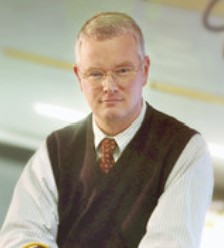 Louis Whitcomb合作论文数Laboratory for Computational Sensing and Robotics, Department of Mechanical Engineering, Whiting School of Engineering, Johns Hopkins University;Department of Computer Science, Whiting School of Engineering, Johns Hopkins University6
 Daniel Gomez-Ibanez合作论文数6
 Dana Yoerger合作论文数Deep Submergence Laboratory, Department of Applied Ocean Physics & Engineering, Woods Hole Oceanographic Institution6
 Andrew D. Bowen合作论文数5
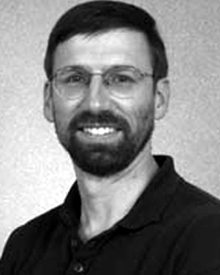 Jonathan Howland合作论文数5
 Glenn Mcdonald合作论文数University of Adelaide;Department of Plant Science;Department of Plant Science, University of Adelaide4john w bailey合作论文数3casey machado合作论文数3Stefano Suman合作论文数3Taylor, C.合作论文数3
 Carl L. Kaiser合作论文数Department of Applied Ocean Physics and Engineering, Woods Hole Oceanographic Institution;Department of Applied Ocean Physics and Engineering, Woods Hole Oceanographic Institution3
 Christopher R. German (Chris German)合作论文数Woods Hole Oceanographic Institution3James Buescher合作论文数3Barbara Fletcher合作论文数3
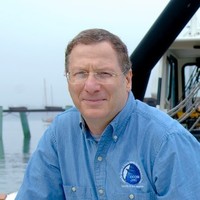 Larry A. Mayer (Larry Mayer)合作论文数Center for Coastal and Ocean Mapping, University of New Hampshire;School of Marine Science and Ocean Engineering, University of New Hampshire3
 Sarah E. Webster合作论文数Department of Mechanical Engineering, Johns Hopkins University3c j taylor合作论文数2Chris Young合作论文数2Pontbriand, C.合作论文数2Donald B. Peters合作论文数2
 Stephen C. Martin合作论文数2
 Christopher J. Mcfarland合作论文数2
 Robert McCabe合作论文数2s j elliott合作论文数1
 Antje Boetius合作论文数Max Planck Institute for Marine Microbiology;Alfred Wegener Institute, Helmholtz Centre for Polar and Marine Research;MARUM Cluster of Excellence, University of Bremen1
 Samuel Hulme合作论文数1Martin, S.C.合作论文数1charles e taylor合作论文数1J. Howland合作论文数1Christopher P Young合作论文数1
 Patricia Fryer合作论文数Institute of Geophysics and Planetology, University of Hawai‘i at Manoa;School of Ocean and Earth Science and Technology, University of Hawai‘i at Manoa1
 Timothy Shank合作论文数Institute of Marine and Coastal Sciences, Rutgers University1A. D. Bowen合作论文数1D Peters合作论文数1
 Eleanor K. Bors合作论文数Center for Marine Functional Genomics, Mount Desert Island Biological Laboratory1G Mcdonald合作论文数1




