Power supply systems are essential for deep-ocean underwater vehicles. Pressure-tolerant power systems have potential to be more buoyant and more reliable than power systems housed in abyssal pressure housings. We describe the design and field experience with the abyssal-pressure-tolerant battery and power systems on the Nereid Under Ice (NUI) hybrid remotely operated vehicle. Pressure-tolerant SeaSafe lithium-ion battery modules were developed in parallel with the NUI vehicle, along with several pressure-tolerant power distribution components. Our experience operating NUI's power systems over several underice campaigns is reviewed, including a power failure that nearly resulted in a total loss of the vehicle.
Design and testing of an epoxy-encapsulated planar L-band antenna for use in a small autonomous underwater vehicle is reported. Return loss testing with a reference radiative element is used to characterize two candidate polymer encapsulation materials, acrylic and epoxy. Planar radiative elements are iteratively scaled for accurate tuning after encapsulation.
ABSTRACTMetabarcoding analysis of environmental DNA samples is a promising new tool for marine biodiversity and conservation. Typically, seawater samples are obtained using Niskin bottles and filtered to collect eDNA. However, standard sample volumes are small relative to the scale of the environment, conventional collection strategies are limited, and the filtration process is time consuming. To overcome these limitations, we developed a new large – volume eDNA sampler with in situ filtration, capable of taking up to 12 samples per deployment. We conducted three deployments of our sampler on the robotic vehicle Mesobot in the Flower Garden Banks National Marine Sanctuary in the northwestern Gulf of Mexico and collected samples from 20 to 400 m depth. We compared the large volume (∼40 – 60 liters) samples collected by Mesobot with small volume (∼2 liters) samples collected using the conventional CTD – mounted Niskin bottle approach. We sequenced the V9 region of 18S rRNA, which detects a broad range of invertebrate taxa, and found that while both methods detected biodiversity changes associated with depth, our large volume samples detected approximately 66% more taxa than the CTD small volume samples. We found that the fraction of the eDNA signal originating from metazoans relative to the total eDNA signal decreased with sampling depth, indicating that larger volume samples may be especially important for detecting metazoans in mesopelagic and deep ocean environments. We also noted substantial variability in biological replicates from both the large volume Mesobot and small volume CTD sample sets. Both of the sample sets also identified taxa that the other did not – although the number of unique taxa associated with the Mesobot samples was almost four times larger than those from the CTD samples. Large volume eDNA sampling with in situ filtration, particularly when coupled with robotic platforms, has great potential for marine biodiversity surveys, and we discuss practical methodological and sampling considerations for future applications.
A newly developed water sampling system enables autonomous detection and sampling of underwater oil plumes. The Midwater Oil Sampler collects multiple 1-L samples of seawater when preset criteria are met. The sampler has a hydrocarbon-free sample path and can be configured with several modules of six glass sample bottles. In August 2019, the sampler was deployed on an autonomous underwater vehicle and captured targeted water samples in natural oil seeps offshore Santa Barbara, CA, USA.
Historically, visual observation is an emergency responder's first ‘tool’ in identifying spilled oil. Optical detection has since expanded to include a myriad of signals from space, aircraft, drone, vessel and submersible platforms that can provide critical information for decision-making during spill response efforts. Spill monitoring efforts below the air-water interface have been vastly improved by advances with in situ optical sensors and vehicle platform technology. Optical techniques using fluorescence, scattering, and holography offer a means to determine dissolved versus droplet fractions, provide oil concentration estimates and serve as proxies for dispersion efficiency. For subsurface spills over large space and time scales, Autonomous Underwater Vehicles (AUVs) can be used to provide subsurface plume footprints and estimate oil concentrations. For smaller, more frequent spills, tethered compact Remotely Operated Vehicles (ROVs) may be more appropriate as they are easy to deploy for rapid detection. Two underwater oil detection technologies have been developed: (1) A Remote Environmental Monitoring UnitS (REMUS-600) AUV equipped with fluorescence and backscatter SeaOWL UV-A (Oil-in-Water Locator; Sea-Bird Scientific WET Labs Inc.), holographic imager (HoloCam; SeaScan, Inc), hydrographic information, video camera, CTD and a water/oil sampler. (2) A tethered ROV system (DTG2, Deep Trekker Inc.) equipped with video camera, UviLux (Chelsea Technologies Group, Inc) fluorometer, a CTD and water/oil sampler. Calibration and validation tests of the sensor suite were conducted at the Coastal Response Research Center flume tank (NH, USA). Oil concentration estimates were verified by chemical analysis of hydrocarbons and particle size analysis (LISST 200X, Sequoia, Inc). Operational performance of the ROV platform and sensors was evaluated at the Ohmsett wave tank (NJ, USA). Field performance of the REMUS and sensor suite was evaluated at natural seeps near Santa Barbara, CA. This research demonstrates the forensic value of in situ optical data for improved understanding of the behavior and transport of spilled oil below the air-sea interface.
Mesobot, an autonomous underwater vehicle, addresses specific unmet needs for observing and sampling a variety of phenomena in the ocean's midwaters. The midwater hosts a vast biomass, has a role in regulating climate, and may soon be exploited commercially, yet our scientific understanding of it is incomplete. Mesobot has the ability to survey and track slow-moving animals and to correlate the animals' movements with critical environmental measurements. Mesobot will complement existing oceanographic assets such as towed, remotely operated, and autonomous vehicles; shipboard acoustic sensors; and net tows. Its potential to perform behavioral studies unobtrusively over long periods with substantial autonomy provides a capability that is not presently available to midwater researchers. The 250-kilogram marine robot can be teleoperated through a lightweight fiber optic tether and can also operate untethered with full autonomy while minimizing environmental disturbance. We present recent results illustrating the vehicle's ability to automatically track free-swimming hydromedusae (Solmissus sp.) and larvaceans (Bathochordaeus stygius) at depths of 200 meters in Monterey Bay, USA. In addition to these tracking missions, the vehicle can execute preprogrammed missions collecting image and sensor data while also carrying substantial auxiliary payloads such as cameras, sonars, and samplers.
The HACON cruise is a major component of the FRINATEK HACON project, which aims at investigating the role of the Gakkel Ridge and Arctic Ocean in biological connectivity amongst ocean basins and global biogeography of chemosynthetic ecosystems. The HACON study area is centered in the Aurora seamount and Aurora vent field.
In 2014, the Woods Hole Oceanographic Institution started a major design effort to miniaturize the main control electronics used on REMUS 600 AUVs. Our design goals included decreasing vehicle cost and component size, improving the already reconfigurable nature of the vehicle, and increasing base vehicle capability and efficiency. A new vehicle controller, the Vehicle Core Board, has been developed which reduces controller size, weight, and power requirements, improving AUV system endurance and modularity. The reduced size allows the control system to be completely housed in the AUV tail, improving system modularity and freeing up space for payload and energy modules. These systems have demonstrated as much as 40% hotel power reduction, 40% chassis weight reduction, and 70% chassis volume reduction on the Next Generation REMUS 600 system compared to legacy REMUS 600 systems. A new Guest Port Expansion chassis allows for standard payloads to be easily swapped without any internal wiring changes.
We report the design, sea trials, and scientific operation of a fast vertical profiling autonomous underwater vehicle, called Clio, designed to cost-effectively improve the understanding of marine microorganism ecosystem dynamics on a global scale by collecting high-volume filter samples autonomously, in contrast to conventional techniques that require a ship’s wire.
Mesobot, a new class of autonomous underwater vehicle, will address specific unmet needs for observing slow-moving targets in the midwater ocean. Mesobot will track targets such as zooplankton, fish, and descending particle aggregates using a control system based on stereo cameras and a combination of thrusters and a variable buoyancy system. The vehicle will also be able to collect biogeochemical and environmental DNA (eDNA) samples using a pumped filter sampler.
This paper reports the development of a new underwater robotic vehicle, Nereid-UI, with the goal of being capable of deployments in polar ocean regions traditionally considered difficult or impossible to access such the ice-ocean interface in marginal ice zones, in the water column of ice-covered seas, and the seas underlying ice shelves. The vehicle employs a novel lightweight fiber-optic tether that will enable it to be deployed from a ship to attain standoff distances of up to 20 km from an ice-edge boundary under the real-time remote-control of its human operators, providing real-time high-resolution optical and acoustic imaging, environmental sensing and sampling, and, in the future, robotic intervention.
A new tool was developed for large volume sampling to facilitate marine microbiology and biogeochemical studies. It was developed for remotely operated vehicle and hydrocast deployments, and allows for rapid collection of multiple sample types from the water column and dynamic, variable environments such as rising hydrothermal plumes. It was used successfully during a cruise to the hydrothermal vent systems of the Mid-Cayman Rise. The Suspended Particulate Rosette V2 large volume multi-sampling system allows for the collection of 14 sample sets per deployment. Each sample set can include filtered material, whole (unfiltered) water, and filtrate. Suspended particulate can be collected on filters up to 142mm in diameter and pore sizes down to 0.2μm. Filtration is typically at flowrates of 2Lmin−1. For particulate material, filtered volume is constrained only by sampling time and filter capacity, with all sample volumes recorded by digital flowmeter. The suspended particulate filter holders can be filled with preservative and sealed immediately after sample collection. Up to 2L of whole water, filtrate, or a combination of the two, can be collected as part of each sample set. The system is constructed of plastics with titanium fasteners and nickel alloy spring loaded seals. There are no ferrous alloys in the sampling system. Individual sample lines are prefilled with filtered, deionized water prior to deployment and remain sealed unless a sample is actively being collected. This system is intended to facilitate studies concerning the relationship between marine microbiology and ocean biogeochemistry.
Certain enabling technologies coupled with recent advances in robotic systems make it possible to consider supplementing many of the functions performed by vehicles with appropriately designed semi-autonomous systems. These systems are effectively a hybrid cross between ROV and AUV systems and poised to enable an important new class of undersea vehicle capable of intervention tasks under direct human control. It is now possible to radically redefine the meaning of the words “tethered vehicle” to include virtual tethering via acoustic and optical means or through the use of an extremely small optical fiber, providing not power but only high bandwidth communications. Battery-powered, hybrid-tethered vehicles will be able to perform a range of tasks that might otherwise require a conventional ROV. These functions will be performed at much lower cost by requiring less complex ships because of a greatly reduced dependence on complex, large, specialized tether and vehicle handling equipment, and a reduced need for dynamic positioning capability. Several key emerging technologies and capabilities make such a vehicle possible. Advances in both acoustic and optical “wireless” underwater communications and mico-tethers as pioneered by the HROV Nereus offer the potential to transform ROV type operations. By utilizing multiband acoustics and WHOI's newly developed through-water optical transceivers, variable bandwidth communications are possible. In late 2012, Nereus was interfaced to a specially configured acoustic and optical communications system and a series of field demonstrations conducted offshore, including highly interactive and complex manipulations, demonstrating what we term as the Nereid Technology.
A new tool was developed for deep-sea microbial mat studies by remotely operated vehicles and was successfully deployed during a cruise to the hydrothermal vent systems of the Mid-Cayman Rise. The Mat Sampler allows for discrete, controlled material collection from complex microbial structures, vertical-profiling within thick microbial mats and particulate and fluid sample collection from venting seafloor fluids. It has a reconfigurable and expandable sample capacity based on magazines of 6 syringes, filters, or water bottles. Multiple magazines can be used such that 12–36 samples can be collected routinely during a single dive; several times more if the dive is dedicated for this purpose. It is capable of hosting in situ physical, electrochemical, and optical sensors, including temperature and oxygen probes in order to guide sampling and to record critical environmental parameters at the time and point of sample collection. The precision sampling capability of this instrument will greatly enhance efforts to understand the structured, delicate, microbial mat communities that grow in diverse benthic habitats.
This paper reports an overview of the navigation and control system design for the new Nereus hybrid underwater robotic vehicle (HROV). Vehicle performance during its first sea trials in November 2007 near Hawaii, and in May and June 2009 in the Challenger Deep of the Mariana Trench is reported. During the latter expedition, the vehicle successfully performed scientific observation and sampling operations at depths exceeding 10,903 m. The Nereus underwater vehicle is designed to perform scientific survey and sampling to the full depth of the ocean — significantly deeper than the depth capability of all other present-day operational vehicles. For comparison, the second deepest underwater vehicle currently operational worldwide can dive to 7,000 m maximum depth. Nereus operates in two different modes. For broad-area survey, the vehicle can operate untethered as an autonomous underwater vehicle (AUV) capable of exploring and mapping the sea floor with sonars and cameras. Nereus can be converted at sea to become a tethered remotely operated vehicle (ROV) to enable close-up imaging and sampling. The ROV configuration incorporates a lightweight fiber-optic tether (for high-bandwidth, real-time video and data telemetry to the surface), an electro-hydraulic manipulator arm, and sampling instruments. The Nereus vehicle is designed to render all parts of the Earth's seafloor accessible to oceanographic science.
The hybrid vehicle Nereus employs an energy efficient architecture to enable novel modes of remote operation. Available energy is limited by the capacity of Nereus's on-board batteries. Nereus's energy design was developed by first creating representative dive profiles for candidate missions, and then developing an energy budget for each mission. The design of energy intensive subsystems, including the propulsion thrusters, manipulator arm, and lights, was optimized to reduce energy consumption while delivering adequate performance. Performance of Nereus's energy systems during its first three expeditions is reported.
Few methods presently exist for routine benthic survey and sampling operations under permanent moving ice in high latitudes. Many benthic survey and sampling techniques commonly employed for blue-water oceanography are unsuitable for operations in ice covered seas due to the constrined maneuverability inherent in icebreaker operations. Over-theside deployments with lowered instruments prohibit ice-breaking and constrain the ship to the wind-driven motion of the ice. We propose that hybrid remotely operated vehicles (HROVs) with light data-only tethers could provide significantly enhanced under-ice scientific access to the world's high-latitude oceans. This paper identifies operational obstacles to benthic survey and sampling operations posed by permanent moving ice cover and proposes solutions to these obstacles.
This paper reports the results of sea trials of the Nereus hybrid underwater robotic vehicle (HROV) conducted in May and June 2009 in the Challenger Deep of the Mariana Trench, where the vehicle successfully performed scientific observation and sampling operations at hadal depths of 10,903 m. The Nereus underwater vehicle is designed to perform scientific survey and sampling to the full depth of the ocean significantly deeper than the depth capability of all other present-day operational vehicles. For comparison, the second deepest underwater vehicle currently operational worldwide can dive to 7,000 m maximum depth. Nereus operates in two different modes. For broad-area survey, the vehicle can operate untethered as an autonomous underwater vehicle (AUV) capable of exploring and mapping the sea floor with sonars and cameras. Nereus can be converted at sea to become a remotely operated vehicle (ROV) to enable close-up imaging and sampling. The ROV configuration incorporates a lightweight fiber-optic tether for high-bandwidth, real-time video and data telemetry to the surface enabling high-quality teleoperation. A manipulator, lightweight hydraulic power unit, and sampling instruments are added to provide sampling capabilities. This paper reports a brief overview of the Nereus vehicle design, and reviews the initial results of the eight dives conducted on this expedition, including two dives to more than 10,900 m depth. The Nereus vehicle is designed to render all parts of the Earth's seafloor reachable and the sea trials of its full-ocean depth capability in May and June 2009 were successful.
 Dana Yoerger合作论文数Deep Submergence Laboratory, Department of Applied Ocean Physics & Engineering, Woods Hole Oceanographic Institution11
 Michael Jakuba合作论文数Woods Hole Oceanographic Institution10
 Louis Whitcomb合作论文数Laboratory for Computational Sensing and Robotics, Department of Mechanical Engineering, Whiting School of Engineering, Johns Hopkins University;Department of Computer Science, Whiting School of Engineering, Johns Hopkins University8
 Jonathan Howland合作论文数8
 James C. Kinsey合作论文数Department of Applied Ocean Physics and Engineering;Department of Geology and Geophysics;Department of Applied Ocean Physics and Engineering|Department of Geology and Geophysics7
 Andrew D. Bowen合作论文数6
 Matthew Heintz合作论文数6Taylor, C.合作论文数5
 Christopher R. German (Chris German)合作论文数Woods Hole Oceanographic Institution5casey machado合作论文数4Stefano Suman合作论文数4
 John A. Breier合作论文数Woods Hole Oceanog Inst4
 Glenn Mcdonald合作论文数University of Adelaide;Department of Plant Science;Department of Plant Science, University of Adelaide4
 Sarah E. Webster合作论文数Department of Mechanical Engineering, Johns Hopkins University4john w bailey合作论文数3c j taylor合作论文数3Molly Curran合作论文数3Justin Fujii合作论文数3Pontbriand, C.合作论文数3
 Carl L. Kaiser合作论文数Department of Applied Ocean Physics and Engineering, Woods Hole Oceanographic Institution;Department of Applied Ocean Physics and Engineering, Woods Hole Oceanographic Institution3
 Amy Kukulya合作论文数Oceanographic Systems Laboratory;Woods Hole Oceanographic;Oceanographic Systems Laboratory, Woods Hole Oceanographic3
 Stephen C. Martin合作论文数3James Buescher合作论文数3
 Christopher J. Mcfarland合作论文数3Barbara Fletcher合作论文数3
 Annette F. Govindarajan合作论文数Biology Department;Woods Hole;Oceanographic Institution;Biology Department, Oceanographic Institution3
 Larry A. Mayer (Larry Mayer)合作论文数Center for Coastal and Ocean Mapping, University of New Hampshire;School of Marine Science and Ocean Engineering, University of New Hampshire3Abhimanyu Belani合作论文数2Chris Young合作论文数2
 Devi Sundaravadivelu合作论文数Pegasus Tech Serv, Cincinnati, OH USA2
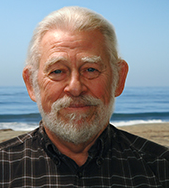 Bruce H. Robison合作论文数A Nonprofit Oceanographic Research Center, Monterey Bay Aquarium Research Institute2J. Howland合作论文数2
 Joel K. Llopiz合作论文数Division of Marine Biology and Fisheries;School of Marine and Atmospheric Science;University of Miami;School of Marine and Atmospheric Science, University of Miami2Donald B. Peters合作论文数2
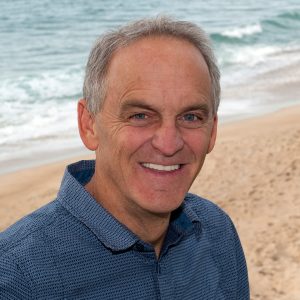 Brett Hobson合作论文数Monterey Bay Aquarium Research Institute2
 Robyn Conmy合作论文数2Michael Risi合作论文数2Ben Grocholsky合作论文数Robotics Institute, Carnegie Mellon University2A. D. Bowen合作论文数2
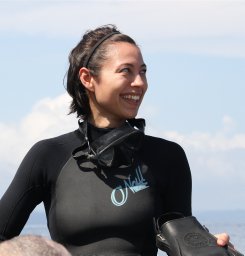 Kakani Katija合作论文数Res & Dev, Monterey Bay Aquarium Res Inst2
 Robert McCabe合作论文数2
 Camillo J. Taylor合作论文数Department of Computer and Information Science, General Robotics, Automation, Sensing & Perception Laboratory, University of Pennsylvania2
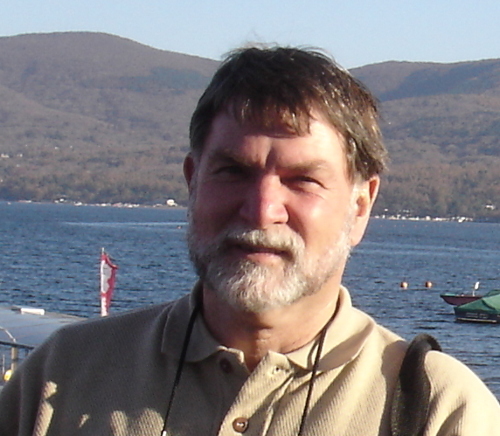 Peter H. Wiebe (Peter Wiebe)合作论文数Department of Biology, Woods Hole Oceanographic Institution2Lisa M. Dipinto合作论文数2V Kumar合作论文数1s j elliott合作论文数1
 Antje Boetius合作论文数Max Planck Institute for Marine Microbiology;Alfred Wegener Institute, Helmholtz Centre for Polar and Marine Research;MARUM Cluster of Excellence, University of Bremen1c g rauch合作论文数1norman e farr合作论文数1




