Abstract Nitrogen-vacancy (NV) center ensembles in diamond are one of the most promising solid-state quantum platforms for various sensing applications. Achieving ultimate sensitivity requires simultaneously long spin dephasing times ( $${T}_{2}^{* }$$ T 2 * ) and high NV center concentrations. In this work, we propose a systematic measurement approach to quantify the electron spin dephasing in NV center ensembles and analyze the contributions of various sources to the dephasing time, including NV-NV interactions, strain and electric field distributions, 13C nuclear spins, and P1 electron spins. Our method is validated using a series of high-performance diamond samples, providing a comprehensive understanding of dephasing mechanisms and revealing correlations between NV concentration and different dephasing sources. Building on these insights, we outline strategies to further enhance the achievable sensitivity for DC magnetic field measurements.
Many quantum networking applications require efficient photonic interfaces to quantum memories which can be produced at scale and with high yield. Synthetic diamond offers unique potential for the implementation of this technology as it hosts color centers which retain coherent optical interfaces and long spin coherence times in nanophotonic structures. Here, we report a technique enabling wafer-scale processing of thin-film diamond that combines ion implantation and membrane liftoff, high-quality overgrowth, targeted color center implantation, and serial, high-throughput thermocompression bonding with yields approaching unity. The deterministic deposition of thin diamond membranes onto semiconductor substrates facilitates consistent integration of photonic crystal cavities with silicon-vacancy (SiV) quantum memories. We demonstrate reliable, strong coupling of SiVs to photons with cooperativities approaching 50. Furthermore, we show that photonic crystal cavities can be reliably fabricated across several membranes bonded to the same handling chip. Our platform enables modular fabrication where the photonic layer can be integrated with functionalized substrates featuring electronic control lines such as coplanar waveguides for microwave delivery. Finally, we implement passive optical packaging with sub-decibel insertion loss. Together, these advances pave the way to the scalable assembly of optically addressable quantum memory arrays which are a key building block for modular photonic quantum interconnects.
Quantum networks promise secure communication, distributed sensing and modular quantum computing by interconnecting distant quantum nodes through photonic links. Extending such networks beyond metropolitan distances requires quantum repeaters to overcome the exponential attenuation of photons in optical fiber. Across all architectures, a key requirement is the indistinguishability of single photons, which directly impacts the fidelity of photonic operations based on two-photon interference, such as Bell-state measurements and fusion gates. Here, we demonstrate generation of highly indistinguishable single photons from a coherently excited tin-vacancy center in diamond, achieving raw Hong-Ou-Mandel interference visibilities exceeding 0.95. By separating intrinsic emitter properties from technical imperfections, we show that decoherence plays a negligible role and that the remaining limitations are predominantly technical in nature, arriving at an intrinsic indistinguishability of up to 0.999. We further show that quantum frequency conversion to the telecom C-band preserves the photon indistinguishability. In combination with the long-lived electron and nuclear spin coherence times, these results establish tin-vacancy centers in diamond as a competitive platform for long-distance quantum networks and photonic quantum information processing. We further substantiate this potential through Monte Carlo simulations of a quantum-repeater link, demonstrating that the SnV-center platform surpasses the bound set by direct transmission.
We demonstrate direct, non-invasive and non-contact detection of human cardiac magnetic signals using quantum sensors based on nitrogen-vacancy (NV) centers in diamond. Three configurations were employed recording magnetocardiography (MCG) signals in various shielded and unshielded environments. The signals were averaged over a few hundreds up to several thousands of heart beats to detect the MCG traces. The compact room-temperature NV sensors exhibit sensitivities of 6-26 pT/Hz^(1/2) with active sensing volumes below 0.5 mm^3, defining the performance level of the demonstrated MCG measurements. While the present signals are obtained by averaging, this performance already indicates a clear path toward single-shot MCG sensing. To move beyond shielded environments toward practical clinical use, strong noise suppression is required. To this end, we implement NV-based gradiometry and achieve efficient common-mode noise rejection, enabled by the intrinsically small sensing volume of NV sensors. Together, these multi-platform results obtained across diverse magnetic environments provide a solid foundation for translating quantum sensors into human medical diagnostics such as MCG and magnetoencephalography (MEG).
Understanding how electric currents flow in complex biological and electronic systems requires three-dimensional magnetic imaging with high spatial and temporal resolution. However, reconstructing current sources from measured magnetic fields is challenging in multilayer and dynamically evolving environments, where signal overlap and noise render conventional two-dimensional inversion approaches unreliable. Here, we demonstrate widefield nitrogen-vacancy (NV) center magnetometry for time-resolved three-dimensional magnetic source localization. Using a custom multi-layer micro-coil platform that emulates localized, time-varying neuronal-like currents, we acquire magnetic field maps with micrometer-scale spatial and millisecond temporal resolution via per-pixel lock-in detection. Source localization is performed using a sparsity-promoting least absolute shrinkage and selection operator (LASSO) framework that incorporates experimentally measured magnetic field basis maps as structured spatial priors. Applied to a simulated neuronal dictionary of 6250 neurons, the method enables robust identification of sparse and correlated source configurations. These results establish a general framework for dynamic three-dimensional magnetic source localization in complex multilayer systems. (c) 2026 Optica Publishing Group under the terms of the Optica Open Access Publishing Agreement
We propose and demonstrate experimentally continuous phased dynamical decoupling (CPDD), where we apply a continuous field with discrete phase changes for quantum sensing and robust compensation of environmental and amplitude noise. CPDD does not use short pulses, making it particularly suitable for experiments with limited driving power or nuclear magnetic resonance at high magnetic fields. It requires control of the timing of the phase changes, offering much greater precision than the Rabi frequency control needed in standard continuous sensing schemes. We successfully apply our method to nanoscale nuclear magnetic resonance and combine it with quantum heterodyne detection, achieving microhertz uncertainty in the estimated signal frequency for a 120 s measurement. Our Letter expands significantly the applicability of dynamical decoupling and opens the door for a wide range of experiments, e.g., in nitrogen-vacancy centers, trapped ions, or trapped atoms.
As quantum control approaches hardware-imposed performance limits, weak effects omitted by reduced models become consequential. Assumptions required for analytic tractability then cease to guide control design and instead constrain further improvement. Here, we relax such assumptions and use simulation-guided stochastic tree search to navigate combinatorially large, discrete pulse-sequence spaces for robust many-body spin control. Experimentally, in a solid-state spin ensemble, the resulting computationally discovered pulse sequences substantially outperform analytically optimized baselines, despite being excluded by construction from analytic design criteria. Importantly, these unconventional sequences expose predictive structural features that enable rapid neural network–based performance evaluation. This efficiency gain makes the combinatorial scaling tractable and expands the control alphabet from 8 symmetry-restricted pulses to over 26,000 hardware-resolved options. The resulting fine-grained design freedom provides the control resolution required to reliably address weak, performance-limiting effects, unlocking qualitatively different spin-control capabilities beyond decades of traditional sequence design. Together, these results show that near performance limits, simplifying assumptions can become a primary constraint on quantum control in realistic hardware, and must be repurposed to guide computational discovery.
Spins associated to solid-state color centers are a promising platform for investigating quantum computation and quantum networks. Recent experiments have demonstrated multiqubit quantum processors, optical interconnects, and basic quantum error-correction protocols. One of the key open challenges towards larger-scale systems is to realize high-fidelity universal quantum gates. In this work, we design and demonstrate a complete high-fidelity gate set for the two-qubit system formed by the electron and nuclear spin of a nitrogen-vacancy center in diamond. We use gate set tomography (GST) to systematically optimize the gates and demonstrate single-qubit gate fidelities of up to 99.999(1)% and a two-qubit gate fidelity of 99.93(5)%. Our gates are designed to decouple unwanted interactions and can be extended to other electron-nuclear spin systems. The high fidelities demonstrated provide opportunities towards larger-scale quantum processing with color-center qubits.
Three-dimensional magnetic imaging with high spatio-temporal resolution is critical for probing current paths in various systems, from biosensing to microelectronics. Conventional 2D Fourier-based current source localization methods are ill-posed in multilayer or dynamic systems due to signal overlap and noise. In this work, we demonstrate an innovative nitrogen-vacancy (NV) center-based wide-field magnetic microscopy technique for dynamic three-dimensional imaging and localization of current sources. Using custom-fabricated multilayer micro-coil platform to emulate localized, time-varying currents similar to neuronal activity, we acquire magnetic field maps with micrometre-scale spatial and millisecond-scale temporal resolution using per-pixel lock-in-based detection. Source localization and image reconstruction are achieved using a Least Absolute Shrinkage and Selection Operator (LASSO)-based reconstruction framework that incorporates experimentally measured basis maps as spatial priors. Our method enables robust identification of active current sources across space and time, and significantly advances the accuracy of dynamic 3D current imaging and NV-based magnetometry for complex systems.
Nitrogen vacancy centres in diamond can be used for vector magnetometry. In this work we present a portable vector diamond magnetometer. Its vector capability, combined with feedback control and robust structure enables operation on moving platforms. While placed on a trolley, magnetic mapping of a room is demonstrated and the magnetometer is also shown to be operational in a moving van with the measured magnetic field shifts for the x, y, and z axes being tagged with GPS coordinates. These magnetic field measurements are in agreement with measurements taken simultaneously with a fluxgate magnetometer.
Mechanical polishing of diamond is known to be detrimental to the spin coherence time and strain environment of near-surface defects via intrinsic introduction of subsurface damage: this damage is typically removed by inductively coupled plasma reactive ion etching (ICP-RIE). By utilizing a chemical mechanical polishing (CMP) process to prepare ⟨001⟩ diamond surfaces, we demonstrate that we can achieve 13C-limited spin lifetimes of shallow implanted (≤34 nm) nitrogen vacancy (NV) centers in an industrially scalable process. We compare spin lifetimes (T2) of three diamonds processed with CMP with one processed by ICP-RIE and observe an increased median T2 of 340 μs in the CMP-processed samples for 15NV centers implanted and annealed under identical conditions.
We report an experimental approach to excite, stabilize, and continuously track Bloch sphere trajectories of dipolar-coupled nuclear spins in a solid. We demonstrate these capabilities on a model system of hyperpolarized C-13 nuclear spins in diamond. We elucidate a method to drive, and preserve, the motion of spins in complex three-dimensional trajectories for over T '(2)>27s even in the presence of interspin coupling. Indeed, without quantum control, interspin interactions lead to rapid spin decay in T*(2)approximate to 1.5ms. Furthermore, we show that the motion of the spins can be continuously tracked in three dimensions on the Bloch sphere for over 35s. During this time the spins complete >68000 closed precession orbits, exhibiting high stability and robustness against error. Leveraging these long-lived, robust spin trajectories we devise a novel nonequilibrium quantum sensing scheme for DC magnetic fields, based on micromotion dynamics, and without a static counterpart. Sensing here proceeds for the entire T '(2) period, orders of magnitude longer than T*(2), and operates in the dense sensor limit, yielding significant sensitivity improvements. Our results suggest new ways to stabilize and interrogate strongly coupled quantum systems through periodic driving and portend powerful applications of rigid spin orbits in quantum sensing.
The decoherence of a central electron spin due to the dynamics of a coupled electron-spin bath is a core problem in solid-state spin physics. Ensemble experiments have studied the central spin coherence in detail, but such experiments average out the underlying quantum dynamics of the bath. Here, we show the coherent back-action of an individual NV center on an electron-spin bath and use it to detect, prepare and control the dynamics of a pair of bath spins. We image the NV-pair system with sub-nanometer resolution and reveal a long dephasing time (T_2^* = 44(9) ms) for a qubit encoded in the electron-spin pair. Our experiment reveals the microscopic quantum dynamics that underlie the central spin decoherence and provides new opportunities for controlling and sensing interacting spin systems.
Diamonds with nitrogen-vacancy (NV) center ensembles are one of the most promising solid-state quantum platforms for various sensing applications. The combination of a long spin dephasing time (T_2^*) and a high NV center concentration is crucial for pushing the sensitivity limits. In this work, we propose a systematic measurement approach to quantify the electron spin dephasing in NV center ensembles and analyze the contributions of various sources to the dephasing time, including NV-NV interactions, strain and electric field distributions, ^13C nuclear spins, and P1 electron spins. Our method is validated using a series of high-performance diamond samples, providing a comprehensive understanding of dephasing mechanisms and revealing correlations between NV concentration and different dephasing sources. Based on these insights, we further evaluate and propose strategies to improve the achievable sensitivity limits for DC magnetic field measurements.
We use Fourier transform infrared spectroscopy (FTIR) and photoluminescence spectroscopy to characterize boron and nitrogen concentrations needed for the stabilization of neutral silicon vacancy centers (SiV0) in Si-implanted diamonds co-doped with boron and nitrogen.
Vector magnetometry provides more information than scalar measurements for magnetic surveys utilized in space, defense, medical, geological and industrial applications. These areas would benefit from a mobile vector magnetometer that can operate in extreme conditions. Here we present a scanning fiber-coupled nitrogen vacancy (NV) center vector magnetometer. Feedback control of the microwave excitation frequency is employed to improve dynamic range and maintain sensitivity during movement of the sensor head. Tracking of the excitation frequency shifts for all four orientations of the NV center allow us to image the vector magnetic field of a damaged steel plate. We calculate the magnetic tensor gradiometry images in real time, and they allow us to detect smaller damage than is possible with vector or scalar imaging.
A key challenge toward future quantum internet technology is connecting quantum processors at metropolitan scale. Here, we report on heralded entanglement between two independently operated quantum network nodes separated by 10 kilometers. The two nodes hosting diamond spin qubits are linked with a midpoint station via 25 kilometers of deployed optical fiber. We minimize the effects of fiber photon loss by quantum frequency conversion of the qubit-native photons to the telecom L-band and by embedding the link in an extensible phase-stabilized architecture enabling the use of the loss-resilient single-click entangling protocol. By capitalizing on the full heralding capabilities of the network link in combination with real-time feedback logic on the long-lived qubits, we demonstrate the delivery of a predefined entangled state on the nodes irrespective of the heralding detection pattern. Addressing key scaling challenges and being compatible with different qubit systems, our architecture establishes a generic platform for exploring metropolitan-scale quantum networks.
Advances in applications of nitrogen-vacancy (NV) spin centres in diamond for sensing and quantum metrology depend critically on the NV fabrication methods. One such technique combines epitaxial diamond growth and electron or ion irradiation (He, C, etc), where NVs are activated by vacancy trapping at the nitrogen donor atoms upon thermal diffusion. In this work we study the efficiency of such method by analyzing NV depth profiles created by 340 keV and also 4 keV He irradiation in high purity CVD and HPHT diamond crystals and subjected to sequent annealing at 950 degrees C and 1200 degrees C temperatures. This analysis is coupled with the measurement of NV density in the bulk of CVD diamonds with nitrogen doping at low-ppb and low-ppm levels, exposed to MeV electrons in a wide range of the doses. For data analysis we developed an atomistic model based on probabilistic atomic jumps in a crystal lattice, which considers competitive trapping between di- (V2) or multi-vacancy defects compared to that of NVs. The efficiency of NV formation was defined as a ratio of the corresponding capture cross sections: sigma NV vs. sigma V2 . Applying this model to the experimental data, the sigma NV/sigma V2 ratio was estimated about 0.1-0.5, where the activation energy of vacancy diffusion of about 1.7 eV was evaluated by 3D localization of individual NVs in depth profiles in a confocal microscope and sampling their spin coherence properties ( T2 ). In addition, we noted two subsidiary effects also discussed here: (i) reduction of NV density within the stopping range of the implanted He atoms after 1200 circle annealing and, (ii) partial suppression of NVs at near-surface areas visible only at low-dose electron exposures. The results of this study could be helpful to optimize the NV fabrication process reducing the density of 'collateral' lattice damage.
We present a deployed quantum link between the Dutch cities Delft and The Hague separated by 10 kilometers, capable of generating solid-state heralded entanglement. This link is realized by employing NV center end nodes, connecting them with state-of-the-art Quantum Frequency Converters and a phase-stabilized architecture over 25 kilometers of telecom fiber. By capitalizing on the full heralding capabilities of the network link in combination with real-time feedback logic on the long-lived qubits, we demonstrate the delivery of a predefined entangled state on the nodes irrespective of the detector outcome. The extendable design, real-time control and compatibility with other qubit platforms and makes this architecture an excellent candidate for future metropolitan scale quantum networks.
 Daniel J. Twitchen合作论文数Division of Innovation, Element Six Ltd.109
 Ronald Hanson合作论文数Delft University of Technology;QuTech30
 Andrew Edmonds合作论文数27
 Tim H. Taminiau合作论文数Institute of Photonic Sciences26
 Fedor Jelezko合作论文数Institute for Quantum Optics, Ulm University;Department of Physics, Ulm University21
 Mikhail Lukin合作论文数Lyman Laboratory, Department of Physics, Harvard University17
 Machiel S. Blok合作论文数Kavli Institute of Nanoscience Delft, Delft University of Technology;Kavli Institute of Nanoscience Delft, Delft University of Technology15
 Alastair Stacey合作论文数School of Physics, University Of Melbourne15
 Nathalie de Leon合作论文数Department of Electrical and Computer Engineering, Princeton University;Department of Physics, Princeton University;Princeton Plasma Physics Laboratory, Princeton University14
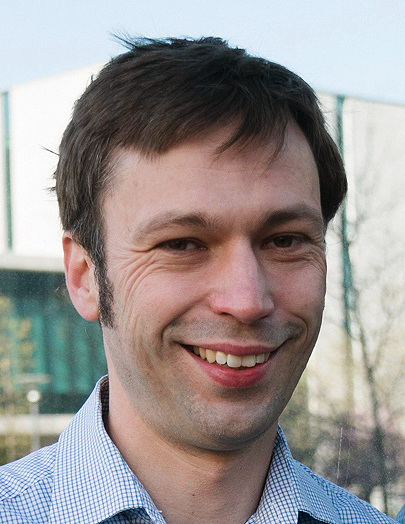 Hannes Bernien合作论文数Pritzker School of Molecular Engineering, The University of Chicago14
 C. E. Bradley合作论文数Delft Univ Technol, QuTech, POB 5046, NL-2600 GA Delft, Netherlands13
 Norbert Kalb合作论文数QuTech, Delft Univ Technol12
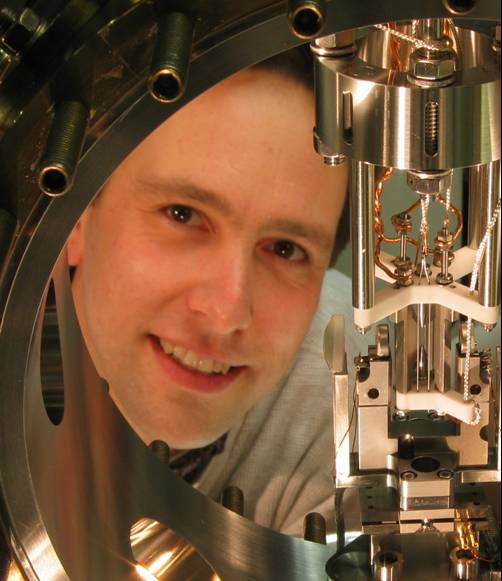 Christoph Becher合作论文数Department of Physics, Faculty of Natural Sciences and Technology, Saarland University11
 M. H. Abobeih合作论文数Delft Univ Technol, QuTech, NL-2600 GA Delft, Netherlands9
 Tim Schröder合作论文数Department of Physics, Faculty of Mathematics and Natural Sciences, Humboldt-Universität Zu Berlin9Jan Meijer合作论文数Institute for Experimental Physics II, University of Leipzig9
 Dirk Englund合作论文数Department of Electrical Engineering and Computer Science, Schwarzman College of Computing, Massachusetts Institute of Technology;LightMatter Computing Inc;Dust Identity Inc9
 Joe Randall合作论文数8H. P. Bartling合作论文数Delft Univ Technol, QuTech, Delft, Netherlands8M. J. Degen合作论文数Delft Univ Technol, QuTech, POB 5046, NL-2600 GA Delft, Netherlands8
 Edward H. Chen合作论文数8
 Luozhou Li合作论文数8
 Benjamin Pingault合作论文数Argonne National Laboratory;University of Chicago8
 Marko Lončar合作论文数Laboratory for Nanoscale Optics, John A. Paulson School of Engineering and Applied Sciences, Harvard University8Junichi Isoya (磯谷順一)合作论文数Faculty of Library and Information Science, University of Tsukuba;Faculty of Pure and Applied Sciences, University of Tsukuba;Graduate School of Library, Information and Media Studies, University of Tsukuba8Lucio Robledo合作论文数Institute of Quantum Electronics8
 Jörg Wrachtrup合作论文数3. Physikalisches Institut, University of Stuttgart8Boris Naydenov合作论文数Inst Quantum Opt, Univ Ulm8
 McGuinness Liam P合作论文数Inst Quantum Opt, Univ Ulm7
 Andreas Reiserer合作论文数School of Natural Sciences, Technical University of Munich7Nicola Palmer合作论文数6
 Shova D. Subedi合作论文数Dept Phys, Univ Alabama Birmingham6S. J. H. Loenen合作论文数Delft Univ Technol, QuTech, Delft, Netherlands6
 Zihuai Zhang合作论文数Department of Electrical and Computer Engineering, Princeton University6
 Jeremy J Baumberg合作论文数The Cavendish Laboratory, Department of Physics, University of Cambridge;Jesus College, University of Cambridge6
 Helmut Fedder合作论文数6
 Mete Atature合作论文数The Cavendish Laboratory, Department of Physics, University of Cambridge;St John’s College, University of Cambridge6
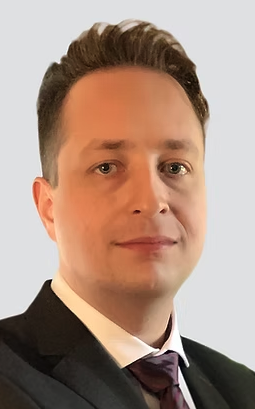 Jonas Nils Becker合作论文数Department of Physics and Astronomy, Michigan State University;The Quantum Optical Devices Laboratory, Michigan State University6
 Matt Trusheim合作论文数Department of Electrical Engineering and Computer Science, Massachusetts Institute of Technology;U.S. Army DEVCOM Army Research Laboratory6
 Sebastien Pezzagna合作论文数Felix-Bloch-Institut für Festkörperphysik, Faculty of Physics and Earth System Sciences, Universität Leipzig6R. N. Schouten合作论文数Kavli Institute of Nanoscience;Delft University of Technology;Kavli Institute of Nanoscience, Delft University of Technology6
 Sergey Mirov合作论文数Department of Physics, College of Arts and Sciences, University of Alabama at Birmingham6
 Stephen A. Lyon合作论文数Department of Electrical and Computer Engineering, Princeton University;Princeton Materials Institute, Princeton University6Vladimir V. Fedorov合作论文数5B. Hensen合作论文数5Raymond F. L. Vermeulen合作论文数5Brendon Rose合作论文数Corresponding author at: Princeton University, B418 Equad Olden St., Princeton, NJ 08540, United States.5
 Ding Huang合作论文数Institute of Materials Research and Engineering (IMRE), Agency for Science, Technology and Research (A*STAR), 2 Fusionopolis Way, Singapore 138634, Singapore.5




