Multiple sclerosis (MS) is a progressive inflammatory demyelinating disease of the CNS. Increasing evidence suggests that vulnerable neurons in MS exhibit fatal metabolic exhaustion over time, a phenomenon hypothesized to be caused by chronic hyperexcitability. Axonal Kv7 (outward-rectifying) and oligodendroglial Kir4.1 (inward-rectifying) potassium channels have important roles in regulating neuronal excitability at and around the nodes of Ranvier. Here, we studied the spatial and functional relationship between neuronal Kv7 and oligodendroglial Kir4.1 channels and assessed the transcriptional and functional signatures of cortical and retinal projection neurons under physiological and inflammatory demyelinating conditions. We found that both channels became dysregulated in MS and experimental autoimmune encephalomyelitis (EAE), with Kir4.1 channels being chronically downregulated and Kv7 channel subunits being transiently upregulated during inflammatory demyelination. Further, we observed that pharmacological Kv7 channel opening with retigabine reduced neuronal hyperexcitability in human and EAE neurons, improved clinical EAE signs, and rescued neuronal pathology in oligodendrocyte–Kir4.1–deficient (OL-Kir4.1–deficient) mice. In summary, our findings indicate that neuron-OL compensatory interactions promoted resilience through Kv7 and Kir4.1 channels and identify pharmacological activation of nodal Kv7 channels as a neuroprotective strategy against inflammatory demyelination.
Background Copy number variations, and particularly duplications of genomic regions, have been strongly associated with various neurodegenerative conditions including autism spectrum disorder (ASD). These genetic variations have been found to have a significant impact on brain development and function, which can lead to the emergence of neurological and behavioral symptoms. Developing strategies to target these genomic duplications has been challenging, as the presence of endogenous copies of the duplicate genes often complicates the editing strategies. Results Using the ASD and anxiety mouse model Flailer, which contains a partial genomic duplication working as a dominant negative for MyoVa, we demonstrate the use of DN-CRISPRs to remove a 700 bp genomic region in vitro and in vivo. Importantly, DN-CRISPRs have not been used to remove genomic regions using sgRNA with an offset greater than 300 bp. We found that editing the flailer gene in primary cortical neurons reverts synaptic transport and transmission defects. Moreover, long-term depression (LTD), disrupted in Flailer animals, is recovered after gene editing. Delivery of DN-CRISPRs in vivo shows that local delivery to the ventral hippocampus can rescue some of the mutant behaviors, while intracerebroventricular delivery, completely recovers the Flailer animal phenotype associated to anxiety and ASD. Conclusions Our results demonstrate the potential of DN-CRISPR to efficiently remove larger genomic duplications, working as a new gene therapy approach for treating neurodegenerative diseases.
Hippocampal pyramidal cells encode an animal’s location by single action potentials and complex spike bursts. These elementary signals are believed to play distinct roles in memory consolidation. The timing of single spikes and bursts is determined by intrinsic excitability and theta oscillations (5–10 Hz). Yet contributions of these dynamics to place fields remain elusive due to the lack of methods for specific modification of burst discharge. In mice lacking Kcnq3-containing M-type K + channels, we find that pyramidal cell bursts are less coordinated by the theta rhythm than in controls during spatial navigation, but not alert immobility. Less modulated bursts are followed by an intact post-burst pause of single spike firing, resulting in a temporal discoordination of network oscillatory and intrinsic excitability. Place fields of single spikes in one- and two-dimensional environments are smaller in the mutant. Optogenetic manipulations of upstream signals reveal that neither medial septal GABA-ergic nor cholinergic inputs alone, but rather their joint activity, is required for entrainment of bursts. Our results suggest that altered representations by bursts and single spikes may contribute to deficits underlying cognitive disabilities associated with KCNQ3 -mutations in humans.
Understanding neurological diseases requires tractable genetic systems, and engineered three-dimensional (3D) neural tissues are an attractive choice. Yet how the cellular transcriptomic profiles in these tissues are affected by the encapsulating materials and are related to the human brain transcriptome is not well understood. Here, we report the characterization of the effects of different culturing conditions on the transcriptomic profiles of induced neuronal cells and developed a method for the rapid generation of 3D co-cultures of neuronal and astrocytic cells from the same pool of human embryonic stem cells. By comparing the gene-expression profiles of neuronal cells in culture conditions relevant to the developing human brain, we found that modifying the degree of crosslinking of composite hydrogels can tune expression patterns so that they correlate with those of specific brain regions and developmental stages. Moreover, single-cell-sequencing results showed that our engineered tissues recapitulate transcriptional patterns of cell types in the human brain. Analyses of culturing conditions will inform the development of 3D neural tissues for use as tractable models of brain diseases.
Transcriptomes of individual neurons provide rich information about cell types and dynamic states. However, it is difficult to capture rare dynamic processes, such as adult neurogenesis, because isolation from dense adult tissue is challenging, and markers for each phase are limited. Here, we developed Div-Seq, which combines Nuc-Seq, a scalable single nucleus RNA-Seq method, with EdU-mediated labeling of proliferating cells. We first show that Nuc-Seq can sensitively identify closely related cell types within the adult hippocampus. We apply Div-Seq to track transcriptional dynamics of newborn neurons in an adult neurogenic region in the hippocampus. Finally, we find rare adult newborn GABAergic neurons in the spinal cord, a non-canonical neurogenic region. Taken together, Nuc-Seq and Div-Seq open the way for unbiased analysis of any complex tissue.
Nat. Biotechnol. 35, 31–34 (2017); published online 5 December 2016; corrected after print 12 January 2017 In the version of this article initially published, in Fig. 2j, the percentage for the targets Mecp2, Nlgn3, and Drd1 should be 15.2%, not 16.9%; the same error appeared in the main text, next to last paragraph, “Our results show that ∼17%.
Microbial CRISPR-Cas defense systems have been adapted as a platform for genome editing applications built around the RNA-guided effector nucleases, such as Cas9. We recently reported the characterization of Cpf1, the effector nuclease of a novel type V-A CRISPR system, and demonstrated that it can be adapted for genome editing in mammalian cells (Zetsche et al., 2015). Unlike Cas9, which utilizes a trans-activating crRNA (tracrRNA) as well as the endogenous RNaseIII for maturation of its dual crRNA:tracrRNA guides (Deltcheva et al., 2011), guide processing of the Cpf1 system proceeds in the absence of tracrRNA or other Cas (CRISPR associated) genes (Zetsche et al., 2015) (Figure 1a), suggesting that Cpf1 is sufficient for pre-crRNA maturation. This has important implications for genome editing, as it would provide a simple route to multiplex targeting. Here, we show for two Cpf1 orthologs that no other factors are required for array processing and demonstrate multiplex gene editing in mammalian cells as well as in the mouse brain by using a designed single CRISPR array.
Genome-editing tools, and in particular those based on CRISPR-Cas (clustered regularly interspaced short palindromic repeat (CRISPR)-CRISPR-associated protein) systems, are accelerating the pace of biological research and enabling targeted genetic interrogation in almost any organism and cell type. These tools have opened the door to the development of new model systems for studying the complexity of the nervous system, including animal models and stem cell-derived in vitro models. Precise and efficient gene editing using CRISPR-Cas systems has the potential to advance both basic and translational neuroscience research.
KCNQ2 (Kv7.2) and KCNQ3 (Kv7.3) K+ channels dampen neuronal excitability and their functional impairment may lead to epilepsy. Less is known about KCNQ5 (Kv7.5), which also displays wide expression in the brain. Here we show an unexpected role of KCNQ5 in dampening synaptic inhibition and shaping network synchronization in the hippocampus. KCNQ5 localizes to the postsynaptic site of inhibitory synapses on pyramidal cells and in interneurons. Kcnq5(dn/dn) mice lacking functional KCNQ5 channels display increased excitability of different classes of interneurons, enhanced phasic and tonic inhibition, and decreased electrical shunting of inhibitory postsynaptic currents. In vivo, loss of KCNQ5 function leads to reduced fast (gamma and ripple) hippocampal oscillations, altered gamma-rhythmic discharge of pyramidal cells and impaired spatial representations. Our work demonstrates that KCNQ5 controls excitability and function of hippocampal networks through modulation of synaptic inhibition.
Wall stretch is a major stimulus for the myogenic response of small arteries to pressure. Recent findings suggest that G protein‐coupled receptors can elicit a stretch response. Our aim was to determine if angiotensin II type 1 receptors (AT1R) in vascular smooth muscle cells (VSMC) exert mechanosensitivity and identify the downstream ion channel mediators of myogenic vasoconstriction. We used mice deficient in AT1R signaling molecules and putative ion channel targets, namely AT1R, angiotensinogen, TRPC6 channels or subtypes of the KCNQ (Kv7) gene family (KCNQ3, 4 or 5). We identified a mechano‐sensing mechanism in mesenteric arteries and the renal circulation that relies on coupling of the AT1R subtype a (AT1aR) to a Gq/11‐protein as a critical event to accomplish the myogenic response. The mechano‐activation occurs after block of AT1R, and in the absence of angiotensinogen or TRPC6. Activation of AT1aR suppresses XE991‐sensitive Kv channel currents in VSMCs, blocking these channels enhances mesenteric and renal myogenic tone. Although KCNQ3, 4 and 5 are expressed in VSMCs, XE991‐sensitive K+ current and myogenic contractions persist in arteries deficient in these channels. Our results provide evidence that myogenic responses of mouse mesenteric and renal arteries rely on ligand‐independent mechano‐activation of AT1aR. This signal relies on an ion channel distinct from TRPC6 or KCNQ3, 4 or 5.Grant Funding Source: Supported by Deutsche Forschungsgemeinschaft (DFG)
CRISPR-Cas9 can be used to edit both single and multiple genes in postmitotic neurons in adult mice enabling rapid assessment of gene functions in the brain. Probing gene function in the mammalian brain can be greatly assisted with methods to manipulate the genome of neurons in vivo. The clustered, regularly interspaced, short palindromic repeats (CRISPR)-associated endonuclease (Cas)9 from Streptococcus pyogenes (SpCas9)1 can be used to edit single or multiple genes in replicating eukaryotic cells, resulting in frame-shifting insertion/deletion (indel) mutations and subsequent protein depletion. Here, we delivered SpCas9 and guide RNAs using adeno-associated viral (AAV) vectors to target single (Mecp2) as well as multiple genes (Dnmt1, Dnmt3a and Dnmt3b) in the adult mouse brain in vivo. We characterized the effects of genome modifications in postmitotic neurons using biochemical, genetic, electrophysiological and behavioral readouts. Our results demonstrate that AAV-mediated SpCas9 genome editing can enable reverse genetic studies of gene function in the brain.
CRISPR-Cas9 is a versatile genome editing technology for studying the functions of genetic elements. To broadly enable the application of Cas9 in vivo, we established a Cre-dependent Cas9 knockin mouse. We demonstrated in vivo as well as ex vivo genome editing using adeno-associated virus (AAV)-, lentivirus-, or particle-mediated delivery of guide RNA in neurons, immune cells, and endothelial cells. Using these mice, we simultaneously modeled the dynamics of KRAS, p53, and LKB1, the top three significantly mutated genes in lung adenocarcinoma. Delivery of a single AAV vector in the lung generated loss-of-function mutations in p53 and Lkb1, as well as homology-directed repair-mediated KrasG12D mutations, leading to macroscopic tumors of adenocarcinoma pathology. Together, these results suggest that Cas9 mice empower a wide range of biological and disease modeling applications.
Rationale : Vascular wall stretch is the major stimulus for the myogenic response of small arteries to pressure. The molecular mechanisms are elusive, but recent findings suggest that G protein–coupled receptors can elicit a stretch response. Objective : To determine whether angiotensin II type 1 receptors (AT 1 R) in vascular smooth muscle cells exert mechanosensitivity and identify the downstream ion channel mediators of myogenic vasoconstriction. Methods and Results : We used mice deficient in AT 1 R signaling molecules and putative ion channel targets, namely AT 1 R, angiotensinogen, transient receptor potential channel 6 (TRPC6) channels, or several subtypes of the voltage-gated K + (K v 7) gene family (KCNQ3, 4, or 5). We identified a mechanosensing mechanism in isolated mesenteric arteries and in the renal circulation that relies on coupling of the AT 1 R subtype a to a G q/11 protein as a critical event to accomplish the myogenic response. Arterial mechanoactivation occurs after pharmacological block of AT 1 R and in the absence of angiotensinogen or TRPC6 channels. Activation of AT 1 R subtype a by osmotically induced membrane stretch suppresses an XE991-sensitive K v channel current in patch-clamped vascular smooth muscle cells, and similar concentrations of XE991 enhance mesenteric and renal myogenic tone. Although XE991-sensitive KCNQ3, 4, and 5 channels are expressed in vascular smooth muscle cells, XE991-sensitive K + current and myogenic contractions persist in arteries deficient in these channels. Conclusions : Our results provide definitive evidence that myogenic responses of mouse mesenteric and renal arteries rely on ligand-independent, mechanoactivation of AT 1 R subtype a. The AT 1 R subtype a signal relies on an ion channel distinct from TRPC6 or KCNQ3, 4, or 5 to enact vascular smooth muscle cell activation and elevated vascular resistance.
 Feng Zhang (张锋)合作论文数McGovern Institute for Brain Research, Massachusetts Institute of Technology;Departments of Brain and Cognitive Sciences, Massachusetts Institute of Technology;Departments of Biological Engineering, Massachusetts Institute of Technology;Broad Institute, Massachusetts Institute of Technology;Howard Hughes Medical Institute13
 Lukasz Swiech合作论文数Laboratory of Molecular and Cellular Neurobiology, International Institute of Molecular and Cell Biology11
 Thomas Jentsch合作论文数Charité - Universitätsmedizin Berlin;Department Physiology & Pathology of Ion Transport, FMP & MDC Berlin;Leibniz Forschungsinstitut für Molekulare Pharmakologie9
 Naomi Habib合作论文数Edmond and Lily Safra Center for Brain Sciences, Hebrew University of Jerusalem Israel6
 Yinqing Li (李寅青)合作论文数School of Pharmaceutical Sciences, Tsinghua University5
 John J. Trombetta合作论文数Broad Institute of Harvard and Massachusetts Institute of Techonology5
 Sourav Choudhury合作论文数Sanofi US, Framingham, MA USA4Cynthia C. Hession合作论文数3Jeroen Kneppers合作论文数Oncode Institute, Netherlands Cancer Institute3Nerges Winblad合作论文数3
 Prarthana Mohanraju合作论文数Wageningen Univ, Lab Microbiol, Stippeneng 4, NL-6708 WE Wageningen, Netherlands3Bernd Zetsche合作论文数Broad Inst MIT & Harvard, Cambridge, MA 02142 USA3
 Ellen M DeGennaro合作论文数Department of Neurology, Harvard Medical School3Wen Y Wu合作论文数3
 David Scott合作论文数Centre for Lymphoid Cancer, British Columbia Cancer3
 Jonathan Gootenberg合作论文数Department of Stem Cell and Regenerative Biology, Harvard Medical School Blavatnik Institute;Beth Israel Deaconess Medical Center;Department of Genetics, Brigham and Women’s Hospital3
 Randall Platt合作论文数Laboratory for Biological Engineering, Department of Biosystems Science and Engineering, Eidgenössische Technische Hochschule Zürich;University of Basel;Botnar Research Centre for Child Health;NCCR Molecular Systems Engineering3
 Omar Abudayyeh合作论文数Harvard Medical School, Harvard University;Brigham and Women's Hospital3
 Konstantin V. Severinov合作论文数Department of Molecular Biology and Biochemistry, Rutgers, The State University of New Jersey;Waksman Institute of Microbiology, Rutgers, The State University of New Jersey;Center of Life Sciences, Skolkovo Institute of Science and Technology3
 John van der Oost合作论文数Laboratory of Microbiology, Wageningen University;Wageningen University & Research3
 Aviv Regev合作论文数Howard Hughes Medical Institute;Statistics + Data Science Center, Schwarzman College of Computing, Massachusetts Institute of Technology;Broad Institute, Massachusetts Institute of Technology;The Center for Microbiome Informatics & Therapeutics, Massachusetts Institute of Technology3
 Iana Fedorova合作论文数Skolkovo Institute of Science and Technology, Center of life sciences, Skolkovo, Russia3fei ran合作论文数2Celia Lerma-Martin合作论文数2Julia Dyckow合作论文数2Mario Kassmann合作论文数ECRC, Berlin, Germany2
 Jana Sonner合作论文数2
 Elisa D'Este合作论文数Max Planck Inst Med Res, Opt Microscopy Facil, Heidelberg, Germany2Manideep Chavali合作论文数Eli & Edyth Broad Ctr Stem Cell Res & Regenerat M, Univ Calif San Francisco2Johanna Schleifenbaum合作论文数2
 Kathryn Fitzgerald合作论文数Epidemiology, Bloomberg School of Public Health, Johns Hopkins University2
 Tatiana Korotkova合作论文数2Avraham-Davidi Inbal合作论文数Department of Biological Regulation, Weizmann Institute of Science2
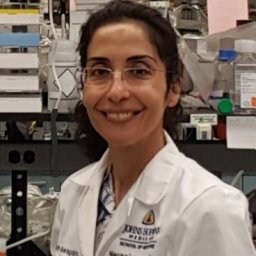 Gharagozloo Marjan合作论文数Dept Immunol, Isfahan Univ Med Sci2Gollasch Maik合作论文数2
 Abhishek Banerjee合作论文数Picower Institute for Learning and Memory, Massachusetts Institute of Technology2
 Srivastava Rajneesh合作论文数2Tzingounis Anastasios V合作论文数2
 Christian Cordano合作论文数2Szijártó István András合作论文数2
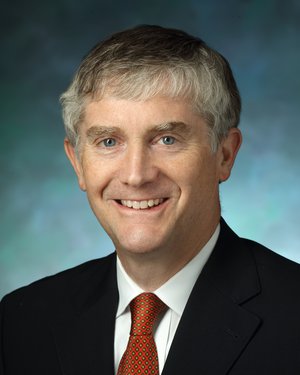 Peter Calabresi合作论文数Department of Neurological Sciences, Larner College of Medicine, University of Vermont2
 Andres Cruz-Herranz合作论文数La Paz University Hospital, Autonomous University of Madrid2
 Ari Green合作论文数Division of Neuroimmunology and Glial Biology, Department of Neurology, Weill Institute for Neuroscience, University of California, San Francisco;School of Medicine, University of California, San Francisco2Anistan Yoland-Marie合作论文数2
 Le Cong (丛乐)合作论文数Department of Pathology, School of Medicine, Stanford University2
 Schirmer Lucas合作论文数Department of Neuropathology, University Medical Center Göttingen2
 Bernhard Hemmer合作论文数Neurologischen Klinik, Technischen Universität München;Faculty of Medicine, Technische Universität München2
 David Rowitch合作论文数Wellcome - MRC Cambridge Stem Cell Institute, University of Cambridge;Department of Paediatrics, School of Clinical Medicine, University of Cambridge;School of Medicine, University of California, San Francisco2C. Stadelmann合作论文数2




