Volcanic plumes are common and far-reaching manifestations of volcanic activity during and between eruptions. Observations of the rate of emission and composition of volcanic plumes are essential to recognize and, in some cases, predict the state of volcanic activity. Measurements of the size and location of the plumes are important to assess the impact of the emission from sporadic or localized events to persistent or widespread processes of climatic and environmental importance. These observations provide information on volatile budgets on Earth, chemical evolution of magmas, and atmospheric circulation and dynamics. Space-based observations during the last decades have given us a global view of Earth's volcanic emission, particularly of sulfur dioxide (SO2). Although none of the satellite missions were intended to be used for measurement of volcanic gas emission, specially adapted algorithms have produced time-averaged global emission budgets. These have confirmed that tropospheric plumes, produced from persistent degassing of weak sources, dominate the total emission of volcanic SO2. Although space-based observations have provided this global insight into some aspects of Earth's volcanism, it still has important limitations. The magnitude and short-term variability of lower-atmosphere emissions, historically less accessible from space, remain largely uncertain. Operational monitoring of volcanic plumes, at scales relevant for adequate surveillance, has been facilitated through the use of ground-based scanning differential optical absorption spectrometer (ScanDOAS) instruments since the beginning of this century, largely due to the coordinated effort of the Network for Observation of Volcanic and Atmospheric Change (NOVAC). In this study, we present a compilation of results of homogenized post-analysis of measurements of SO2 flux and plume parameters obtained during the period March 2005 to January 2017 of 32 volcanoes in NOVAC. This inventory opens a window into the short-term emission patterns of a diverse set of volcanoes in terms of magma composition, geographical location, magnitude of emission, and style of eruptive activity. We find that passive volcanic degassing is by no means a stationary process in time and that large sub-daily variability is observed in the flux of volcanic gases, which has implications for emission budgets produced using short-term, sporadic observations. The use of a standard evaluation method allows for intercomparison between different volcanoes and between ground- and space-based measurements of the same volcanoes. The emission of several weakly degassing volcanoes, undetected by satellites, is presented for the first time. We also compare our results with those reported in the literature, providing ranges of variability in emission not accessible in the past. The open-access data repository introduced in this article will enable further exploitation of this unique dataset, with a focus on volcanological research, risk assessment, satellite-sensor validation, and improved quantification of the prevalent tropospheric component of global volcanic emission. Datasets for each volcano are made available at https://novac.chalmers.se (last access: 1 October 2020) under the CC-BY 4 license or through the DOI (digital object identifier) links provided in Table 1.
The largest error in determining volcanic gas fluxes using ground based optical remote sensing instruments is typically the determination of the plume speed, and in the case of fixed scanning instruments also the plume height. We here present a newly developed technique capable of measuring plume height, plume speed and gas flux using one single instrument by simultaneously collecting scattered sunlight in two directions. The angle between the two measurement directions is fixed, removing the need for time consuming in-field calibrations. The plume height and gas flux is measured by traversing the plume and the plume speed is measured by performing a stationary measurement underneath the plume. The instrument was tested in a field campaign in May 2005 at Mt. Etna, Italy, where the measured results are compared to wind fields derived from a meso-scale meteorological model (MM5). The test and comparison show that the instrument is functioning and capable of estimating wind speed at the plume height.
This paper presents a method to reconstruct the gas distribution inside a vertical cross section of a gas plume by combining data from two or more scanning DOAS instruments using a tomographic algorithm. The method can be applied to gas plumes from any single, elevated point source, such as a volcano or industrial chimney. Such two-dimensional concentration distributions may prove to be useful for example in plume chemistry, dispersion and environmental impact studies. Here we show the case with one scanning DOAS instrument located on each side of the plume, which is the easiest and most economic setup as well as the most useful in routine monitoring of e.g. volcanic gas emissions. The paper investigates the conditions under which tomographic reconstructions can be performed and discusses limitations of this setup. The proposed method has been studied theoretically by numerical simulations and has been experimentally tested during two field campaigns, with measurements of SO2 emissions from a volcano and a power plant. The simulations show that, under good measurement conditions, the algorithm presented performs well, which is further confirmed by the experimental results.
Universities have increasingly been facing a focus on competition for research resources, not the least for external funding. This paper studies structural characteristics of the Swedish university sector and these characteristics relation to the propensity of universities to attract external research funding. The findings show a clear polarization of the sector into ‘Larger research and teaching intensive’ universities, accessing the lion’s share of external research funding, and ‘Smaller education dependent’ higher education institutions. Following from this, the paper discusses specialization and division of labor among universities, in relation to the ability to gain critical mass and excellence in research.
Sensor and actuator networks (SAN) will play a key role in delivering information about and enable interactions with the physical world for next generations of highly autonomous and adaptive Internet services and applications. Current SAN deployments are still low in numbers and represent heterogeneous, vertically closed solutions. True world awareness can only be achieved if existing and future SANs can be integrated into a scalable real world information and interaction fabric, connecting the current Internet with the physical world. In this paper we present architectural challenges, goals and concepts oil the way towards such a real world enabled Internet.
How do board composition and board ties influence the performance of newly founded firms? An immense body of literature on boards of directors is largely inconclusive to explain the impact on performance and has predominantly focused on large and mature firms. In this paper, we argue that boards of directors provide means of newly founded firms to get access to expertise and gain legitimacy. We develop a set of hypotheses related to size of the board, turnover and interlock ties with similar and dissimilar organizations and test this with a comprehensive longitudinal dataset from Sweden. The results suggest that direct board ties to similar organizations have a positive effect whereas board ties to dissimilar organization have a negative effect on performance. Surprisingly, we find no consistent results of the effects of board structure. We discuss the implications for theory and practice.
How do board composition and board ties influence the performance of startups? An immense body of literature on boards of directors with a predominant focus on large and mature firms remains largely inconclusive to the impact of boards on performance. In this paper, we argue that boards of directors provide means of startups to access expertise and gain legitimacy. We develop a set of hypotheses related to board size, turnover and interlock ties with similar and dissimilar organizations and test this with a comprehensive longitudinal dataset from Sweden. The results suggest that direct board ties to similar organizations have a positive effect whereas board ties to dissimilar organization have a negative effect on performance. Surprisingly, we find no consistent results of the effects of board structure. We discuss the implications for theory and practice.
This paper presents a novel method for quantification of the total emission of gases from area sources using the mobile mini-DOAS (Differential Optical Absorption Spectroscopy) instrument, a ground based optical remote sensing technique. The presented method has been applied to measure the emission of SO2 and NO2 from the city of Beijing, P.R. China, on a time scale of approximately 2h. The measurements have been performed during two field campaigns, in April and in August 2005. The estimated emission of NO2 is roughly the same during the two field campaigns with an average emission of 189tonsd−1 during April and 174tonsd−1 during August. The estimated emission of SO2 varies greatly between the two periods, with an average emission of 293tonsd−1 during April and 52tonsd−1 during August.
This article investigates the relationship between universities and academic spin-offs, with special emphasis on the antecedent conditions of, and the nature of the linkages that the spin-offs form, as well as the means for sustaining them. The present research uses an instrumental case study approach, and is also an instance of a collective case study as four companies of various size and activities have been studied together. The preliminary results indicate that the network relations are characterized by a small number of strong ties to universities, with a high degree of trust and informality. Although fruitful for the transfer of complex knowledge, the strength of the ties also make them difficult to substitute, which may lead to problems as the spin-offs are highly dependent on continued basic research support. This may in turn lead to implications for policy at university, as well as higher levels.
Wireless sensor networking research has been mainly focused on internal wireless sensor network issues such as MAC and routing protocols, energy saving, HW design and to some extent on the architecture of gateways that connect a wireless sensor network with the rest of the world. Wireless sensor networks have been seen as dedicated to one task by one owner. On the other hand, our research is focused on integration of wireless sensor networks into existing networks, primarily mobile ones, and provision of sensor based and/or enhanced services to remote users. Therefore, we have been working on designing an architecture that utilizes the existing infrastructure to interconnect independent wireless sensor networks and to provide data aggregation and actuator control services. In the proposed architecture, sensor networks (small or large, deployed for any purpose and by anyone) represented by their gateways are treated as leaf nodes hanging off a mobile or fixed network that use these networks to interact with remote and local users. Each gateway exposes the capabilities of its sensors, actuators and the sensor network as a whole. This information is used by sensor services middleware to query/command sensor ecosystems on behalf of applications and remote users interested in sensor measurements or actuator control. The details of the interaction between the gateways and its sensors/actuators are of no interest to the remote users. Further, we consider the whole wireless sensor networking landscape as an open market where the underlying mobile and fixed networks facilitate the interaction between the sensor networks and the consumers of the information they produce. Each sensor network is first of all a sensor information provider that offers specific sensor information defined by the type of available sensors and their spatial and temporal conditions to the interested users. Secondly, each sensor network provides actuation services that may potentially affect the inform- ation gathered by its sensors. Obviously, in such an environment, where many mobile users are acting as tiny information providers, service discovery, service composition, service provisioning and service authorization are very challenging problems. These problems are addressed in the proposed architecture by introducing a middle layer that aggregates information from all small information providers and provides higher level services to the end users. This layer provides the means to quickly add or remove sensors, actuators, sensor networks, sensor network providers, to modify and enhance the existing or add completely new services utilizing the underlying infrastructure. It could be thought of as a "plug-and-play" functionality for: (a) interconnecting different existing sensor networks; (b) adding new sensor networks which facilitate the expansion of the entire system; and (c) expanding the capability of individual sensor networks.
We describe the design and implementation of a generic robotic solution to automate the loading of MALDI sample plates into a mass spectrometer. The soft- and hardware aspects are described together with the various safety issues that need to be addressed. The automation increases throughput by a factor of between 5- and 80-fold.
Titanium is biocompatible with bone tissue, and during the healing process bone makes intimate contact with the implant surface. Although much is known about the long-term healing of implants, less is known about the callus formation at implants. In this study, the histology of bone healing was studied during the period between 4 and 14 days. Incisions were made in rat tibia. Some incisions were simply left to heal, while in others titanium discs were implanted. Smooth implants as well as implants with different porosities were used. After 4, 7, and 14 days of healing, the sites of bone incisions were retrieved, decalcified, sectioned, and stained. The aim was to compare normal fracture healing with implant healing and to see whether implant properties influenced the short-term healing process. Similarities between fracture healing and implant healing were evident. In both cases, inflammation, soft and hard callus formation, and remodeling had taken place during the period investigated. Between 7 and 14 days substantial bone resorption occurred around the implants. While after 14 days the marrow was almost completely reconstituted during normal wound healing, at the implants a thin layer of bone remained in close contact with the surface. Results from bone-implant contact measurements indicate that the surface properties of the implants do not have a significant influence on the early bone formation, since there were no significant differences between the smooth surface and any of the porous surfaces.
In this paper we present our view of sensor and actuator networks, how we position them relative to the network of the future and what support such networks would both bring to and require from the existing and future core network. We put a special emphasis on the support infrastructure, and describe our envisioned architecture for a future ubiquitous sensor and actuator framework
Research on corporate spin-offs has suggested that spin-off firms have advantages over other new entrants in air industry because of their origin. These advantages have been argued to lie with the founders' prior industry experience, and with the opportunity to form sourcing agreements with the parent firms. This paper inquires into an additional aspect of prior experience, founders' informal relations. The use and benefits of such informal relations to source resources necessary for growth were analysed in three spin-offs in the Swedish telecommunications industry. The findings show that the spin-offs derived a variety of benefits from the use of founders' informal relations, in particular in staffing the spin-offs, but also to acquire resources when other means of sourcing were unavailable. The results indicate that future research on corporate spin-offs as well as corporate spin-outs may need to account better for this variable in order to explain spin-off growth, and hence success.
 Bo Galle合作论文数6
 Claudia Rivera合作论文数4
 Erik Bohlin合作论文数Chalmers University of Technology;Ivey Business School, Western University4
 Sven Lindmark合作论文数Chalmers University of Technology4Erik Andersson合作论文数3
 Srdjan Krco合作论文数Ericsson;c3
 Maureen Mckelvey合作论文数Department of Economy and Society, School of Business, Economics and Law, University of Gothenburg3
 Daniel Ljungberg合作论文数Sch Business Econ & Law, Univ Gothenburg2
 Deliang Chen (陈德亮)合作论文数Department of Earth System Science, Tsinghua University2
 Hugo Delgado Granados合作论文数Institute of Geophysics, Universidad Nacional Autonoma de Mexico2Tomas Hellström合作论文数IMIT and Innovation Engineering and Management;Chalmers University of Technology;IMIT and Innovation Engineering and Management, Chalmers University of Technology2Santiago Arellano合作论文数2
 Vlasios Tsiatsis合作论文数Ericsson Research2Ivica Cubic合作论文数2Nicole Bobrowski合作论文数2
 Linus Dahlander合作论文数Department of Industrial;School of Technology Management and Economics;Chalmers University of Technology;School of Technology Management and Economics, Chalmers University of Technology2
 Martin W. Wallin合作论文数ETH2
 Merle Jacob合作论文数Research Policy Institute, Lund University2Andrea Di Muro合作论文数1Patrik Norman合作论文数1Mathieu M. Yalire合作论文数1Zoraida Chacón合作论文数1Manne Kihlman合作论文数1Francisco Montalvo合作论文数1Nia Haerani合作论文数1
 Jose Armando Saballos合作论文数1G. Avard合作论文数1Deborah Fernandez合作论文数1Claudia Bucarey合作论文数1Christian Joseph Clarito合作论文数1Viviana Burbano合作论文数1
 F. Vita合作论文数1
 Fredy ERLINGTTON Apaza Choquehuayta合作论文数1Freddy Vasconez合作论文数1yan zhang合作论文数1
 Charlotte Barrington合作论文数Earth Observ Singapore EOS, Nanyang Technol Univ1Philippe Kowalski合作论文数1mathiew yalire合作论文数1
 Pablo Masias合作论文数Observatorio Vulcanológico del INGEMMET (OVI), Barrio Magisterial 2 B-16 Yanahuara, Arequipa, Peru1
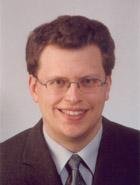 Martin Bauer合作论文数NEC Labs Europe, Heidelberg, Germany1Tong Yu (虞统)合作论文数1
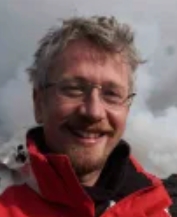 Mike Burton合作论文数Department of Earth and Environmental Sciences, School of Natural Sciences, Faculty of Science and Engineering, The University of Manchester1JinXiang Li (李金香)合作论文数1
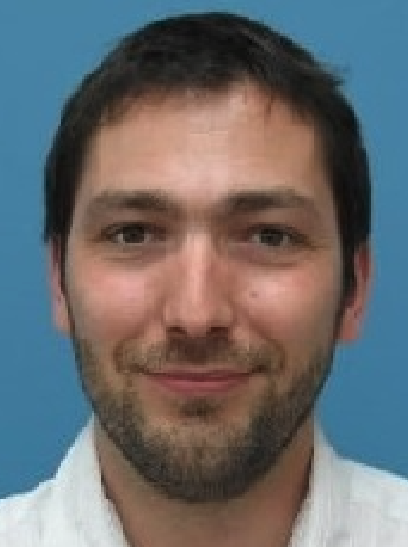 Benoit Taisne合作论文数Asian School of the Environment, Nanyang Technological University;Earth Observatory of Singapore, Nanyang Technological University1
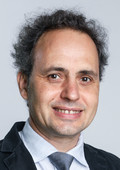 Fidel Costa合作论文数Université Denis Diderot;Institut de Physique du Globe de Paris;Universite de Paris1
 Vladimir Conde合作论文数chalmers university of technology1
 Tomas Andersson合作论文数Inst Environm Med, Karolinska Inst1
 Katrin Richter合作论文数1Håkan Nygren合作论文数Institute of Biomedicine, University of Gothenburg1




