Heteromeric amino acid transporters (HATs) comprise a group of membrane proteins that belong to the solute carrier (SLC) superfamily. They are formed by two different protein components: a light chain subunit from an SLC7 family member and a heavy chain subunit from the SLC3 family. The light chain constitutes the transport subunit whereas the heavy chain mediates trafficking to the plasma membrane and maturation of the functional complex. Mutation, malfunction, and dysregulation of HATs are associated with a wide range of pathologies or represent the direct cause of inherited and acquired disorders. Here we report the cryogenic electron microscopy structure of the neutral and basic amino acid transport complex (b[0,+]AT1-rBAT) which reveals a heterotetrameric protein assembly composed of two heavy and light chain subunits, respectively. The previously uncharacterized interaction between two HAT units is mediated via dimerization of the heavy chain subunits and does not include participation of the light chain subunits. The b(0,+)AT1 transporter adopts a LeuT fold and is captured in an inward-facing conformation. We identify an amino-acid-binding pocket that is formed by transmembrane helices 1, 6, and 10 and conserved among SLC7 transporters.
Plant growth and architecture is regulated by the polar distribution of the hormone auxin. Polarity and flexibility of this process is provided by constant cycling of auxin transporter vesicles along actin filaments, coordinated by a positive auxin-actin feedback loop. Both polar auxin transport and vesicle cycling are inhibited by synthetic auxin transport inhibitors, such as 1-N-naphthylphthalamic acid (NPA), counteracting the effect of auxin; however, underlying targets and mechanisms are unclear. Using NMR, we map the NPA binding surface on the Arabidopsis thaliana ABCB chaperone TWISTED DWARF1 (TWD1). We identify ACTIN7 as a relevant, although likely indirect, TWD1 interactor, and show TWD1-dependent regulation of actin filament organization and dynamics and that TWD1 is required for NPA-mediated actin cytoskeleton remodeling. The TWD1-ACTIN7 axis controls plasma membrane presence of efflux transporters, and as a consequence act7 and twd1 share developmental and physiological phenotypes indicative of defects in auxin transport. These can be phenocopied by NPA treatment or by chemical actin (de)stabilization. We provide evidence that TWD1 determines downstream locations of auxin efflux transporters by adjusting actin filament debundling and dynamizing processes and mediating NPA action on the latter. This function appears to be evolutionary conserved since TWD1 expression in budding yeast alters actin polarization and cell polarity and provides NPA sensitivity.
ATG101 is an essential component of the ULK complex responsible for initiating cellular autophagy in mammalian cells; its 3-dimensional structure and molecular function, however, are currently unclear. Here we present the X-ray structure of human ATG101. The protein displays an open HORMA domain fold. Both structural properties and biophysical evidence indicate that ATG101 is locked in this conformation, in contrast to the prototypical HORMA domain protein MAD2. Moreover, we discuss a potential mode of dimerization with ATG13 as a fundamental aspect of ATG101 function.
BACKGROUND:Both disrupted-in-schizophrenia 1 (DISC1) and dysbindin have been identified as schizophrenia candidate genes in independent genetic linkage studies. The proteins have been assigned distinct subcellular locations and functions. We investigated whether both proteins converge into a common pathway specific for schizophrenia or mental diseases.METHODS:DISC1 and dysbindin were expressed as recombinant proteins with or without a fluorescent protein-tag in human or mouse neuroblastoma cells and as recombinant proteins in E. coli. Postmortem brains of patients with mental diseases from the Stanley Research Medical Institute's Consortium Collection were used to demonstrate molecular interactions in biochemically purified protein fractions.RESULTS:First, upon overexpression in neuroblastoma cells, DISC1 formed aggresomes that recruited homologous soluble C-terminal DISC1 fragment or heterologous dysbindin. Domains involved in binding could be mapped to DISC1 (316-597) and dysbindin (82-173), indicating a specific interaction. In addition, recruitment was demonstrated when externally added, purified DISC1 aggresomes penetrated recipient cells after coincubation. Second, a direct interaction between soluble DISC1 protein and dysbindin was demonstrated in a cell free system using E. coli-expressed proteins. Third, co-aggregation of DISC1 and dysbindin was demonstrated in postmortem brains for a subgroup of cases with chronic mental disease but not healthy control subjects.CONCLUSIONS:A direct interaction of soluble and insoluble DISC1 protein with dysbindin protein demonstrates convergence of so far considered independent mental disease genes by direct molecular interaction. Our findings highlight protein aggregation and recruitment as a biological mechanism in mental disease.
Genetic studies have established a role of disrupted-in-schizophrenia-1 (DISC1) in chronic mental diseases (CMD). Limited experimental data are available on the domain structure of the DISC1 protein although multiple interaction partners are known including a self-association domain within the middle part of DISC1 (residues 403-504). The DISC1 C-terminal domain is deleted in the original Scottish pedigree where DISC1 harbors two coiled-coil domains and disease-associated polymorphisms at 607 and 704, as well as the important nuclear distribution element-like 1 (NDEL1) binding site at residues 802-839. Here, we performed mutagenesis studies of the C-terminal domain of the DISC1 protein (residues 640-854) and analyzed the expressed constructs by biochemical and biophysical methods. We identified novel DISC1 self-association motifs and the necessity of their concerted action for orderly assembly: the region 765-854 comprising a coiled-coil domain is a dimerization domain and the region 668-747 an oligomerization domain; dimerization was found to be a prerequisite for orderly assembly of oligomers. Consistent with this, disease-associated polymorphism C704 displayed a slightly higher oligomerization propensity. The heterogeneity of DISC1 multimers in vitro was confirmed with a monoclonal antibody binding exclusively to HMW multimers. We also identified C-terminal DISC1 fragments in human brains, suggesting that C-terminal fragments could carry out DISC1-dependent functions. When the DISC1 C-terminal domain was transiently expressed in cells, it assembled into a range of soluble and insoluble multimers with distinct fractions selectively binding NDEL1, indicating functionality. Our results suggest that assembly of the C-terminal domain is controlled by distinct domains including the disease-associated polymorphism 704 and is functional in vivo.
 Carsten Korth合作论文数6
 Verian Bader合作论文数Department of Neuropathology, Heinrich Heine University Medical School6Svenja V. Trossbach合作论文数6Leliveld S Rutger合作论文数3Pum Martin E合作论文数2
 Joseph P. Huston合作论文数Psychology/Center for Behavioral Neuroscience Heinrich-Heine University2
 Dieter Willbold合作论文数Heinrich-Heine-Universität Düsseldorf2Oliver H. Weiergräber合作论文数2Noelia Inés Burgardt合作论文数1Miriam Linnert合作论文数1Christina Decker合作论文数1Ingrid Prikulis合作论文数1
 Pei ge合作论文数1Tamara N Grund合作论文数Max Planck Inst Biophys, Dept Mol Membrane Biol, D-60438 Frankfurt, Germany1
 Philipp Ottis合作论文数1Pengchao Hao合作论文数Univ Fribourg, Dept Biol, CH-1700 Fribourg, Switzerland1
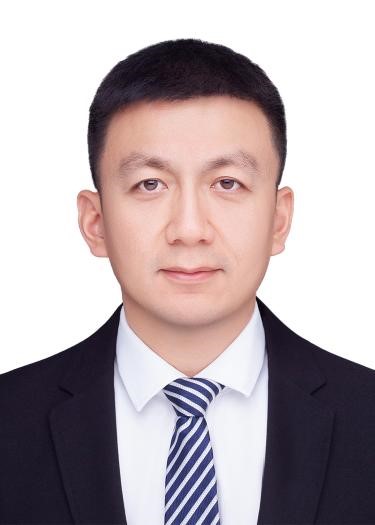 Di Wu (吴迪)合作论文数Taikang Medical School, Wuhan University;Taikang Center for Life and Medical Sciences, Wuhan University1
 Jinsheng Zhu合作论文数Univ Fribourg, Dept Biol Plant Biol, CH-1700 Fribourg, Switzerland1
 Schara Safarian合作论文数Max Planck Inst Biophys, Dept Mol Membrane Biol, D-60438 Frankfurt, Germany1
 Jacqueline Oehri合作论文数Univ Zurich, Dept Evolutionary Biol & Environm Studies, Winterthurerstr 190, CH-8057 Zurich, Switzerland1
 Markus Geisler合作论文数Univ Fribourg, Dept Biol, CH-1700 Fribourg, Switzerland1
 Roland Wedlich-Soldner合作论文数1
 Celine Hoffmann合作论文数1
 Aurelien Bailly合作论文数1Deryck J Mills合作论文数1Hendriks Philipp合作论文数1
 Marta Zwiewka合作论文数1
 Martin Di Donato合作论文数1
 Bibek Aryal合作论文数University of Fribourg, Université de Fribourg1
 Hans A. Kretzschmar合作论文数Department of Neuropathology, University of Göttingen1
 Jiří Friml合作论文数Institute of Science and Technology Austria1Christian Lücke合作论文数1
 Stephan Pollmann合作论文数Current address: Centro Biotecnología Genómica Plantas, Campus Montegancedo UPM, Autopista M-40 (Km 38), 28223 Pozuelo de Alarcón, Madrid, Spain1Christian Luckhaus合作论文数1Elisa Azzarello合作论文数LINV–International Lab for Plant Neurobiology, University of Florence1
 Yoichiro Fukao (深尾陽一朗)合作论文数Department of Bioinformatics, College of Life Sciences, Ritsumeikan University1
 Stefano Mancuso合作论文数Division of Environmental, Water and Agricultural Engineering, Technion - Israel Institute of Technology;Dipartimento di Scienze delle Produzioni Agroalimentari e dell'Ambiente, University of Florence;Kitakyushu University;International Laboratory of Plant Neurobiology, Department of Plant, University of Florence1Sonja Welsch合作论文数1
 Noel Ferro合作论文数Department of Agronomy, Forestry and Agronomy Faculty, University of Pinar del Río1Gustavo Sajnani合作论文数1Luitgard Nagel-Steger合作论文数1Matthias Weiwad合作论文数1V. Sovero合作论文数1Karin Fehsel合作论文数1Georg Winterer合作论文数1
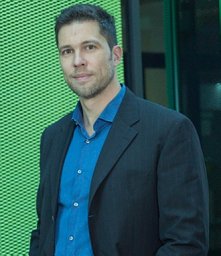 Clement Thomas合作论文数Institut de Biologie Moleculaire des Plantes;Universite Louis Pasteur;Institut de Biologie Moleculaire des Plantes, Universite Louis Pasteur1Rudolf Hartmann合作论文数Institut für Strukturbiologie und Biophysik 3, Forschungszentrum Jülich1
 Hartmut Michel (哈特穆特·米歇尔)合作论文数Bethune First Hospital of Jilin University1
 Melanie Schwarten合作论文数Institut für Physikalische Biologie und BMFZ, Heinrich-Heine-Universität Düsseldorf1




