Conventional hydroprocessing of vacuum residue depends heavily on externally supplied hydrogen. Although methane is an abundant alternative, its direct utilization remains challenging due to its chemical inertness. This work aims to overcome this limitation through rational catalyst and process design. A hierarchical HZSM-5 support was constructed via controlled alkaline treatment (Si/Al = 25, 0.8 M NaOH, 80 °C). Ag, Co, and Ce were sequentially loaded by incipient wetness impregnation. The optimal catalyst, Ag3Co5Ce8/HZSM-5, was characterized by XRD, N2 physisorption, NH3-TPD, Py-FTIR, XPS, and TEM. Catalytic upgrading was performed in a batch reactor (410 °C, 3 MPa CH4, 2 h). A two-stage tandem process (H2/CH4 pretreatment followed by CH4 upgrading) was also developed. The optimized catalyst achieved desulfurization and denitrogenation efficiencies of 41.2% and 29.4%, respectively, under single-stage conditions. Comparative CH4/H2/N2 experiments showed higher desulfurization under CH4 (41.2%) than under H2 (14.1%) or N2 (1.3%), supporting the role of methane-derived species beyond simple H2 formation. Integration into a two-stage tandem process dramatically enhanced performance, with desulfurization and denitrogenation reaching 71.0% and 61.8%. This work presents three key innovations: (i) a diffusion-acidity coupled hierarchical support that resolves the long-standing mass transport limitation for bulky residue molecules; (ii) a synergistic Ag-Co-Ce catalytic network where Ag activates CH4, Co facilitates heteroatom removal, and Ce provides redox stabilization; and (iii) a two-stage tandem strategy that decouples catalyst deactivation from methane activation, enabling deep upgrading under hydrogen-lean conditions. This catalyst-process co-design framework offers a viable pathway for low-carbon valorization of heavy feedstocks using natural gas.
The tightening of global environmental regulations and the growing emphasis on carbon neutrality have driven the petroleum industry to pursue ultra-clean fuels. Diesel, as a dominant transportation fuel, faces particularly stringent sulfur limits due to the adverse environmental and operational impacts of sulfur oxides. Hydrodesulfurization (HDS) remains the most mature and efficient industrial technology for producing low-sulfur diesel; however, the escalating demands for ultra-deep desulfurization and low-carbon operation have placed unprecedented challenges on catalyst performance. Despite significant advances in catalyst formulation, systematic reviews dedicated specifically to HDS catalyst development remain scarce. This review provides a comprehensive overview of recent progress in HDS catalysis, emphasizing strategies for modulating active phases, supports, and novel unsupported catalysts. The fundamental mechanisms governing desulfurization pathways are briefly summarized to establish the theoretical foundation for subsequent discussions. Recent advances in tuning metal–support interactions, tailoring acidity, and employing heteroatom or promoter modifications to enhance catalytic activity are critically analyzed. Support regulation strategies—including compositional modification of γ-Al2O3 and zeolite-based systems—are examined with attention to structure–performance correlations and industrial applicability. The review further explores the emerging class of unsupported catalysts, highlighting template-assisted synthesis and three-dimensional framework designs as promising directions. Finally, key scientific challenges and future prospects are outlined, aiming to provide guidance for the rational design of next-generation HDS catalysts that enable sustainable production of ultra-clean diesel.
The removal of nitrogen-containing compounds from fossil fuels is crucial for improving fuel stability and reducing NOₓ emissions, while conventional hydrodenitrogenation is limited by high energy consumption and catalyst deactivation. Ionic liquid–based extraction offers a promising alternative, particularly for refractory nitrogen species. In this study, the molecular interactions between the sulfate-based ionic liquid 1-butyl-3-methylimidazolium hydrosulfate ([BMIM][HSO4]) and two representative nitrogen-containing compounds—indole (neutral) and quinoline (basic)—were investigated using density functional theory. The results show that [BMIM][HSO4] interacts more strongly with indole than with quinoline, primarily due to the formation of a strong N–H···O hydrogen bond between indole and the [HSO4]⁻ anion. Both the cation and anion contribute cooperatively through hydrogen bonding, electrostatic interactions, and π···π stacking. These findings provide a molecular-level explanation for the high extraction efficiency of sulfate-based ionic liquids toward indole and offer guidance for the rational design of task-specific ionic liquids for extractive denitrogenation. All calculations were carried out using density functional theory at the ωB97XD/6-311++G(d,p) level. Full geometry optimizations were performed without symmetry constraints, and all optimized structures were confirmed as true minima by harmonic frequency analysis. Interaction energies were calculated with basis set superposition error (BSSE) correction, and solvent effects were incorporated through SMD-based single-point energy calculations. Natural bond orbital (NBO) analysis was employed to evaluate charge distribution and donor–acceptor interactions, while non-covalent interaction (NCI) and atoms-in-molecules (AIM) analyses were conducted to characterize hydrogen bonding, dispersion, and π···π interactions. Wavefunction analyses, including electrostatic potential mapping, NCI visualization, and AIM topological analysis, were performed using the Multiwfn program.
The CO2-assisted oxidative dehydrogenation (ODH) of light alkanes offers a promising route for converting underutilized resources into valuable chemical feedstocks while addressing environmental challenges associated with CO2 emissions. CO2 plays a dual role in ODH by acting as a mild oxidant that enhances product selectivity and catalyst stability while preventing carbon deposition through the Reverse Water-Gas Shift (RWGS) and Boudouard reactions. The review has elucidated a variety of catalyst design and optimization strategies that may guide the future development of novel CO2-assisted ODH catalysts with improved alkane conversion, superior alkene selectivity, and long-term stability. It provides a comprehensive analysis of the structural characteristics, catalytic performances, and reaction mechanisms of typical catalysts, including transition metal catalysts (e. g., Cr-based, Co-based, V-based), metal oxide catalysts (e. g., Ga-based, In-based), noble metal catalysts (e. g., Pt-based, Ru-based), and bimetallic catalysts. Special attention is given to the structure-performance relationship of these catalysts, emphasizing how changes in promoters, supports, and morphology affect critical properties such as redox behavior, acidity-basicity balance, dispersion of active components, and catalyst-support interactions. Finally, future research directions and perspectives for the CO2-assisted ODH of ethane and propane are proposed, with a focus on advancing catalyst design and optimization strategies. This review aims to serve as a comprehensive reference for researchers exploring the potential of CO2-assisted ODH in promoting sustainable production of light alkenes.
Chemical conversion of greenhouse gas CO2 into value-added oxygenates such as ethanol, acetic acid, propanal, propionic acid, butanol, etc. is challenging due to the complexity of C-C coupling and the uncontrollable bonding. In this review, recent research progresses on the synthesis of multi-carbon oxygenates from CO2 in fixed bed reactor are provided. Firstly, the reaction mechanisms of CO2 hydrogenation are summarized. Then, the potential catalysts applied in one-step or tandem CO2 hydrogenation, dry reforming with light hydrocarbons and hydroformylation were introduced over metal carbides, alkali metal modified single or binary metal catalysts such as Cu, Fe, Co, Rh, etc. The reaction mechanism over different catalysts were further elaborated. Finally, the problems and outlook are discussed.
为了提高C4资源综合利用水平,异丁烷高效转化技术是重要方向.本文综述异丁烷定向转化技术的现状及发展趋势,介绍异丁烷烷基化生产烷基化油、异丁烷脱氢生产异丁烯及异丁烷正构化制正丁烷技术,重点介绍异丁烷烷基化技术、脱氢技术、正构化技术中催化剂的基本情况,并对未来发展提出建议.
为了提高催化柴油的深加工利用率,在低压下,以催化柴油为原料,制备了高沸点芳烃溶剂SA-2000.结果表明:催化柴油经过加氢精制-馏分切割-芳烃富集后,产物的芳烃体积分数、馏程、闪点、密度、铜片腐蚀、混合苯胺点均可达到高沸点芳烃溶剂SA-2000的产品指标要求,综合收率为43.46%;随着加氢精制温度的升高,加氢产物的含硫、氮量降低,单环芳烃质量分数增加,双环芳烃和多环芳烃质量分数降低;产物中的单、双、总芳烃质量分数与色度无对应关系;当反应温度为295℃时,产物的Pt-Co色度最低;催化柴油和精制柴油的显色组分集中在馏程较重的组分中.
The impaction process of droplet on fiber (used as packing) including capture and dispersion is widely encountered in the multiphase reactors. Numerous studies have been conducted to illustrate the captured phenomena, while the phenomena and mechanism of dispersion are still unclear. In this work, the high-speed photography and computational fluid dynamics simulation were employed to investigate the dispersion phenomena of liquid droplet impacting on the single fiber with different wettabilities. Three flow patterns, named one-drop, one-film, and two-film dripping were observed from experimental results. Four contact angle models were implemented in the simulation. The gas-liquid interfacial area and energy utilization efficiency respectively increased from 1.85 to 3.38 times of initial area and from 1.97 % to 48.29 % when the contact angle increased from 45 degrees to 155 degrees. The results are of great significance to understand the dispersion phenomena as well as the enhanced dispersion efficiency of liquid in chemical reactors. (c) 2021 Published by Elsevier Ltd.
某公司POX合成气甲醇洗装置外排废甲醇约3 000 t/a,定量分析其中含有杂质质量分数苯为41.97%、甲醇为57.88%。利用小型固定流化床装置进行废甲醇催化裂化实验,在剂醇比为9和525℃反应温度下,气体产品中C 3 ~C 4 液化石油气收率为3.86%,C 5 ~C 5 + 轻汽油收率为4.76%;液体收集系统的轻质油品收率为13.99%。催化裂化装置掺炼废甲醇比例以3%~4%最佳,液化石油气收率可提高2.0%~2.5%,其中烯烃收率可提高1%~2%。
Pollution involving pharmaceutical components in bodies of water is an increasingly serious environmental issue. Plasma discharge for the degradation of antibiotics is an emerging technology that may be relevant toward addressing this issue. In this work, a plasma-assisted rotating disk reactor (plasma-RDR) and a photocatalyst—namely, titanium dioxide (TiO2)—were coupled for the treatment of metronidazole (MNZ). Discharge uniformity was improved by the use of a rotating electrode in the plasma-RDR, which contributed to the utilization of ultraviolet (UV) light radiation in the presence of TiO2. The experimental results showed that the degradation efficiency of MNZ and the concentration of generated hydroxyl radicals respectively increased by 41% and 2.954 mg∙L−1 as the rotational speed increased from 0 to 500 r∙min−1. The synergistic effect of plasma-RDR plus TiO2 on the generation of hydroxyl radicals was evaluated. Major intermediate products were identified using three-dimensional (3D) excitation emission fluorescence matrices (EEFMs) and liquid chromatography–mass spectrometry (LC-MS), and a possible degradation pathway is proposed herein. This plasma-catalytic process has bright prospects in the field of antibiotics degradation.
Liquid droplet is an essential flow pattern inside the porous packing of rotating packed bed reactors. However, the mechanism of the impacting phenomenon of droplets on the rotating packing has scarcely been researched. In this work, liquid droplet impaction on the rotating single-layer stainless steel wire mesh was investigated through the high-speed photography technology and three-dimensional numerical simulation. Experimental results show that with the increase of impacting angle from 30 degrees to 150 degrees, the dispersion cone angle was enlarged by 43% and the average diameter of daughter droplets declined by 40%, leading to the better liquid dispersion. Via simulation, the mechanism of the enhancement of liquid dispersion was clarified by analyzing the relative motion between the droplet and wire mesh. The growth rate of gas-liquid interfacial area was calculated to have an increment as the impacting angle enlarged. (c) 2021 Elsevier Ltd. All rights reserved.
流化催化裂化(FCC)油浆外甩量通常超过5%,需要脱固处理得到澄清油再利用.本文分析得出了向延迟焦化、溶剂脱沥青、减压蒸馏、加氢等重质油加工装置直接掺炼,局限性较大;利用减压蒸馏、溶剂抽提、超临界流体萃取等工艺,对澄清油"掐头去尾",分离组分可生产针状焦、环保橡胶填充油、沥青树脂以及碳素纤维等高附加值产品.油浆组分通过延迟焦化制备针状焦,是工业化应用主体方向,但国内产品质量与国外尚有很大差距;油浆制备环保橡胶填充油,在降低环保橡胶油多环芳烃(PCA)和8种危害性稠环芳烃(PAHs)分别至3%和10mg/kg以下的同时,必须提高芳碳率(CA)值至10%以上来保持橡胶相容性,其收率及生产成本是工业化应用推广的制约因素.
An Al2O3-coated stainless steel wire mesh packing was prepared, aiming to serve as the monolithic catalyst support applied in a rotating packed bed (RPB) reactor. Before the application, the wetting behavior and gas–liquid mass transfer performance of Al2O3-coated wire mesh packing were investigated in this work. The results showed that the Al2O3-coated stainless steel fiber had on average 18.8% longer liquid spreading length compared with the uncoated stainless steel fiber. The gas–liquid effective interfacial area (ae) and the volumetric liquid-side mass transfer coefficient (kLae) of the RPB with Al2O3-coated wire mesh packing were on average 25.9 and 45.7% higher than those with uncoated wire mesh packing, respectively. The Al2O3-coated wire mesh packing has great prospects for the catalytic reactions in the RPB reactor by providing double functions of mass transfer intensification and the monolithic catalyst support.
Catalytic oxidation of mercaptide is a significant way to eliminate waste emission of spent caustic and recycle the resource of caustic. However, the kinetics of mercaptide oxidation for spent caustic regeneration is still unclear, which hinders the reactor design. In this work, mechanism analyses and kinetics experiments were conducted to investigate the kinetics of homogeneous catalytic oxidation of sodium ethyl mercaptide. Ultraviolet visual spectra show that mercaptide ion is superior to oxygen molecule adsorbed on the catalyst, which is in accord with the simulations. Reaction mechanism of two-layer adsorption structure was proposed by density functional theory calculations. By applying the method of decoupling macroscopic kinetics and making pseudo-first-order fast reaction hypothesis, the rate expression of the intrinsic kinetics for the oxidation reaction of sodium ethyl mercaptide was proposed as -dCAdt=6.84×10¹⁰exp(-29584RT)CACB. A statistical test was carried out to verify the intrinsic kinetics data, showing that the kinetics data were overall reasonable.
Droplet dispersion exists in a variety of industrial applications. Droplet impacting on the wire mesh could be dispersed into many tiny droplets and exposed larger surface area, which is better for the gas-liquid mass transfer process. In this work, the dispersion mechanisms and characteristics of droplet was investigated, as well as considering the influence of surface wettability. By increasing the surface hydrophobicity of the wire mesh, the cone angle of dispersion was enlarged maximally by 80%, the average diameter of daughter droplets decreased maximally by 70% and the liquid surface area could be eventually highly improved. Finally, based on the dispersion characteristics, the mass transfer model of droplet was established and verified by a gas-liquid absorption system. This study provides a better understanding of droplet dispersion after impacting on the wire mesh and also has major implications in the field of gas-liquid interface interaction enhancement. (C) 2020 Elsevier Ltd. All rights reserved.
The 2,3,5-trimethyl-1,4-benzoquinone (TMQ), a significant intermediate product to synthesize vitamin E, is generally produced by the gas-liquid catalytic oxidation reaction of 2,3,6-trimethylphenol (TMP) and oxygen. However, the oxidation reaction rate was strongly limited by the mass transfer of oxygen from gas phase to liquid phase. In this work, a rotating packed bed (RPB) reactor with excellent mass transfer performance was applied for the catalytic oxidation of TMP to synthesize TMQ. Different effects of various operating conditions on the TMP conversion (X) and TMQ yield (Y) were investigated. Under the optimal conditions of the RPB reactor, the X and Y reached 99.28 % and 64.73 %, respectively. A comparison between different reactor combinations was also conducted. The RPB rector has a great application prospect for the industrial production of the catalytic oxidation of TMP.
Liquid dispersion by impacting on wire mesh benefits many mass transfer processes. However, most of studies focused on the dispersion behaviors of liquid impacting on a one-layer wire mesh. In this work, the intensification of droplet dispersion by impacting on multilayer wire mesh was investigated as well as considering the influence of surface wettability. The dispersion characteristics (cone angle of dispersion theta(cone) and average diameter of daughter droplets d(avg)) were systematically analyzed. theta(cone) enlarged by 44% and d(avg) decreased by 12% on average when increasing the water contact angle of the wire mesh from alpha-70 degrees to alpha-155 degrees. Empirical correlations for predicting theta(cone) and d(avg) were proposed. The predicted values agreed well with the experimental data. The intensification of liquid dispersion by using multilayer wire mesh was applied in the inner cavity zone of a rotating packed bed (RPB), leading to a significant improvement of gas-liquid mass transfer performance.
As a basic form of the substance, plasma is different from solid, liquid and gas due to its unique high activity. It has gradually been applied in many fields and has developed into a new discipline. The gas-liquid chemical reaction involving the non-thermal plasma could generate more reactive oxygen species, and the fluidity of liquid could enhance the mass transfer in the gas-liquid non-thermal plasma reactors. So, the reaction of non-thermal plasma generated by the gas discharge and liquid phase has an important application value in many fields. The discharge patterns and characterization techniques of various non-thermal plasmas are reviewed. Furthermore, the different structures and applications of gas-liquid non-thermal plasma multiphase reactors are highlighted, and then the development of gas-liquid non-thermal plasma is prospected.
Regeneration of spent caustic from liquefied petroleum gas sweetening in refineries is significant to save resources and reduce solid waste emissions. Conventional regeneration technologies have been widely used, but these technologies usually have a reactor and a separator in series which occupies a large space. In this work, simultaneous reaction and separation processes were proposed to be conducted in a rotating packed bed (RPB), aiming for the process intensification of spent caustic regeneration. Experimental results of laboratory tests show that the regeneration processes of mercaptide oxidation and disulfide separation were efficiently enhanced in the RPB. The side-line test, treating the actual spent caustic from a refinery, could achieve good performance for a long-time running. An artificial neural network model was applied for parameters analysis and prediction of the regeneration performance. This work demonstrated the feasibility of spent caustic regeneration in only one RPB unit, which displays bright prospects for industrial application.
Plasma discharge in contact with water is a promising technology for disinfection. Developing efficient gas-liquid nonthermal plasma reactors for disinfection is very urgent. In this work, a plasma-assisted rotating disk reactor (plasma-RDR) was developed toward disinfection of Escherichia coli (E. coli). Experimental results show that the number of killed E. coli increased by 3.07 x 10(5) CFU.mL(-1) within 60 min when the rotational speed increased from 0 to 500 rpm. Effects of discharge characteristics and other operating conditions on the disinfection efficiency were evaluated. Synergistic effects of plasma and acid or alkali on the disinfection efficiency were obvious. Based on the Weibull distribution model, the critical pH values of resistance were approximately 10.4 and 5.3. The main disinfection process of cell electroporation was inferred based on observations of the cell morphology. Compared with other reported plasma reactors and disinfection technologies, plasma-RDR has better disinfection efficiency at a lower energy consumption.
 Guangwen Chu (初广文)合作论文数Research Center of the Ministry of Education for High Gravity Engineering and Technology, Beijing University of Chemical Technology;The College of Chemical Engineering, Beijing University of Chemical Technology17
 Yong Luo (罗勇)合作论文数Research Center of the Ministry of Education for High Gravity Engineering and Technology, Beijing University of Chemical Technology;College of Chemical Engineering, Beijing University of Chemical Technology16
 Jianfeng Chen (陈建峰)合作论文数College of Chemical Engineering, Beijing University of Chemical Technology;State Key Laboratory of Organic-Inorganic Composites, Beijing University of Chemical Technology14
 Baochang Sun (孙宝昌)合作论文数College of Chemical Engineering, Beijing University of Chemical Technology7
 Yong Cai合作论文数5
 Chongchong Wu合作论文数4
 Liangliang Zhang (张亮亮)合作论文数College of Chemical Engineering, Beijing University of Chemical Technology4
 Yuanbao Zhu合作论文数3
 Yan-Bin Li合作论文数2Yue-Yan Wang合作论文数2Lu Deqing (卢德庆)合作论文数2Yuan-Yuan Zhan合作论文数2Chi Ma合作论文数2HaiHong Zhang (张海洪)合作论文数2LongNian Han (韩龙年)合作论文数2Jing Xin (辛靖)合作论文数2
 Haikui Zou (邹海魁)合作论文数College of Chemical Engineering, Beijing University of Chemical Technology2
 Yuan Le (乐园)合作论文数Beijing University of Chemical Technology2
 Chuang Liang (梁闯)合作论文数1
 Wei Wu (吴伟)合作论文数School of Physics and Technology, Wuhan University1Shun Bai合作论文数1Yan‐Bin Li合作论文数1REN Xujin (任绪金)合作论文数1Hanxiao LIU (刘含笑)合作论文数1
 Siran Zhang合作论文数1Yuanfang Wan合作论文数1Xiaotong Mi合作论文数1Bao-Ju Wang合作论文数1
 Zhi-Hao Liu合作论文数1Song Yu (宋宇)合作论文数1Ying Wang合作论文数1YuFei Chen (陈禹霏)合作论文数1
 Jie Shi (时杰)合作论文数School of Food and Biological Engineering, Hefei University of Technology1GuoMing Yang (杨国明)合作论文数1XiaoHua Zheng (郑晓华)合作论文数1Zhanggui Hou (侯章贵)合作论文数CNOOC Oil and Petrochemicals Company(CNOOC Refining and Chemical Co., Ltd.,CNOOC Oil and Petrochemicals Company,CNOOC Energy Technology and Services-Petrochemicals Co.,CNOOC Huizhou Refining and Petrochemicals Company,CNOOC Oil and Petrochemicals Co. Ltd.),,China1
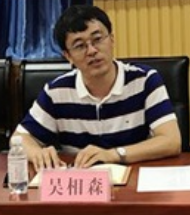 Xiangsen Wu (吴相森)合作论文数College of Chemical Engineering, Beijing University of Chemical Technology1Wei Liu (刘伟)合作论文数College of Chemical Engineering, Beijing University of Chemical Technology1
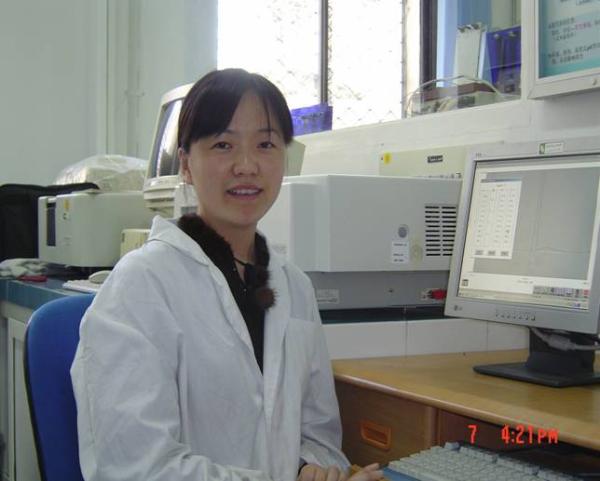 Lianying Wang (王连英)合作论文数College of Chemisty, Beijing University of Chemical Technology1
 Jian Liu (刘坚)合作论文数College of Science, China University of Petroleum1




