The TEXTAROSSA project aims to bridge the technology gaps that exascale computing systems are currently facing and will be key in the near future to overcome performance and energy efficiency challenges. This project provides solutions for improved energy efficiency by using state-of-the-art cooling and thermal control, seamless integration of heterogeneous accelerators in HPC multi-node platforms, and new arithmetic methods tailored to heterogeneous hardware platforms. Challenges are tackled through a co-design approach to heterogeneous HPC solutions, supported by the integration and extension of HW and SW IPs, programming models, and tools derived from European research.
Enabling uncertainty quantification (UQ) for a computational model can be a complex process, often exceeding the domain expertise of its developer or user. To address this challenge, we developed the mUQSA platform, which streamlines typical uncertainty quantification scenarios through a modern web-based environment and pre-configured automated workflows that leverage large-scale computing resources for state-of-the-art UQ techniques. mUQSA is designed with two key objectives: to support users in analyzing how input uncertainties propagate through their models and to identify the input parameters that most significantly influence outcomes through sensitivity analysis (SA). The particular strength of mUQSA lies in its accessibility: offered as a Software-as-a-Service (SaaS) solution, mUQSA eliminates the need for installation or configuration of software, enabling users to access UQ/SA methods directly from a web browser. Its user-friendly, intuitive interfaces for defining use cases and displaying results guarantee high accessibility, while a robust execution layer, supported by HPC resources, ensures mUQSA can handle even very complex computational models.
This paper delves into the application of Uncertainty Quantification (UQ) and Sensitivity Analysis (SA) to address complex, multiscale Global Challenges. Using a Renewable Energy Sources case study, we demonstrate various approaches to incorporate UQ and SA. UQ helps mitigate uncertainties in models and input data, leading to more reliable results. SA identifies the significant influence of specific input parameters on model outputs, aiding in resource allocation and problem-solving. By reducing the number of required parameters, SA can optimize computational resources and accelerate time-to-solution. Additionally, we showcase how UQ and SA can directly contribute to addressing Global Challenges. The paper concludes by discussing the multiscale Uncertainty Quantification and Sensitivity Analysis platform (mUQSA) and its underlying tools, which streamline the implementation of UQ and SA for Global Challenges.
Reliability is an increasingly pressing issue for High-Performance Computing systems, as failures are a threat to large-scale applications, for which an even single run may incur significant energy and billing costs. Currently, application developers need to address reliability explicitly, by integrating application-specific checkpoint/restore mechanisms. However, the application alone cannot exploit system knowledge, which is not the case for system-wide resource management systems. In this paper, we propose a reliability-oriented policy that can increase significantly component reliability by combining checkpoint/restore mechanisms exploitation and proactive resource management policies.
In the near future, Exascale systems will need to bridge three technology gaps to achieve high performance while remaining under tight power constraints: energy efficiency and thermal control; extreme computation efficiency via HW acceleration and new arithmetic; methods and tools for seamless integration of reconfigurable accelerators in heterogeneous HPC multi-node platforms. TEXTAROSSA addresses these gaps through a co -design approach to heterogeneous HPC solutions, supported by the integration and extension of HW and SW IPs, programming models, and tools derived from European research.
The VECMA toolkit enables automated Verification, Validation and Uncertainty Quantification (VVUQ) for complex applications that can be deployed on emerging exascale platforms and provides support for software applications for any domain of interest. The toolkit has four main components including EasyVVUQ for VVUQ workflows, FabSim3 for automation and tool integration, MUSCLE3 for coupling multiscale models and QCG tools to execute application workflows on high performance computing (HPC). A more recent addition to the VECMAtk is EasySurrogate for various types of surrogate methods. In this paper, we present five tutorials from different application domains that apply these VECMAtk components to perform uncertainty quantification analysis, use surrogate models, couple multiscale models and execute sensitivity analysis on HPC. This paper aims to provide hands-on experience for practitioners aiming to test and contrast with their own applications.
We present the VECMA toolkit (VECMAtk), a flexible software environment for single and multiscale simulations that introduces directly applicable and reusable procedures for verification, validation (V&V), sensitivity analysis (SA) and uncertainty quantication (UQ). It enables users to verify key aspects of their applications, systematically compare and validate the simulation outputs against observational or benchmark data, and run simulations conveniently on any platform from the desktop to current multi-petascale computers. In this sequel to our paper on VECMAtk which we presented last year [ 1 ] we focus on a range of functional and performance improvements that we have introduced, cover newly introduced components, and applications examples from seven different domains such as conflict modelling and environmental sciences. We also present several implemented patterns for UQ/SA and V&V, and guide the reader through one example concerning COVID-19 modelling in detail. This article is part of the theme issue ‘Reliability and reproducibility in computational science: implementing verification, validation and uncertainty quantification in silico ’.
Validation, verification, and uncertainty quantification (VVUQ) of simulation workflows are essential for building trust in simulation results, and their increased use in decision‐making processes. The EasyVVUQ Python library is designed to facilitate implementation of advanced VVUQ techniques in new or existing workflows, with a particular focus on high‐performance computing, middleware agnosticism, and multiscale modeling. Here, the application of EasyVVUQ to five very diverse application areas is demonstrated: materials properties, ocean circulation modeling, fusion reactors, forced human migration, and urban air quality prediction.
RECIPE (REliable power and time-ConstraInts-aware Predictive management of heterogeneous Exascale systems) is a recently started project funded within the H2020 FETHPC programme, which is expressly targeted at exploring new High-Performance Computing (HPC) technologies. RECIPE aims at introducing a hierarchical runtime resource management infrastructure to optimize energy efficiency and minimize the occurrence of thermal hotspots, while enforcing the time constraints imposed by the applications and ensuring reliability for both time-critical and throughput-oriented computation that run on deeply heterogeneous accelerator-based systems. This paper presents a detailed overview of RECIPE, identifying the fundamental challenges as well as the key innovations addressed by the project, which span run-time management, heterogeneous computing architectures, HPC memory/interconnection infrastructures, thermal modelling, reliability, programming models, and timing analysis. For each of these areas, the paper describes the relevant state of the art as well as the specific actions that the project will take to effectively address the identified technological challenges.
This document is one of the deliverable reports created for the ESCAPE project. ESCAPE stands for Energy-efficient Scalable Algorithms for Weather Prediction at Exascale. The project develops world-class, extreme-scale computing capabilities for European operational numerical weather prediction and future climate models. This is done by identifying Weather & Climate dwarfs which are key patterns in terms of computation and communication (in the spirit of the Berkeley dwarfs). These dwarfs are then optimised for different hardware architectures (single and multi-node) and alternative algorithms are explored. Performance portability is addressed through the use of domain specific languages. This deliverable contains the description of the performance and energy models for the selected Weather & Climate dwarfs for different hardware architectures, multinode with GPU accelerators in particular. Presented performance models are extension to model provided in Deliverable 3.2. With some further enhancements, they are incorporated in the DCworms simulator. In particular, extended models allow to predict computational and energy performance on different architectures: single and multinodes, equipped with CPUs and GPUs accelerators. This allows to provide feasible performance projection at system scale.
In the simulation of complex multi-scale flows arising in weather and climate modelling, one of the biggest challenges is to satisfy strict service requirements in terms of time to solution and to satisfy budgetary constraints in terms of energy to solution, without compromising the accuracy and stability of the application. These simulations require algorithms that minimise the energy footprint along with the time required to produce a solution, maintain the physically required level of accuracy, are numerically stable, and are resilient in case of hardware failure. The European Centre for Medium-Range Weather Forecasts (ECMWF) led the ESCAPE (Energy-efficient Scalable Algorithms for Weather Prediction at Exascale) project, funded by Horizon 2020 (H2020) under the FET-HPC (Future and Emerging Technologies in High Performance Computing) initiative. The goal of ESCAPE was to develop a sustainable strategy to evolve weather and climate prediction models to next-generation computing technologies. The project partners incorporate the expertise of leading European regional forecasting consortia, university research, experienced high-performance computing centres, and hardware vendors. This paper presents an overview of the ESCAPE strategy: (i) identify domain-specific key algorithmic motifs in weather prediction and climate models (which we term Weather & Climate Dwarfs), (ii) categorise them in terms of computational and communication patterns while (iii) adapting them to different hardware architectures with alternative programming models, (iv) analyse the challenges in optimising, and (v) find alternative algorithms for the same scheme. The participating weather prediction models are the following: IFS (Integrated Forecasting System); ALARO, a combination of AROME (Application de la Recherche à l'Opérationnel à Meso-Echelle) and ALADIN (Aire Limitée Adaptation Dynamique Développement International); and COSMO–EULAG, a combination of COSMO (Consortium for Small-scale Modeling) and EULAG (Eulerian and semi-Lagrangian fluid solver). For many of the weather and climate dwarfs ESCAPE provides prototype implementations on different hardware architectures (mainly Intel Skylake CPUs, NVIDIA GPUs, Intel Xeon Phi, Optalysys optical processor) with different programming models. The spectral transform dwarf represents a detailed example of the co-design cycle of an ESCAPE dwarf. The dwarf concept has proven to be extremely useful for the rapid prototyping of alternative algorithms and their interaction with hardware; e.g. the use of a domain-specific language (DSL). Manual adaptations have led to substantial accelerations of key algorithms in numerical weather prediction (NWP) but are not a general recipe for the performance portability of complex NWP models. Existing DSLs are found to require further evolution but are promising tools for achieving the latter. Measurements of energy and time to solution suggest that a future focus needs to be on exploiting the simultaneous use of all available resources in hybrid CPU–GPU arrangements.
The transition to Exascale computing is going to be characterised by an increased range of application classes. In addition to traditional massively parallel "number crunching" applications, new classes are emerging such as real-time HPC and data-intensive scalable computing. Furthermore, Exascale computing is characterised by a "democratisation" of HPC: to fully exploit the capabilities of Exascale-level facilities, HPC is moving towards enabling access to its resources to a wider range of new players, including SMEs, through cloud-based approaches [1]. Finally, the need for much higher energy efficiency is pushing towards deep heterogeneity, widening the range of options for acceleration, moving from the traditional CPU-only organization, to the CPU plus GPU which currently dominates the Green500 1 , to more complex options including programmable accelerators and even (reconfigurable) hardware accelerators [2].
The recent advent of novel multi- and many-core architectures forces application programmers to deal with hardware-specific implementation details and to be familiar with software optimization techniques to benefit from new high-performance computing machines. An extra care must be taken for communication-intensive algorithms, which may be a bottleneck for forthcoming era of exascale computing. This paper aims to present a high level stencil framework implemented for the EULAG model that efficiently utilizes heterogeneous clusters. Only an efficient usage of both CPUs and GPUs with the flexible data decomposition method can lead to the maximum performance that scales communication-intensive elliptic solver with preconditioner.
Today, various Science Gateways created in close collaboration with scientific communities provide access to remote and distributed HPC, Grid and Cloud computing resources and large-scale storage facilities. However, as we have observed there are still many entry barriers for new users and various limitations for active scientists. In this paper we present our latest achievements and software solutions that significantly simplify the use of large scale and distributed computing. We describe several Science Gateways that have been successfully created with the help of our application tools and the QCG (Quality in Cloud and Grid) middleware, in particular Vine Toolkit, QCG-Portal and QCG-Now, and make the use of HPC, Grid and Cloud more straightforward and transparent. Additionally, we share the best practices and lessons learned after creating jointly with user communities many domain-specific Science Gateways, e.g. dedicated for physicists, medical scientists, chemists, engineers and external communities performing multi-scale simulations. As our deployed software solutions have reached recently a critical mass of active users in the PLGrid e-infrastructure in Poland, we also discuss in this paper how changing technologies, visual design and user experience could impact the way we should re-design Science Getaways or even develop new attractive tools, e.g. desktop or mobile-based applications in the future. Finally, we present information and statistics regarding the behaviour of users to help readers understand how new capabilities and functionalities may influence the growth of user interest in Science Gateways and HPC technologies.
SummaryThe goal of this study is to adapt the multiscale fluid solver EULerian or LAGrangian framewrok (EULAG) to future graphics processing units (GPU) platforms. The EULAG model has the proven record of successful applications, and excellent efficiency and scalability on conventional supercomputer architectures. Currently, the model is being implemented as the new dynamical core of the COSMO weather prediction framework. Within this study, two main modules of EULAG, namely the multidimensional positive definite advection transport algorithm (MPDATA) and the variational generalized conjugate residual, elliptic pressure solver Generalized Conjugate Residual (GCR) are analyzed and optimized. In this paper, a method is proposed, which ensures a comprehensive analysis of the resource consumption including registers, shared, and global memories. This method allows us to identify bottlenecks of the algorithm, including data transfers between host and global memory, global and shared memories, as well as GPU occupancy. We put the emphasis on providing a fixed memory access pattern, padding as well as organizing computation in the MPDATA algorithm. The testing and validation of the new GPU implementation have been carried out based on modeling decaying turbulence of a homogeneous incompressible fluid in a triply‐periodic cube. Simulations performed using the standard version of EULAG and its new GPU implementation give similar solutions. Preliminary results show a promising increase in terms of computational efficiency. Copyright © 2014 John Wiley & Sons, Ltd.
The recent advent of novel multi- and many-core architectures forces application programmers to deal with hardware-specific implementation details and to be familiar with software optimisation techniques to benefit from new high-performance computing machines. Extra care must be taken for communication-intensive algorithms, which may be a bottleneck for forthcoming era of exascale computing. This paper aims to present a high-level stencil framework implemented for the EULerian or LAGrangian model (EULAG) that efficiently utilises multi- and many-cores architectures. Only an efficient usage of both many-core processors (CPUs) and graphics processing units (GPUs) with the flexible data decomposition method can lead to the maximum performance that scales the communication-intensive Generalized Conjugate Residual (GCR) elliptic solver with preconditioner.
The recent advent of novel multi- and many-core architectures forces application programmers to deal with hardware-specific implementation details and to be familiar with software optimisation techniques to benefit from new high-performance computing machines. An extra care must be taken for communication-intensive algorithms, which may be a bottleneck for forthcoming era of exascale computing. This paper aims to present performance evaluation of preliminary adaptation techniques to hybrid MPI+OpenMP parallelisation schemes we provided into the EULAG code. Various techniques are discussed, and the results will lead us toward efficient algorithms and methods to scale communication-intensive elliptic solver with preconditioner, including GPU architectures to be provided later in the future.
Investigation of rock properties, porosity and permeability particularly, which determines transport media characteristic, is crucial to reservoir engineering. Nowadays, micro-tomography (micro-CT) methods allow to obtain vast of petro-physical properties. The micro-CT method facilitates visualization of pores structures and acquisition of total porosity factor, determined by sticking together 2D slices of scanned rock and applying proper absorption cut-off point. Proper segmentation of pores representation in 3D is important to solve the permeability of porous media. This factor is recently determined by the means of Computational Fluid Dynamics (CFD), a popular method to analyze problems related to fluid flows, taking advantage of numerical methods and constantly growing computing powers. The recent advent of novel multi-, many-core and graphics processing unit (GPU) hardware architectures allows scientists to benefit even more from parallel processing and built-in new features. The high level of parallel scalability offers both, the time-to-solution decrease and greater accuracy - top factors in reservoir engineering.This paper aims to present research results related to fluid flow simulations, particularly solving the total porosity and permeability of porous media, taking advantage of modern hardware architectures. In our approach total porosity is calculated by the means of general-purpose computing on multiple GPUs. This application sticks together 2D slices of scanned rock and by the means of a marching tetrahedra algorithm, creates a 3D representation of pores and calculates the total porosity. Experimental results are compared with data obtained via other popular methods, including Nuclear Magnetic Resonance (NMR), helium porosity and nitrogen permeability tests. Then CFD simulations are performed on a large-scale high performance hardware architecture to solve the flow and permeability of porous media. In our experiments we used Lattice Boltzmann methods (LBM), which models the fluid flow consisting of particles performing propagation and collision processes over a discrete lattice mesh.The paper also addresses a general issue of performance evaluation of porosity and permeability applications. The efficiency and scalability are compared on different hardware architectures. Presented results can be also useful for verification of 3D pores representation.
In recent years we have observed a huge increase in natural disasters, such as earthquakes, tornadoes and floods. Even Poland as a relatively stable region has experienced many big natural disasters, in particular three floods early this year with the estimated cost around 3 billion Euro. To address the dramatic changes in our climate, hydro-meteo scientists have to work together to share important data, tweak existing meteorological models, even couple them, ultimately achieving the goal of preventing such disasters in the future. The computing power and data capacity grow every day, and scientists are willing to run the hydro-meteo simulations at greater model size as well as use new archiving and back up services for historical analysis. However, to benefit from modern architectures, applications and data structures have to be adapted properly. In this chapter we discuss various ideas to improve the performance of Eulag - a numerical solver for all-scale geophysical flows using innovative computing technologies. We present preliminary results of applying the GPGPU and OpenMP shared memory model to Eulag, so that the application can be well scaled on cluster of GPUs or cluster of SMPs nodes respectively. Moreover, we present additional useful solutions to visualize the hydro-meteorological data at speed, as well as to share data in a secure way among end-users
 Krzysztof Kurowski合作论文数Poznan Supercomputing and Networking Center11
 Piotr Kopta合作论文数9Milosz Ciznicki合作论文数7
 Tomasz Piontek合作论文数6Bartosz Bosak合作论文数Pozna$#324/ Supercomputing and Networking Center6
 Giovanni Agosta合作论文数HEAP Laboratory, Dipartimento di Elettronica, Informazione e Bioingegneria, Politecnico di Milano5
 Federico Reghenzani合作论文数Politecn Milan, DEIB, Milan, Italy4
 Giuseppe Massari合作论文数DEIB, Politecnico di Milano4Sebastian Ciesielski合作论文数3O O Luk合作论文数3
 Jalal Lakhlili合作论文数Max Planck Inst Plasma Phys Garching3
 Wouter Edeling合作论文数Centrum voor Wiskunde en Informatica, Amsterdam, the Netherlands3
 Diana Suleimenova合作论文数Brunel University London3
 Peter Coveney合作论文数Centre for Computational Science,Department of Chemistry, Faculty of Maths & Physical Sciences, University College London;University of Amsterdam3
 Ariel Oleksiak合作论文数Poznan Supercomputing and Networking Center3
 Derek Groen合作论文数Leiden3
 William Fornaciari合作论文数Polytechnic University of Milan,Department of Electronics, Information and Bioengineering3
 Daan Crommelin合作论文数Top Institute Pharma3
 Federico Terraneo合作论文数Politecnico di Milano3
 Zbigniew Piotrowski合作论文数Institute of Meteorology and Water Management, University of Warsaw3
 Vytautas Jancauskas合作论文数Faculty of Mathematics and Informatics, Vilnius University3
 Davide Zoni合作论文数3
 Hamid Arabnejad合作论文数Laboratório de Intelegência Artificial e Ciência dos Computadores, Universidade do Porto3Carlos Alvarez合作论文数2Cristian Rossi合作论文数2Roman Wyrzykowski合作论文数2
 Miquel Vidal i Pinyol合作论文数2
 Daniele Cattaneo合作论文数2
 P. Vicini合作论文数Sezione di Roma, INFN2Robert C. Sinclair合作论文数2Lourens Veen合作论文数Netherlands eSci Ctr, Amsterdam, Netherlands2
 Andrea Galimberti合作论文数Dipartimento di Elettronica, Informazione e Bioingegneria, Politecnico di Milano2Paolo Cretaro合作论文数INFN, Sez Roma, Rome, Italy2
 Massimo Bernaschi合作论文数Istituto per le Applicazioni del Calcolo, National Research Council2
 Marina Zapater合作论文数CEI Campus Moncloa UCM-UPM;c;CEI Campus Moncloa UCM-UPM2
 Carles Hernández合作论文数Barcelona Supercomputing Center BSC2
 Robin Richardson合作论文数2
 Marco Aldinucci合作论文数University of Torino2
 Francesco Iannone合作论文数Associazione Euratom-ENEA sulla Fusione2
 David Atienza Alonso合作论文数Embedded Systems Laboratory, École Polytechnique Fédérale de Lausanne;Institute of Electrical and Micro Engineering, École Polytechnique Fédérale de Lausanne2
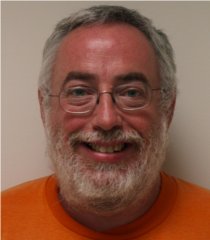 David Coster合作论文数Division of Tokamak Theory, Max Planck Institute for Plasma Physics2Marek Blazewicz合作论文数Poznań University of Technology2
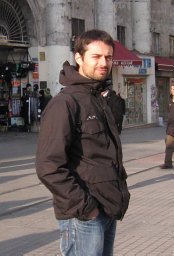 Alessandro Celestini合作论文数IMT Advanced Studies Lucca2Francesca Lo Cicero合作论文数INFN Sezione di Roma2
 Pawel Gepner合作论文数Intel Corporation2Michele Martinelli合作论文数Swiss Cardiovascular Center, University Hospital Bern2
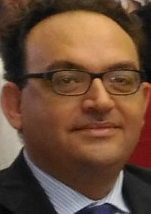 Sergio Saponara合作论文数Department of Information Engineering, University of Pisa;Ingeniars Srl2
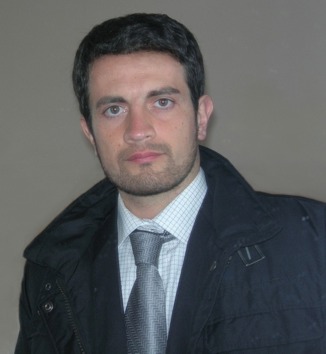 Alessandro Cilardo合作论文数Department of Electrical Engineering and Information Technologies, University of Naples Federico II2Giuseppe Zummo合作论文数2




