Materialized views are a core construct in database systems, used to accelerate analytical queries and optimize batch pipelines for extract-transform-load (ETL) workflows. Maintaining view consistency as underlying data evolves is a fundamental challenge, especially in high-throughput and real-time settings. Incremental view maintenance (IVM) has been studied for decades and continues to attract significant investment from major database vendors. However, most industrial systems either offer limited SQL-operator coverage or require users to hand-tune refresh strategies. This paper presents Enzyme, an IVM engine developed at Databricks to power Spark Declarative Pipelines. It provides a built-in, end-to-end approach to incremental pipelines, utilizing materialized views as first-class building blocks. By automating refresh planning, Enzyme reduces total cost of ownership and lets users focus on business logic rather than MV mechanics. Validation across thousands of large-scale production pipelines spanning diverse application domains has demonstrated substantial computational efficiency gains, yielding a cumulative daily compute reduction of billions of CPU seconds. Built atop Apache Spark primitives, Enzyme adds a cost-based optimization layer that selects refresh strategies for collections of materialized views organized into pipelines. Enzyme's modular architecture is designed to generalize across data sources and query engines. We present key design decisions for incremental refresh planning and execution, including optimizations that exploit batching opportunities across materialized view sources. Experimental results on standard benchmarks demonstrate significant performance improvements at scale.
For many users of Apache Spark, managing Spark version upgrades is a significant interruption that typically involves a time-intensive code migration. This is mainly because in Spark, there is no clear separation between the application code and the engine code, making it hard to manage them independently (dependency clashes, use of internal APIs). In Databricks' Serverless Spark offering, we introduced Versionless Spark where we leverage Spark Connect to fully decouple the client application from the Spark engine which allows us to seamlessly upgrade Spark engine versions. In this paper, we show how our infrastructure built around Spark Connect automatically upgrades and remediates failures in automated Spark workloads without any interruption. Using Versionless Spark, Databricks users' Spark workloads run indefinitely, and always on the latest version based on a fully managed experience while retaining nearly all of the programmability of Apache Spark.
1 ETL and ELT are required to prepare comprehensive, clean, and correct derived data that can fuel successful analytics and ML. Based on our observations from thousands of customers processing data in the cloud at Databricks, the preparation of derived data typically involves a complex DAG of transformations, which are split into two activities: (a) Ingestion: At the sources of the DAG, raw data are fetched from streaming platforms, like Apache Kafka TM and Amazon Kinesis, and from cloud storage that stages incoming data. This data is typically in blob stores such as AWS S3. The majority of our customers store it in Delta Lake tables, the data format that enables transaction processing on data lakes [1,2]. (b) Downstream ELT: Multiple transformations clean, enrich, and aggregate the ingested data. The downstream ELT typically leads to many transformations, using popular frameworks such as DBT, or individual jobs that transform the data. In the former case, the transformations are typically in SQL as CREATE-TABLE-AS (CTAS) statements. In all cases, the underlying processing engine sees a series of seemingly independent SQL queries. Delta
This paper argues that the data warehouse architecture as we know it today will wither in the coming years and be replaced by a new architectural pattern, the Lakehouse, which will (i) be based on open direct-access data formats, such as Apache Parquet, (ii) have firstclass support for machine learning and data science, and (iii) offer state-of-the-art performance. Lakehouses can help address several major challenges with data warehouses, including data staleness, reliability, total cost of ownership, data lock-in, and limited use-case support. We discuss how the industry is already moving toward Lakehouses and how this shift may affect work in data management. We also report results from a Lakehouse system using Parquet that is competitive with popular cloud data warehouses on TPC-DS.
Cloud object stores such as Amazon S3 are some of the largest and most cost-effective storage systems on the planet, making them an attractive target to store large data warehouses and data lakes. Unfortunately, their implementation as key-value stores makes it difficult to achieve ACID transactions and high performance: metadata operations such as listing objects are expensive, and consistency guarantees are limited. In this paper, we present Delta Lake, an open source ACID table storage layer over cloud object stores initially developed at Databricks. Delta Lake uses a transaction log that is compacted into Apache Parquet format to provide ACID properties, time travel, and significantly faster metadata operations for large tabular datasets (e.g., the ability to quickly search billions of table partitions for those relevant to a query). It also leverages this design to provide high-level features such as automatic data layout optimization, upserts, caching, and audit logs. Delta Lake tables can be accessed from Apache Spark, Hive, Presto, Redshift and other systems. Delta Lake is deployed at thousands of Databricks customers that process exabytes of data per day, with the largest instances managing exabyte-scale datasets and billions of objects.
With the ubiquity of real-time data, organizations need streaming systems that are scalable, easy to use, and easy to integrate into business applications. Structured Streaming is a new high-level streaming API in Apache Spark based on our experience with Spark Streaming. Structured Streaming differs from other recent streaming APIs, such as Google Dataflow, in two main ways. First, it is a purely declarative API based on automatically incrementalizing a static relational query (expressed using SQL or DataFrames), in contrast to APIs that ask the user to build a DAG of physical operators. Second, Structured Streaming aims to support end-to-end real-time applications that integrate streaming with batch and interactive analysis. We found that this integration was often a key challenge in practice. Structured Streaming achieves high performance via Spark SQL's code generation engine and can outperform Apache Flink by up to 2x and Apache Kafka Streams by 90x. It also offers rich operational features such as rollbacks, code updates, and mixed streaming/batch execution. We describe the system's design and use cases from several hundred production deployments on Databricks, the largest of which process over 1 PB of data per month.
Large scale streaming systems aim to provide high throughput and low latency. They are often used to run mission-critical applications, and must be available 24x7. Thus such systems need to adapt to failures and inherent changes in workloads, with minimal impact on latency and throughput. Unfortunately, existing solutions require operators to choose between achieving low latency during normal operation and incurring minimal impact during adaptation. Continuous operator streaming systems, such as Naiad and Flink, provide low latency during normal execution but incur high overheads during adaptation (e.g., recovery), while micro-batch systems, such as Spark Streaming and FlumeJava, adapt rapidly at the cost of high latency during normal operations.Our key observation is that while streaming workloads require millisecond-level processing, workload and cluster properties change less frequently. Based on this, we develop Drizzle, a system that decouples the processing interval from the coordination interval used for fault tolerance and adaptability. Our experiments on a 128 node EC2 cluster show that on the Yahoo Streaming Benchmark, Drizzle can achieve endto-end record processing latencies of less than 100ms and can get 2-3x lower latency than Spark. Drizzle also exhibits better adaptability, and can recover from failures 4x faster than Flink while having up to 13x lower latency during recovery.
Originally started as an academic research project at UC Berkeley, Apache Spark is one of the most popular open source projects for big data analytics. Over 1000 volunteers have contributed code to the project; it is supported by virtually every commercial vendor; many universities are now offering courses on Spark. Spark has evolved significantly since the 2010 research paper: its foundational APIs are becoming more relational and structural with the introduction of the Catalyst relational optimizer, and its execution engine is developing quickly to adopt the latest research advances in database systems such as whole-stage code generation. This tutorial is designed for database researchers (graduate students, faculty members, and industrial researchers) interested in a brief hands-on overview of Spark. This tutorial covers the core APIs for using Spark 2.0, including DataFrames, Datasets, SQL, streaming and machine learning pipelines. Each topic includes slide and lecture content along with hands-on use of a Spark cluster through a web-based notebook environment. In addition, we will dive into the engine internals to discuss architectural design choices and their implications in practice. We will guide the audience to "hack" Spark by extending its query optimizer to speed up distributed join execution.
THE GROWTH OF data volumes in industry and research poses tremendous opportunities, as well as tremendous computational challenges. As data sizes have outpaced the capabilities of single machines, users have needed new systems to scale out computations to multiple nodes. As a result, there has been an explosion of new cluster programming models targeting diverse computing workloads. At first, these models were relatively specialized, with new models developed for new workloads; for example, MapReduce4 supported batch processing, but Google also developed Dremel13 for interactive SQL queries and Pregel11 for iterative graph algorithms. In the open source Apache Hadoop stack, systems like Storm and Impala9 are also specialized. Even in the relational database world, the trend has been to move away from “one-size-fits-all” systems. Unfortunately, most big data applications need to combine many different processing types. The very nature of “big data” is that it is diverse and messy; a typical pipeline will need MapReduce-like code for data loading, SQL-like queries, and iterative machine learning. Specialized engines can thus create both complexity and inefficiency; users must stitch together disparate systems, and some applications simply cannot be expressed efficiently in any engine. In 2009, our group at the University of California, Berkeley, started the Apache Spark project to design a unified engine for distributed data processing. Spark has a programming model similar to MapReduce but extends it with a data-sharing abstraction called “Resilient Distributed Datasets,” or RDDs. Using this simple extension, Spark can capture a wide range of processing workloads that previously needed separate engines, including SQL, streaming, machine learning, and graph processing (see Figure 1). These implementations use the same optimizations as specialized engines (such as column-oriented processing and incremental updates) and achieve similar performance but run as libraries over a common engine, making them easy and efficient to compose. Rather than being specific Apache Spark: A Unified Engine for Big Data Processing
This open source computing framework unifies streaming, batch, and interactive big data workloads to unlock new applications.
This open source computing framework unifies streaming, batch, and interactive big data workloads to unlock new applications.
Apache Spark is one of the most widely used open source processing engines for big data, with rich language-integrated APIs and a wide range of libraries. Over the past two years, our group has worked to deploy Spark to a wide range of organizations through consulting relationships as well as our hosted service, Databricks. We describe the main challenges and requirements that appeared in taking Spark to a wide set of users, and usability and performance improvements we have made to the engine in response.
Spark SQL is a new module in Apache Spark that integrates relational processing with Spark's functional programming API. Built on our experience with Shark, Spark SQL lets Spark programmers leverage the benefits of relational processing (e.g. declarative queries and optimized storage), and lets SQL users call complex analytics libraries in Spark (e.g. machine learning). Compared to previous systems, Spark SQL makes two main additions. First, it offers much tighter integration between relational and procedural processing, through a declarative DataFrame API that integrates with procedural Spark code. Second, it includes a highly extensible optimizer, Catalyst, built using features of the Scala programming language, that makes it easy to add composable rules, control code generation, and define extension points. Using Catalyst, we have built a variety of features (e.g. schema inference for JSON, machine learning types, and query federation to external databases) tailored for the complex needs of modern data analysis. We see Spark SQL as an evolution of both SQL-on-Spark and of Spark itself, offering richer APIs and optimizations while keeping the benefits of the Spark programming model.
Nearly 15 years ago, Hellerstein, Haas and Wang proposed online aggregation (OLA), a technique that allows users to (1) observe the progress of a query by showing iteratively refined approximate answers, and (2) stop the query execution once its result achieves the desired accuracy. In this demonstration, we present G-OLA, a novel mini-batch execution model that generalizes OLA to support general OLAP queries with arbitrarily nested aggregates using efficient delta maintenance techniques. We have implemented G-OLA in FluoDB, a parallel online query execution framework that is built on top of the Spark cluster computing framework that can scale to massive data sets. We will demonstrate FluoDB on a cluster of 100 machines processing roughly 10TB of real-world session logs from a video-sharing website. Using an ad optimization and an A/B testing based scenario, we will enable users to perform real-time data analysis via web-based query consoles and dashboards.
Spark SQL is a new module in Apache Spark that integrates relational processing with Spark’s functional programming API. Built on our experience with Shark, Spark SQL lets Spark programmers leverage the benefits of relational processing (e.g., declarative queries and optimized storage), and lets SQL users call complex analytics libraries in Spark (e.g., machine learning). Compared to previous systems, Spark SQL makes two main additions. First, it offers much tighter integration between relational and procedural processing, through a declarative DataFrame API that integrates with procedural Spark code. Second, it includes a highly extensible optimizer, Catalyst, built using features of the Scala programming language, that makes it easy to add composable rules, control code generation, and define extension points. Using Catalyst, we have built a variety of features (e.g., schema inference for JSON, machine learning types, and query federation to external databases) tailored for the complex needs of modern data analysis. We see Spark SQL as an evolution of both SQL-on-Spark and of Spark itself, offering richer APIs and optimizations while keeping the benefits of the Spark programming model.
Developers of rapidly growing applications must be able to anticipate potential scalability problems before they cause performance issues in production environments. A new type of data independence, called scale independence, seeks to address this challenge by guaranteeing a bounded amount of work is required to execute all queries in an application, independent of the size of the underlying data. While optimization strategies have been developed to provide these guarantees for the class of queries that are scale-independent when executed using simple indexes, there are important queries for which such techniques are insufficient. Executing these more complex queries scale-independently requires precomputation using incrementally-maintained materialized views. However, since this precomputation effectively shifts some of the query processing burden from execution time to insertion time, a scale-independent system must be careful to ensure that storage and maintenance costs do not threaten scalability. In this paper, we describe a scale-independent view selection and maintenance system, which uses novel static analysis techniques that ensure that created views do not themselves become scaling bottlenecks. Finally, we present an empirical analysis that includes all the queries from the TPC-W benchmark and validates our implementation's ability to maintain nearly constant high-quantile query and update latency even as an application scales to hundreds of machines.
 Matei Zaharia合作论文数Department of Electrical Engineering and Computer Sciences, University of California, Berkeley;Databricks13
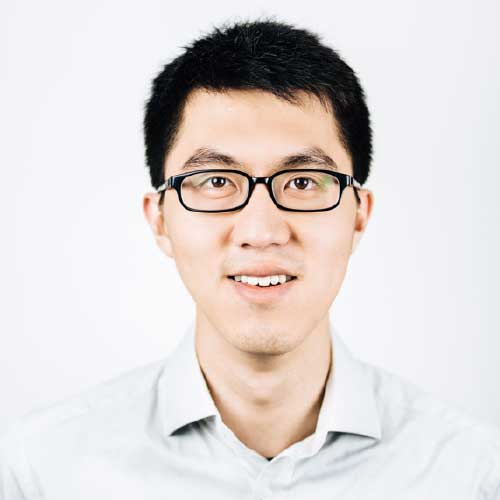 Reynold S. Xin (辛湜)合作论文数Databricks12
 Ali Ghodsi合作论文数Databricks;Computer Science Division, Department of Electrical Engineering & Computer Science, University of California, Berkeley11
 Michael Franklin合作论文数Department of Computer Science, University of Chicago10
 Ion Stoica合作论文数Department of Electrical Engineering and Computer Sciences, University of California, Berkeley;Anyscale;Databricks8
 David A. Patterson合作论文数Department of Electrical Engineering and Computer Sciences, University of California, Berkeley;Google8
 Tathagata Das合作论文数Databricks.com6
 Xiangrui Meng合作论文数Databricks5
 Anthony D. Joseph合作论文数Department of Electrical Engineering and Computer Science, University of California, Berkeley5
 Armando Fox合作论文数Department of Electrical Engineering & Computer Sciences, College of Engineering, University of California, Berkeley5
 Andy Konwinski合作论文数Laude Ventures;Perplexity AI;University of California, Berkeley;CS Graduate Ventures;Databricks5
 R Griffith合作论文数4Patrick Wendell合作论文数4
 Shivaram Venkataraman合作论文数N+1 Institute, Department of Computer Sciences, School of Computer, Data & Information Sciences, University of Wisconsin–Madison4A Fox合作论文数3Joseph Torres合作论文数Databricks Inc., San Francisco, CA, USA3G Lee合作论文数3
 Randy H. Katz合作论文数Computer Science Division, Department of Electrical Engineering and Computer Science, University of California, Berkeley3
 Scott Shenker合作论文数International Computer Science Institute, University of California, Berkeley;Division of Computer Science, University of California, Berkeley3
 Joshua Rosen合作论文数UC Berkeley3
 Joseph E. Gonzalez合作论文数Division of Computer Science, Department of Electrical Engineering and Computer Science, University of California, Berkeley3
 Ankur Dave合作论文数Databricks3Mukul Murthy合作论文数2
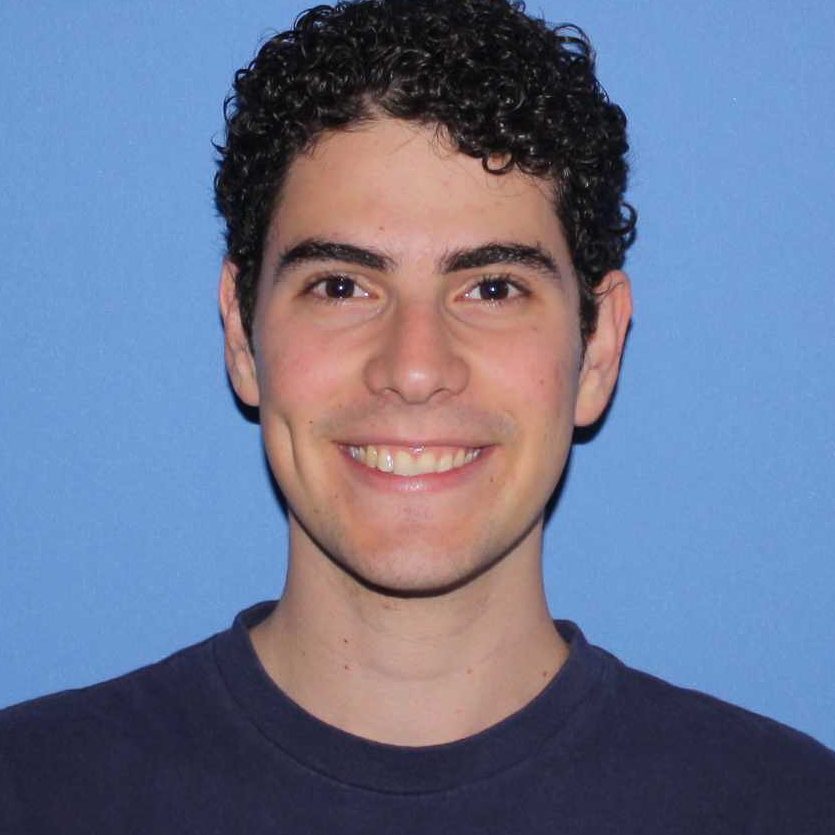 Tomer Kaftan合作论文数OpenAI2
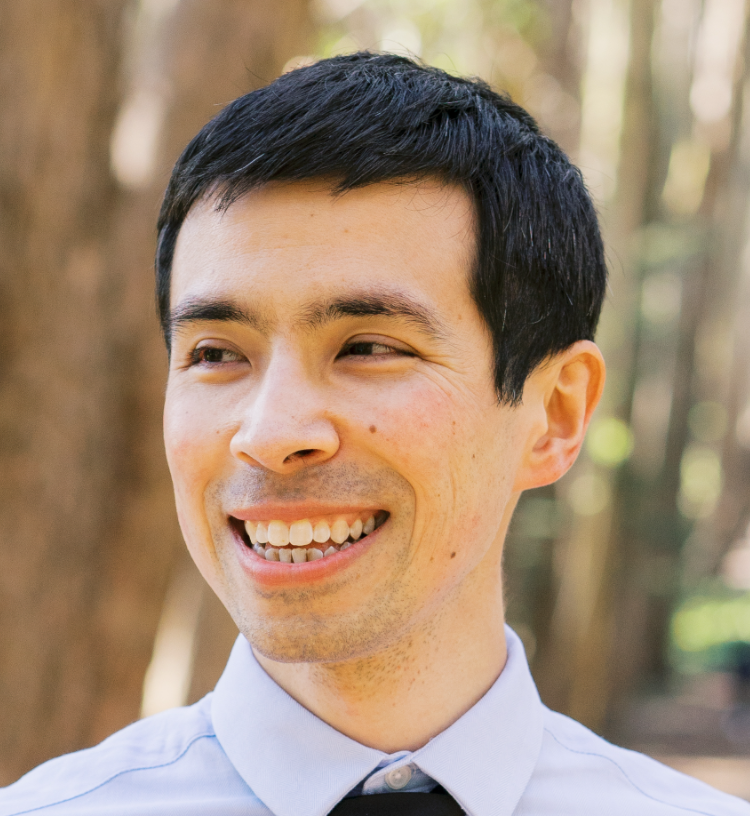 Joseph Kurata Bradley合作论文数Databricks2
 Davies Liu合作论文数Juicedata2Yin Huai合作论文数2
 Cheng Lian合作论文数Databricks2
 Burak Yavuz合作论文数Databricks2Shixiong Zhu合作论文数Databricks2
 Michael I. Jordan (迈克尔·乔丹)合作论文数Department of Electrical Engineering and Computer Sciences, University of California, Berkeley;Department of Statistics, University of California, Berkeley;Department of Industrial Engineering and Operations Research, University of California, Berkeley2
 Peter Bodík合作论文数Microsoft Research2
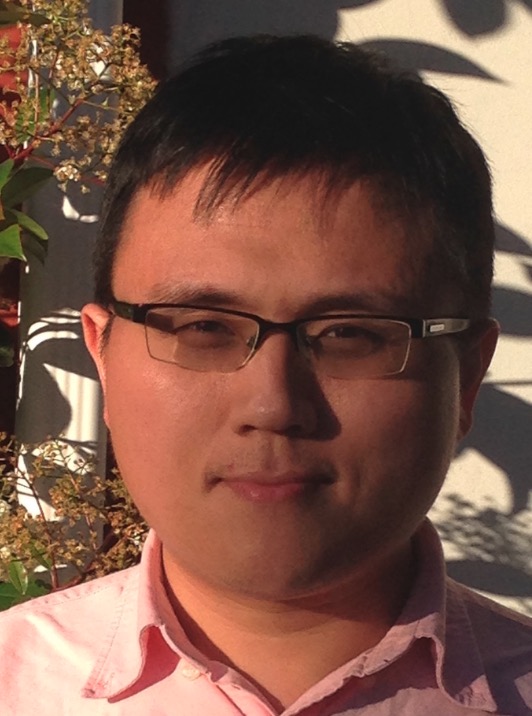 Yingyi Bu合作论文数Couchbase2Nick Lanham合作论文数2
 Gunho Lee合作论文数2
 Tim Kraska合作论文数Computer Science and Artificial Intelligence Laboratory, Massachusetts Institute of Technology2
 Yannis Papakonstantinou合作论文数Google Cloud2
 Ariel Rabkin合作论文数2
 Rean Griffith合作论文数2
 Beth Trushkowsky合作论文数2
 Kevin Robert Canini合作论文数University of California2y h katz合作论文数1AD Joseph合作论文数1
 Kristal Curtis合作论文数1Michal Switakowski合作论文数1Pieter Senster合作论文数1Sameer Paranjpye合作论文数1
 Liang Xi合作论文数1