Circuits implementing the concept of Selective Fault Tolerance according to [1] are fault-tolerant for a specified subset of inputs. In this paper, a new heuristic is presented to make the method of Selective Fault Tolerance applicable to industrial designs. The heuristic can be efficiently implemented by use of conventional design tools. Compared to TMR, the method, in combination with the heuristic, saves a huge amount of area redundancy and fault tolerance is adapted to the real requirements of a system specification. This is demonstrated by experimental results obtained from circuit descriptions in Verilog and a synthesis with the tool Synopsys.
This paper introduces the concept of Selective Fault Tolerance for sequential circuits. A sequential circuit that is designed according to this method is fault-tolerant for an arbitrarily selected subset of input sequences that are applied in one or more arbitrarily specified states. Once a selected input sequence is applied in a specified state, the circuit guarantees the same degree of fault tolerance as Triple Modular Redundancy (TMR). No fault tolerance is guaranteed in any other case. A simple heuristic algorithm for the design of such circuits is presented and for a benchmark circuit the reduction of area overhead compared to TMR is experimentally determined. The proposed method is a generalization of Selective Fault Tolerance for combinational circuits as described in [1].
This paper presents a new method of fault-tolerant design for combinational circuits. For an arbitrary chosen subset X 1 of inputs the designed system is fault-tolerant, but not necessarily for the other inputs. For all the inputs from X 1 the same level of fault tolerance as for Triple Modular Redundancy (TMR) is achieved. Compared to TMR the necessary area can be significantly reduced. Since the subset X 1 of inputs, for which the system is fault-tolerant, can be chosen by the designer, the proposed fault-tolerant design method is optimally adapted to the real requirements of fault tolerance.
This paper presents a new on-line checking scheme for asynchronous handshake protocols. The proposed scheme requires very small chip area while maintaining high coverage for all considered faults which are briefly exposed. In addition to simple pass-fail information the checker provides off-line diagnosis capabilities in order to further analyze the cause of a fault and the time of its occurrence. In order to verify its functionality the checker was proven by performing analogue simulations. In addition the area overhead and the power consumption was determined and compared with existing implementations.
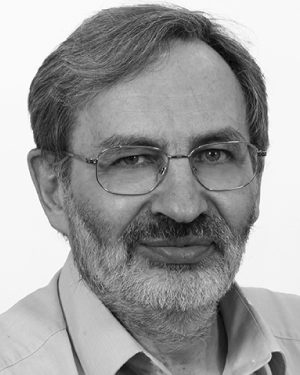 Rolf Kraemer合作论文数6
 Michael Goessel合作论文数6
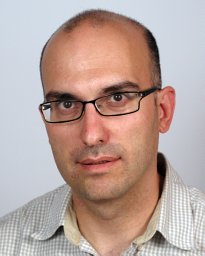 Milos Krstic合作论文数IHP2Haruo Kobayashi合作论文数1Sungho Kang合作论文数1Miao Tony He合作论文数1
 Marcus Ehrig合作论文数1Jerzy Dabrowski合作论文数1Nicola Nicolici合作论文数1Shuichi Kameyama合作论文数1Christoph Wolf合作论文数1
 André A. Mariano合作论文数1
 Gildas Leger合作论文数1
 Alberto Yufera合作论文数1Kai-Chiang Wu合作论文数1Osman Ekekon合作论文数1Leon Shohet合作论文数1Jin-Fu Li合作论文数1Jayashree Saxena合作论文数1Hans A. R. Manhaeve合作论文数1
 Adib Nahiyan合作论文数Univ Florida, Dept Elect & Comp Engn, Gainesville, FL 32611 USA1
 Álvaro Gómez-Pau合作论文数Electronics Engineering Department, Universitat Politècnica de Catalunya1
 Serge Bernard合作论文数University of Montpellier1
 Cristian Sorin Grecu合作论文数Department of Electrical and Computer Engineering, Faculty of Applied Science, The University of British Columbia1
 Kanad Basu合作论文数Department of Electrical & Computer Engineering, University of Texas at Dallas1Heinrich Theodor Vierhaus合作论文数1
 Chandan Bandyopadhyay合作论文数Bengal Eng. & Sci. Univ., Howrah, India;c;Bengal Eng. & Sci. Univ., Howrah, India|c|1Maximilien Glorieux合作论文数1
 Zipeng Li合作论文数Apple Inc1
 Manuel J. Barragan合作论文数1
 Krishnendu Chakrabarty合作论文数School of Electrical, Computer and Energy Engineering, Arizona State University;University of Bremen1
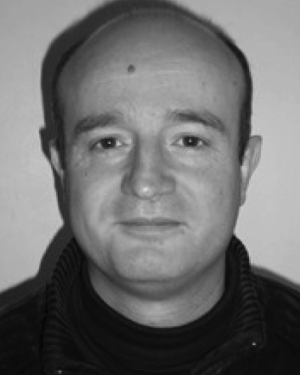 Salvador Mir合作论文数TIMA Laboratory, CNRS-Grenoble INP-UJF),1
 Mihalis Psarakis合作论文数University of Piraeus1Nisar Ahmed合作论文数Apple1
 Ioannis Voyiatzis合作论文数Department of Informatics, Technological Educational Institute of Athens1
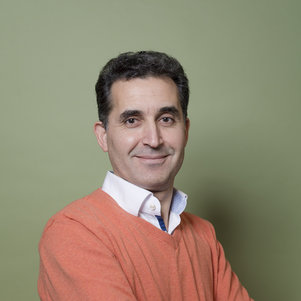 Said Hamdioui合作论文数Computer Engineering Laboratory, Delft University of Technology;MDnext;Faculty of Electrical Engineering, Mathematics and Computer Science, Delft University of Technology1
 Bashir M. Al-Hashimi合作论文数Department of Engineering, Faculty of Natural, Mathematical & Engineering Sciences, King’s College London1
 Dimitris Nikolos合作论文数Comp Engn & Informat Dept, Univ Patras1
 Michiko Inoue合作论文数Nara Institute of Science and Technology1
 Jiun-Lang Huang (黃俊郎)合作论文数Department of Electrical Engineering, National Taiwan University1
 Luis Entrena合作论文数Electronic Technology Department, Universidad Carlos III de Madrid1
 Sudhakar M. Reddy合作论文数Department of Electrical and Computer Engineering, College of Engineering, University of Iowa;Seamans Center for the Engineering Arts and Sciences, University of Iowa1Dominique Dallet合作论文数IMS Laboratory;University of Bordeaux;IMS Laboratory, University of Bordeaux1
 Eduardo Bezerra合作论文数1
 Lorena Anghel合作论文数TIMA Laboratory, Grenoble, France1
 Shyue-Kung Lu合作论文数1
 Joan Figueras合作论文数1
 Peter Maxwell合作论文数Test Spring School;Aptina Imaging1
 Subhasish Mitra合作论文数Department of Electrical Engineering, Stanford University;Department of Computer Science, Stanford University1




