Training in Deep learning (DL) remains highly compute- and data-intensive, with I/O becoming a critical bottleneck as models and datasets scale. Recent studies report that data loading can dominate training time, especially on large-scale HPC systems with shared parallel file systems (PFS). Existing caching approaches either rely on single-tier designs or require intrusive modifications to training pipelines, limiting their portability and effectiveness. In this work, we present FitCache, a transparent drop-in framework for multi-tier caching to accelerate distributed DL training by coordinating fast local memory (e.g., DRAM, Persistent Memory (PMem)) and NVMe as hierarchical caches atop PFS. Our design adapts to hardware diversity, i.e., if NVMe is missing, memory transparently acts as a caching tier, ensuring stable performance. FitCache transparently intercepts I/O requests and issues concurrent fetches across all tiers, returning data from the fastest responder without centralized metadata or static redirection paths. FitCache adapts to dynamic workloads and heterogeneous clusters while maintaining POSIX compatibility. Experiments on Frontier (2048 GPUs) and smaller research clusters show that FitCache reduces training time by up to 40% and per-batch I/O latency by up to 71.6% compared to Lustre Orion PFS, offering a drop-in solution for scalable DL training.
The evolving landscape of scientific computing requires seamless transitions from experimental to production HPC environments for interactive workflows. This paper presents a structured transition pathway developed at OLCF that bridges the gap between development testbeds and production systems. We address both technological and policy challenges, introducing frameworks for data streaming architectures, secure service interfaces, and adaptive resource scheduling for time-sensitive workloads and improved HPC interactivity. Our approach transforms traditional batch-oriented HPC into a more dynamic ecosystem capable of supporting modern scientific workflows that require near real-time data analysis, experimental steering, and cross-facility integration.
The Lustre filesystem serves as a vital element in high-performance parallel storage, meeting the rising demands of scientific, research, and enterprise environments. Widely deployed across HPC environments, ranging from small-scale applications in AI/ML, to domains like oil and gas, drug discovery, and meteorology, and manufacturing, Lustre addresses the universal challenge of efficiently accessing vast and ever-increasing volumes of data. Lustre is the filesystem of choice on six out of the top 10 fastest supercomputers in the world today, over 65% of the top 100, and also for over 60% of the top 500. Despite its widespread popularity, there is a lack of a complete and up-to-date reference, covering Lustre’s evolution, design, and various advancements made over the years. In this journal, we aim to fill this gap by providing a comprehensive journey of Lustre, including its history with significant contributions to HPC, detailed architecture and design elements, exploration of advancements added through its evolution, and future directions. Additionally, we present a comparison of Lustre with other prominent storage technologies of the era. To illustrate the current state of Lustre, we analyze several filesystem trends, including utilization, performance, and usage patterns on Orion, the Lustre filesystem on the first exascale supercomputer Frontier. We hope that this journal serves as a comprehensive educational reference for the current and future generations interested in HPC filesystem storage aspects.
The Secure Scientific Service Mesh (S3M) provides API-driven infrastructure to accelerate scientific discovery through automated research workflows. By integrating near real-time streaming capabilities, intelligent workflow orchestration, and fine-grained authorization within a service mesh architecture, S3M enables secure and flexible programmatic access to high performance computing (HPC) resources. This framework allows intelligent agents and experimental facilities to dynamically provision resources and execute complex workflows, accelerating experimental lifecycles, and enabling AI-augmented autonomous science. S3M establishes a modern foundation for scientific computing infrastructure that significantly reduces traditional barriers between researchers, computational resources, and experimental facilities.
Memory-to-memory data streaming is essential for modern scientific workflows that require near real-time data analysis, experimental steering, and informed decision-making during experiment execution. It eliminates the latency bottlenecks associated with file-based transfers to parallel storage, enabling rapid data movement between experimental facilities and HPC systems. These tightly coupled experimental-HPC workflows demand low latency, high throughput, and reliable data delivery to support on-the-fly analysis and timely feedback for experimental control. Off-the-shelf messaging frameworks are increasingly considered viable solutions for enabling such direct memory streaming due to their maturity, broad adoption, and ability to abstract core messaging and reliability functionalities from the application layer. However, effectively meeting the workflows' requirements depends on utilizing the framework's capabilities and carefully tuning its configurations. In this paper, we present a study that investigates the messaging parameters, and their configuration choices that impact the streaming requirements of two representative scientific workflows. We specifically characterize throughput trade-offs associated with reliable message transmission for these workflows. Our study is conducted through streaming simulations using synthetic workloads derived from the Deleria and LCLS workflows, employing the RabbitMQ messaging framework within the context of the Data Streaming to HPC infrastructure at OLCF. Our simulations reveal several key observations and practical insights that help users understand which configurations best meet the needs of their streaming workloads.
We present a framework to provide privacy preserving (PP) federating learning (FL) across multiple computational and experimental facilities. This work joins the compute capabilities of National Energy Research Scientific Computing Center (NERSC) and Oak Ridge National Laboratory Research Cloud (ORC) with simulated experimental data, such as those produced at the SLAC National Accelerator Laboratory and Spallation Neutron Source (SNS). We describe the software infrastructure developed to provide privacy for computational and experimental networks. We developed algorithmic privacy across the federated system by embedding database security, computation, and communication into the federation architecture, utilizing scientific tools developed by the experimental community.
Cutting-edge science is increasingly data-driven due to the emergence of scientific machine learning models that can guide scientists toward fruitful areas of exploration. Experimental science facilities such as light and neutron sources, particle colliders, and radio astronomy telescopes are also producing raw measurement data at rates that exceed available data storage and computing capacity at those facilities. As a result, scientific workflows are being developed that concurrently couple experiments at science facilities with high-performance computing (HPC) facilities to enable analysis of experimental data while the experiment is ongoing, and where analysis results are potentially fed back to the experiment for use in experimental control and/or steering in a time-sensitive manner. Our goal is to design, prototype, and deploy a new capability for the Oak Ridge Leadership Computing Facility (OLCF) that enables such workflows through support for bidirectional, memory-based streaming of data from external experiments into and out of OLCF HPC systems. This high-level design document describes the related work and motivating use cases that inform our understanding of the technical requirements for this capability, and describes a proposed architectural solution that meets these requirements and our plans for demonstrating the capability.
Microservices architecture is a promising approach for developing reusable scientific workflow capabilities for integrating diverse resources, such as experimental and observational instruments and advanced computational and data management systems, across many distributed organizations and facilities. In this paper, we describe how the INTERSECT Open Architecture leverages federated systems of microservices to construct interconnected science ecosystems, review how the INTERSECT software development kit eases microservice capability development, and demonstrate the use of such capabilities for deploying an example multi-facility INTERSECT ecosystem.
A federated instrument-to-edge-to-center architecture is needed to autonomously collect, transfer, store, process, curate, and archive scientific data and reduce human-in-the-loop needs with (a) common interfaces to leverage community and custom software, (b) pluggability to permit adaptable solutions, reuse, and digital twins, and (c) an open standard to enable adoption by science facilities world-wide. The Selfdriven Experiments for Science/Interconnected Science Ecosystem (INTERSECT) Open Architecture enables science breakthroughs using intelligent networked systems, instruments and facilities with autonomous experiments, “self-driving” laboratories, smart manufacturing and artificial intelligence (AI) driven design, discovery and evaluation. It creates an open federated architecture for the laboratory of the future using a novel approach, consisting of (1) science use case design patterns, (2) a system of systems architecture, and (3) a microservice architecture.
We introduce UnifyFS, a user-level file system that aggregates node-local storage tiers available on high performance computing (HPC) systems and makes them available to HPC applications under a unified namespace. UnifyFS employs transparent I/O interception, so it does not require changes to application code and is compatible with commonly used HPC I/O libraries. The design of UnifyFS supports the predominant HPC I/O workloads and is optimized for bulk-synchronous I/O patterns. Furthermore, UnifyFS provides customizable file system semantics to flexibly adapt its behavior for diverse I/O workloads and storage devices. In this paper, we discuss the unique design goals and architecture of UnifyFS and evaluate its performance on a leadership-class HPC system. In our experimental results, we demonstrate that UnifyFS exhibits excellent scaling performance for write operations and can improve the performance of application checkpoint operations by as much as 3× versus a tuned configuration.
As the US Department of Energy (DOE) computing facilities began deploying petascale systems in 2008, DOE was already setting its sights on exascale. In that year, DARPA published a report on the feasibility of reaching exascale. The report authors identified several key challenges in the pursuit of exascale including power, memory, concurrency, and resiliency. That report informed the DOE's computing strategy for reaching exascale. With the deployment of Oak Ridge National Laboratory's Frontier supercomputer, we have officially entered the exascale era. In this paper, we discuss Frontier's architecture, how it addresses those challenges, and describe some early application results from Oak Ridge Leadership Computing Facility's Center of Excellence and the Exascale Computing Project.
As the US Department of Energy (DOE) computing facilities began deploying petascale systems in 2008, DOE was already setting its sights on exascale. In that year, DARPA published a report on the feasibility of reaching exascale. The report authors identified several key challenges in the pursuit of exascale including power, memory, concurrency, and resiliency. That report informed the DOE's computing strategy for reaching exascale. With the deployment of Oak Ridge National Laboratory's Frontier supercomputer, we have officially entered the exascale era. In this paper, we discuss Frontier's architecture, how it addresses those challenges, and describe some early application results from Oak Ridge Leadership Computing Facility's Center of Excellence and the Exascale Computing Project.
At the 2007 Cray User Group meeting, the Oak Ridge Leadership Computing Facility (OLCF) introduced the OLCF Test Harness (OTH), a framework[1] used for acceptance testing of the Jaguar supercomputer[2]. Since then, the OTH framework has evolved to version 2.0 which adds new features and streamlines usability. The OTH is the key piece of software used to orchestrate acceptance testing for all OLCF computational resources before they are deployed for production use, including our leadership class high performance computing (HPC) systems. The OTH framework is written in Python and is publicly available[3]. In this paper, we first describe the requirements, design, and structure of the OTH. Then, we present specific improvements developed to support acceptance testing of the OLCF’s Summit system[4]. We will also showcase new OTH features that have been added to streamline the acceptance test process as well as the motivation behind those changes. As part of this work, we also evaluated different workflow tools in order to determine whether these tools could complement the OTH in two key areas: automation and reporting. The advantages and disadvantages identified with each tool will be discussed. Lastly, we summarize the challenges and lessons learned collected from using the OTH for the acceptance of the last three flagship systems at the OLCF. These may be useful for other HPC centers developing their own testing frameworks or those interested in using the OTH. Keywords-automated testing framework, high performance computing, workflows
Summit, the latest flagship supercomputer deployed at Oak Ridge Leadership Computing Facility (OLCF), became the number one system in the TOP500 [ 17 ] list in June 2018 and retained its top spot in the November 2018 list. An extensive acceptance test plan was developed to evaluate the unique features introduced in the Summit architecture and system software stack. The acceptance test also includes tests to ensure that the system is reliable, stable, and performant.
We measure and analyze the performance observed when running applications and benchmarks before and after the Meltdown and Spectre fixes have been applied to the Cray supercomputers and supporting systems at the Oak Ridge Leadership Computing Facility (OLCF). Of particular interest is the effect of these fixes on applications selected from the OLCF portfolio when running at scale. This comprehensive study presents results from experiments run on Titan, Eos, Cumulus, and Percival supercomputers at the OLCF. The results from this study are useful for HPC users running on Cray supercomputers and serve to better understand the impact that these two vulnerabilities have on diverse HPC workloads at scale.
This paper describes the vision for UNITY, a new high-performance computing focused data storage abstraction that places the entire memory hierarchy, including both traditionally separated memory-and file-based data storage, into one storage continuum. Through the use of a novel API and a set of services centered around a smart runtime system, UNITY is able to provide a number of valuable and interesting benefits. The unified storage space provides a scalable and resilient data environment that dynamically manages the mapping of data onto available resources based on multiple factors, including desired persistence and energy budget considerations. By eliminating the need for high-performance computing domain scientists to develop architecture-dependent optimizations for rapidly evolving data storage technologies, UNITY addresses both ease-of-use and performance.
 Sarp Oral合作论文数Oak Ridge National Laboratory;Florida State University;OpenSFS14
 Barton P. Miller合作论文数Department of Computer Sciences, School of Computer, Data & Information Sciences, University of Wisconsin-Madison10
 Christopher Zimmer合作论文数Otsuka Maryland Research Institute9
 Veronica G. Melesse Vergara合作论文数6Wayne Joubert合作论文数5
 David Rogers合作论文数National Center for Computational Science, Oak Ridge National Laboratory5
 Reuben D. Budiardja合作论文数Physics Division;Oak Ridge National Laboratory;Physics Division, Oak Ridge National Laboratory5Ryan Adamson合作论文数4
 Tyler J. Skluzacek合作论文数Univ Chicago, Dept Comp Sci, Chicago, IL 60637 USA4Anjus George合作论文数4Swen Boehm合作论文数Oak Ridge Natl Lab, Comp Sci & Math Div, Oak Ridge, TN 37830 USA4
 Mallikarjun Shankar合作论文数Oak Ridge National Laboratory4Ross Miller合作论文数4Scott Atchley合作论文数Oak Ridge National Laboratory, Oak Ridge, TN4
 Rafael Ferreira Da Silva合作论文数Department of Computer Science at University of Southern California4
 Addi Malviya Thakur合作论文数3Olga Kuchar合作论文数3Thomas Papatheodore合作论文数3Matthew Ezell合作论文数3Verónica G. Vergara Larrea合作论文数Oak Ridge Natl Lab, Natl Ctr Computat Sci, Oak Ridge, TN USA3
 Marshall Mcdonnell合作论文数Comp Sci & Math Div, Oak Ridge Natl Lab3Don Maxwell合作论文数3
 Patrick Widener合作论文数Oak Ridge National Laboratory, US Department of Energy3Feiyi Wang (王菲易)合作论文数Center of Computational Science
Oak Ridge National Laboratory3
Patrick Widener合作论文数Oak Ridge National Laboratory, US Department of Energy3Feiyi Wang (王菲易)合作论文数Center of Computational Science
Oak Ridge National Laboratory3 Jack Lange合作论文数Department of Electrical Engineering and Computer Science, Northwestern University3Ryan Prout合作论文数2Ashley Barker合作论文数2Stephen Nichols合作论文数2James Simmons合作论文数2Christopher Fuson合作论文数2Joshua K. Lothian合作论文数2Antigoni Georgiadou合作论文数2K. McMahon合作论文数Hewlett Packard Enterprise2
 John Lange合作论文数2
 Arnold Tharrington合作论文数2Stan G. Moore合作论文数2Subil Abraham合作论文数2Jesse Hanley合作论文数2
 Philipp Grete合作论文数Department of Physics and Astronomy, Michigan State University2
 Evan E Schneider合作论文数Department of Physics and Astronomy, University of Pittsburgh2
 Axel Huebl合作论文数Inst. for Radiat. Phys., Helmholtz-Zentrum Dresden-Rossendorf;c;Inst. for Radiat. Phys., Helmholtz-Zentrum Dresden-Rossendorf2
 Steven P. Hamilton合作论文数2
 Daniel Jacobson合作论文数Biosciences Division, Oak Ridge National Laboratory2
 Thomas L Beck合作论文数Department of Chemistry, University of Cincinnati;Oak Ridge National Laboratory, US Department of Energy2
 Oscar elias Hernandez合作论文数Department of Computer Science, University of Houston2
 Markus Eisenbach合作论文数Oak Ridge National Laboratory2
 J.-L. Vay合作论文数Lawrence Berkeley National Laboratory2
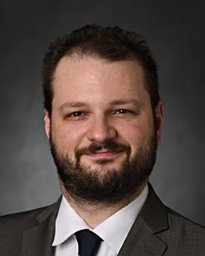 Elia Merzari合作论文数Research Laboratory for Nuclear Reactors N1-5, Tokyo Institute of Technology2
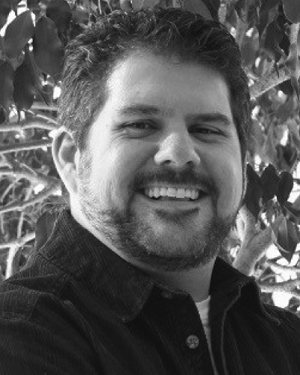 Adam Moody合作论文数Lawrence Livermore National Laboratory2




