OBJECTIVES:The goal of this study was to compare the efficacy of elective stent implantation and balloon angioplasty for new lesions in small coronary arteries. BACKGROUND:Palmaz-Schatz stents have been designed and approved by the Food and Drug Administration for use in coronary arteries with diameters > or = 3.0 mm. The efficacy of elective stent placement in smaller vessels has not been determined. METHODS:By quantitative coronary angiography, 331 patients in the Stent Restenosis Study (STRESS) I-II were determined to have a reference vessel < 3.0 mm in diameter. Of these, 163 patients were randomly assigned to stenting (mean diameter 2.69 +/- 0.21 mm), and 168 patients were assigned to angioplasty (mean diameter 2.64 +/- 0.24 mm). The primary end point was restenosis, defined as > or = 50% diameter stenosis at 6-month follow-up angiography. Clinical event rates at 1 year were assessed. RESULTS:Baseline clinical and angiographic characteristics were similar in the two groups. Procedural success was achieved in 100% of patients assigned to stenting and in 92% of patients assigned to angioplasty (p < 0.001). Abrupt closure within 30 days occurred in 3.6% of patients in both groups. Compared with angioplasty, stenting conferred a significantly larger postprocedural lumen diameter (2.26 vs. 1.80 mm, p < 0.001) and a larger lumen at 6 months (1.54 vs. 1.27 mm, p < 0.001). Restenosis (> or = 50% diameter stenosis at follow-up) occurred in 34% of patients assigned to stenting and in 55% of patients assigned to angioplasty (p < 0.001). At 1 year, event-free survival was achieved in 78% of the stent group and in 67% of the angioplasty group (p = 0.019). CONCLUSIONS:These findings suggest that elective stent placement provides superior angiographic and clinical outcomes than balloon angioplasty in vessels slightly smaller than 3 mm.
BACKGROUNDCoronary angiography may not reliably predict whether a stenosis causes exercise-induced ischemia. Intracoronary Doppler ultrasound may enhance diagnostic accuracy by providing a physiological assessment of stenosis severity. The goal of this study was to compare intracoronary Doppler ultrasound with both 201Tl imaging and coronary angiography.METHODS AND RESULTSFifty-five patients with 67 stenotic coronary arteries underwent coronary angiography with intracoronary Doppler ultrasound and had exercise 201Tl testing within a 1-week period. Coronary flow reserve was measured, and analyses were performed by independent core laboratories. The mean stenosis was 59+/-12%; 51 of 67 stenoses were intermediate in severity (40% to 70%). A coronary flow reserve < 1.7 predicted the presence of a stress 201Tl defect in 56 of 67 stenoses (agreement=84%; kappa=0.67; 95% CI=0.48 to 0.86). In the patients who achieved 75% of their predicted maximum heart rate, the Doppler and 201Tl imaging data agreed in 46 of 52 stenoses (agreement=88%; kappa=0.77; 95%CI=0.57 to 0.97). Scatter was evident when angiography was compared with coronary flow reserve (r=.43), and the angiogram did not reliably predict the results of the 201Tl stress test (kappa=0.21; agreement=57% to 63%).CONCLUSIONSDoppler-derived coronary flow reserve accurately predicts the presence of exercise-induced ischemia on stress 201Tl imaging, and coronary angiography does not reliably assess the physiological significance of an intermediate coronary stenosis.
Background Adverse cardiovascular events associated with thrombotic occlusion occur in 4% to 12.8% of patients after coronary angioplasty. Recently, potent antiplatelet agents have been used to reduce those thrombotic complications. Tirofiban is a highly selective, short-acting inhibitor of fibrinogen binding to platelet glycoprotein (GP) IIb/IIIa that inhibits ex vivo platelet aggregation in response to a variety of agonists. Methods and Results The RESTORE trial (Randomized Efficacy Study of Tirofiban for Outcomes and REstenosis) was a randomized, double-blind, placebo-controlled trial of tirofiban in patients undergoing coronary interventions (balloon angioplasty or directional atherectomy) within 72 hours of presentation with an acute coronary syndrome (unstable angina pectoris or acute myocardial infarction). The end points of the study were death from any cause, myocardial infarction, coronary bypass surgery due to angioplasty failure or recurrent ischemia, repeat target-vessel angioplasty for recurrent ischemia, and insertion of a stent due to actual or threatened abrupt closure of the dilated artery, and the primary end point was a composite representing the occurrence of any of these events. The prespecified primary hypothesis of the study was that tirofiban, administered as a bolus of 10 μg/kg over a 3-minute period and followed by a 36-hour infusion of 0.15 μg · kg −1 · min −1 , would result in a reduction in the 30-day composite end point compared with placebo. Patients (n=2139) who were already receiving treatment with aspirin and heparin were randomized to receive tirofiban or placebo. The primary composite end point at 30 days was reduced from 12.2% in the placebo group to 10.3% in the tirofiban group, a 16% relative reduction ( P =.160). However, 2 days after angioplasty, the tirofiban group had a 38% relative reduction in the composite end point ( P ≤.005), and at 7 days there was a 27% relative reduction (P=.022), largely because of a reduction in nonfatal myocardial infarction and the need for repeat angioplasty. When repeat angioplasty or coronary artery bypass surgery procedures were included in the composite only if performed on an urgent or emergency basis, the composite 30-day event rates were 10.5% for the placebo group and 8.0% for the tirofiban group, a relative reduction of 24% ( P =.052). Major bleeding, including transfusion, was not significantly different between the two groups (3.7% in the placebo group and 5.3% in the tirofiban group; P =.096). When the Thrombolysis In Myocardial Infarction (TIMI) criteria for major bleeding were used, the incidence was 2.1% in the placebo group compared with 2.4% in the tirofiban group ( P =.662). Thrombocytopenia was similar in the placebo and tirofiban groups (0.9% for the placebo group versus 1.1% for the tirofiban group; P =.709). Conclusions In patients undergoing coronary angioplasty for acute coronary syndromes, tirofiban protects against early adverse cardiac events related to thrombotic closure. At 30 days, however, the reduction in adverse cardiac events was no longer statistically significant. The bleeding observed with tirofiban was not statistically different from that observed with placebo.
Background Coronary stenting has been shown to improve initial success, reduce angiographic restenosis, and reduce the need for repeat revascularization compared with conventional balloon angioplasty (PTCA). Although previous studies have demonstrated that initial hospital costs for stenting are considerably higher than those for conventional PTCA, the impact of coronary stenting on long-term medical care costs remains unknown.Methods and Results Between January 1991 and June 1993, 207 consecutive patients with symptomatic coronary disease requiring revascularization of a single coronary lesion were randomized to receive initial treatment by either PTCA (n=105) or Palmaz-Schatz coronary stent implantation (n=102) in the multicenter STRESS trial. Detailed resource utilization and cost data were collected for each patient's initial hospitalization and for any subsequent hospital visits for 1 year after randomization. Compared with conventional angioplasty, coronary stenting resulted in additional catheterization laboratory costs, increased vascular complications, and longer length of stay. Initial hospital costs were thus approximate to$2200 higher for stenting than for PTCA ($9738+/-3248 versus $7505+/-5015; P<.001). Over the first year of follow-up, however, patients assigned to initial stenting were less likely to require rehospitalization for a cardiac condition and underwent fewer subsequent revascularization procedures. Follow-up medical care costs thus tended to be lower for stenting than for conventional angioplasty ($1988+/-4841 versus $3359+/-7100, P=.21). None theless, cumulative 1-year medical care costs remained higher for patients undergoing initial stenting ($11 656+/-5674 versus $10 865+/-9073, P<.011). Even after adjustment for the higher incidence of vascular complications in the stent group, total 1-year costs were $300 higher for stenting than for balloon angioplasty.Conclusions Elective coronary stenting, as performed in the randomized STRESS trial, increased total 1-year medical care costs by approximate to$800 per patient compared with conventional angioplasty. Future studies will be necessary to determine whether ongoing refinements in stent design, implantation techniques, and anticoagulation regimens can narrow this cost difference further by reducing stent-related vascular complications or length of stay.
Background Although several studies have established that the complications of percutaneous transluminal coronary angioplasty (PTCA) are related to clinical and angiographic variables such as advanced age and lesion complexity, it is uncertain whether the use of hospital resources after PTCA also depends on the same baseline variables. The purpose of this study was to identify the factors responsible for prolonged hospital stay after PTCA.Methods and Results The study cohort included 591 consecutive patients undergoing conventional balloon angioplasty at nine medical centers in North America. Major or minor complications occurred in 91 patients (15.4%) and were observed to be related to several baseline characteristics, including unstable angina, multivessel coronary artery disease, patient age, and lesion complexity. Compared with a median length of hospital stay of 2.0 days after PTCA (25th, 75th percentiles: 2.0, 4.0) for the entire cohort of patients, the length of stay was increased in patients with unstable angina (3.0 days [2.0, 5.0]; P=.002), multivessel coronary artery disease (3.0 [2.0, 5.5]; P=.001), age >65 years (3.0 [2.0, 5.5]; P=.02), complex lesions (3.0 [2.0, 6.0]; P=.001), and filling defects (6.0 [2.0, 11.0]; P<.001). The length of stay was more strikingly increased, however, in patients who experienced major or minor PTCA complications, such as emergency bypass surgery (9.0 days [8.0, 18.0]; P<.001), Q-wave or non-Q-wave myocardial infarction (8.0 [6.0, 15.5]; P<.001), transfusion unrelated to bypass surgery (8.0 [4.0, 12.0]; P<.001), or abrupt vessel closure (6.0 [3.0, 10.5]; P<.001). On stepwise multiple linear regression, PTCA complications appeared to be the strongest predictors of length of hospital stay (all P<.001) and overwhelmed the weaker relation between length of stay and several individual baseline variables. Inclusion of a composite clinical risk score (reflecting the presence of unstable angina, multivessel disease, advanced age, complex lesions, or filling defects) in the regression model confirmed that patients with several high-risk baseline variables had a significant increase in length of stay after PTCA (P=.003), but PTCA complications remained the strongest predictors of length of stay.Conclusions Although PTCA complications were correlated with baseline Variables such as unstable angina, multivessel disease, advanced age, complex lesions, and filling defects, excess length of stay after PTCA was most strongly influenced by the development of minor and major PTCA complications. Because patients with several baseline risk factors experienced significantly prolonged hospitalizations, improved selection of patients may contribute to reductions in length of stay after PTCA. A greater reduction in resource use after PTCA, however, would be expected from developing new treatments to decrease PTCA complications rather than limiting the access of patients with unstable angina, advanced age, or complex lesions to PTCA.
Background: Although the development of thrombus or dissection during percutaneous transluminal coronary angioplasty (PTCA) increases the risk of abrupt vessel closure, the magnitude of the effect is difficult to define. Objective: The aim of the study was to determine prospectively the effect of the development of thrombus or dissection on PTCA procedural outcome. Methods: Data from 591 consecutive angioplasty procedures involving 756 lesions at 9 clinical centers were included in a prospective registry with a core angiographic laboratory. Results: Clinical success (defined as < 50% stenosis of all target lesions assessed in a core angiographic laboratory, with no major complications of death, Q wave or non-Q wave myocardial infarction or emergency CABG) was achieved in 497 patients (84%). Major complications occurred in 45 (7.6%). Abrupt vessel closure, including both established closure (TIMI grade 0 or I flow) and impending closure (> 50% stenosis, TIMI grade 0-2 flow, plus use of additional interventions) occurred in 65 patients (11%). Angiographically visible dissections developed in 40% of lesions; more severe grades of dissection were associated with reduced success rates, and increased incidence of and abrupt vessel closure and major complication. Angiographic evidence of thrombus (filling defects) developed in 12.3% of lesions; the presence of thrombus was associated with significantly lower procedural success (61% vs. 86%) and significantly higher rates of abrupt vessel closure (28% vs 7%) and major complications (24% vs. 6%). With multivariable analysis, thrombus was identified as an independent predictor of procedural success, abrupt vessel closure, and major complications. Conclusion: The development of severe dissections or thrombus following PTCA is associated with significantly lower procedural success rates and higher rates of abrupt vessel closure and major complications. Patients who develop severe dissection or thrombus may be appropriate candidates for more aggressive forms of therapy.
To determine predictors of acute coronary dissection after coronary angioplasty, we studied 170 consecutive patients who underwent arterial dilatations of 234 arteries. Coronary dissection occurred in 103 (44%) arteries. More dissections occurred in women [40/73 (55%) versus 63/161 (39%), p < 0.03] and in patients with long lesions [45/74 (61%) versus 56/158 (35%), p < 0.0005]. Balloon/arterial diameter ratio was higher in patients with dissection (1.1 +/- 0.2 versus 1.0 +/- 0.2, p < 0.02). Complications did not differ in patients with and without dissection except for non-Q wave myocardial infarctions which were more frequent in patients with coronary dissection [10/12 (83%) versus 2/12 (17%), p < 0.01]. Thus coronary dissection during angioplasty is relatively frequent. However, most dissections are not associated with complications. Balloon dilatation of lesions in female patients and in patients with long lesions are more likely to result in dissection.
 D Wohlgelernter合作论文数14Henry Cabin合作论文数14Michael Remetz合作论文数8Cc Jaffe合作论文数7Sheldon Goldberg合作论文数7John W. Hirshfeld合作论文数7Hs Cabin合作论文数6Paul S Teirstein合作论文数6Ha Highman合作论文数5M Savage合作论文数5J Brennan合作论文数5
 David L Fischman合作论文数From Florida Heart Institute5C Jaffe合作论文数4
 Steven Pfau合作论文数Cardiovascular Medicine, Internal Medicine, Yale School of Medicine, Yale University4
 Richard R. Heuser合作论文数Arizona Heart Institute4Ian M. Penn合作论文数4
 Reuben Ilia合作论文数4R Bonan合作论文数3B Adelman合作论文数3J Setaro合作论文数3S McConnell合作论文数3M Nobuyoshi合作论文数3F Leya合作论文数3D Baim合作论文数3Mw Wolfe合作论文数3J Brinker合作论文数3
 Richard A. Schatz合作论文数Ralph H. Johnson Veterans Affairs Medical Center3
 Steven Bailey合作论文数Division of Cardiology, Department of Medicine, The University of Texas Health Science Center at San Antonio;Medical Arts & Research Center3
 Michael P. Savage合作论文数Cardiac Catheterization Laboratory, Jefferson Medical College, Thomas Jefferson University;Cardiac Catheterization Laboratory, Thomas Jefferson University Hospital3Sharon Gebhardt合作论文数3Teresa Caulin-Glaser合作论文数3J SHANI合作论文数2Ad Cannon合作论文数2Jw Moses合作论文数2Yc Chuang合作论文数2Sc Wong合作论文数2D Almond合作论文数2DL Fischman合作论文数2Ja Bittl合作论文数2Gs Roubin合作论文数2Ra Schatz合作论文数2Pj Varghese合作论文数2Dj Diver合作论文数2Mj Schweiger合作论文数2John Setaro合作论文数Cardiovascular Medicine, Internal Medicine, Yale School of Medicine, Yale University2
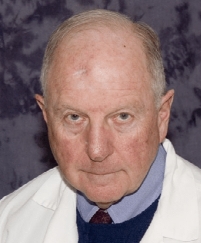 Bertram Pitt合作论文数Samuel and Jean Frankel Cardiovascular Center, University of Michigan;School of Medicine, University of Michigan2
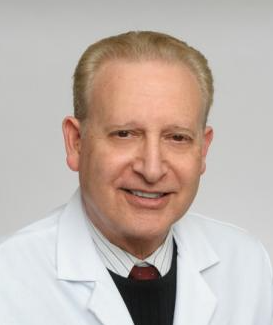 Martin Leon合作论文数Center for Interventional Vascular Therapy, Columbia University Medical Center2Lawrence I. Deckelbaum合作论文数2Jeffrey Moses合作论文数2




