This pictorial presents a case study of "Into the Makerverse", a community workshop that engaged about 250 children and parents in combining AI and tangible making to express desired futures for our city. We thematically analyzed 43 exit interviews and 70 (intro) and 48 (outro) questionnaires to surface themes of craft as meaning-making, prioritizing craft over AI, recognizing AI limitations, and moving beyond technocentric futures. Our discussion reflects on tangible making for AI literacy, participatory design futuring for emphasizing human agency with AI, and the importance of collaborating with local communities for AI engagements that are driven by genuine local interest. We extend and amplify calls for AI engagements that work in service of community desires for local futures and argue for a tangible craft-based approach to support this.
Children are the builders of the future and crucial to how the technologies around us develop. They are not voters but are participants in how the public spaces in a city are used. Through a workshop designed around kids of age 9-12, we investigate if novel technologies like artificial intelligence can be integrated in existing ways of play and performance to 1) re-imagine the future of civic spaces, 2) reflect on these novel technologies in the process and 3) build ways of civic engagement through play. We do this using a blend AI image generation and Puppet making to ultimately build future scenarios, perform debate and discussion around the futures and reflect on AI, its role and potential in their process. We present our findings of how AI helped envision these futures, aid performances, and report some initial reflections from children about the technology.
“Community Futures” presents a hybrid digital-physical workshop framework for Critical AI Literacy (CAIL) through making, performance, and design futuring. It focuses on site-specific, embodied positioning to counter over-generalizing AI output and supports a critique of AI through shared expressive activity. This approach is outlined in detail and was tested (n = 37, children aged 9–12) in a workshop combining GenAI co-creation and material puppetry in a design futuring activity. Through a mixed-methods analysis, we report how the children’s lived experiences served as a “ground truth,” and the performative expression enabled them to imagine local futures where generic algorithmic narratives failed to reflect local civic and environmental complexities. This paper contributes to critical AI education by proposing a novel adaptable hybrid framework of making, performance, and design futuring that is situated in children’s local environment.
Virtual reality (VR) uses head-mounted displays to simulate perceptuomotor experiences in physical environments. However, this mediated approach alters how visual information is presented compared to naturalistic viewing, which can affect user performance. One critical challenge in VR development is the vergenceaccommodation conflict (VAC), which stems from the inherent limitations of approximating natural viewing geometry through digital displays. Although various hardware and software solutions have been proposed to address VAC, no commercially viable option has been universally adopted. This paper presents and evaluates a software solution grounded in a vision-based geometrical model of VAC that alleviates VAC's impact on movement in VR. This model predicts the impact of VAC as a constant offset to the vergence angle, distorting the binocular viewing geometry that results in movement undershooting. In Experiment 1, a 3D pointing task validated the model's predictions and demonstrated that VAC primarily affects online movements involving real-time visual feedback. Experiment 2 implemented a shader program to rectify the effect of VAC, improving movement accuracy by approximately 30%. Overall, this work presented a practical approach to reducing the impact of VAC on HMD-based manual interactions, enhancing the user experience in virtual environments.
Capturing and communicating tacit knowledge remains a challenge for tangible interaction design. This project presents the third stage out of four of an educational interface evaluation for a tacit knowledge project in woodworking practices. It briefly covers earlier stages of the project, including sensing and interface design, before focusing on the evaluation (n= 14) of a customized block plane TUI. It argues from a sensing approach to the design and ultimately the feasibility of an educational interface for tacit knowledge. The evaluation combines SUS with soma-based approaches to capture a novel range of responses. The findings reveal how the interface fosters growing emotional engagement and shifting attention throughout the targeted woodworking practice. They demonstrate the value of soma-informed evaluation for tracking these temporal dynamics and point to future design directions for tacit knowledge interfaces. CCS Concepts center dot Human-centered computing -> User studies.
Entangled Histories Radio is a tangible interface that investigates the connection between local ecologies and the voices of the American Civil Rights Movement. The system senses real-time ecological data from the base of a tree and maps these inputs onto a curated archive of speeches and music from the movement. These sounds are played through a speculative object: a vintage radio. We position the urban forest as a "living archive" that interlocks with a historical human archive. In doing so, we explore how tangible, embodied experiences can bridge environmental and civil rights justice. This work-in-progress contributes a speculative approach for designing with living archives and offers a material response to critiques that more-than-human (MTH) design can overlook layered socio-political issues if not carefully attended to. CCS Concepts center dot Human-centered computing -> Human computer interaction (HCI).
Tacit knowledge remains central in design, art, and craft practices. At the same time, it remains difficult to capture, understand, and communicate such knowledge efficiently. We explore a 3-step pilot study on capturing, understanding, and communicating tacit knowledge in woodworking. We first present a way to capture tacit knowledge through a multi-sensory system that listens to human, material, and tool encounters. Then, we analyze data from the system comparing expert and amateur performances. Based on the analysis, we propose insights and design criteria for designing an educational interface for tacit learning in woodworking. Finally, we present a tangible interface based on these criteria and implemented for communicating tacit knowledge.
In "Mold Sounds," we design a more-than-human encounter that explores how biomaterials, specifically molds, can reorient narratives of toxicity towards polyphonic, multi-species assemblages that speak to queer ecologies. We designed an environment in which molds grow and interact with conductive components, thus altering the sounds produced by the artifact. We reflect on how this helps complicate essentialist, heteronormative narratives in human and non-human relations. Through material engagements, "Mold Sounds" fosters reflections on how we might design for polyphony, or multi-species temporal rhythms, reconsider the nature of toxicity, and explore the unpredictability of queer ecological entanglements in more-than-human design.
As children's everyday interaction with emerging technologies increases, they need to develop criticality to navigate ethical impacts of technology and when imagining futures with technology. We explore how design futuring can facilitate children's criticality through four different workshops with children from India, Finland, and the USA. Participants imagined futures with technologies while critically considering ethical impacts. In the findings, themes related to empowerment and ethics emerged in children's imagined futures. We discuss promoting criticality and empowerment with children's imagined futures, and how these futures can respond to diverse, local issues based on their lived experiences. Our work diversifies design research by highlighting local futures, and the criticality of those imagined futures, from children across the world.
Mixed reality technologies, such as virtual (VR) and augmented (AR) reality, present promising opportunities to advance education and professional training due to their adaptability to diverse contexts. Distortions in the perceived distance in such mediated conditions, however, are well documented and have imposed nontrivial challenges that complicate and limit transferring task performance in a virtual setting to the unmediated reality (UR). One potential source of the distance distortion is the vergence-accommodation conflict—the discrepancy between the depth specified by the eyes’ accommodative state and the angle at which the eyes converge to fixate on a target. The present study involved the use of a manual pointing task in UR, VR, and AR to quantify the magnitude of the potential depth distortion in each modality. Conceptualizing the effect of vergence-accommodation offset as a constant offset to the vergence angle, a model was developed based on the stereoscopic viewing geometry. Different versions of the model were used to fit and predict the behavioral data for all modalities. Results confirmed the validity of the conceptualization of vergence-accommodation as a device-specific vergence offset, which predicted up to 66% of the variance in the data. The fitted parameters indicate that, due to the vergence-accommodation conflict, participants’ vergence angle was driven outwards by approximately 0.2°, which disrupted the stereoscopic viewing geometry and produced distance distortion in VR and AR. The implications of this finding are discussed in the context of developing virtual environments that minimize the effect of depth distortion.
Tacit knowledge remains central in design, art, and craft practices but hard to trace and quantify. We present a multi-layered system to sense differences in a woodworking craft: the use of a traditional block plane tool. Our setup included sensing on the crafter, the tool, and the material. We pilot tested the prototype with amateurs and experts (n=6) to explore whether the system is capable to identify differences in tacit knowledge between participants’ performances. The initial results indicate differences in the individual handling of the tool and suggest that specifics of tacit knowledge can be quantified and related through the sensing setup.
We discuss existent approaches to trace tacit knowledge in craft practices through a turn to more-than-human centered design. This leads to a call for a multi-layered sensing system that covers not only the human body but also the tools and materials involved. Furthermore, it stresses the necessity of relational data collection and analysis. We present the design and implementation of this concept for a traditional woodworking practice: shaving wood with a block plane. In closing, we show feasibility of the suggested design through an initial pilot test. The argument contributes a theoretical turn to material-based sensing principles in the search for ways to track tacit knowledge, it outlines key design principles of this approach, provides an example implementation, and indicates a first validation through pilot data.
The popularity of mixed reality (MR) technologies, including virtual (VR) and augmented (AR) reality, have advanced many training and skill development applications. If successful, these technologies could be valuable for high-impact professional training, like medical operations or sports, where the physical resources could be limited or inaccessible. Despite MR's potential, it is still unclear whether repeatedly performing a task in MR would affect performance in the same or related tasks in the physical environment. To investigate this issue, participants executed a series of visually-guided manual pointing movements in the physical world before and after spending one hour in VR or AR performing similar movements. Results showed that, due to the MR headsets' intrinsic perceptual geometry, movements executed in VR were shorter and movements executed in AR were longer than the veridical Euclidean distance. Crucially, the sensorimotor bias in MR conditions also manifested in the subsequent post-test pointing task; participants transferring from VR initially undershoot whereas those from AR overshoot the target in the physical environment. These findings call for careful consideration of MR-based training because the exposure to MR may perturb the sensorimotor processes in the physical environment and negatively impact performance accuracy and transfer of training from MR to UR.
The material turn in HCI has refocused discussions with the help of new materialism and feminist technoscience on objects and materials as providing their own voices. Current frameworks build on this argument but recognizing the role of active materials in interaction design remains a challenge. This paper explores the conceptual opportunities that open in a nonhuman design space. Our argument resists human-centered tendencies in HCI and integrates materials as partners in our conceptualizations of design and design schemas. We offer the Material Correspondence Framework (MCF) as a materiality-based model for HCI that moves closer to new materialist approaches. The MCF marks interactions as forms of human and material becoming that are intertwining in a co-creative moment which occurs in-situ and at the encounter itself. Finally, we present a mapping technique for engaging materiality within interaction design.
How can interaction design counter the trend of declining cinema visits by improving the visitor experience? This project focuses on experiences of social immersion and shared emotions among cinema audiences. The After-movie Social Accelerator is based on specific key design criteria for emotion-sharing and offers a proof-of-concept implementation. The paper closes with a preliminary evaluation (n=6) that indicates the value of emotion-sharing in cinema experiences but also calls for more communication opportunities.
 Ali Mazalek合作论文数Georgia Institute of Technology16
 Tim Welsh合作论文数Department of Psychology, Faculty of Arts and Science, University of Toronto;Faculty of Kinesiology & Physical Education, University of Toronto13
 Paul Clifton合作论文数10Firaz Peer合作论文数Georgia Institute of Technology6Gabby Resch合作论文数Ryerson University5
 Xiaoye Michael Wang合作论文数Dept Kinesiol, Univ Toronto5
 Andrew Quitmeyer合作论文数Georgia Tech, Atlanta, GA, USA5Georgina Yeboah合作论文数OCAD University3Alison Doucette合作论文数3
 Jack Shen-Kuen Chang合作论文数Ryerson University West Lafayette, Purdue University3
 Brian O'Neill合作论文数School of Interactive Computing, Georgia Institute of Technology3
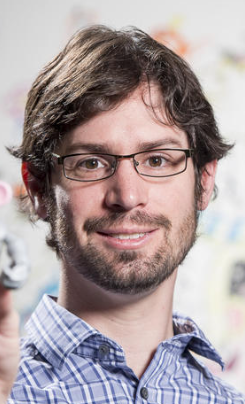 Mark Riedl合作论文数School of Interactive Computing, College of Computing, Georgia Institute of Technology3Friedrich Kirschner合作论文数3Fred Leighton合作论文数2
 Daniel Southwick合作论文数AGE-WELL, University Health Network2Elaine Yilin Liu合作论文数georgia institute of technology2Lauren Schaffer合作论文数2
 Noura Howell合作论文数School of Literature, Media, and Communication, Ivan Allen College of Liberal Arts, Georgia Institute of Technology2
 Connor Reid合作论文数2Ulrich Geske合作论文数2
 Walter Paulus合作论文数Göttingen Graduate Center for Neurosciences, Biophysics, and Molecular Biosciences, Georg-August-Universität Göttingen2
 Sanjay Chandrasekharan合作论文数Georgia Institute of Technology2
 Sumita Sharma合作论文数INTERACT Research Group, University of Oulu2
 Nicholas Davis合作论文数Georgia Institute of Technology2
 Ute Fischer合作论文数School of Literature, Media, and Communication, Ivan Allen College of Liberal Arts, Georgia Institute of Technology2Hye Yeon Nam合作论文数Georgia Institute of Technology2
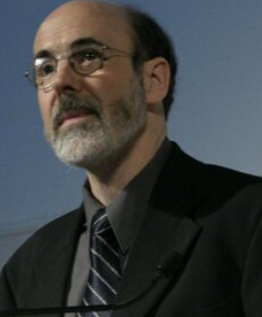 Jay David Bolter (Jay D. Bolter)合作论文数School of Literature, Media, and Communication, Ivan Allen College of Liberal Arts, Georgia Institute of Technology2Dilip Athreya合作论文数1Kimberley Jovanov合作论文数1Peichi Chung合作论文数1Johannes Pelka合作论文数1Blaire Bosley合作论文数1Kai Tan合作论文数1lonneke van der velden合作论文数1Robert Aust合作论文数1Sarah Schoemann合作论文数Digital Media, Georgia Inst Technol1
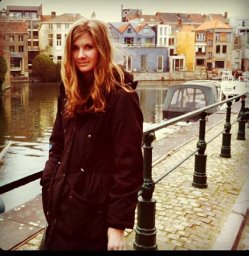 Anna Weisling合作论文数Georgia Institute of Technology, Atlanta, GA, USA1Ji-Su Park合作论文数1
 Heidi Hartikainen合作论文数Univ Oulu, Dept Informat Proc Sci, Oulu, Finland1
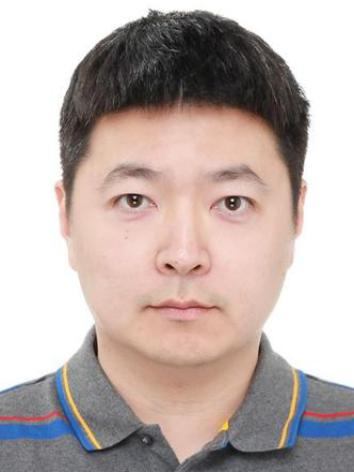 Boyang "Albert" Li合作论文数College of Computing and Data Science, Nanyang Technological University1
 Susan Primo合作论文数1
 Boyce Michael W合作论文数1Kutschenko Anna合作论文数1
 Eva Durall合作论文数1Eng Crystal合作论文数1
 Netta Iivari合作论文数INTERACT research unit, University of Oulu1
 Wei Liu (刘伟)合作论文数Department of Mechanical and Energy Engineering, College of Engineering, Southern University of Science and Technology1
 Antal, Andrea合作论文数Göttingen Graduate Center for Neurosciences, Biophysics, and Molecular Biosciences, School of Science, Georg-August University1
 Blair Macintyre合作论文数School of Art+Design, College of Arts, Media and Design, Northeastern University;Khoury College of Computer Sciences, Northeastern University;Jpmorgan Chase1




