The search for a Fermi surface in the absence of a conventional Fermi liquid has thus far yielded very few potential candidates. Among promising materials are spin-frustrated Mott insulators near the insulator–metal transition, where theory predicts a Fermi surface associated with neutral low-energy excitations. Here we reveal another route to experimentally realize a Fermi surface in the absence of a Fermi liquid by the experimental study of a Kondo insulator SmB6 positioned close to the insulator–metal transition. We present experimental signatures down to low temperatures (≪1 K) associated with a Fermi surface in the bulk, including a sizeable linear specific heat coefficient, and on the application of a finite magnetic field, bulk magnetic quantum oscillations, finite quantum oscillatory entropy, and substantial enhancement in thermal conductivity well below the charge gap energy scale. Thus, the weight of evidence indicates that despite an extreme instance of Fermi liquid breakdown in Kondo insulating SmB6, a Fermi surface arises from novel itinerant low-energy excitations that couple to magnetic fields, but not weak DC electric fields. Experimental study of the Kondo insulator SmB6 provides an alternative route to realize a Fermi surface in the absence of a conventional Fermi liquid.
We report measurements of in-plane electrical and thermal transport properties in the limit T -> 0 near the unconventional quantum critical point in the heavy-fermion metal beta-YbAlB4. The high Kondo temperature T-K similar or equal to 200 K in this material allows us to probe transport extremely close to the critical point, at unusually small values of T/T-K < 5 x 10(-4). Here we find that the Wiedemann-Franz law is obeyed at the lowest temperatures, implying that the Landau quasiparticles remain intact in the critical region. At finite temperatures we observe a non-Fermi-liquid T-linear dependence of inelastic-scattering processes to energies lower than those previously accessed. These processes have a weaker temperature dependence than in comparable heavy fermion quantum critical systems, revealing a temperature scale of T similar to 0.3 K which signals a sudden change in the character of the inelastic scattering.
We report the pressure dependence of the superconducting transition temperature, $T_c$, in TlNi$_2$Se$_{2-x}$S$_x$ detected via the AC susceptibility method. The pressure-temperature phase diagram constructed for TlNi$_{2}$Se$_{2}$, TlNi$_{2}$S$_{2}$ and TlNi$_{2}$SeS exhibits two unexpected features: (a) a sudden collapse of the superconducting state at moderate pressure for all three compositions and (b) a dome-shaped pressure dependence of $T_c$ for TlNi$_{2}$SeS. These results point to the nontrivial role of S substitution and its subtle interplay with applied pressure, as well as novel superconducting properties of the TlNi$_2$Se$_{2-x}$S$_x$ system.
In the quest to increase the critical temperature Tc of cuprate superconductors, it is essential to identify the factors that limit the strength of superconductivity. The upper critical field Hc2 is a fundamental measure of that strength, yet there is no agreement on its magnitude and doping dependence in cuprate superconductors. Here we show that the thermal conductivity can be used to directly detect Hc2 in the cuprates YBa2Cu3Oy, YBa2Cu4O8 and Tl2Ba2CuO6+δ, allowing us to map out Hc2 across the doping phase diagram. It exhibits two peaks, each located at a critical point where the Fermi surface of YBa2Cu3Oy is known to undergo a transformation. Below the higher critical point, the condensation energy, obtained directly from Hc2, suffers a sudden 20-fold collapse. This reveals that phase competition-associated with Fermi-surface reconstruction and charge-density-wave order-is a key limiting factor in the superconductivity of cuprates.
We report the effect of applied pressures on magnetic and superconducting order in single crystals of the aliovalent La-doped iron pnictide material Ca1-xLaxFe2As2. Using electrical transport, elastic neutron scattering, and resonant tunnel diode oscillator measurements on samples under both quasihydrostatic and hydrostatic pressure conditions, we report a series of phase diagrams spanning the range of substitution concentrations for both antiferromagnetic and superconducting ground states that include pressure-tuning through the antiferromagnetic (AFM) superconducting critical point. Our results indicate that the observed superconducting phase with a maximum transition temperature of T-c = 47 K is intrinsic to these materials, appearing only upon suppression of magnetic order by pressure-tuning through the AFM critical point. Thus, the superconducting phase appears to exist exclusively in juxtaposition to the antiferromagnetic phase in a manner similar to the oxygen- and fluorine-based iron-pnictide superconductors with the highest transition temperatures reported to date. Unlike the lower-T-c systems, in which superconductivity and magnetism usually coexist, the tendency for the highest-T-c systems to show noncoexistence provides an important insight into the distinct transition temperature limits in different members of the iron-based superconductor family.
The magnetization of three high-quality single crystals of YBa2Cu3O6+x, from slightly overdoped to heavily underdoped, has been measured using torque magnetometry. Striking effects in the angular dependence of the torque for the two underdoped crystals, a few degrees above the superconducting transition temperature (T-c), are described well by the theory of Gaussian superconducting fluctuations using a single adjustable parameter. The data at higher temperatures (T) are consistent with a strong cutoff in the fluctuations for T greater than or similar to 1.1T(c). Numerical estimates suggest that inelastic scattering could be responsible for this cutoff.
We present evidence for quantum oscillations in the pressure-induced metallic state of the 4$d$ layered perovskite Ca$_2$RuO$_4$. A complicated oscillation spectrum is observed, which is both temperature and field dependent, with unusually light cyclotron masses in the range of $m^*/m_e$ $\sim$ 0.6 -- 3, suggesting that the pressure-induced metallic state is a weakly correlated Fermi liquid. We compare our observations to band structure calculations within the local spin density approximation, and conclude that some features of the spectrum are a result of non-linear spin splitting effects.
Shubnikov-de Haas oscillations were measured in alpha-YbAlB4 at fields up to B = 16 T. Quantum oscillations were used to directly extract the quasiparticle mean free path by fitting to the Dingle decay yielding a mean free path similar to 550 angstrom. We also describe a novel fitting procedure used to extract a low frequency oscillation from the non-oscillatory background magneto-resistance.
We present Shubnikov-de Haas measurements on LuRh2Si2, the non-magnetic reference compound to the prototypical heavy-fermion system YbRh2Si2. We find an extensive set of orbits with clear angular dependences. Surprisingly, the agreement with non-correlated band structure calculations is limited. This may be related to an uncertainty in the calculations arising from a lack of knowledge about the exact Si atom position in the unit cell. The data on LuRh2Si2 provide an extensive basis for the interpretation of measurements on YbRh2Si2 indicative of discrepancies between the high-field Fermi surface of YbRh2Si2 and the "small" Fermi surface configuration.
We have measured the thermal conductivity of the iron pnictide superconductor LaFePO down to temperatures as low as T=60mK and in magnetic fields up to 5 T. The data shows a large residual contribution that is linear in temperature, consistent with the presence of low energy electronic quasiparticles. We interpret the magnitude of the linear term, as well as the field and temperature dependence of thermal transport in several pairing scenarios. The presence of an unusual supralinear temperature dependence of the electronic thermal conductivity in zero magnetic field, and a high scattering rate with minimal Tc suppression argues for a sign-changing nodal s+/- state.
The low temperature electrical and thermal transport properties of the itinerant ferromagnet ZrZn2 were investigated in order to explore the nature of the Fermi-liquid breakdown in this material. We have implemented electrical and thermal conductivity measurements down to temperatures of 100 mK and in high magnetic field. In zero field and above 2 K the electrical and effective thermal resistivities take a T5/3 and T-linear form, respectively. These are the signatures of the marginal Fermi-liquid, predicted to occur close to a ferromagnetic quantum critical point by spin fluctuation theory. In contrast, we find that below 2 K and in external magnetic field the electrical resistivity assumes a quadratic temperature dependence, consistent with a return to conventional Fermi-liquid behaviour.
We present an overview of unconventional phenomena arising close to ferromagnetic and ferroelectric quantum phase transitions. The applicability and potential breakdown of traditional field theories of quantum criticality and the emergence of a multiplicity of critical fields in particular will be discussed.
The Strongly Correlated Electron Systems Conference (SCES) 2011, was held from 29 August–3 September 2011, in Cambridge, UK. SCES'2011 was dedicated to 100 years of superconductivity and covered a range of topics in the area of strongly correlated systems. The correlated electronic and magnetic materials featured include f-electron based heavy fermion intermetallics and d-electron based transition metal compounds. The meeting welcomed to Cambridge 657 participants from 23 countries, who presented 127 talks (including 16 plenary, 57 invited, and 54 contributed) and 736 posters in 40 sessions over five full days of meetings. This proceedings volume contains papers reporting on the science presented at the meeting. This work deepens our understanding of the rich physical phenomena that arise from correlation effects. Strongly correlated systems are known for their remarkable array of emergent phenomena: the traditional subjects of superconductivity, magnetism and metal-insulator transitions have been joined by non-Fermi liquid phenomena, topologically protected quantum states, atomic and photonic gases, and quantum phase transitions. These are some of the most challenging and interesting phenomena in science. As well as the science driver, there is underlying interest in energy-dense materials, which make use of 'small' electrons packed to the highest possible density. These are by definition 'strongly correlated'. For example: good photovoltaics must be efficient optical absorbers, which means that photons will generate tightly bound electron-hole pairs (excitons) that must then be ionised at a heterointerface and transported to contacts; efficient solid state refrigeration depends on substantial entropy changes in a unit cell, with large local electrical or magnetic moments; efficient lighting is in a real sense the inverse of photovoltaics; the limit of an efficient battery is a supercapacitor employing mixed valent ions; fuel cells and solar to fuel conversion require us to understand electrochemistry on the scale of a single atom; and we already know that the only prospect for effective high temperature superconductivity involves strongly correlated materials. Even novel IT technologies are now seen to have value not just for novel function but also for efficiency. While strongly correlated electron systems continue to excite researchers and the public alike due to the fundamental science issues involved, it seems increasingly likely that support for the science will be leveraged by its impact on energy and sustainability. The conference owes its success to the large number of devoted workers for the cause, which includes the organising and programme committees and a considerable number of workers on the ground who contributed to the smooth running of the meeting. The conference received major sponsorship from CamCool Research Limited, the International Institute for Complex Adaptive Matter, from the European Science Foundation through the program INTELBIOMAT, and the Cambridge Central Asia Forum. On behalf of Conference Chairs: P B Littlewood and G G Lonzarich Secretary: S Saxena Treasurer: M Sutherland Local Organising Committee Chair: S E Sebastian Programme Committee Chairs: E Artacho, F M Grosche, Z Hadzibabic (The PDF file also contains photographs from the conference.) Programme Committee E. Artacho, Cambridge (chair) D. Cox, Davis M. Norman, Argonne M. Grosche, Cambridge (chair) H. Ding, IOP, China Y. Onuki, Osaka Z. Hadzibabic, Cambridge (chair) M. Ellerby, London C. Panagopoulos, Singapore H. Alloul, Paris Z. Fisk, Irvine S. Ramakrishnan, Mumbai E. Baggio-Saitovich, Rio Di Janeiro J. Flouquet, Grenoble A. Ramirez, Santa Cruz E. Bauer, Vienna A. Galatanu, Romania F. Rivadulla, Compostela N. Berloff, Cambridge P. Gegenwart, Gottingen S. E. Sebastian, Cambridge D. Bonn, Vancouver L. Greene, Urbana V. Sechovsky, Prague J. van den Brink, Dresden H. Hwang, Tokyo S. Simon, Oxford R. Budhani, Delhi A. P. Mackenzie, St.Andrews D. Snoke, Pittsburgh P. Chandra, Piscataway N. Mathur, Cambridge J.C. Gomez-Sal, Santander S-W. Cheong, Rutgers K. Miyake, Osaka V. Tripathi, Mumbai P. Coleman, Piscataway A Navrotsky, Davis A. Vasiliev, Moscow M. Vojta, Cologne Local Committee S. E. Sebastian (chair) R. Needs J. Keeling N. Mathur E. Pugh D. Khmelnitskii M. Parish M. Carpenter M. Koehl M. Atature R. Cowburn W. Milne C. Barnes J. McManus Driscoll S. Redfern N. Berloff A. Ferrari D. Ritchie M. Blamire C. Grey J. Robertson J. Baumberg Z. Hadzibabic B. Simons A. Cheetham National Advisory Committee G. Aeppli, London V. Falko, Lancaster M. Pepper, Cambridge A. Ardavan, Oxford R. Friend, Cambridge T. Perring, Didcot P. Attfield, Edinburgh C. Frost, Rutherford J. Saunders, London A. Boothroyd, Oxford G. Gehring, Shefield A. Schofield, Birmingham A. Coldea, Oxford S. Hayden, Bristol N. Shannon, Bristol L. Eaves, Nottingham N. Hussey, Bristol M. Skolnick, Sheffield D. Edwards, London A. Huxley, Edinburgh S. Thompson, York M. Ellerby, London H. Wilhelm, Didcot International Advisory Committee E. Abrahams, UCLA G. Kotliar, Piscataway E. V. Sampathkumaran, Mumbai G. Aeppli, London D. Khmelnitskii, Cambridge UK J. Sarrao, Los Alamos J. W. Allen, Ann Arbor K. Kugel, Moscow J. Schilling, St. Louise P. W. Anderson, Princeton C. Lacroix, Grenoble A. Schofield, Birmingham M. Aronson, Stony Brook P. A. LeeCambridge, USA V. Sechovsky, Prague Y. K. Bang, Kwangju and Pohang C.T. Liang, Taipei T. Senthil, Cambridge, USA M. Barma, Mumbai P. Majumdar, Allahabad J. G. Sereni, Bariloche G. Baskaran, Chennai Y. Maeno, Kyoto K. Shimizu, Osaka E. Bauer, Vienna J. Mannhart, Augsburg Q. Si, Houston G. Boebinger, Tallahassee M. B. Maple, San Diego M. Sigrist, Zurich R. Budhani, Delhi Y. Matsuda, Kyoto A. Simoni, Trento P. Canfield, Ames R. Moessner, Dresden D. Singh, Oak Ridge M. Continentino, Rio di Janiero A. Millis, New York A. Sood, Bangalore S. Coppersmith, Madison J. Mydosh, Leiden J. Spalek, Krakow B. Coqblin, Paris S. Nakatsuji, Tokyo F. Steglich, Dresden A. Chubukov, Madison G. Oomi, Kyushu G. R. Stewart, Gainesville C. Di Castro, Rome R. Osborn, Chicago H. Takagi, Tokyo M. Eremets, Mainz S. Ovchnikov, Krasnoyarsk L. Taillefer, Sherbrooke M. Fiebig, Bonn C. Panagopoulos, Singapore & Heraklion J. D. Thompson, Los Alamos Z. FiskIrvine S. Paschen, Vienna Y. Tokura, Tokyo J. Flouquet, Grenoble C. Pfleiderer, Munich K. Ueda, Tokyo P. Fulde, Dresden P. Phillips, Urbana C. M. Varma, Riverside A. Geim, Manchester D. Pines, Davis T. Vojta, Rolla J.C. Gomez-Sal, Santander T. V. Ramakrishnan, Bangalore N.L. Wang, Beijing A. Kavokin, Southampton A.K. Raychaudhuri, Calcutta T. Xiang, Beijing J. Goodenough, Austin M. Reifers, Kosice L. Yu, Beijing H. Hosono, Tokyo P. Riseborough, Philadelphia F. C. Zhang, Hong Kong S. Julian, Toronto M. L Saboungi, Orleans G. Zwicknagl, Braunschweig Operational Team Anson Cheung (co-ordinator) Hyeong Jin Kim Paul Nahai-Williamson Beng Tan (co-ordinator) Jack Gillett Peter Logg Cheng Liu (co-ordinator) Jo Wensley Prajakti Kalra Swee K. Goh (co-ordinator) Jonathan Silver Richard Brierley Adam Halski Lara Sibley Robert Hay Edd Cavanna Leona Hope Seb Haines Felix Nissen Lina Klintberg Sitikantha Das Gareth Conduit Marianne Bauer Stephen Rowley Gerie Lonzarich Matt Burgess Sven Friedemann Greg Lever Muhammad Ahsan Zeb Yang Zou Hannah Price Nick Bristowe Yiqian Xu Haruka Taniguchi Oleksandr Poplavskyy Zhuo Feng
Measurements of low-temperature transport and thermodynamic properties have been used to characterize the non-Fermi-liquid state of the itinerant ferromagnet ZrZn2. We observe a T-5/3 temperature dependence of the electrical resistivity at zero field, which becomes T-2-like in an applied field of 9 T. In zero field, we also measured the thermal conductivity, and we see a novel linear-in-T dependence of the difference between the thermal and electrical resistivities. Heat-capacity measurements, also at zero field, reveal an upturn in the electronic contribution at low temperatures when the phonon term is subtracted. Taken together, we argue that these properties are consistent with a marginal Fermi-liquid state, which is predicted by a mean-field model of enhanced spin fluctuations on the border of ferromagnetism in three dimensions. We compare our data to quantitative predictions and establish this model as a compelling theoretical framework for understanding ZrZn2.
A Viewpoint on: Lifshitz critical point in the cuprate superconductor YBa2Cu3Oy from high-field Hall effect measurements David LeBoeuf, Nicolas Doiron-Leyraud, B. Vignolle, Mike Sutherland, B. J. Ramshaw, J. Levallois, R. Daou, Francis Laliberté, Olivier Cyr-Choinière, Johan Chang, Y. J. Jo, L. Balicas, Ruixing Liang, D. A. Bonn, W. N. Hardy, Cyril Proust and Louis Taillefer Phys. Rev. B 83, 054506 (2011) – Published February 14, 2011
We present an overview of unconventional metallic states arising close to magnetic quantum critical points with a focus on d-electron systems. The applicability and potential breakdowns of traditional self-consistent field theories of such materials are discussed as well as related phenomena in other systems.
We present a detailed study of quantum oscillations in the antiferromagnetically ordered pnictide compound SrFe2As2 as the angle between the applied magnetic field and crystalline axes is varied. Our measurements were performed on high-quality single crystals in a superconducting magnet, and in pulsed magnetic fields up to 60 T, allowing us to observe orbits from several small Fermi-surface pockets. We extract the cyclotron effective mass m(star) and frequency F for these orbits and track their values as the field is rotated away from the c axis. While a constant ratio of m(star)/F is expected for a parabolic band, we observe deviations from this behavior. We conclude that this observation points to orbits derived from a band with Dirac dispersion near the Fermi level.
 Louis Taillefer合作论文数Département de Physique, Faculté des Sciences, Université de Sherbrooke29
 Robert W Hill合作论文数Department of Physics;University of Toronto;Department of Physics, University of Toronto26
 Johnpierre Paglione合作论文数Quantum Materials Center, Department of Physics, University of Maryland;Center for Nanophysics and Advanced Materials, University of Maryland25
 David G. Hawthorn合作论文数Department of Physics;University of Toronto;Department of Physics, University of Toronto23
 Filip Ronning合作论文数Institute for Materials Science, Los Alamos National Laboratory20
 Ruixing Liang合作论文数Advanced Materials and Process Engineering Laboratory, University of British Columbia14
 GOH Swee Kuan (吳瑞權)合作论文数Department of Physics,The Chinese University of Hong Kong14
 Walter N. Hardy合作论文数Department of Physics & Astronomy, The University of British Columbia14
 Douglas Bonn合作论文数Department of Physics & Astronomy, University of British Columbia14M. Tanatar合作论文数10Cyril Proust合作论文数10E. C. T. O'Farrell合作论文数10
 Makariy Tanatar合作论文数Division of Material Science and Engineering, Ames National Laboratory;Clayton Swensson Low Temperature laboratory9
 Shiyan Li (李世燕)合作论文数Department of Physics, Fudan University;Laboratory of Advanced Materials, Fudan University8
 Patricia Lebre Alireza合作论文数Department of Physics, Lucy Cavendish College, University of Cambridge8E. Boaknin合作论文数7
 F. Malte Grosche合作论文数University of Cambridge7
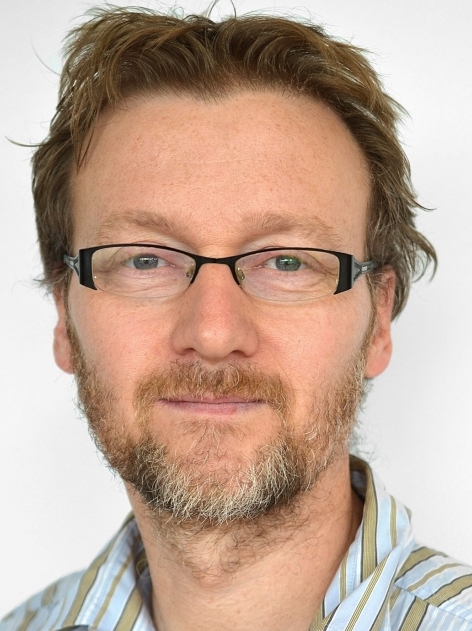 Nigel E. Hussey合作论文数Radboud University Nijmegen7
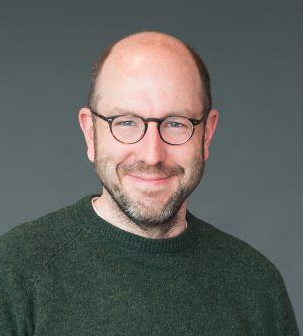 Nicolas Doiron-Leyraud合作论文数Ministère De L'économie Et De L'innovation Du Québec7G. G. Lonzarich合作论文数6Christoph Bergemann合作论文数6Etienne Boaknin合作论文数6
 Cedomir Petrovic合作论文数Brookhaven National Laboratory6
 Satoru Nakatsuji (中辻知)合作论文数Department of Physics, Graduate School of Science, The University of Tokyo;The Institute for Solid State Physics, The University of Tokyo;Department of Physics and Astronomy, Johns Hopkins University;Canadian Institute for Advanced Research5Stephen E. Rowley合作论文数5
 Yoshi Maeno (前野悦輝)合作论文数Department of Physics, Graduate School of Science, Kyoto University5
 Suchitra Sebastian合作论文数Cavendish Laboratory, Department of Physics, University of Cambridge5
 Luis Molinuevo Balicas合作论文数Department of Physics, College of Arts and Sciences, Florida State University5H. Takagi合作论文数4
 Siddharth Shanker Saxena合作论文数The Cavendish Laboratory, Department of Physics, University of Cambridge4
 Paul C. Canfield合作论文数Department of Physics and Astronomy, College of Liberal Arts and Sciences, Iowa State University of Science and Technology4
 Andrew Mackenzie合作论文数Max Planck Institute for Chemical Physics of Solids4
 Neil Harrison合作论文数The National High Magnetic Field Laboratory;Los Alamos National Laboratory4
 Sven Friedemann合作论文数School of Physics, University of Bristol4D. A. Tompsett合作论文数4
 Minoru Nohara (野原実)合作论文数Department of Quantum Matter, Hiroshima University4
 Zachary Fisk合作论文数Department of Physics and Astronomy, University of California, Irvine4
 Stephen Hayden合作论文数School of Physics, University of Bristol4J. Levallois合作论文数3C. Lupien合作论文数3K. Kuga合作论文数3
 J. Chang合作论文数3
 Brad Ramshaw合作论文数Department of Physics, College of Arts & Sciences, Cornell University;Canadian Institute for Advanced Research3
 Robin Perry合作论文数London Centre for Nanotechnology, University College London3Robert Smith合作论文数University of Cambridge3Toews W H合作论文数3
 M. Brian Maple合作论文数Jacobs School of Engineering, University of California San Diego;Department of Physics, University of California San Diego3Seiji Adachi合作论文数3Harry Zhang合作论文数3




