This paper outlines the preparation and properties of TiAl3 composite coatings by cold spray methods. It including cold spray process and heat treatment process, and through titanium aluminum equilibrium phase diagram analysis to guide the preparation of TiAl3 composite coatings by cold spray technology. It was studied that the crystal structure of the coatings, phase composition and high-temperature oxidation resistance. It explored that the preparation of Cr modified TiAl3 based L12 alloy coatings, and high temperature oxidation resistance of the composite coatings.
The development,characters and basic principle of AFLP technique were introduced in the paper.The AFLP technology has been extensively applied in sugarcane breeding,such as identifying varieties or germplasms,verifying of genetic diversities,constructing of molecular genetic maps,localizing and cloning genes,assistant breeding,and studying gene expression,regulation,classification as well as evolution,etc.,it has shown a bright future in the sugarcane breeding application.
The genomic DNAs of the ROC25 and ROC23 were analyzed with the technology of Amplified Fragment Length Polymorphism(AFLP).Five pairs of AFLP primers were selected from the 110 pairs primer which had rich polymorphism for the genomic DNA of sugarcane.They are the E2/M4,E4/M5,E5/M6,E11/M7 and E2/M6,which provide a reference for sugarcane genetic research with AFLP.
Offspring of wheat cultivars Jing 411 (J411) and Xiaoyan 54 (X54) were compared with parent plants in photosynthetic rates of flag leaves at grain filling stage. Higher photosynthetic rate (10% higher than that of parent plants) in a line 1-15 (F_(3) generation) plants was observed and this higher photosynthetic capacity was also observed in F_(4) generation. Based on our preliminary experiments, the possibility of taking higher photosynthetic capacity as an important criterion in breeding of wheat varieties and its practical difficulties were discussed.
随着啤酒酿造工业的飞速发展,我国已成为世界上第二啤酒生产大国,年产啤酒2 000万t以上,年需求啤酒大麦原料450万t以上,由于国产啤麦品种还不尽人意和未形成大面积原料基地,使国家每年进口啤酒大麦原料200万~300万t,由于进口量大,往往原料品质得不到保证,浪费了大量的人力物力,一个产业的原料依赖进口也不是我国啤酒酿造业发展之路,随着啤酒工业的发展,大量的啤麦需求国外也无法供应.
 Huiquan Shen合作论文数1qike wei (魏其克)合作论文数1Zhang Ximei (张锡梅)合作论文数1jijun zhang (张吉军)合作论文数1HongWei Wang (王宏炜)合作论文数1HuaZi Jin (金花子)合作论文数1WeiKuan Fang (方位宽)合作论文数1ChaoXu Liang (梁朝旭)合作论文数1He Chen (陈和)合作论文数Institute of Agricultural Sciences in the Coastal Areas in Jiangsu1XiaoJing Chen (陈晓静)合作论文数1Jun Liang (梁俊)合作论文数1Jing Zhang (张敬)合作论文数1Jie Wu (吴杰)合作论文数1Jian Chen (陈健)合作论文数1Bin Li (李滨)合作论文数1
 Tianying Xiong (熊天英)合作论文数中国科学院金属研究所1
 Zhensheng Li (李振声)合作论文数Institute of Genetics and Developmental Biology, Chinese Academy of Sciences;University of Chinese Academy of Sciences1Ansheng Li (李安生)合作论文数1
 Xiaobing Shi合作论文数Department of Epigenetics, Van Andel Institute1
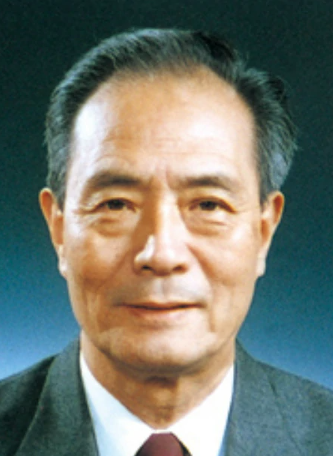 Yungang Shen (沈允钢)合作论文数Institute of Plant Physiology and Ecology, Chinese Academy of Sciences1
 Jing Yang (杨静)合作论文数Institute of Semiconductors, Chinese Academy of Sciences;University of Chinese Academy of Sciences1
 Yangrui Li (李杨瑞)合作论文数Sugarcane Research Institute, Guangxi Academy of Agricultural Sciences1Yumo Tan (谭裕模)合作论文数广西壮族自治区甘蔗研究所1




