This paper investigates numerically the correlation function in the frequency domain due to diffuse scattering originated from rough surfaces. The scattered fields are computed by means of physical optics methods. The irregularities of the rough surface are modeled as a correlated Gaussian process. The correlation of the channel transfer function comprising only diffuse scattering components is analyzed. In the analysis, radio propagation channels comprising orthogonally oriented dipoles at the link ends are considered while assuming different Gaussian roughness profiles. This study offers a useful characterization of the channel behavior in a multipath-rich environment due to diffuse scattering. The presented results are of particular interest to wireless systems based on orthogonal frequency-division multiplexing.
Propagation characteristics at 26, 28, and 38 GHz (Ka band) in outdoor environments are analyzed through path loss measurements in two different urban scenarios and used to tune a ray-tracing model, with specific focus on nonspecular scattering and vegetation attenuation. The contribution from nonspecular components in non-line-of-sight conditions is shown to be much more important than expected even for narrowband prediction, differently to what was found in previous studies at lower frequencies. Attenuation through vegetation is also very important and can be described using vegetation polygons and a simple linear attenuation model. When these effects are modeled inside the ray-tracing tool, prediction accuracy is good. However, scattering from vehicles and other cluttering objects is shown to give a relevant contribution in deep non-line-of-sight locations, and further work is needed to systematically model such effects into the ray-tracing engine.
In this paper 26GHz propagation in outdoor urban environment is investigated using path-loss measurements and ray-tracing simulation. The impact of advanced implementations such as diffuse scattering and vegetation attenuation is verified versus measurements in an outdoor scenario. The results show that the contribution from non-specular components in non-line-of-sight conditions is much more important than expected to achieve a good prediction accuracy at this frequency band. Moreover, vegetation attenuation is also very relevant and can be modeled using a simple, specific attenuation formula. Despite some deficiencies in the input database, the prediction accuracy is good and simulations are generally able to track the measurements behavior.
Wave propagation in tunnels for vehicle-to-vehicle (V2V) communications scenarios is characterized by multiple diffuse reflections on tunnel surfaces as well as specular reflections on other objects inside the tunnel, leading to a nonstationary fading process. Such a fading process is difficult to model by ray tracing (RT), requiring a prohibitively high computational complexity due to the large number of diffuse reflections. In this paper, we propose two new ideas for modeling diffuse reflections in nonstationary scenarios: 1) We partition the nonstationary fading process into multiple stationarity regions with a given extent in time and frequency for which approximate wide-sense stationarity can be assumed; 2) we propose a hybrid model, tightly interlinking RT with a propagation graph, such that vertices for the propagation graph are obtained from interaction points calculated by RT for each stationarity region. We compare our hybrid model with measurement data in terms of the time-variant power-delay and the Doppler-power spectral-density as well as the root-mean square delay- and Doppler-spread. This analysis shows, that our hybrid model is the first numerical simulation model that is able to model diffuse reflections inside a tunnel with correct nonstationary (i.e., time-variant) temporal correlation for a nonstationary V2V communication link.
This paper proposes a hybrid modeling approach for the prediction of the room-to-room radio propagation channel. The model combines ray tracing (RT) with the propagation graph (PG). The PG vertices are obtained at each room by RT with the assumption that the receive antenna (or transmit antenna) virtually locates on the surface of the separating wall between the two rooms. Rays transmitted from one room to the other through the separating wall are deterministically calculated by Snell's law of refraction. Predictions by the proposed model are compared with the measurement data from an office-to-office scenario. The results show that the proposed modeling works with the simplest parameter settings, i.e., assuming no propagation from the room containing receive antenna to the room containing transmit antenna, RT applied separately in each room only involves mechanism of line of sight and first-order specular reflection.
This paper proposes to add diffuse scattering correlation to Effective Roughness (ER) models used in ray tracing. Diffuse scattering correlation is modeled by phase evolution models including a deterministic part and a correlated (random) part. The deterministic part is dependent on the distance variations between the moving terminal and each ER tile, and the correlated part is related to the angular variations. The predicted narrowband radio channels by ray tracing with proposed diffuse scattering correlation are compared with those obtained by applying a reference physical optics approach, in terms of the properties over spatial frequency.
Vehicular communication channels are characterized by a time-and frequency-selective non-stationary fading process. The real-time simulation of this fading process is addressed in this paper. We analyze the clustering of multi-path components in the delay-Doppler domain using the local scattering function of channel measurement data. For the statistical analysis, we divide the cluster locations in the delay-Doppler plane into different characteristic regions. The time-variant cluster parameters, such as cluster birth rate, relationship between delay and Doppler shift, and the distribution of the lifetime and of the cluster gain in each region, are characterized. For low complexity emulation the cluster parameters are randomly drawn from this pre-computed distributions. Our model is validated with measurement data using the cumulative distribution function of the root mean square delay spread and Doppler spread. A close match of our numeric model with measurement results is demonstrated.
Ray tracing tools allow for deterministic simulation of the channel impulse response. Studies show that these tools work well when the impulse response consists only of a few distinct components. However, measurements of the channel impulse response in indoor environments reveal a diffuse tail. This diffuse tail is difficult to include in ray tracing due to the computational complexity. We propose a hybrid model to include deterministic components and the diffuse tail by combining ray tracing with a propagation graph. The recursive structure of the propagation graph allows for a computationally efficient calculation of the channel transfer function considering infinitely many components. We use ray tracing and the theory of room electromagnetics to obtain the parameter settings for the propagation graph. Thus, the proposed hybrid model does not require new or additional parameters in comparison to ray tracing. Simulation results show good agreement with measurements with respect to the inclusion of the diffuse tail in both the delay power spectrum and the azimuth-delay power spectrum.
Opportunistic interference alignment (OIA) exploits channel randomness and multiuser diversity by user selection. The transmitter needs channel state information (CSI), which is usually measured on the receiver side and sent to the transmitter side via a feedback channel. Lee and Choi show that d degrees of freedom (DoF) per transmitter are achievable in a 3-cell MIMO interference channel assuming a fully informed network, where every user feeds back a real-valued variable to their own transmitter. This paper investigates the achievable DoF using only 1-bit feedback per user. We prove that 1-bit feedback is sufficient to achieve the optimal DoF d. Most importantly, the required number of users for OIA with 1-bit feedback remains the same as with real-valued feedback. Moreover, for a given system configuration, we provide an optimal choice of the 1-bit quantizer, which captures most of the capacity provided by a system with real-valued feedback.
Simulating the time-variance of vehicular channels correctly remains a challenging topic. We are interested in parsimonious mathematical channel models, in which only significant groups of multipath components (MPCs) are included. The MPCs are grouped in the delay-Doppler domain, which enables the development of cluster-based channel models. However, the characterization of time-variant vehicular channel parameters based on a joint clustering-and-tracking framework has not been adequately studied previously.In this paper, we focus on the cluster lifetime characterization for vehicular communication channels. A joint cluster identification-and-tracking approach based on the local scattering function ( LSF) is applied, which takes the delay and Doppler domains into consideration. The proposed approach uses a density-based spatial clustering of applications with noise ( DBSCAN) algorithm for identification. The cluster centroid tracking is based on the multipath component distance ( MCD) matrix. We apply this approach to real-world vehicular channel measurements. The time-varying cluster lifetimes are tracked according via the cluster centroids for two scenarios. The results indicate that the detected cluster related to the line-of-sight ( LOS) component persists throughout the measurement run and contributes the highest gain level for both scenarios. The clusters detected from traffic signs and large moving vehicles also persist for a longer period, whereas many clusters associated with discrete scatterers along the roadside appear for very short periods.
Sub-band divided ray tracing (SDRT) is one technique that has been extensively used to obtain the channel characteristics for ultra-wideband (UWB) radio wave propagation in realistic indoor environments. However, the computational complexity of SDRT scales directly with the number of sub-bands. Although we have proposed a low-complexity SDRT algorithm for one terminal position [1], the computational complexity is still extremely high when involving multiple mobile terminal positions. Moreover, some indoor positioning techniques require for high positioning accuracy data from measurements/simulations with a very fine spatial resolution. To cope with this, we propose an algorithm to reduce the computational complexity of SDRT for multiple mobile terminal positions. The algorithm uses a projection of all propagation paths on a subspace spanned by two-dimensional discrete prolate spheroidal (DPS) sequences at each sub-band. It is important to note that, since the geometrical information of the propagation paths is the same in all sub-bands, the subspace dimension and basis coefficients in frequency dimension do not need to be recalculated at different sub-bands. We justify the simplifications of the proposed method by numerical simulations. Furthermore, we evaluate the effect of antenna characteristics on the proposed algorithm. Our proposed algorithm reduces the computational complexity by more than one order of magnitude for indoor scenarios.
Opportunistic interference alignment (OIA) exploits channel randomness and multiuser diversity by user selection. In this paper, we address the major disadvantage of OIA which requires the feedback of the locally measured interference alignment from all users. We propose a selective feedback scheme for OIA by thresholding, where only a subset of users are required to send feedback to the transmitter. The proposed scheme can reduce the amount of feedback and still achieve the optimal degrees of freedom (DoF). We characterize the threshold and the corresponding feedback load to achieve the full DoF for a given signal-to-noise ratio. Both theoretical analysis and simulation results show that the amount of feedback can be dramatically reduced (by one order of magnitude at 20dB SNR and two orders of magnitude at 30dB SNR), while still preserving the essential DoF promised by conventional OIA with full feedback.
Cluster based channel models can be used to reduce the computational complexity. For vehicular communications, the environment changes rapidly due to the high velocities of the transmitter and receiver, resulting in fast changing cluster parameters. In this paper, we present an automatic cluster identification and tracking algorithm in order to consistently characterize the evolution of cluster parameters, e.g. delay and Doppler spreads. We apply the algorithm to a set of vehicular channel measurements. By analyzing the time-variant spreads of clusters, we find that the cluster associated with line-of-sight (LOS) components usually also consists of multipath components coming from several other objects, thus resulting in more dynamically changing spreads. Clusters at high Doppler shifts, stemming from big vehicle driving in the opposite direction, exhibit stable spreads. We apply the algorithm to a set of vehicular channel measurements and provide the fitting parameters.
Opportunistic interference alignment (OIA) exploits channel randomness and multiuser diversity by user selection when the transmitter has channel state information (CSI), which is usually measured on the receiver side and sent to the transmitter side via a feedback channel. Lee and Choi show that $d$ degrees of freedom (DoF) per transmitter is achievable in a 3-cell $d \times 2d$ MIMO interference channel assuming a fully informed network, where every user feeds back a real-valued variable to their own transmitter. This paper investigates the achievable DoF using only 1-bit feedback per user. We prove that 1-bit feedback is sufficient to achieve the optimal DoF $d$. Most importantly, the required number of users remains the same as for OIA with full feedback. Moreover, for a given system configuration, we provide an optimal choice of the 1-bit quantizer, which captures most of the capacity provided by a system with full feedback.
Accurate modeling of electromagnetic wave propagation by means of ray tracing (RT) includes not only specular reflection, penetration through dielectric blocks and diffraction, but also diffuse scattering mechanisms. The accuracy, supported by a precise description of the environment, is achieved at a very high computational complexity. This computational complexity scales directly with the number of propagation paths, of which the diffuse scattering paths comprise a large proportion. In this paper, we propose a general subdivision algorithm for diffuse scattering of RT in indoor scenarios based on concentric circles. The proper tile size is defined according to the system bandwidth. The method significantly reduces the computational complexity of RT with no loss in accuracy. The method is verified by evaluating the power delay profile (PDP), delay spread and angular spread.
Ray tracing has been extensively used to simulate indoor channel characteristics. For an ultra-wideband system, the channel characteristics vary significantly over the entire bandwidth. To cope with this, sub-band divided RT has been proposed by dividing the frequency of interest into multiple subbands and superposing the RT results at the individual center frequency of each subband. Thus, the computational complexity is directly proportional to the number of subbands. In this paper, we propose a mathematical method to significantly reduce the computational complexity of the sub-band divided RT, making it almost independent of the number of subbands. It is important to note that, based on our approach, not only the determination of the rays reaching a give location is made only once, but also the electromagnetic calculation of the received signal is not needed to perform repeatedly. The accuracy of low-complexity subband divided RT algorithm is verified through a measurement campaign.
Sub-band divided ray tracing (RT) has been widely used to reproduce as reliably as possible the ultra-wideband (UWB) radio wave propagation channel in realistic indoor environments. However, its accuracy is strictly limited by the available description of the environment. Moreover, its computational complexity scales with the number of selected subbands and the number of propagation paths. In the present work, our RT tool considers not only deterministic propagation paths but also diffuse scattering components. Based on a low-complexity sub-band divided RT implementation, we propose a calibration method for indoor UWB sub-band divided RT. The method estimates the optimal material parameters, including the dielectric parameters and the scattering parameters, using channel measurements and multiobjective simulated annealing (MOSA). This calibration can improve the accuracy of sub-band divided RT in terms of the power delay profile (PDP) and the root mean square (RMS) delay spread for all test locations including those not considered by the calibration. A measurement campaign is used to verify the calibration technique.
Traffic s afety at road intersections can be improved by establishing reliable communications between vehicles. For vehicle-to-vehicle communications, this requires information exchange in non line-of-sight (NLOS) conditions due to the obstruction by buildings. In order to overcome the low receive signal-to-noise ratio (SNR) due to NLOS, we consider to place a relay at road intersections to enhance the reliability of communication links. In this paper, we implement a vehicular non-stationary geometry based stochastic channel model for road intersections, which is an extension of an existing highway channel model. The model is verified by comparison with vehicular channel measurements. Using the proposed channel model, we present link level simulation results for IEEE 802.11p relaying at varying transmitter/receiver locations using different channel estimation techniques. The results show that a relay at the intersection is able to greatly extend the reliable communications region. Besides, in the high SNR regime with moderate or high mobility transmitter and receiver, the block type least square channel estimator is the bottleneck that limits the relaying performance. An advanced iterative channel estimator is also simulated, which exhibits robustness against increased vehicle velocities.
 Thomas Zemen合作论文数Forschungszentrum Telekommunikation Wien18
 Claude Oestges合作论文数Louvain School of Engineering, Universite Catholique de Louvain;Institute of Information and Communication Technologies, Electronics and Applied Mathematics, Universite Catholique de Louvain10
) Zhinan Xu (徐志南)合作论文数Institute of Bioengineering, College of Chemical and Biological Engineering, Zhejiang University9
Zhinan Xu (徐志南)合作论文数Institute of Bioengineering, College of Chemical and Biological Engineering, Zhejiang University9 Troels Pedersen合作论文数Section Navigation and Communications;Department of Electronic Systems;Aalborg University;Department of Electronic Systems, Aalborg University6
 Francesco Mani合作论文数ICTEAM Institute, Universitè catholique de Louvain6
 Gerhard Steinböck合作论文数5
 Paul Meissner合作论文数National Bureau of Standards5
 Erik Leitinger合作论文数Graz Univ Technol5
 Klaus Witrisal合作论文数Signal Processing and Speech Communication Laboratory, Graz University of Technology5
 Miao Yang合作论文数Beijing Institute of Technology Beijing Institute of Technology Beijing Inst of Technol4
 Evgenii Vinogradov合作论文数ICTEAM, Univ. catholique de Louvain;c;ICTEAM, Univ. catholique de Louvain3
 Markus Fröhle合作论文数3
 Enrico M. Vitucci合作论文数3
 Vittorio Degli Esposti合作论文数Department of Electrical, Electronic, and Information Engineering "Guglielmo Marconi", University of Bologna3
 Franco Fuschini合作论文数2
 Jian Yao Zhao合作论文数Ctr Opt & Electromagnet Res, Zhejiang Univ2
 Chao Li合作论文数2
 Markus Hofer合作论文数2
 Christoph Mecklenbräuker合作论文数Institute of Telecommunications, Technische Universitat Wien;WiTECH Centre, Chalmers University of Technology2
 Marina Barbiroli合作论文数2
 Zhimeng Zhong合作论文数Department of Electronics and Information Engineering, Xi'an Jiaotong University2
 Fredrik Tufvesson合作论文数Department of Electrical and Information Technology, Lund University2
 T. Zemen合作论文数1amor nafka合作论文数1
 Ke Guan (官科)合作论文数State Key Lab of Rail Traffic and Control Safety, Beijing Jiaotong University1anna umbert juliana合作论文数Universitat Politècnica de Catalunya1
 Quentin Gueuning合作论文数1
 Carles Fernandez-Prades合作论文数(CTTC/CERCA),, Centre Tecnològic de Telecomunicacions de Catalunya1
 Xuhong Li合作论文数1
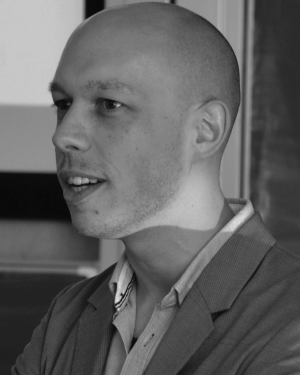 Brecht Hanssens合作论文数1
 Wei Wang (王威)合作论文数School of Information Engineering, Chang`An University1
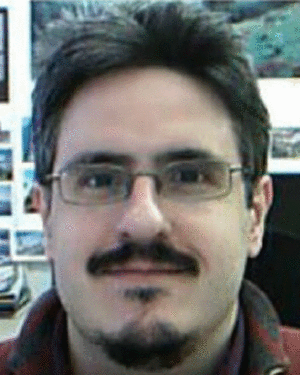 Jordi Pérez-Romero合作论文数Universitat Politècnica de Catalunya1
 Davide Dardari合作论文数Department of Electrical, Electronic, and Information Engineering, University of Bologna1
 Laura Bernado合作论文数Forschungszentrum Telekommunikation Wien, Telecommunications Research Center Vienna (ftw.)1
 Yi Gong (贡毅)合作论文数Department of Electronic and Electrical Engineering, College of Engineering, Southern University of Science and Technology1
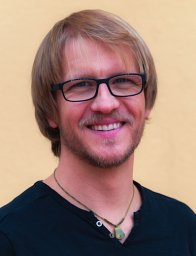 Pau Closas合作论文数Department of Electrical and Computer Engineering, Northeastern University1
 Paolo Castiglione合作论文数Department of Land Resources and Environmental Science;Montana State University;Department of Land Resources and Environmental Science, Montana State University1
 Pawel Kryszkiewicz合作论文数Pozna, Poznan Univ Tech1
 Katsuyuki Haneda合作论文数Department of Electronics and Nanoengineering, School of Electrical Engineering, Aalto University;Helsinki University of Technology1
 Miquel Payaró合作论文数CTTC, Castelldefels, Spain1
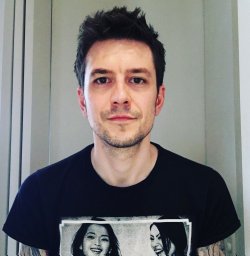 Oriol Font-Bach合作论文数Parc Mediterrani de la Tecnología (PMT),, Centre Tecnològic de Telecomunicacions de Catalunya (CTTC),1
 Ana Moragrega合作论文数1
 Nikolaos Bartzoudis合作论文数Department of Electronic & Electrical Engineering;Loughborough University;Department of Electronic & Electrical Engineering, Loughborough University1
 Nicolai Czink合作论文数Technische Universit1
 Kim Mahler合作论文数1Bernard Henri Fleury合作论文数1
 Andres Alayon Glazunov合作论文数Ericsson Radio Systems1
 Veronika Shivaldova合作论文数1
 Taimoor Abbas合作论文数Lund University1




