Optimising productivity of tightly coupled production lines in, for instance, the production printing or semiconductor industry is difficult due to the diversity of products resulting in different product flows, the variety of constraints, and the precise timing required to coordinate multiple tightly coupled machines. A modular setup provides flexibility and cost reduction through reuse of machinery and schedulers. However, the scheduling of a modular production line is challenging as it leads to a distributed decision process where each module has a limited view of the entire system, while local scheduling decisions have a global impact on schedule feasibility. This work proposes a distributed scheduling method for tightly coupled modular sequential production lines where products cannot overtake each other during production. We develop a multi-agent framework in which a system agent propagates timing constraints of the schedulers of different modules. The system agent aims to reach consensus about the handover times of jobs between modules to converge to a globally feasible schedule. The system agent interacts with local agents that interface with local schedulers, allowing the use of existing local schedulers without modification. We illustrate the approach on production lines with multiple re-entrant flow-shop instances with setup times and due dates, which results in a challenging scheduling problem. The performance of the proposed distributed scheduling method is assessed using a monolithic exact scheduler (implemented as a constraint program, not applicable to modular problems) as a reference. It is found to deliver good quality schedules, having only a 1.15 larger makespan on average than the hypothetical optimum provided by the exact scheduler.
This paper presents a unified formal framework, called ReTA, that allows users to define scheduling problems using a user-friendly domain-specific language (DSL) and automatically obtain response times of jobs in return. ReTA supports user-defined online scheduling policies (beyond work-conserving or priority-based scheduling) for heterogeneous computing resource types with multiple instances per type (e.g., multiple CPU cores, GPUs, DSPs, and FPGAs on one single chip), thus supporting global, partitioned, and clustered scheduling. In the current version of ReTA, we focus on non-preemptive periodic tasks as these are susceptible to scheduling anomalies and hence harder to analyze. ReTA performs response-time analysis by constructing a timed labeled transition system (TLTS) from the domain model as a basis for performing a reachability analysis enriched with efficient state-space reduction techniques. Our empirical evaluations show that ReTA identifies up to 50 times more schedulable task sets than fixed-point iteration-based analyses. With a runtime on the order of a few minutes, ReTA produces highly accurate results two-orders of magnitude faster than an exact Timed Automata-based analysis in UPPAAL (e.g., for systems with 16 cores and 32 tasks).
Containerisation is becoming a cornerstone of modern distributed systems, thanks to their lightweight virtualisation, high portability, and seamless integration with orchestration tools such as Kubernetes. The usage of containers has also gained traction in real-time cyber-physical systems, such as software-defined vehicles, which are characterised by strict timing requirements to ensure safety and performance. Nevertheless, ensuring real-time execution of co-located containers is challenging because of mutual interference due to the sharing of the same processing hardware. Existing parallel computing frameworks such as Ray and its Kubernetes-enabled variant, KubeRay, excel in distributed computation but lack support for scheduling policies that allow guaranteeing real-time timing constraints and CPU resource isolation between containers, such as the SCHED_DEADLINE policy of Linux. To fill this gap, this paper extends Ray to support real-time containers that leverage SCHED_DEADLINE. To this end, we propose KubeDeadline, a novel, modular Kubernetes extension to support SCHED_DEADLINE. We evaluate our approach through extensive experiments, using synthetic workloads and a case study based on the MobileNet and EfficientNet deep neural networks. Our evaluation shows that KubeDeadline ensures deadline compliance in all synthetic workloads, adds minimal deployment overhead (in the order of milliseconds), and achieves lower worst-case response times, up to 4 times lower, than vanilla Kubernetes under background interference.
Centralised servers provide on-demand resources to process offloaded workloads from computing nodes. While server-based computing has been successful for applications with soft timing constraints, it falls short for safety-critical real-time systems with hard timing requirements. To bridge this gap, we develop a job-level admission test to satisfy the requirements for real-time applications deployed on a server by extending the "(M, K)-firm weakly hard" model to server systems, ensuring timely processing of server requests. We introduce an admission policy to regulate the workload and prevent deadline misses while attempting to admit more requests than the minimum required by the initial (M, K) constraints. The admission policy is designed to allow an optimal resource allocation to applications deployed on the server. (1)
Centralised servers can provide on-demand resources to edge devices for offloading workloads. Resource-constrained computing nodes send requests to execute a task on the server for higher quality or faster execution. These requests are best characterised by an arrival curve. A server may become overloaded if too many requests come at once. For safety-critical applications, therefore, an admission test is required to ensure that the admitted requests meet their timing requirements. In this work, we present an online admission test to decide whether an incoming request can meet its timing requirements on a server without jeopardising the timing requirements of already admitted requests and itself, considering potential future requests to higher-priority tasks. The server executes tasks using a nonpreemptive global fixed-priority scheduling policy. Our admission test extracts arrival times of future higher-priority jobs from their arrival curves and past observations and uses these, together with a reachability-based response-time analysis, to obtain a safe bound on the worst-case response time of the incoming request. Our empirical evaluations show that our admission test is effective, admitting more than 95% of the incoming jobs to a 4- or 8-core server, when there are 20 tasks in the system. Comparing our admission test with an exact task-level schedulability test for tasks with arrival curves shows that the number of rejected admissible requests is small. The runtime of our test is practical for online analysis (typically below 6 microseconds).
This paper explores the design and verification of real-time cyber-physical systems transitioning from embedded platforms to the cloud. It covers opportunities, potential use cases, and challenges associated with the timing predictability of cloud-enabled real-time systems. The conclusion outlines future research directions to address these challenges.
Global scheduling reduces the average response times as it can use the available computing cores more efficiently for scheduling ready tasks. However, this flexibility poses challenges in accurately quantifying interference scenarios, often resulting in either conservative response-time analyses or scalability issues. In this paper, we present a new response-time analysis for preemptive periodic tasks (or job sets) subject to release jitter under global job-level fixed-priority (JLFP) scheduling. Our analysis relies on the notion of schedule-abstraction graph (SAG), a reachability-based response-time analysis known for its potential accuracy and efficiency. Up to this point, SAG was limited to non-preemptive tasks due to the complexity of handling preemption when the number of preemptions and the moments they occur are not known beforehand. In this paper, we introduce the concept of time partitions and demonstrate how it facilitates the extension of SAG for preemptive tasks. Moreover, our paper provides the first response-time analysis for the global EDF(k) policy - a JLFP scheduling policy introduced in 2003 to address the Dhall's effect. Our experiments show that our analysis is significantly more accurate compared to the state-ofthe-art analyses. For example, we identify 12 times more schedulable task sets than existing tests for the global EDF policy (e.g., for systems with 6 to 16 tasks, 70% utilization, and 4 cores) with an average runtime of 30 minutes. We show that EDF(k) outperforms global RM and EDF by scheduling on average 24.9% more task sets (e.g., for systems with 2 to 10 cores and 70% utilization). Moreover, for the first time, we show that global JLFP scheduling policies (particularly, global EDF(k)) are able to schedule task sets that are not schedulable using well-known partitioning heuristics.
Response-time analysis (RTA) is crucial for ensuring the timeliness of real-time systems. As system complexity increases, there’s a growing need for RTA techniques that can automate the process of finding worst-case response times. The schedule-abstraction graph (SAG), a recent reachability-based RTA, addresses this by systematically exploring the decision space of global job-level fixed-priority (JLFP) scheduling policies for a given task set. SAG significantly outperforms existing RTAs for global scheduling on multicore, e.g., it can identify 12 times more schedulable task sets for global EDF in comparison to sufficient RTAs and operates 400 times faster than some other reachability-based tests. Despite these achievements, the state-space explored by the SAG can become very large in case the release jitter or the number of cores is large. This is because at present the SAG approach explores one scheduling decision at a time, leaving the parallelism inherent to global scheduling unexploited during state-space exploration. Recognizing that multiple jobs can be dispatched concurrently without interference, we introduce the first state-space-reduction technique for SAG that identifies and analyzes sets of independent jobs in tandem. We apply this technique to both preemptive and non-preemptive SAG frameworks. Our empirical evaluations show that our solution efficiently reduces the number of explored states while maintaining or even enhancing the accuracy of the SAG analysis, enabling it to scale to larger systems. For instance, our method achieves a 6 times reduction in runtime while improving schedulability by 16% for preemptive task sets scheduled using global EDF (e.g., for systems with 2 to 12 cores and 60% utilization).
In safety-critical real-time systems such as autonomous cars, fault-tolerance is essential for system reliability but can increase end-to-end latency and hinder schedulability. This paper presents a novel, safe, and latency-aware fault-tolerant scheduling technique for multi-rate task chains. A naive use of traditional fault-tolerance mechanisms, such as checkpointing and re-execution with recovery blocks, can violate end-to-end latency requirements. Our technique uses recovery blocks but leverages inherent task redundancies in multi-rate task chains (where data producers and consumers have different periods) to reduce the need for recovery. Moreover, it determines the priority of the recover blocks such that the end-to-end latency of the task chain is reduced in the presence of transient faults. Our experiments show that our technique significantly improves schedulability and reduces data age compared to the state-of-the-art checkpointing method. For instance, for systems with 4 to 16 cores and 10 to 40 tasks, we achieve up to 6 times higher schedulability and reduce data age by 21% under various fault levels.
While multicore real-time systems are extensively employed in the industry, research gaps still exist in developing a scalable analysis to find tight bounds on the worst-case response time (WCRT) of tasks scheduled by global preemptive scheduling policies. Additionally, the presence of release jitter poses a challenge where examining the earliest and latest release times may not derive WCRT. The existing analyses either provide very conservative bounds or face challenges in scaling to systems with numerous cores and tasks. This work provides preliminary foundations to derive tight WCRT bounds for tasks scheduled by global preemptive job-level fixed-priority scheduling policies (e.g., EDF and FP) on homogeneous multicore platforms by performing a reachability analysis using time-label-transition systems. Our solution uses 2 orders of magnitude less memory than UPPAAL and identifies on average 12% (up to 39%) more schedulable task sets than sufficient schedulability analyses (e.g., for systems with 4 cores and 10 tasks).
Response-time analysis (RTA) has been a means to evaluate the temporal correctness of real-time systems since the 1970 s. While early analyses were successful in capturing the exact upper bound on the worst-case response-time (WCRT) of systems with relatively simple computing platforms and task activation models, nowadays we see that most existing RTAs either become pessimistic or do not scale well as systems become more complex (e.g., parallel tasks running on a multicore platform). To make a trade-off between accuracy and scalability, recently, a new reachability-based RTA, called schedule-abstraction graph (SAG), has been proposed. The analysis is at least three orders of magnitude faster than other exact RTAs based on UPPAAL. However, it still has a fundamental limitation in scalability as it suffers from state-space explosion when there are large uncertainties in the timing parameters of the input jobs (e.g., large release jitters or execution-time variations). This could impede its applicability to large industrial use cases, or to be integrated with automated tools that explore alternative design choices. In this paper, we improve the scalability of the SAG analysis by introducing partial-order reduction rules that avoid combinatorial exploration of all possible scheduling decisions. We include systems with dependent and independent task execution models (i.e., with and without precedence constraint). Our empirical evaluations show that the proposed solution is able to reduce the runtime by five orders of magnitude and the number of explored states by 98% in comparison to the original SAG analysis. These achievements come only at a negligible cost of an over-estimation of 0.1% on the actual WCRT. We applied our solution on an automotive case study showing that it is able to scale to realistic systems made of hundreds of tasks for which the original analysis fails to finish.
Industrial and academic interest converge on scheduling flow shops with sequence- and time-dependent maintenance. We posit that anticipatory, integrated scheduling of operational and maintenance tasks leads to superior performance to purely ‘wait-then-fix’ handling of the maintenance tasks. Motivated by an industrial problem with (sequence dependent) setup times, maximum separation constraints, and a combination of sequence- and time- dependent maintenance tasks, this paper introduces an integer programming solution, a constraint programming solution and a heuristic solution based on list scheduling. The motivating use case provides a unique combination of concerns that is to the best of our knowledge, not yet studied in the literature. We build on existing work where we can by extending models for sequence-dependent maintenance scheduling to accommodate sequence- and time-dependent maintenance scheduling and also propose other new models. We show the relative performances of our methods through empirical evaluations and also show significant improvements – up to 25% reduction in makespan – when compared to a reactive scheduling approach that does not consider maintenance in its planning. Based on our evaluations on exact methods, constraint programming models scale better than mixed integer programming models for this problem.
Schedulability analyses check whether all tasks in a task set will meet their timing requirements. They thus provide a boolean answer. Some analyses may also compute bounds on the worst-case response-time (WCRT) of tasks. However, only knowing WCRT is often not enough to understand which tasks are involved in deadline-miss scenarios and under what conditions those scenarios may happen. Therefore, it is hard to infer what must be fixed to make unschedulable task sets schedulable. This issue is exacerbated when tasks are non-preemptive since they are subject to timing anomalies that are non-trivial to analyze. The schedule-abstraction technique is a relatively scalable reachability-based response-time analysis that explores the space of possible schedules to detect potential deadline misses. There-fore, it can tell which jobs (of which tasks) are involved in a deadline-miss scenario. However, the schedule abstraction framework is not yet able to provide concrete release and execution times (and therefore concrete schedules) for those jobs. The reason is that, to reduce memory consumption, the schedule abstraction framework deliberately forgets information about the job execution ordering that led to a state. It also merges states to defer state-space explosion during the state-space exploration. In this work, we propose a technique to derive concrete schedules resulting in deadline misses by augmenting the exploration phase of the schedule-abstraction technique to carry minimal extra information that allows resolving ambiguities while tracing back jobs involved in deadline-miss scenarios using our own partial-order planning algorithm.
Ensuring deadlines of hard real-time applications in server-based deployments is a challenging problem, particularly if the workload arrives following an arbitrary arrival curve. This work extends the “(M, /K)-firm weakly hard” model to server-based systems, ensuring timely processing of real-time requests to the server. We introduce an admission policy to regulate the remote server workload and prevent deadline misses while attempting to admit more requests than the minimum required, when possible. We guarantee the weakly hard constraints through optimal resource allocation and server confiauration.
Real-time systems are commonly used in safety-critical applications which require tasks to be completed before their deadlines, even in the presence of faults. Thus, fault tolerance becomes essential to ensure a certain level of reliability in safety-critical real-time systems [1]. To achieve fault tolerance in computer systems, redundancy can be implemented either in space (spatial redundancy) or time (time redundancy) [2]. Unlike spatial redundancy which involves increasing hardware resources, time redundancy focuses on re-execution or multiple executions of software on the same hardware resources [3] and therefore is better suited for embedded systems with limited cost and size constraints that are subject to transient faults more often than permanent faults [2], [4].
Safety and control functions of modern automotive systems are implemented as chains of periodic data producer/consumer tasks run at different rates. To simplify the development of such systems, automotive standards relax synchronization requirements between tasks, allowing a task to run even if its dependent tasks are inactive. This gives birth to more complex timing constraints such as data age, which specifies the maximum duration of time that input data of a task chain is still allowed to affect the output of the chain. We develop a technique to compute lower and upper bounds on the data age of multi-rate task chains that execute upon a heterogeneous computing platform using a job-level fixed-priority scheduling policy. To the best of our knowledge, we are the first to consider uncertainties in the timing parameters (namely, both the release jitter and execution-time variation) of the tasks. Such an assumption makes the problem more challenging as it increases the number of possible schedules that the system may encounter during its lifespan. We represent these uncertainties by timing intervals and devise an analysis that uses those intervals to explore possible dependencies between jobs. We incorporated various pruning rules to make the analysis much faster and far less pessimistic than the state of the art. Our evaluations on an industrial case study as well as synthetic task sets show that our analysis reduces the overestimation of the data age by 36% on average (and up to 42%) in comparison to the state of the art when the number of tasks varies from 10 to 50.
Gang scheduling has long been adopted by the high-performance computing community as a way to reduce the synchronization overhead between related threads. It allows for several threads to execute in lock steps without suffering from long busy-wait periods or be penalized by large context-switch overheads. When combined with non-preemptive execution, gang scheduling significantly reduces the execution time of threads that work on the same data by decreasing the number of memory transactions required to load or store the data. In this work, we focus on two main types of gang tasks: rigid and moldable . A moldable gang task has a presumed known minimum and maximum number of cores on which it can be executed at runtime, while a rigid gang task always executes on the same number of cores. This work presents the first response-time analysis for non-preemptive moldable gang tasks. Our analysis is based on the notion of schedule abstraction; a new approach for response-time analysis with the promise of high accuracy. Our experiments on periodic rigid gang tasks show that our analysis is 4.9 times more successful in identifying schedulable tasks than the existing utilization-based test for rigid gang tasks.
The temporal correctness of safety-critical systems is typically guaranteed via a response-time analysis (RTA). However, as systems become complex (e.g., parallel tasks running on a multicore platform), most existing RTAs either become pessimistic or do not scale well. To make a trade-off between accuracy and scalability, recently, a new reachability-based RTA, called schedule-abstraction graph (SAG), has been proposed. The analysis is at least three orders of magnitude faster than other exact RTAs based on UPPAAL. One fundamental limitation of the SAG analysis is that it suffers from state-space explosion when there are large uncertainties in the timing parameters of the input jobs, which may impede its applicability to some industrial use cases. In this paper, we improve the scalability of the SAG analysis by introducing partial-order reduction (POR) rules that avoid combinatorial exploration of all possible scheduling decisions. An empirical evaluation shows that our solution is able to reduce the runtime by five orders of magnitude and the number of explored states by 98%, at a negligible cost of an over-estimation of 0.1% on the tasks' worst-case response-time (WCRT). We applied our solution on an automotive case study showing that it is able to scale to realistic systems made of hundreds of tasks for which the original analysis fails to finish.
With the growth in complexity of real-time embedded systems, there is an increasing need for tools and techniques to understand and compare the observed runtime behavior of a system with the expected one. Since many real-time applications require periodic interactions with the environment, one of the fundamental problems in guaranteeing their temporal correctness is to be able to infer the periodicity of certain events in the system. The practicability of a period inference tool, however, depends on both its accuracy and robustness (also its resilience) against noise in the output trace of the system, e.g., when the system trace is impacted by the presence of aperiodic tasks, release jitters, and runtime variations in the execution time of the tasks. This work (i) presents the first period inference framework that uses regression-based machine-learning (RBML) methods, and (ii) thoroughly investigates the accuracy and robustness of different families of RBML methods in the presence of uncertainties in the system parameters. We show, on both synthetically generated traces and traces from actual systems, that our solutions can reduce the error of period estimation by two to three orders of magnitudes w.r.t. the state of the art.
This paper presents results and observations from a survey of 120 industry practitioners in the field of real-time embedded systems. The survey provides insights into the characteristics of the systems being developed today and identifies important trends for the future. It extends the results from the survey data to the broader population that it is representative of, and discusses significant differences between application domains. The survey aims to inform both academics and practitioners, helping to avoid divergence between industry practice and academic research. The value of this research is highlighted by a study showing that the aggregate findings of the survey are not common knowledge in the real-time systems community.
 Geoffrey Nelissen合作论文数Polytechnic Institute of Porto14
 Björn B. Brandenburg合作论文数Max Planck Institute for Software Systems (MPI-SWS)14
 Gerhard Fohler合作论文数Department and Electrical and Computer Engineering ;University of Kaiserslautern9Jeroen P. M. Voeten合作论文数Information and Communication Systems group8Pourya Gohari合作论文数7
 Twan Basten合作论文数Electrical Engineering Department, Eindhoven University of Technology;TNO-ESI5
 Arpan Gujarati合作论文数Max Planck Inst Software Syst MPI SWS5Mehdi Kargahi合作论文数School of ECE, University of Tehran5
 Robert Davis合作论文数Department of Computer Science, University of York4
 Morteza Mohaqeqi合作论文数University of Tehran4
 Marc Geilen合作论文数Electrical Engineering, Eindhoven University of Technology4Sayra Ranjha合作论文数3
 Gedare Bloom合作论文数The George Washington University3
 Serban Vadineanu合作论文数2
 Ryan M. Gerdes合作论文数2Yang Xu (徐旸)合作论文数2
 Sebastian Altmeyer合作论文数Saarland University2
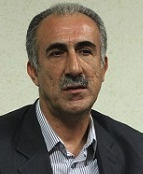 Mohsen Sharifi合作论文数School of Computer Engineering, Iran University of Science and Technology2
 Karl Erik Årzén合作论文数Faculty of Engineering, Lund University2
 Anton Cervin合作论文数Department of Automatic Control, Faculty of Engineering, Lund University2
 Benny Akesson合作论文数Eindhoven University of Technology2
 Saeed Shariati合作论文数Department of Computer Engineering, Iran University of Science and Technology2
 Beyazit Yalcinkaya合作论文数University of California, Berkeley1Srinidhi Srinivasan合作论文数1Didier Stricker合作论文数1Mark Stidd合作论文数1Joan Marcè i Igual合作论文数1Saranya Natarajan合作论文数1
 Uchenna Ezeobi合作论文数University of Colorado at Colorado Springs1Sena Hounsinou合作论文数University of Colorado Colorado Springs, Colorado Springs, CO, USA1Habeeb Olufowobi合作论文数1
 Daniel Casini合作论文数Scuola Superiore Sant Anna Pisa1
 Vladislav Golyanik合作论文数Max Planck Institute for Informatics1
 Alessandro Biondi合作论文数Scuola Superiore Sant'Anna1
 Bart De Schutter合作论文数Delft Center for Systems and Control, Delft University of Technology1
 Mohammad Abdollahi Azgomi合作论文数Dept Comp Engn, Iran Univ Sci & Technol1
 Neil Yorke-Smith合作论文数American University of Beirut1
 Mauro Marinoni合作论文数University of Pavia1
 Luca Abeni合作论文数ReTiS Lab, Scuola Superiore Sant'Anna1
 Rupak Majumdar合作论文数Max Planck Institute for Software Systems;Automated Reasoning Group, Amazon Web Services, Inc;Quaddra Software;Department of Computer Science, University of California, Los Angeles;University of Kaiserslautern1
 Thidapat Chantem合作论文数University of Notre Dame1
 Emmanuel Grolleau合作论文数LIAS, ENSMA-Université de Poitiers1
 Sanjoy Baruah合作论文数Department of Computer Science & Engineering, James McKelvey School of Engineering, Washington University in St. Louis;Center for Trustworthy AI in CPS, Washington University in St. Louis1
 David Broman合作论文数Division of Software and Computer Systems, KTH Royal Institute of Technology;Department of Computer Science, KTH Royal Institute of Technology1




