Background Following COVID-19 pandemic, clinical description focused on the clinical presentation of patients in the acute stage of the disease. More recently, data have emerged that some patients continue to experience symptoms related to COVID-19 after the acute phase of infection has subsided (post-COVID syndrome). Although characteristics of post-COVID syndrome have been well described, less is known about the possible invitations during acute illnesses that can predict such syndrome. Our study is a prospective study aiming at assessment of CT severity scoring in the acute phase of COVID-19 pneumonia as a predictor for development of post-COVID syndrome in recovering patients. Results A total of 192 symptomatic COVID-19 patients between April 2020 and October 2020 were enrolled in this single-center study, and high-resolution chest CT examinations were evaluated for CT severity scoring. Data were matched with the long-term clinical outcome. CT severity score was significantly higher in patients who developed post-COVID symptoms ( p < 0.001). A CT score of > 7 was associated with an increased risk and was found to be predictive of condition development with sensitivity (95.9%), specificity (96%), positive predictive value (95.92%), negative predictive value (96%), and accuracy (95.96%). Conclusions CT severity scoring can help in predicting the long-term outcome of COVID-19 patients with cutoff value of CT-SSS > 7 showing highest sensitivity and specificity for predicting development of post-COVID syndrome.
Introduction: Stress and anxiety have been a common topic of discussion among the medicalstudents in normal circumstances owing to the burden of immense studies, clinical rotations, regularexams and assessments. Material and methods: A cross sectional study consisting of 330 medicalstudents studying in various medical colleges in various states like Himachal, Karnataka, Haryana,Rajasthan, Bihar, Punjab, Delhi etc. was conducted using online forms that were shared in variousWhatsApp college groups. The questionnaire was a simple 10 question form consisting of theKessler's psychological distress scale questions. The stress levels were defined according to theKessler's psychological distress scale k10. Results: The results of the study showed that 72.5% oftotal participants suffered from mild to moderate levels of stress with 20.6% students suffering frommild stress, 15.5% from moderate stress and significant 36.4% from severe stress. Similarly,various socio-demographic determinants have also been studied for any relation to these high stresslevels. The treatment seeking behaviour among medical students also reflected poorly when it cameto seeking help from health professionals. Conclusion: It was found that during the covid-19lockdown, medical students suffered from severe stress levels which is a topic of concern for theauthorities and calls for a timely intervention to control the situation. The treatment seekingbehaviour is also a topic of concern as medical students being most exposed to the knowledge ofmental health do not themselves prefer to take treatment from a health professional.
Coronavirus disease 2019 pandemic causes significant strain on healthcare infrastructure and medical resources. So, it becomes crucial to identify reliable predictor biomarkers for COVID-19 disease severity and short term mortality. Many biomarkers are currently investigated for their prognostic role in COVID-19 patients. Our study is retrospective and aims to evaluate role of semi-quantitative CT-severity scoring versus LDH as prognostic biomarkers for COVID-19 disease severity and short-term clinical outcome. Two hundred sixty-six patients between April 2020 and November 2020 with positive RT-PCR results underwent non-enhanced CT scan chest in our hospital and were retrospectively evaluated for CT severity scoring and serum LDH level measurement. Data were correlated with clinical disease severity. CT severity score and LDH were significantly higher in severe and critical cases compared to mild cases (P value < 0.001). High predictive significance of CT severity score for COVID-19 disease course noted, with cut-off value ≥ 13 highly predictive of severe disease (96.96% accuracy); cut-off value ≥ 16 highly predictive of critical disease (94.21% accuracy); and cut-off value ≥ 19 highly predictive of short-term mortality (92.56% accuracy). CT severity score has higher sensitivity, specificity, positive, and negative predictive values as well as overall accuracy compared to LDH level in predicting severe, critical cases, and short-term mortality. Semi-quantitative CT severity scoring has high predictive significance for COVID-19 disease severity and short-term mortality with higher sensitivity, specificity, and overall accuracy compared to LDH. Our study strongly supports the use of CT severity scoring as a powerful prognostic biomarker for COVID-19 disease severity and short-term clinical outcome to allow triage of need for hospital admission, earlier medical interference, and to effectively prioritize medical resources for cases with high mortality risk for better decision making and clinical outcome.
Determining the rigid-body transformation be-tween 2D image data and 3D point cloud data has applications for mobile robotics including sensor calibration and localizing into a prior map. Common approaches to 2D-3D registration use least-squares solvers assuming known associations often provided by heuristic front-ends, or iterative nearest-neighbor. We present a linear line-based 2D-3D registration algorithm formulated as a mixed-integer program to simultaneously solve for the correct transformation and data association. Our formulation is explicitly formulated to handle outliers, by modeling associations as integer variables. Additionally, we can constrain the registration to SE(2) to improve runtime and accuracy. We evaluate this search over multiple real-world data sets demonstrating adaptability to scene variation.
E-health becomes one of the internet's products for healthcare. The problems of health service such as far hospital and expensive examination fees become the emergence of this technology. Consequently, people reluctant to check their health to hospital. E-health provides information on disease prevention, detecting early symptoms, and monitoring the patient's condition based on medical parameters from a far distance. Internet of things became the main concept in this system, which combines wearable sensors, communication systems, and mobile user interfaces. Reliable and valid system, easily carried, help the doctor to monitor patients from far distance expectantly to overcome the problems. The aims of this paper review are describing how an internet of things technology and wearable sensor help medical science and find the best way to create a health monitoring system.  Â
An overview in the advancements of Powder Metallurgy has been studied in this paper. The investigations are focused upon the mechanical properties of sintered structure along with its advantages and limitations. The recent methods like nanocrystalline materials, intermetallic and composites has also been studied considering its applications. (C) 2018 Elsevier Ltd. All rights reserved.
This paper aims to scrutinize the performance of semi-active suspension system using a PID controller by applying Bouc-Wen model for magnetorheological fluid. The mathematical model is being simulated in the MATLAB Simulink environment. Two crucial road excitation were given to the suspension system namely sine and random input. The results of the both have been presented and their hysteric behaviour has been studied. Results show that by applying a controller the desired effect can be reached.
The paper reviews recent advances and ongoing technologies on which today’s industry work upon in the metal forming processes. This paper has also included some revolutionary researches which later became the base for many processes. Metal forming is advancing field as we can observe different, innovative and easy methods are been introduced for sheet metal process also heavy research been done in forging and extrusion process for its optimization. With growing technologies, we adapt with advance processes. Simulation is one of the way through which the mimic of the process could be done which further helps in analysis of defects, loading profile, stress-strain curve. The analysis is done via Finite Element Analysis or Finite Volume Method in which the mesh grid over the desired surface is made and then simulated. The more refined the grid the better the results. The simulation is provided by the software in which we must give specifications of whatever we process or material we need to simulate. This is the great tool for observing and get a predictable idea of process and thereby obtain desirable result by altering the specification. Also, the integration of CAD/CAM helps further processes to regulate with software and has also been covered in the paper
An overview of varied orthopedic applications with the use of polymer composites are reported with this paper. Various properties of composites with its performance, purposes and specific use are mentioned in the paper. This paper also studies about the grafting and composites that are already in use and its advantages are highlighted. The specific use of polymers in the field of orthopedics is the main concern of this literature.
An overview of various biomedical applications of polymer composites are addressed in this paper regarding the use of composites in dentistry and biomimetic sensors. The properties of implants and their specific use are thrown light upon. Paper also conjointly studies the vital problems and studies challenges during the manufacturing the polymer material and their biomedical trade.
Corniche El Mazraa Road, one of the major arterial of Beirut – the capital city of Lebanon – is characterized by severe traffic congestion spreading over extended peak periods during the day. This is jeopardizing the transport system risking of halting the functionality of the city in addition to economic and environmental losses. The authors examined a number of mitigation measures to improve the traffic condition along Corniche El Mazraa Road. The only solution that could result in tangible improvements in the traffic conditions, in such an urban dense environment, is the introduction of a reliable public transport system.
Introduction:- The worldwide incidence, morbidity and mortality of asthma are increasing dramatically. It is one of the most common disorders encountered in clinical medicine in both children and adults.Asthma is an inflammatory disorder of the airway. Cytokines play an important role in the co-ordination and persistence of inflammation in asthma. In our study we aimed to observe the Anti-inflammatory effect of Nagilasativa among asthmatic patients. Material & Methods:- The present study was conducted at the Department of Tuberculosis& Respiratory Diseases, Jawaharlal Nehru Medical College, Aligarh Muslim University, Aligarh, Uttar Pradesh, India. Total 152 patients were enrolled in this study, in which 102 were male and 50 were female along with 20 healthy controls. The patients were randomized in two groups. Group I (76 patients) was given conventional treatment, while Group II (76 patients) received extract of Nigella Sativa (N.sativa). Measurements of all cytokines were performed by sandwich ELISA method and using commercially available ELISA kits. Results:- We found that levels of cytokines (IL-4, IL-6, IL-8, IL-10 & IL-12) increases in asthmatic patients. But when these were treated with N. sativa levels of these cytokines decreased. The present study showed that the extract from N. sativa caused inhibitory effect on these cytokines.
Purpose: To evaluate the effect of continuous oral suction, performed with two different modalities of local oropharyngeal anesthesia, on patient tolerance to EGD. Methods: In this prospective, single-blinded, placebo-controlled trial, 200 consecutive patients scheduled for an elective diagnostic EGD, were randomized to one of four study groups: (I) EGD performed with lidocaine spray and continuous oral suction; (II) EGD performed with lidocaine spray; (III) EGD performed with lidocaine gel and continuous oral suction; (IV) EGD performed with lidocaine gel. The lidocaine dose used in all groups was 150 mg. Patients were informed that intravenous sedation would be given only if needed during the procedure. The gag reflex was assessed before the EGD and the patient tolerance to the procedure was documented by the blinded physicians performing the procedure. The amount of sedatives required during the procedure was also recorded. After the procedure, patients were asked to rate the difficulties encountered during the procedure. Results: No demographic differences were observed among the four study groups. Fifty-three percent of patients who had no continuous oral suction, experienced cough during the procedure, compared to only 18% of those who had continuous oral suction (p<0.01). The use of continuous oral suction improved the procedure tolerability for those patients who received the lidocaine spray as the pharyngeal anesthesia (P=0.031). The use of continuous oral suction had no effect on the amount of sedatives used during the procedure. The results of this trial confirmed our previous data that the use of lidocaine gel significantly decreased the need for sedatives used during the procedure as 57% of the patients who used the lidocaine gel did not require any intravenous sedation as compared to only 10% of the patients who received the lidocaine spray (P=0.001). Also, patients who received the lidocaine gel as the pharyngeal anesthesia were more satisfied with the mode of anesthesia as compared to those who received the lidocaine spray. Conclusion: The use of continuous oral suction during EGD is a promising adjunct to oropharyngeal anesthsesia. Its use resulted in a decrease in the cough experienced during the procedure and improved patient tolerance. Thus, it would be ideal to combine the use of posterior lingual lidocaine gel with continuous oral suction to improve patient tolerance to EGD and decrease the need for intravenous sedation.
The dried powdered roots of Phyllanthus pulcher Wall. ex Mull. Arg. (Euphorbiaceae), were sequentially extracted with dichloromethane (DCM), ethyl acetate (EtOAc) and methanol (MeOH). The extracts were tested for cytotoxic activity against three human cancer cell lines: MCF-7 (breast), NCI-H460 (lung) and DU-145 (prostate). The DCM extract exhibited the strongest cytotoxic activity compared with EtOAc and MeOH extracts. Hence from the DCM extract, five pentacyclic triterpenes, 3 alpha-acetoxyl-25-hydroxyolean-12-en-28-oic acid (1), glochidone (2), 12(13)-dehydro-3 alpha-acetoxyolean-28-oic acid (3), lupanyl acetate (4) and glochidonol (5) were isolated and identified by spectroscopic analyses ((1)H NMR, (13)C NMR, FT-IR, UV, DEPT, HMQC, HMBC and HREIMS). This is the first report on the isolation of 4 from a natural source, whereas 1 and 3 have already been isolated from the families Hamamelidaceae and Compositae (Asteraceae), respectively. However this is the first study reporting the presence of 1 and 3 in the Euphorbiaceae family. The isolated tritepenes 1-5 were tested against the three human tumour cell lines as stated above. Only compounds 1 and 5 exhibited cytotoxic activity, 5 being most potent with IC(50) values ranging 7.5-13.4 mu g/mL (17.1-30.5 mu M).
PURPOSE: Patients in the intensive care unit frequently receive less than their caloric requirement and a better method of feeding may prevent this chronic problem.
 Shagil Akhtar合作论文数Dept Mech Engn, Integral Univ5glen franklin合作论文数3
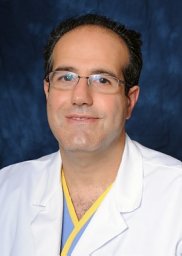 Ozan Akca合作论文数Dept Anesthesiol & Crit Care Med, Johns Hopkins Med Ctr3Memon Saima B合作论文数3Mona I Ahmed合作论文数2
 Johnson Stanslas合作论文数2Ahmed F. El Khateeb合作论文数2
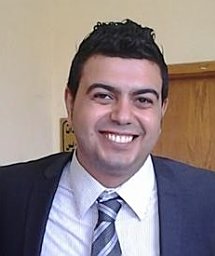 Ahmed Magdy合作论文数Clin Oncol & Nucl Med, Kafrelsheikh Univ2J. Ramirez合作论文数2Lajis Nordin Haji合作论文数2
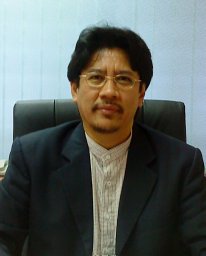 Ahmad Sazali Hamzah合作论文数Faculty of Applied Science, UiTM2mahesh shetty合作论文数1Dina H. Gamal El-Din合作论文数1scott p kellie合作论文数1Alia Naaz合作论文数1
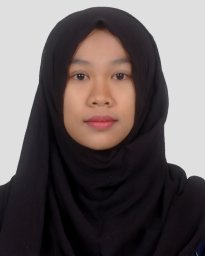 Arisa Olivia Putri合作论文数Department Of Electrical Engineering, Politeknik Negeri Semarang1
 Mohd. Reyaz Ur Rahim合作论文数Dept Mech Engn, Integral Univ1A. Kremer合作论文数1Musab A. M. Ali合作论文数Halic University1D. Lvovsky合作论文数1
 Najib Nicolas Nicolas Gerges合作论文数Dept Civil Engn, Univ Balamand1
 Chakib Ayoub合作论文数Department of Anesthesiology, Duke University1
 Stephen McClave合作论文数Department of Gastroenterology, School of Medicine, University of Louisville1
 David Kaufman合作论文数1
 Shaik Ibrahim Khalivulla合作论文数1
 Ryan W. Wolcott合作论文数Zipline1Esterle Mark合作论文数1
 Asrar Ahmad合作论文数Faculty of Life Sciences, Aligarh Muslim University;Jawaharlal Nehru Medical College, Aligarh Muslim University;Aligarh Muslim University, Aligarh Muslim University1
 Malcolm Stevens合作论文数School of Pharmacy, Faculty of Science, University of Nottingham;Centre for Biomolecular Sciences, University of Nottingham1
 Julio A. Ramirez合作论文数Lyles School of Civil and Construction Engineering, Purdue University;Network Coordination Office Center, Natural Hazards Engineering Research Infrastructure, Purdue University1Yaw Amoateng-Adjepong合作论文数School of Medicine, Yale University1
 Khozirah Shaari合作论文数Universiti Putra Malaysia1
 Sidiq Syamsul Hidayat合作论文数1Gururaj Bagalkotkar合作论文数1Srinivasa Rao Jada合作论文数1
 Steven A. Parkison合作论文数Toyota Research Institute Los Altos1
 Mohammad Shameem合作论文数Departmentof Virology;Institute of TropicalMedicine;Departmentof Virology, Institute of TropicalMedicine1
 Assaad Soweid合作论文数1
 Jeffrey M. Walls合作论文数Toyota Research Institute Los Altos1Genevieve Suseno Subur合作论文数1
 Rebecca Twersky合作论文数1Nazish Fatima合作论文数Jawaherlal Nehru Medical College, Aligarh Muslim University1Charlie Matthews合作论文数1
 Ryan M. Eustice合作论文数Department of Mechanical Engineering, University of Michigan;Department of Electrical Engineering & Computer Science, University of Michigan;Toyota Research Institute1




