Artificial Intelligence for scientific applications increasingly requires training large models on data that cannot be centralized due to privacy constraints, data sovereignty, or the sheer volume of data generated. Federated learning (FL) addresses this by enabling collaborative training without centralizing raw data, but scientific applications demand model scales that requires extensive computing resources, typically offered at High Performance Computing (HPC) facilities. Deploying FL experiments across HPC facilities introduces challenges beyond cloud or enterprise settings. We present a comprehensive cross-facility FL framework for heterogeneous HPC environments, built on Advanced Privacy-Preserving Federated Learning (APPFL) framework with Globus Compute and Transfer orchestration, and evaluate it across four U.S. Department of Energy (DOE) leadership-class supercomputers. We demonstrate that FL experiments across HPC facilities are practically achievable, characterize key sources of heterogeneity impacting the training performance, and show that algorithmic choices matter significantly under realistic HPC scheduling conditions. We validate the scientific applicability by fine-tuning a large language model on a chemistry instruction dataset, and identify scheduler-aware algorithm design as a critical open challenge for future deployments.
The limited-memory BFGS (L-BFGS) Hessian update scheme is the critical kernel in many quasi-Newton optimization algorithms. The most common approach to implementing L-BFGS uses 2m sequential rank-1 updates as part of solving a linear system when there are m history steps. The performance of this approach suffers when the latency of synchronization is significant, and its poor temporal locality increases the memory traffic when vectors do not fit in cache. The compact dense representation of L-BFGS results in an approach that has minimal synchronization latency and better temporal locality, but it requires an additional pass over the basis vectors and an additional basis that must be recomputed when the B_0 matrix changes as in variable-metric methods. In the Portable Extensible Toolkit for Scientific Computation and the Toolkit for Advanced Optimization (PETSc/TAO), we have implemented an intermediate dense formulation of BFGS that retains most of the good characteristics of both the recursive and compact dense approaches. We report single-node performance tests of these implementations on the U.S. Department of Energy's Polaris and Frontier machines, testing both GPU-based and CPU-based computations.
Materials behavior is often treated as a deterministic mapping from structure to properties, yet many important phenomena emerge from the conditional activation of multiple mechanisms across scales. This is especially evident in fatigue of metals, where crack growth is typically modeled as monotonic and irreversible process, despite evidence that local microstructure, loading history, and competing unit processes can shift the balance among propagation, arrest, and self-healing. Here we present a probabilistic framework that describes materials behavior as an ensemble of constituent mechanisms whose activation, interaction, and evolution determine emergent outcomes. The framework connects mechanism activation, state evolution, and macroscopic observables in a probabilistic way. In the case of fatigue crack propagation, it reframes damage tolerance as an inference problem over mechanism competition and provides a basis for integrating multiscale simulation, multimodal characterization, and machine learning. The same logic extends to other physical and chemical systems suggesting a portable framework for any system in which emergent behavior reflects mechanism competition under changing conditions. The broader ambition of this perspective review is a shift from correlating structure and performance after the fact to identifying, in advance, the conditions that make desired emergent behavior probable.
We study the design of an electromagnetic cloak from multiple materials with an additional constraint on the mass of the cloak. Our problem is an example of a topology optimization problem, and we formulate this problem as a mixed-integer partial-differential equation constrained optimization (MIPDECO) problem, where Maxwell’s equation models the propagation of the wave through the cloak and surrounding medium. We use binary variables to model the assignment of the different materials, and their relevant properties (permittivity and density). The mass constraint adds a nontrivial constraint to this problem. We propose a two-phase strategy to solve this problem. In the first phase, we solve a continuous relaxation, and then propose a new variant of the feasibility pump that exploits the structure of the PDE to obtain an initial integral solution candidate. In the second phase, we use a trust-region approach to improve this incumbent. We also consider a continuation or mesh-sequencing approach to find better solutions faster on consecutively finer meshes. We present detailed numerical results to illustrate the effectiveness of our approaches for constructing multi-material cloaks with a mass constraint.
Optimal design of experiments for Bayesian inverse problems has recently gained wide popularity and attracted much attention, especially in the computational science and Bayesian inversion communities. An optimal design maximizes a predefined utility function that is formulated in terms of the elements of an inverse problem, an example being optimal sensor placement for parameter identification. The state-of-the-art algorithmic approaches following this simple formulation generally overlook misspecification of the elements of the inverse problem, such as the prior or the measurement uncertainties. This work presents an efficient algorithmic approach for designing optimal experimental design schemes for Bayesian linear inverse problems such that the optimal design is robust to misspecification of elements of the inverse problem. Specifically, we consider a worstcase scenario approach for the uncertain or misspecified parameters, formulate robust objectives, and propose an algorithmic approach for optimizing such objectives. Both relaxation and stochastic solution approaches are discussed with detailed analysis and insight into the interpretation of the problem and the proposed algorithmic approach. Extensive numerical experiments to validate and analyze the proposed approach are carried out for sensor placement in a parameter identification problem.
Workshop on Developing an Artificial Intelligence-Enabled Digital Twin Using Chicago as a Benchmark What: Over 50 participants-including national laboratory researchers, academic scholars, industry representatives, and stakeholders from the City of Chicago-convened in person and online to assess the readiness and potential of an Artificial Intelligence-Enabled Digital Twin (AIDT) for urban systems, with the Greater Chicago area serving as the benchmark location. The workshop underscored that the Chicago Urban Integrated Field Laboratory provides an unparalleled testbed for developing and validating urban DTs-combining dense, multiscale observations, advanced physics-based and AI modeling capabilities, and strong stakeholder and industry engagement. Discussions highlighted available datasets, AI architectures for high resolution, multipurpose urban DTs, key applications, and near-and long-term priorities for scaling this framework within Chicago and to other U.S. and global cities. When: 29-30 July 2025 Where: Argonne National Laboratory, Lemont, Illinois
Deforestation for cattle ranching in the Brazilian Amazon emits carbon, and reforestation absorbs carbon. The social productivities for these alternative activities vary across locations. We analyze a spatial/dynamic model of efficient land allocation to establish a benchmark for policies. We treat cattle prices as stochastic and location-specific productivities as uncertain when assessing the consequences of imposing alternative prices of carbon emissions. Modest carbon price increases would incentivize Brazil to choose policies that capture a significant amount of greenhouse gases in the next 30 years. Our analysis pinpoints tropical forest management as an important contributor to climate change mitigation.
Data-driven science and technology offer transformative tools and methods to science. This review article highlights the latest development and progress in the interdisciplinary field of data-driven plasma science (DDPS), i.e., plasma science whose progress is driven strongly by data and data analyses. Plasma is considered to be the most ubiquitous form of observable matter in the universe. Data associated with plasmas can, therefore, cover extremely large spatial and temporal scales, and often provide essential information for other scientific disciplines. Thanks to the latest technological developments, plasma experiments, observations, and computation now produce a large amount of data that can no longer be analyzed or interpreted manually. This trend now necessitates a highly sophisticated use of high-performance computers for data analyses, making artificial intelligence and machine learning vital components of DDPS. This article contains seven primary sections, in addition to the introduction and summary. Following an overview of fundamental data-driven science, five other sections cover widely studied topics of plasma science and technologies, i.e., basic plasma physics and laboratory experiments, magnetic confinement fusion, inertial confinement fusion and high-energy-density physics, space and astronomical plasmas, and plasma technologies for industrial and other applications. The final Section before the summary discusses plasma-related databases that could significantly contribute to DDPS. Each primary Section starts with a brief introduction to the topic, discusses the state-of-the-art developments in the use of data and/or data-scientific approaches, and presents the summary and outlook. Despite the recent impressive signs of progress, the DDPS is still in its infancy. This article attempts to offer a broad perspective on the development of this field and identify where further innovations are required.
Optimal design of experiments for Bayesian inverse problems has recently gained wide popularity and attracted much attention, especially in the computational science and Bayesian inversion communities. An optimal design maximizes a predefined utility function that is formulated in terms of the elements of an inverse problem, an example being optimal sensor placement for parameter identification. The state-of-the-art algorithmic approaches following this simple formulation generally overlook misspecification of the elements of the inverse problem, such as the prior or the measurement uncertainties. This work presents an efficient algorithmic approach for designing optimal experimental design schemes for Bayesian inverse problems such that the optimal design is robust to misspecification of elements of the inverse problem. Specifically, we consider a worst-case scenario approach for the uncertain or misspecified parameters, formulate robust objectives, and propose an algorithmic approach for optimizing such objectives. Both relaxation and stochastic solution approaches are discussed with detailed analysis and insight into the interpretation of the problem and the proposed algorithmic approach. Extensive numerical experiments to validate and analyze the proposed approach are carried out for sensor placement in a parameter identification problem.
This chapter describes methodologies to perform in situ computations at desired intervals along with the simulations for different execution modes. This needs to be done in a way such that the simulation throughput is minimally impacted and the analysis output is available immediately within desired intervals. We describe the formulation of optimal resource allocation for simulation and in situ analysis computations as constrained integer linear programs so that the end-to-end simulation-analysis time is minimized. In particular, we describe the scheduling of in situ analyses as a numerical optimization problem to maximize the number of online analyses and minimize overall runtime, subject to resource constraints such as I/O bandwidth, network bandwidth, rate of computation and available memory. We also demonstrate the effectiveness of our approach through real application case studies on supercomputers.
The communities that develop and support open-source scientific software packages are crucial to the utility and success of such packages. Moreover, they form an important part of the human infrastructure that enables scientific progress. This article discusses aspects of the Portable Extensible Toolkit for Scientific Computation community, its organization, and technical approaches that enable community members to help each other efficiently and effectively.
We formulate a mixed-integer partial differential equation constrained optimization problem for designing an electromagnetic cloak governed by the 2D Helmholtz equation with absorb-ing boundary conditions. Our formulation is an alternative to the topology optimization formulation of electromagnetic cloaking design. We extend the formulation to include uncertainty with respect to the angle of the incidence wave, and we develop a mixed-integer trust-region approach for solving both the deterministic and the uncertain formulation. We present detailed numerical results that show that our trust-region approach obtains effective cloaks.
As the growth of data sizes continues to outpace computational resources, there is a pressing need for data reduction techniques that can significantly reduce the amount of data and quantify the error incurred in compression. Compressing scientific data presents many challenges for reduction techniques since it is often on non-uniform or unstructured meshes, is from a high-dimensional space, and has many Quantities of Interests (QoIs) that need to be preserved. To illustrate these challenges, we focus on data from a large scale fusion code, XGC. XGC uses a Particle-In-Cell (PIC) technique which generates hundreds of PetaBytes (PBs) of data a day, from thousands of timesteps. XGC uses an unstructured mesh, and needs to compute many QoIs from the raw data, f. One critical aspect of the reduction is that we need to ensure that QoIs derived from the data (density, temperature, flux surface averaged momentums, etc.) maintain a relative high accuracy. We show that by compressing XGC data on the high-dimensional, nonuniform grid on which the data is defined, and adaptively quantizing the decomposed coefficients based on the characteristics of the QoIs, the compression ratios at various error tolerances obtained using a multilevel compressor (MGARD) increases more than ten times. We then present how to mathematically guarantee that the accuracy of the QoIs computed from the reduced f is preserved during the compression. We show that the error in the XGC density can be kept under a user-specified tolerance over 1000 timesteps of simulation using the mathematical QoI error control theory of MGARD, whereas traditional error control on the data to be reduced does not guarantee the accuracy of the QoIs.
The current practice for fusion scientists running first principle simulations on high performance computing plat-forms is to either run their simulations and output their data for post-hoc analysis, or to place in situ analytics into their code. In this paper we examine a complex workflow using XGC fusions simulation run on the Oak Ridge Leadership Computing Facility's supercomputer Summit, which also involve three anal-yses as part of the results necessary for scientific discovery. We discuss the challenges faced when implementing these algorithms and present an original hybrid staging technique to help enable the physicists to make discoveries during the execution of the simulation. By creating this infrastructure, we can examine complicated physics results, which may not have been possible without the infrastructure. For example, our work enables the online visualization of turbulent homoclinic tangle around the magnetic X-point, breaking the last confinement surface. This visualization could help fusion scientists to better understand and improve the turbulence spread of plasma exhaust heat, which is crucial toward realizing plasmas beyond the currently accessible physics regimes of present-day tokamak reactors. The physics of turbulent homoclinic tangle will be reported in a future physics publication, by utilizing the original online analysis/visualization framework presented in this paper.
We present a novel stochastic approach to binary optimization for optimal experimental design (OED) for Bayesian inverse problems governed by mathematical models such as partial differential equations. The OED utility function, namely, the regularized optimality criterion, is cast into a stochastic objective function in the form of an expectation over a multivariate Bernoulli distribution. The probabilistic objective is then solved by using a stochastic optimization routine to find an optimal observational policy. The proposed approach is analyzed from an optimization perspective and also from a machine learning perspective with correspondence to policy gradient reinforcement learning. The approach is demonstrated numerically by using an idealized two-dimensional Bayesian linear inverse problem, and validated by extensive numerical experiments carried out for sensor placement in a parameter identification setup.
We present the Exascale Framework for High Fidelity coupled Simulations (EFFIS), a workflow and code coupling framework developed as part of the Whole Device Modeling Application (WDMApp) in the Exascale Computing Project. EFFIS consists of a library, command line utilities, and a collection of run-time daemons. Together, these software products enable users to easily compose and execute workflows that include: strong or weak coupling, in situ (or offline) analysis/visualization/monitoring, command-and-control actions, remote dashboard integration, and more. We describe WDMApp physics coupling cases and computer science requirements that motivate the design of the EFFIS framework. Furthermore, we explain the essential enabling technology that EFFIS leverages: ADIOS for performant data movement, PerfStubs/TAU for performance monitoring, and an advanced COUPLER for transforming coupling data from its native format to the representation needed by another application. Finally, we demonstrate EFFIS using coupled multi-simulation WDMApp workflows and exemplify how the framework supports the project’s needs. We show that EFFIS and its associated services for data movement, visualization, and performance collection does not introduce appreciable overhead to the WDMApp workflow and that the resource-dominant application’s idle time while waiting for data is minimal.
Machine learning (ML)-based steering can improve the performance of ensemble-based simulations by allowing for online selection of more scientifically meaningful computations. We present DeepDriveMD, a framework for ML-driven steering of scientific simulations that we have used to achieve orders-ofmagnitude improvements in molecular dynamics (MD) performance via effective coupling of ML and HPC on large parallel computers. We discuss the design of DeepDriveMD and characterize its performance. We demonstrate that DeepDriveMD can achieve between 100-1000x acceleration for protein folding simulations relative to other methods, as measured by the amount of simulated time performed, while covering the same conformational landscape as quantified by the states sampled during a simulation. Experiments are performed on leadershipclass platforms on up to 1020 nodes. The results establish DeepDriveMD as a high-performance framework for ML-driven HPC simulation scenarios, that supports diverse MD simulation and ML back-ends, and which enables new scientific insights by improving the length and time scales accessible with current computing capacity.
 Sven Leyffer合作论文数Mathematics and Computer Science Division at Argonne National Laboratory17
 Ian Foster合作论文数Department of Computer Science, University of Chicago;Data Science and Learning Division, Argonne National Laboratory10
 Scott Klasky合作论文数Scientific Computing Group within the National Center for Computational Sciences (NCCS)8
 Alp Dener合作论文数Argonne Natl Lab6
 Kshitij Mehta合作论文数Oak Ridge Natl Lab, Oak Ridge, TN 37831 USA5
 Choongseock Chang合作论文数Princeton Plasma Physics Laboratory5
 Molly M Wolf合作论文数College of Computing, Georgia Institute of Technology5
 Lois Curfman Mcinnes合作论文数Mathematics and Computer Science Division, Argonne National Laboratory5
 Jong Youl Choi合作论文数Indiana University5
 Igor Yakushin合作论文数Argonne Natl Lab, Chicago, IL USA4
 Arvind Ramanathan合作论文数4
 Dave Pugmire合作论文数Computer Science and Mathematics Division, Oak Ridge National Laboratory4
 Michael C. Ferris合作论文数Department of Computer Sciences, School of Computer, Data & Information Sciences, University of Wisconsin-Madison;Wisconsin Institute for Discovery, University of Wisconsin-Madison4
 Richard Tran Mills合作论文数Laboratory for Applied Mathematics, Numerical Software, and Statistics;Mathematics and Computer Science Division, Argonne National Laboratory4
 Jieyang Chen合作论文数Univ Calif Riverside, Riverside, CA 92521 USA3Patrick Sanan合作论文数3
 Philip E. Davis合作论文数Rutgers State Univ, Rutgers Discovery Informat Inst, Piscataway, NJ 08854 USA3
 E. Suchyta合作论文数Comp Sci & Math Div, Oak Ridge Natl Lab3S. Ku合作论文数3
 Manish Parashar合作论文数Scientific Computing and Imaging Institute, University of Utah;Kahlert School of Computing, University of Utah;Department of Computer Science, Rutgers University3
 Chris Knight合作论文数3
 Churchill R M合作论文数MIT Plasma Science and Fusion Center, Cambridge, Massachusetts 02139, USA.3
 Michael E. Papka合作论文数Department of Computer Science, College of Engineering, University of Illinois Chicago;Argonne National Laboratory;University of Chicago3
 Norbert Podhorszki合作论文数Research Institute for Measurement and Computing;Hungarian Academy of Sciences;Research Institute for Measurement and Computing, Hungarian Academy of Sciences3
 Mark Ainsworth合作论文数Division of Applied Mathematics, Brown University3
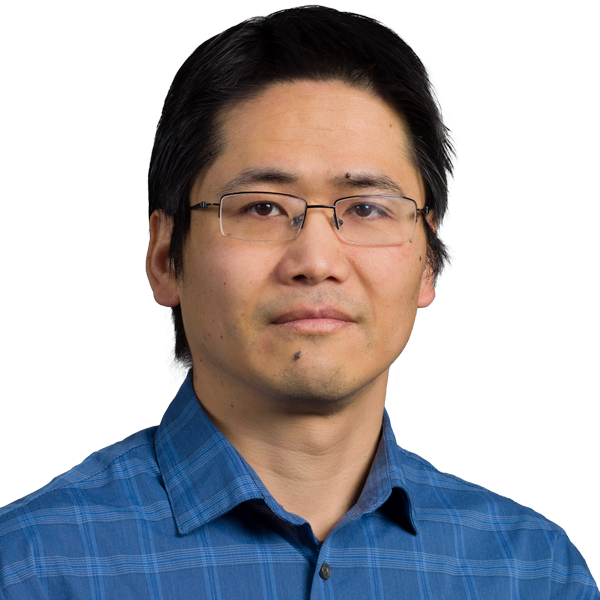 Qing Liu合作论文数Department of Electrical and Computer Engineering, New Jersey Institute of Technology3
 Venkatram Vishwanath合作论文数Argonne Natl Lab3
 Kevin A. Huck合作论文数University of Oregon3
 Shantenu Jha合作论文数Rutgers University3
 Matteo Turilli合作论文数3
 Jorge J. More’合作论文数Argonne National Laboratory3
 Stefan M. Wild合作论文数Applied Mathematics and Computational Research Division, Lawrence Berkeley National Laboratory;Department of Industrial Engineering and Management Sciences, McCormick School of Engineering, Northwestern University;Northwestern Argonne Institute of Science and Engineering, Northwestern University3
 Jed Brown合作论文数Argonne National Laboratory3
 Satish Balay合作论文数Argonne National Laboratory3
 Stephane Ethier合作论文数Princeton Plasma Physics Laboratory3
 Matthew Knepley合作论文数University of Chicago3
 Preeti Malakar合作论文数Indian Institute of Science3Daniela Ushizima合作论文数2
 Jim Luedtke合作论文数Department of Computer Sciences, School of Computer, Data & Information Sciences, University of Wisconsin-Madison2Ozan Tugluk合作论文数Brown Univ, Div Appl Math, Providence, RI 02912 USA2
 Anda Trifan合作论文数Argonne Natl Lab, Data Sci & Learning Div, 9700 S Cass Ave, Argonne, IL 60439 USA2
 Ben Whitney合作论文数Oak Ridge Natl Lab, Oak Ridge, TN 37830 USA2
 Alexander Brace合作论文数Argonne National Lab, Lemont, IL, USA#TAB#2
 P Brune合作论文数Div Math & Comp Sci, Argonne Natl Lab2
 Ruonan Wang合作论文数Oak Ridge Natl Lab, Oak Ridge, TN 37831 USA2Heng Ma合作论文数Argonne Natl Lab, Data Sci & Learning Div, Lemont, IL 60439 USA2
 Adrienne Hoarfrost合作论文数Univ N Carolina, Dept Marine Sci, Chapel Hill, NC 27515 USA2Gabriele Merlo合作论文数Univ Texas Austin2
 Matt Menickelly合作论文数Argonne Natl Lab, Math & Comp Sci Div, Lemont, IL 60439 USA2




