National, state and local governments shape the settlement of former refugees and humanitarian migrants in regional locations. However, settlement is often measured by top-down traditional markers of success that tend to overlook the role of place. This editorial introduces a special collection on regional settlement of refugees and humanitarian migrants. The included papers adopt diverse place-based approaches that highlight the intersection of former refugees and humanitarian settlement with local environments, landscapes and distinctive community dynamics in place. Through two key themes, successful refugee settlement in place(s) and people-place bonds, we consider how policy and practice in the context of settlement and integration outcomes can be better served using a place-based lens. By interrogating the idea of 'successful settlement', we elucidate settlement locations as sites where the identities of existing residents and newcomers intersect, are shaped, and are transformed through social integration, and from this we show how places of settlement can be reimagined beyond welcoming communities.
Community attitudes towards offshore wind development have received substantial attention in policy and academic research, however young people's perspectives are under-represented in both, and in public consultation processes. This study focuses on young adults' perspectives on the declaration of a proposed offshore wind zone in the Illawarra region, 60 km south of Sydney, Australia. Interviews with 95 participants aged 18-30 showed a high rate of support for offshore wind, alongside strong place attachment. Participants also expressed significant climate change concern and identified localised climate change impacts on the Illawarra coastline. For this cohort, place attachment did not result in project opposition. Instead, they reframed support for offshore wind development as place-protective behaviour. The young adult interviewees also brought distant places and future time into the ambit of their care and concern. They expressed a relational and interconnected sense of place, and a sense of responsibility to take local action that benefits the Illawarra, while also promoting distributive and intergenerational justice. We argue that young adults need to be included more equitably in academic research and community consultation on renewable energy transitions, and that their inclusion has significant potential to shift the direction and priorities of public debate on this complex issue.
Notwithstanding the substantial social science literature on energy transitions, little attention has been paid to the role of lawmaking and its spatial implications for governing how infrastructure lands in place. Adopting a legal geographic approach and engaging with Jessop's strategic relations theory, we address these gaps through a case study of Australia's offshore wind sector. Documentary analysis and statutory interpretation methods are used to: 1. trace the emergence of a national legislative framework derived from specific regional conditions and fuelled by developers seeking a spatial fix; and 2. identify how the legislation produces new oceanic legal spaces to develop infrastructure, in the form of zoning and private licences for capital accumulation. We document how institutionally entrenched strategic actors engaged and shaped the new sector through a multitude of forums, building consensus while attending to their overlapping interests. Such interests were embedded into the resulting shape of the legislative framework. While opening new spatial territories in the ocean for renewable energy production and rescaling centralist power in electricity markets, Australia's offshore wind laws replicated existing problematic nature-society-energy dynamics. When materialised in place, new legal spaces unfolded over and disrupted existing coastal relations, ecologies, and cultural practices. We thus show how new legal arrangements for oceanic energy spaces give rise to the possibility for place-based conflict. Attention to lawmaking and the legal production of space offers important insights into whose interests transition laws serve, along with why contestation erupts in place over energy infrastructure.
This short paper reflects on teaching qualitative methods to undergraduate students at a time when Generative AI is transforming higher education. We report on our experiences of teaching a skills-focused geography subject which implements an applied research project that undergoes full ethics assessment. Our recent experiences highlight the need for geography educators to make deliberate pedagogical choices that uphold research ethics and integrity when student work involves real participant data. We argue that experiential learning opportunities must be preserved in geography classrooms, however, educators must proactively manage ethical obligations and safeguard research participants’ data from insecure Generative AI platforms. Highlights: • Hands-on research methods training is critical to geography students’ skills development. • Generative AI must be navigated proactively in research subjects involving human participants. • Geography educators who use qualitative data with students must protect participants’ privacy. • Use of Generative AI for data analysis requires greater discussion in geography journals. Contribution to the Special Issue Topics: This paper contributes to the Special Issue themes by exploring: ‘The transformative potential and limitations of digital tools and AI in geography teaching’ and ‘Teacher agency and curriculum decision-making in times of uncertainty’.
White privilege is typically understood as the advantages, resources, and opportunities available to White people based on color. The lines connecting individuals' Whiteness with privilege, however, become tangled in mixed-race families. This article draws on interviews with eighty-six adult members of mixed-race families in Australia. Insights from White and racial minority interviewees expose how racial privilege moves between family members. Privilege often flows in the expected direction-from White to racial minority partners-but sometimes travels in reverse. Through lived experience, some couples become experts in the patterns by which racial logics operate, developing an intimate awareness of intersections between gender and racism. Participants' narratives show that racial minority women often lose out in the interplay between race, status, and privilege, whereas White men retain significant privilege irrespective of their mixed-race relationships. Some mixed-race couples actively maneuver to make the most out of partners' discrepant power and status, depending on the time and place. The benefits they derive from deploying partners' respective racial capital underscore the ongoing salience of racial boundaries and demonstrate that racial privilege needs to be understood in familial-not just individual-terms.
The recent passage of the Offshore Electricity Infrastructure Act (2021) (Cth) opened up the potential for Australia to produce renewable energy at unprecedented scale. Six regions have been identified as potential locations for developing offshore wind projects, promising thousands of new local jobs to legacy industrial regions. This paper charts the regulatory framework for Australia's offshore wind industry and how it positions local economic benefits in the licencing of projects. It then draws on interviews with key stakeholders supported by media and policy analysis to examine the early development of offshore wind capability in one of the proposed regions, the Illawarra, in NSW. Here existing steelmaking capacity positions the region to play a key role in supply chains for local and potentially national projects, but considerable structural and geographical constraints in the labour market will need to be addressed. In light of overseas experience indicating that economic benefits often fall short of promises, greater attention by policy makers is required to ensure hosting communities can develop local skills in the industry and facilitate their relative supply chain capabilities. This paper also calls for careful evaluation of early projects to allow for adjustments to policy settings as the industry matures domestically.
School-based teaching on climate change rarely draws on diverse experiences and knowledge about climate change that circulate in migrant homes and communities. We set out to consider experiences of climate change education (CCE) in schools in Manchester, UK, and Melbourne, Australia, among migrant-background students. We interviewed young people aged 14 to 18 and educators in multicultural secondary schools about climate change education. We then trained and supported young people to interview their parents. Here, we show how those interviews built young researchers' appreciation of family stories. Those accounts revealed aspects of parents' lives growing up that provided a platform from which families could discuss the changing relevance of climate change in their countries of origin and present locations. From those shared insights emerged critical, contextually informed understandings of climate change. Given those outcomes, we argue that intergenerational and cross-cultural storytelling, when brought into dialogue with scientific knowledge, can support climate change educators. They can then draw upon a range of knowledges and responses to climate change wider than that, which currently exists in most classrooms. We conclude by suggesting that among diverse learner cohorts, what then becomes possible is work to build a greater sense of agency and capacity for empathy with respect to climate change. This article presents unique insights into how climate change education can be enhanced by migrants' everyday stories of climate adaptation and resilience from around the world. Insights are drawn from analysis of interviews about climate change education with migrant-background young people in Manchester and Melbourne, interviews with teachers working in these contexts, and two detailed vignettes of young people's interviews with parents about environmental challenges encountered by parents in different times and places.image
Abstract Pacific Island workers contribute significantly to Australiaʼs agriculture and food security through the Seasonal Worker Programme (SWP). Previous studies show the economic benefits of the SWP to both Australian agro‐industries and Pacific workers. However, there are limited studies about the agricultural knowledge exchange that occurs via the circular migration enabled by the SWP, and the experiences of workers and employers as agricultural knowledge holders. With the SWP merged into the Pacific Australia Labour Mobility Scheme, there is an opportunity to help define how circular migration is both an economic and agricultural development policy. In this paper, we present findings from interviews with 63 workers (from Solomon Islands, Tonga, and Vanuatu) about agricultural knowledge and skills acquired and exchanged via SWP participation. We provide a discussion of opportunities for knowledge exchange in international labour mobility, and areas of future research in circular migration.
Climate change is expected to seriously affect agricultural livelihoods and food security in all Pacific Island countries. The United Nations Food and Agriculture Organisation contends that, to adapt, both ‘modern’ and Indigenous agricultural practices and knowledge are needed. A challenge lies in combining agricultural knowledge systems and enabling adaptive knowledge to be shared amongst Pacific Islanders. Opportunities to integrate different types of agricultural knowledge (including ‘modern’ and Indigenous) are needed. This paper argues that international labour mobility programmes provide an avenue for knowledge exchange that can support climate change adaptation in agriculture. It presents empirical evidence from research with 33 Pacific Islanders who grow crops in their home countries and were employed in Australia’s Seasonal Worker Programme (SWP). We demonstrate how SWP participation opened new possibilities for climate change adaptation in agriculture in the Pacific Islands. Adaptive knowledge stems from SWP workers’ exposure to different agricultural skills and ideas in Australia, combined with their knowledge and experience of crop production in their countries of origin. SWP participation created opportunities for workers to draw on different agricultural skills and knowledge on return to the Pacific Islands. The ability for SWP workers to then exchange adaptive knowledge with other Pacific Islanders is enabled by their social relationships, the likes of which an official agricultural extension officer might not have to the same degree. So far, such adaptive agricultural knowledge and skills exchanges are serendipitous. There is scope to explicitly build climate change knowledge exchange into agriculture-focused international labour mobility schemes.
Purpose Temporary labour mobility programmes (TLMPs) are initiated by high-income nations to fill their labour demands by offering temporary work opportunities to migrants from low-income nations. TLMPs also seek to contribute to economic development in workers' home countries. This paper aims to assess the accountability of New Zealand's Recognised Seasonal Employer (RSE) Scheme and Australia's Seasonal Worker Programme (SWP) in reaching their economic development objectives in one sending nation, Samoa. Design/methodology/approach A qualitative study with RSE and SWP workers and key informants (collectively stakeholders) in Samoa was undertaken to assess the contributions of these schemes to economic development. An interdisciplinary research approach was taken using the Pacific methodology of talanoa. Talanoa was used to “operationalise engagement” and empower local stakeholder accounts. Findings Talanoa supported the elicitation of accounts that contributed nuanced insights into the accountability of TLMPs. Specifically, stakeholder accounts revealed limitations in the ability of the RSE Scheme and SWP to meet their economic development objectives for Samoan communities and workers. Adjustments are necessary to meet Pacific nations' economic development objectives. Practical implications This study responds to calls for on-the-ground accounts of stakeholders involved in TLMPs. It provides insights that may contribute to the development of more effective TLMPs, particularly regarding economic development in workers' home countries. Originality/value Drawing on dialogic accounting literature, which calls for engagement with the marginalised, a talanoa approach has been engaged to assess TLMPs via on-the-ground participant accounts in a specific context. This paper introduces talanoa to the critical and social accounting literature, to move beyond a typical accounting qualitative interview process and encourage greater engagement and collaboration with Pacific scholars and partners.
Migration from the Global South to Global North is a major feature of contemporary population movements, and provides a lived experiment of the implications of moving from less resource-intensive modes of living towards more resource-intensive ones. Pre-migration practices come together in complex ways post-migration with established norms and infrastructures in destination countries. Here we examine the barriers to and enablers of sustainable practices, synthesising in-depth research from nine different studies in south-eastern Australia in relation to household water use, food growing and transport. The total sample includes 323 migrants from 33 countries. The main barriers include infrastructure and broader patterns of work and society. The main enablers are cultural norms of frugality and preferences for public transport. Barriers and enablers interact in diverse ways. We show that migrants are important contributors to inadvertent sustainabilities, but their contributions may be weakened by infrastructural, structural and cultural barriers. Addressing the diverse capacities of migrants would enhance system change for everyone.
Families increasingly make home in higher-density housing, a major transition for low-density suburban cities. Adjusting to everyday life in apartments requires distinctive material and emotional homemaking practices, particularly for families with children. Dominant cultural norms frame detached housing as more appropriate, with apartments merely transitional, or 'unhomely' and unsuitable for children. Scarcely has research examined how cultural norms shape parents' experiences of home in apartments. This paper responds by analysing experiences of 18 apartment-dwelling families in Sydney, Australia. Conceptual influences from emotional geographies reveal the work of making apartments home. While parents associate apartment living with lifestyle benefits, their sense of home is undermined by persistent questioning of parenting and housing choices. Contradictory experiences result in doubt about future capacities to make apartments home. Alongside uncertainty, parents feel guilty about 'failing' children through housing constraints and choices. Such experiences signal a need to rethink urban consolidation discourses, planning regulations and building design to better recognise the diversity of apartment residents.
Human geographers engage students in learning about a world characterized by environmental and social disarray. It follows that our students are exposed to deeply confronting topics: climate change, global inequality, food insecurity, and racism, to name a few. Prompted by scholarly debate on the effects of painful emotions elicited by public climate change communication, we asked human geography students at the University of Wollongong about their experiences of our teaching. Via focus group discussions, we invited them to consider which emotions "belong" in our classrooms and how difficult emotions might be managed to minimize harm. The students explained that they expected to feel distress as part-and-parcel of their chosen area of study and found being confronted a productive experience. With regard to pedagogical practice, they considered the responsibility for managing difficult course-related emotions to be distributed, and identified a range of strategies to prevent painful emotions from corroding their wellbeing. Some of these strategies, particularly making room for difficult emotions - by acknowledging, holding onto, and working through them in our classrooms - will be challenging as more universities turn to online teaching.
Regionalisation is a hallmark of Australia's approach to international migration, reflecting governments' growing concern with where new arrivals live. Residence in regional Australia is encouraged (mandated, for some visas) in response to urban population pressures alongside rural population and economic decline. Parallel to regionally focused visa schemes exists a pattern of voluntary urban-to-rural migration among some international migrants. Such secondary mobility counters the policy logic that international migrants only live outside cities when required to do so. This paper explores 18 African migrants' motivations for 'urban flight': Australian cities have failed to sustain their well-being and they consider rural life a remedy. Their preference for rural locations is not purely instrumental, it is shaped by deep-seated affective connections. Given the challenges of regional population retention, settlement policies should be recalibrated to support the aspirations of international migrants who feel an affinity for rural places, rather than compelling the rural settlement of others who do not.
Ethnically mixed households signify decreasing social distance between ethnic groups, and have potential to transform urban ethnic landscapes. Quantitative research has revealed mixed-ethnicity couples' distinctive residential geographies, which interrupt established segregation patterns. Mixed-ethnicity couples often concentrate in diverse neighborhoods. Yet few studies have asked these couples to explain the reasons behind their residential decision-making. We respond to this gap, drawing on 48 interviews with mixed-ethnicity couples in Australia. Conventional concerns prevailed in discussions of neighborhood choice: dwelling characteristics, affordability, proximity to workplace and family and accessibility of services. Most expressed affinity for ethnically diverse neighborhoods, but rarely cited this as a primary decision-making factor. Our findings counter assumptions that ethnic differences are front-and-center of mixed-ethnicity families' everyday decision-making, and highlight their ordinariness. Mixed-ethnicity couples' seeming lack of focus on neighborhood ethnic composition shows that being surrounded by ethnically similar people is not always a driving force in people's residential lives.
Despite decades of challenge to the Enlightenment dualisms of Western environmental thought, they remain deeply embedded with respect to agriculture because of the ways in which cultivation is implicated in humanity's move out of nature and into culture. In contrast, in non-Western contexts, scholars have more commonly discussed cultivation as a close engagement between humans and the more-than-human world. Emergent research examines how environmental engagements change in the encounters of migration from Majority to Minority Worlds, providing new ideas and practices for sustainable futures. We contribute to these debates with a study in the Sunraysia region of Australia's Murray-Darling Basin, an area facing significant climate change impacts. We examine environmental engagements of ethnic minority migrants (Burundian, Hazara, Tongan, Vietnamese, and Italian) alongside Anglo-Australian residents. Findings identify both differences and connections between these groups and show complex interweavings of environmental engagement, ethnic background, migration history, and generational change. Groups perceive and respond to the local environment differently and in the context of their premigration experience, challenging dominant (Minority World) perceptions of environment as a freestanding and separate entity. The strongest cross-cutting theme is valuing environment for its food provision, associated with positive emotions and an ethic of care. Participants relate to food gardens rather than farms as places of pleasure and close engagement. Australian farms are understood as places where different rules apply and harmful chemicals must be used. Food gardens are an important site of cross-cultural encounter and experiment that can move environmental scholarship forward in the search for alternative futures. Key Words: agriculture, cultivation, migration, settler colonialism.
 Olivia Dun合作论文数15
 Chris Gibson合作论文数School of Geography and Sustainable Communities, Faculty of the Arts, Social Sciences and Humanities, University of Wollongong15
 Sophie-May Kerr合作论文数City Futures Res Ctr, Univ New South Wales9
 Lesley Head合作论文数School of Geography, The University of Melbourne9
 Alexander Tindale合作论文数Australian Ctr Culture Environm Soc & Space ACCES, Univ Wollongong7
 Danielle Drozdzewski合作论文数Univ New South Wales7
 Gordon Waitt合作论文数Australian Centre For Culture, Environment, Society and Space, University of Wollongong;Faculty of the Arts, Social Sciences and Humanities, University of Wollongong;School of Geography and Sustainable Communities, University of Wollongong6
 Chantel Carr合作论文数School of Geography and Sustainable Communities, University of Wollongong4
 Yin Paradies合作论文数Faculty of Arts and Education, Deakin University4
 Ikerne Aguirre-Bielschowsky合作论文数3Kim Webster合作论文数3Tess Spaven合作论文数3
 Stephanie Toole合作论文数3Elyse Stanes合作论文数School of Geography and Sustainable Communities, University of Wollongong3marion frere合作论文数2Ananth Gopal合作论文数2Carol Farbotko合作论文数2Eliza Crosbie合作论文数2
 Nicola Ansell合作论文数Social & Polit Sci, Brunel Univ London2
 Ellen van Holstein合作论文数School of Geography, Earth and Atmospheric Sciences, Faculty of Science, The University of Melbourne2
 Celia McMichael合作论文数School of Geography, Earth and Atmospheric Sciences, Faculty of Science, The University of Melbourne2
 Catherine Walker合作论文数School of Social Sciences, Faculty of Humanities, The University of Manchester2
 Kate Dunn合作论文数School of Built Environment, Faculty of Arts, Design & Architecture, The University of New South Wales2
 Paul Hodge合作论文数2Marie McAuliffe合作论文数1Asenati Liki合作论文数1Tikai Pitakia合作论文数1Natasha Larkin合作论文数1
 Susanne Schech合作论文数1
 Sarah Wright合作论文数Univ Newcastle1
 nick skilton合作论文数university of wollongong1Amity James合作论文数Curtin Business Sch, Curtin Univ1
 Farzana Aman Tanima合作论文数University of Wollongong1Melissa Neave合作论文数1
 Laura Ann Hammersley合作论文数Sch Geog & Sustainable Communities, Univ Wollongong1
 marc marticosta合作论文数Area Gobernanza & Polit Publ, Inst Estudis Reg & Metropolitans Barcelona IERMB1
 Mariana T. Atkins合作论文数Social Impact University of Western Australia1Stephanie Perkiss合作论文数1
 David Radford合作论文数University of South Australia1
 Edgar Liu合作论文数Ingham Institute1
 Miriam J Williams合作论文数Geog & Planning Macquarie Sch Social Sci, Macquarie Univ1
 kate golebiowska合作论文数Northern Inst, Charles Darwin Univ1
 Federico Davila合作论文数Institute for Sustainable Futures, University of Technology Sydney1
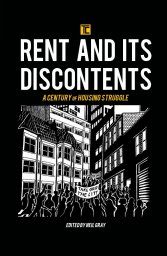 Neil Gray合作论文数Adam Smith Business Sch, Univ Glasgow1
 Charles Gillon合作论文数Sch Geog & Sustainable Communities, Univ Wollongong1
 Anna de Jong合作论文数Sch Interdisciplinary Studies, Univ Glasgow1
 Rae Dufty-Jones合作论文数Geog & Urban Studies, Western Sydney Univ1
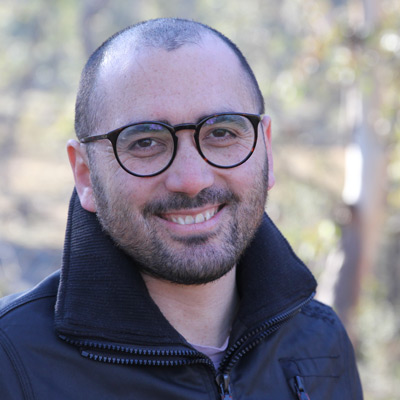 Francis Markham合作论文数Centre for Aboriginal Economic Policy Research, Research School of Social Sciences, College of Arts and Social Sciences, The Australian National University1
 Dallas Rogers合作论文数School of Architecture, Design and Planning, The University of Sydney1




