This study investigates the performance of bent silicon crystals intended to channel hadrons in a fixed-target experiment at the Large Hadron Collider (LHC). The phenomenon of planar channelling in bent crystals enables extremely high effective bending fields for positively charged hadrons within compact volumes. Particles trapped in the potential well of high-purity, ordered atomic lattices follow the mechanical curvature of the crystal, resulting in macroscopic deflections. Although the bend angle remains constant across different momenta (i.e., the phenomenon is non-dispersive), the channelling acceptance and efficiency still depend on the particle momentum. Crystals with lengths from 5 cm to 10 cm, bent to angles between 5 mrad and 15 mrad, are under consideration for measurements of the electric and magnetic dipole moments of short-lived charmed baryons, such as the Lambda_c^+. Such large deflection angles over short distances cannot be achieved using conventional magnets. The principle of inducing spin precession through bent crystals for magnetic dipole moment measurements was first demonstrated in the 1990s. Building on this concept, experimental layouts are now being explored at the LHC. The feasibility of such measurements depends, among other factors, on the availability of crystals with the mechanical properties required to achieve the necessary channelling performance. To address this, a dedicated machine experiment, TWOCRYST, has been installed in the LHC to carry out beam tests in the TeV energy range. The bent crystals for TWOCRYST were fabricated and tested using X-ray diffraction and high-momentum hadron beams at 180 GeV/c at the CERN SPS. This paper presents an analysis of the performance of these newly developed crystals, as characterised by these measurements.
A search for CP violation in Lambda(0)(b) -> pK(-) and Lambda(0)(b) -> p pi(-) decays is presented using the full Run 1 and Run 2 data samples of pp collisions collected with the LHCb detector, corresponding to an integrated luminosity of 9 fb(-1) at center-of-mass energies of 7, 8, and 13 TeV. For the Run 2 data sample, the CPviolating asymmetries are measured to be A(CP)(pK-) = (-1.4 +/- 0.7 +/- 0.4)% and A(CP)(p pi-)= (0.4 +/- 0.9 +/- 0.4)%, where the first uncertainty is statistical and the second is systematic. Following significant improvements in the evaluation of systematic uncertainties compared to the previous LHCb measurement, the Run 1 dataset is reanalyzed to update the corresponding results. When combining the Run 2 and updated Run 1 measurements, the final results are found to be A(CP)(pK-) = (-1.1 +/- 0.7 +/- 0.4)% and A(CP)(p pi-) = (0.2 +/- 0.8 +/- 0.4)%, constituting the most precise measurements of these asymmetries to date.
A bstract A measurement of the $$ {K}^{+}\to {\pi}^{+}\nu \overline{\nu} $$ K + → π + ν ν ¯ decay by the NA62 experiment at the CERN SPS is presented, using data collected in 2021 and 2022. This dataset was recorded, after modifications to the beamline and detectors, at a higher instantaneous beam intensity with respect to the 2016–2018 data taking. Combining NA62 data collected in 2016–2022, a measurement of $$ \mathcal{B}\left({K}^{+}\to {\pi}^{+}\nu \overline{\nu}\right)=\left({13.0}_{-3.0}^{+3.3}\right)\times {10}^{-11} $$ B K + → π + ν ν ¯ = 13.0 − 3.0 + 3.3 × 10 − 11 is reported. With 51 signal candidates observed and an expected background of $$ {18}_{-2}^{+3} $$ 18 − 2 + 3 events, $$ \mathcal{B}\left({K}^{+}\to {\pi}^{+}\nu \overline{\nu}\right) $$ B K + → π + ν ν ¯ becomes the smallest branching ratio measured with a signal significance above 5 σ .
Searches for electric dipole moments (EDMs) in fundamental particles and quantum systems with spin are pivotal experiments at the intersection of low-energy and high-precision particle physics. These investigations offer a complementary pathway to uncovering new physics beyond the Standard Model, parallel to high-energy collider searches. EDM experiments are among the most sensitive probes for detecting non-standard time-reversal (T) symmetry violations and, via the CPT theorem, CP-violation (CPV). Current EDM measurements test new physics at mass scales in or above the 10TeV to 100TeV range. This community input to the European Particle Physics Strategy Update highlights the status of the field, and describes challenges and opportunities in Europe.
The Physics Beyond Collider (PBC) Study Group was initially mandated by the CERN Management to prepare the previous European Particle Physics Strategy Update for CERN projects other than the high-energy frontier colliders. The main findings were summarized in an PBC Summary Report submitted to the Strategy Update. Following the Update process, the PBC Study Group was confirmed on a permanent basis with an updated mandate taking into account the strategy recommendations. The Study Group is now in charge of supporting the proponents of new ideas to address the technical issues and physics motivation of the projects ahead of their review by the CERN Scientific Committees and decision by the Management. The present document updates the previous PBC summary report to inform the new ongoing European Particle Physics Strategy Update process, taking into account the evolution of the CERN and worldwide landscapes and the new projects under consideration within the Study Group.
The first measurement of the CP asymmetry of the decay rate (A(CP)) and the CP average (Sigma A(FB)) and CP asymmetry (Delta A(FB)) of the forward-backward asymmetry in the muon system of Lambda(+)(c) -> p mu(+) mu(-) decays is reported. The measurement is performed using a data sample of proton-proton collisions, recorded by the LHCb experiment from 2016 to 2018 at a center-of-mass energy of 13 TeV, which corresponds to an integrated luminosity of 5.4 fb(-1). The asymmetries are measured in two regions of dimuon mass near the.-meson mass peak. The dimuon-mass integrated results are A(CP) = (-1.1 +/- 4.0 +/- 0.5)%, Sigma A(FB) = (3.9 +/- 4.0 +/- 0.6)%, Delta A(FB) = (3.1 +/- 4.0 +/- 0.4)%, where the first uncertainty is statistical and the second systematic. The results are consistent with the conservation of CP symmetry and the Standard Model expectations.
A setup of two bent crystals and a fixed target in the CERN Large Hadron Collider (LHC) could enable the study of the magnetic (MDM) and electric (EDM) dipole moments of short-lived charm baryons with unprecedented accuracy. At the core of the experiment is a bent crystal in which particles of interest, such as the $\Lambda_c^+$ and $\Xi_c^+$ particles, can be confined between the crystalline planes, inducing a deflection that enforces spin precession measurable by detectors. The setup requires a fixed target inside the LHC vacuum to create the charmed baryons. A first crystal serves to split beam halo particles from the circulating beam, allowing the target to be placed at a safe distance. TWOCRYST is a proof-of-principle experiment to be installed in the LHC to demonstrate the feasibility of such an experimental setup. Scheduled for operation in 2025, TWOCRYST aims to deliver crucial data needed to prepare the experiment and gather experience in operating the double-crystal setup. The TWOCRYST test stand features a simplified setup compared to the final experiment but will include all essential components within the LHC beam vacuum: two crystals and one target with the final specifications. Two 2D detectors, one silicon pixel detector and one fiber tracker, installed in movable Roman pots, will allow observation of the crystal channelling and provide important information on the crystal performance at different beam energies up to about 5 TeV. We review the project, all key devices, and the program of machine tests foreseen for TWOCRYST.
The lifetimes of the _c^0 and Ξ_c^0 baryons are measured using a pp collision dataset collected by the LHCb experiment, corresponding to an integrated luminosity of 9 fb−1. The charm baryons are produced in the fully reconstructed decay chains _b^-→_c^0(→ pK^-K^-π^+)π^- and Ξ_b^-→Ξ_c^0(→ pK^-K^-π^+)π^- . The measurement uses topologically and kinematically similar B− → D0(→ K−K+π−π+)π− decays for normalisation. The measured lifetimes are [ τ__c^0=276.3± 19.4(stat)± 1.8(syst)± 0.7(τ_D^0)fs,; τ_Ξ_c^0=149.2± 2.5(stat)± 0.9(syst)± 0.4 (τ_D^0)fs, ] where the first uncertainty is statistical, the second systematic and the third due to the uncertainty of the D0 lifetime. These results are consistent with previous measurements performed by the LHCb experiment.
Measurements are presented of the cross-section for the central exclusive production of J/psi -> mu(+) mu(-) and psi(2S) -> mu(+)mu(-) processes in proton-proton collisions at root s = 13 TeV with 2016-2018 data. They are performed by requiring both muons to be in the LHCb acceptance (with pseudorapidity 2 < eta(mu +/-) < 4.5) and mesons in the rapidity range 2.0 < y < 4.5. The integrated cross-section results are sigma(J/psi ->mu+ mu-) (2.0 < y(J/psi) < 4.5, 2.0 < eta(mu +/-) < 4.5) = 400 +/- 2 +/- 5 +/- 12 pb, sigma(psi(2S)->mu+mu-)(2.0 < y(psi(2S)) < 4.5, 2.0 < eta(mu +/-) < 4.5) = 9.40 +/- 0.15 +/- 0.13 +/- 0.27 pb, where the uncertainties are statistical, systematic and due to the luminosity determination. In addition, a measurement of the ratio of psi(2S) and J/psi cross-sections, at an average photon-proton centre-of-mass energy of 1 TeV, is performed, giving sigma(psi(2S))/sigma(J/psi) = 0.1763 +/- 0.0029 +/- 0.0008 +/- 0.0039, where the first uncertainty is statistical, the second systematic and the third due to the knowledge of the involved branching fractions. For the first time, the dependence of the J/psi and psi(2S) cross-sections on the total transverse momentum transfer is determined in pp collisions and is found consistent with the behaviour observed in electron-proton collisions.
This paper presents the first measurement of $$\psi {(2S)}$$ ψ ( 2 S ) and $$\chi _{c1}(3872)$$ χ c 1 ( 3872 ) meson production within fully reconstructed jets. Each quarkonium state (tag) is reconstructed via its decay to the $${{J \hspace{-1.66656pt}/\hspace{-1.111pt}\psi }} $$ J / ψ ( $$\rightarrow $$ → $$\mu ^+\mu ^-$$ μ + μ - ) $$\pi ^+\pi ^-$$ π + π - final state in the forward region using proton-proton collision data collected by the LHCb experiment at the center-of-mass-energy of $$13\text {TeV} $$ 13 TeV in 2016, corresponding to an integrated luminosity of $$1.64\,\text {\,fb} ^{-1} $$ 1.64 \,fb - 1 . The fragmentation function, presented as the ratio of the quarkonium-tag transverse momentum to the full jet transverse momentum ( $$p_{\textrm{T}} (\text {tag})/p_{\textrm{T}} (\text {jet})$$ p T ( tag ) / p T ( jet ) ), is measured differentially in $$p_{\textrm{T}} (\text {jet})$$ p T ( jet ) and $$p_{\textrm{T}} (\text {tag})$$ p T ( tag ) bins. The distributions are separated into promptly produced quarkonia from proton-proton collisions and quarkonia produced from displaced b -hadron decays. While the displaced quarkonia fragmentation functions are in general well described by parton-shower predictions, the prompt quarkonium distributions differ significantly from fixed-order non-relativistic QCD (NRQCD) predictions followed by a QCD parton shower.
A measurement of the K^+→π^+νν decay by the NA62 experiment at the CERN SPS is presented, using data collected in 2021 and 2022. This dataset was recorded, after modifications to the beamline and detectors, at a higher instantaneous beam intensity with respect to the 2016–2018 data taking. Combining NA62 data collected in 2016–2022, a measurement of ℬ(K^+→π^+νν)=(13.0_-3.0^+3.3)×10^-11 is reported. With 51 signal candidates observed and an expected background of 18_-2^+3 events, ℬ(K^+→π^+νν) becomes the smallest branching ratio measured with a signal significance above 5σ.
A search for hidden-charm pentaquark states decaying to a range of ΣcD¯ and Λc+D¯ final states, as well as doubly charmed pentaquark states to ΣcD and Λc+D, is made using samples of proton-proton collision data corresponding to an integrated luminosity of 5.7 fb−1 recorded by the LHCb detector at s=13 TeV. Since no significant signals are found, upper limits are set on the pentaquark yields relative to that of the Λc+ baryon in the Λc+→pK−π+ decay mode. The known pentaquark states are also investigated, and their signal yields are found to be consistent with zero in all cases. © 2024 CERN, for the LHCb Collaboration 2024 CERN
The NA62 experiment at CERN utilises a differential Cherenkov counter with achromatic ring focus (CEDAR) for tagging kaons within an unseparated monochromatic beam of charged hadrons. The CEDAR-H detector was developed to minimise the amount of material in the path of the beam by using hydrogen gas as the radiator medium. The detector was shown to satisfy the kaon tagging requirements in a test-beam before installation and commissioning at the experiment. The CEDAR-H performance was measured using NA62 data collected in 2023.
AbstractA method is presented to reconstruct charged particles with lifetimes between $$10\,\text {ps} $$ 10 ps and $$10\,\text {ns},$$ 10 ns , which considers a combination of their decay products and the partial tracks created by the initial charged particle. Using the $${\varXi } ^- $$ Ξ - baryon as a benchmark, the method is demonstrated with simulated events and proton-proton collision data at $$\sqrt{s} =13\,\text {TeV},$$ s = 13 TeV , corresponding to an integrated luminosity of 2.0$$\,\text {fb} ^{-1}$$ fb - 1 collected with the LHCb detector in 2018. Significant improvements in the angular resolution and the signal purity are obtained. The method is implemented as part of the LHCb Run 3 event trigger in a set of requirements to select detached hyperons. This is the first demonstration of the applicability of this approach at the LHC, and the first to show its scaling with instantaneous luminosity.
A sample of 3984 candidates of the K+→π+γγ decay, with an estimated background of 291±14 events, was collected by the NA62 experiment at CERN during 2017–2018. In order to describe the observed di-photon mass spectrum, the next-to-leading order contribution in chiral perturbation theory was found to be necessary. The decay branching ratio in the full kinematic range is measured to be (9.61±0.17)×10−7. The first search for production and prompt decay of an axion-like particle with gluon coupling in the process K+→π+a, a→γγ is also reported.
The production of prompt $D^+_{s}$ and $D^+$ mesons is measured by the LHCb experiment in proton-lead ($p\mathrm{Pb}$) collisions in both the forward ($1.5
The Deep Underground Neutrino Experiment (DUNE) is a next generation experiment aimed to study neutrino oscillation. Its long-baseline configuration will exploit a Near Detector (ND) and a Far Detector (FD) located at a distance of similar to 1300 km. The FD will consist of four Liquid Argon Time Projection Chamber (LAr TPC) modules. A Photon Detection System (PDS) will be used to detect the scintillation light produced inside the detector after neutrino interactions. The PDS will be based on light collectors coupled to Silicon Photomultipliers (SiPMs). Different photosensor technologies have been proposed and produced in order to identify the best samples to fullfill the experiment requirements. In this paper, we present the procedure and results of a validation campaign for the Hole Wire Bonding (HWB) MPPCs samples produced by Hamamatsu Photonics K.K. (HPK) for the DUNE experiment, referring to them as 'SiPMs'. The protocol for a characterization at cryogenic temperature (77 K) is reported. We present the down-selection criteria and the results obtained during the selection campaign undertaken, along with a study of the main sources of noise of the SiPMs including the investigation of a newly observed phenomenon in this field.
Flow harmonic coefficients, $v_n$, which are the key to studying the hydrodynamics of the quark-gluon plasma (QGP) created in heavy-ion collisions, have been measured in various collision systems and kinematic regions and using various particle species. The study of flow harmonics in a wide pseudorapidity range is particularly valuable to understand the temperature dependence of the shear viscosity to entropy density ratio of the QGP. This paper presents the first LHCb results of the second- and the third-order flow harmonic coefficients of charged hadrons as a function of transverse momentum in the forward region, corresponding to pseudorapidities between 2.0 and 4.9, using the data collected from PbPb collisions in 2018 at a center-of-mass energy of $5.02$ TeV. The coefficients measured using the two-particle angular correlation analysis method are smaller than the central-pseudorapidity measurements at ALICE and ATLAS from the same collision system but share similar features.
The LHCb collaboration measures production of the exotic hadron $\chi_{c1}$(3872) in proton-nucleus collisions for the first time. Comparison with the charmonium state $\psi$(2$S$) suggests that the exotic $\chi_{c1}$(3872) experiences different dynamics in the nuclear medium than conventional hadrons, and comparison with data from proton-proton collisions indicates that the presence of the nucleus may modify $\chi_{c1}$(3872) production rates. This is the first measurement of the nuclear modification factor of an exotic hadron.
The production cross-section of J/ψ pairs in proton-proton collisions at a centre-of-mass energy of √(s) = 13 TeV is measured using a data sample corresponding to an integrated luminosity of 4.2 fb−1 collected by the LHCb experiment. The measurement is performed with both J/ψ mesons in the transverse momentum range 0 < pT < 14 GeV/c and rapidity range 2.0 < y < 4.5. The cross-section of this process is measured to be 16.36 ± 0.28 (stat) ± 0.88 (syst) nb. The contributions from single-parton scattering and double-parton scattering are separated based on the dependence of the cross-section on the absolute rapidity difference ∆y between the two J/ψ mesons. The effective cross-section of double-parton scattering is measured to be σeff = 13.1 ± 1.8 (stat) ± 2.3 (syst) mb. The distribution of the azimuthal angle ϕCS of one of the J/ψ mesons in the Collins-Soper frame and the pT-spectrum of the J/ψ pairs are also measured for the study of the gluon transverse-momentum dependent distributions inside protons. The extracted values of ⟨cos 2ϕCS⟩ and ⟨cos 4ϕCS⟩ are consistent with zero, but the presence of azimuthal asymmetry at a few percent level is allowed.
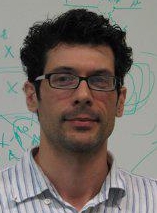 Gabriele Simi合作论文数Dipartimento di Fisica e Astronomia, Università degli Studi di Padova921
 Concezio Bozzi合作论文数Istituto Nazionale di Fisica Nucleare Sezione di Ferrara790
 Abolhassan Jawahery合作论文数Department of Physics, College of Computer, Mathematical, & Natural Sciences, University of Maryland783
 George Lafferty合作论文数School of Physics and Astronomy, The University of Manchester779
 Antimo Palano合作论文数University of Bari774
 Roger Barlow合作论文数School of Computing and Engineering, University of Huddersfield765
 Eleonora Luppi合作论文数Dipartimento di Fisica e Scienze della Terra, Università degli Studi di Ferrara764R. Cenci合作论文数748M. Rotondo合作论文数743Gp Wormser合作论文数738
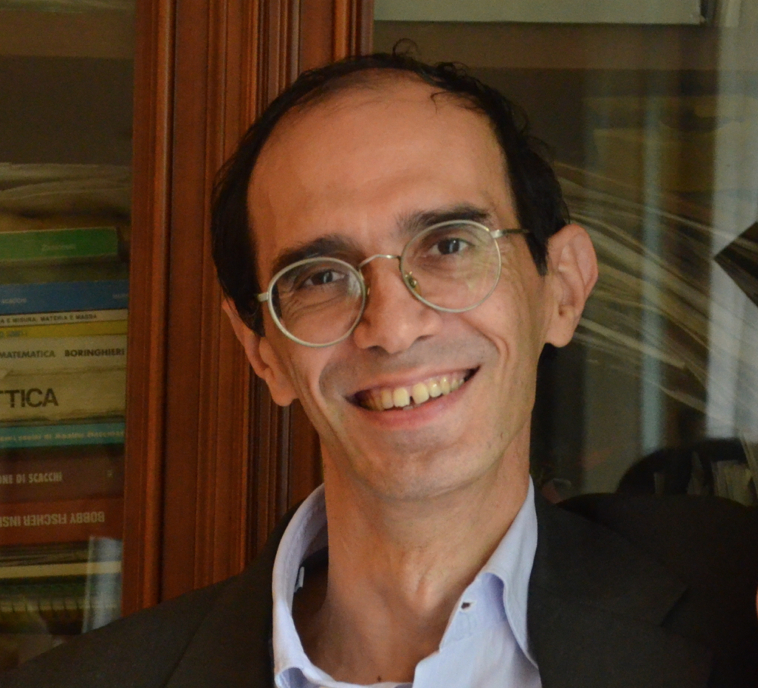 Roberto Calabrese合作论文数Dipartimento Di Fisica E Scienze Della Terra, Università degli Studi di Ferrara;Istituto Nazionale di Fisica Nucleare737
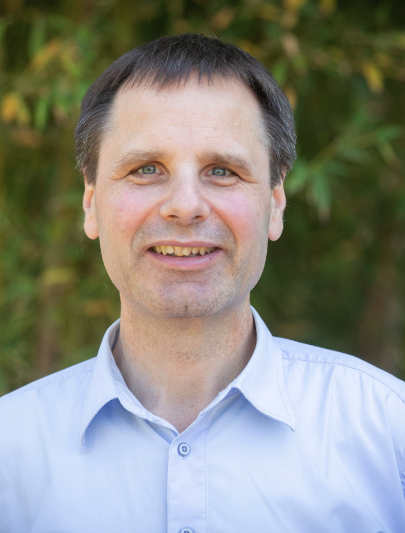 Gerhard Raven合作论文数Faculty of Science, Vrije Universiteit Amsterdam;Nikhef;CERN;SLAC National Accelerator Laboratory709
 Fergus Wilson合作论文数Particle Physics Division A, Science and Technology Facilities Council699Bernhard Spaan合作论文数691
 Steve Playfer合作论文数School of Physics and Astronomy, University of Edinburgh;Institute for Particle and Nuclear Physics, University of Edinburgh691
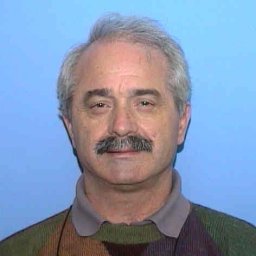 Fernando Palombo合作论文数Department of Physics, University of Milan680
 Francesco Forti合作论文数Department of Physics, University of Pisa;Istituto Nazionale di Fisica Nucleare673
 Eugeni Graugés Pous合作论文数Department of Quantum Physics and Astrophysics, Facultat de Física, Universitat de Barcelona667
 Alberto Lusiani合作论文数Science Department, Scuola Normale Superiore;INFN Sezione di Pisa660
 Francesca Di Lodovico合作论文数Department of Physics, Faculty of Natural, Mathematical & Engineering Sciences, King’s College London646
 Arantza Oyanguren合作论文数Institute of Corpuscular Physics, University of Valencia644
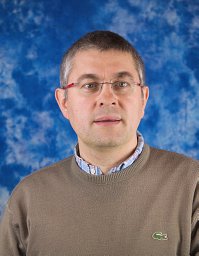 Vincent Tisserand合作论文数Laboratoire de Physique Corpusculaire de Clermont-Ferrand644M. Rama合作论文数640
 Christopher Hearty合作论文数Department of Physics & Astronomy, Faculty of Science, The University of British Columbia638
 David Hutchcroft合作论文数Department of Physics, School of Physical Sciences, Faculty of Science and Engineering, University of Liverpool635Serednyakov Sergey Ivanovich合作论文数Budker Institute of Nuclear Physics, Siberian Division, Russian Academy of Sciences632
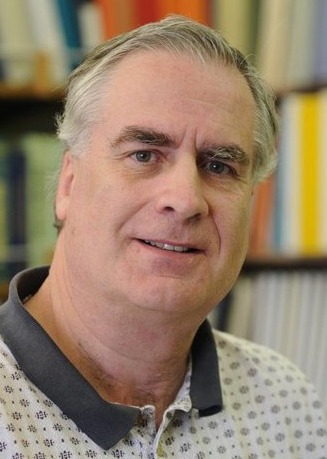 Frank C. Porter合作论文数The Division of Physics, Mathematics and Astronomy, California Institute of Technology631
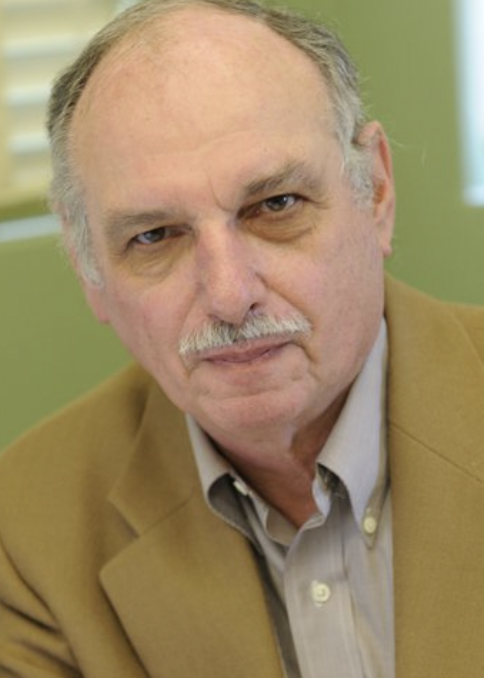 David Hitlin合作论文数Division of Physics Mathematics and Astronomy, California Institute of Technology631Stefano Bettarini合作论文数Dipartimento di Fisica, Università di Pisa628G. Finocchiaro合作论文数627
 Glen Cowan合作论文数Centre for Particle Physics and Astronomy, Department of Physics, Royal Holloway, University of London625
 Gerald Eigen合作论文数Department of Physics and Technology, University of Bergen624J. Ocariz合作论文数623J. Chauveau合作论文数622
 Lucien Cremaldi合作论文数Department of Physics and Astronomy, University of Mississippi620
 Gr Bonneaud合作论文数University of Paris616F. Ferrarotto合作论文数616
 Fernando Martinez Vidal合作论文数Department of Atomic, Molecular and Nuclear Physics, University of Valencia;Instituto de Física Corpuscular614
 James Cochran合作论文数Department of Physics and Astronomy, College of Liberal Arts and Sciences, Iowa State University613
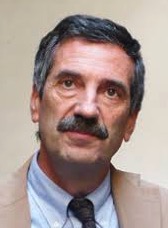 Fernando Ferroni合作论文数School of Advanced Studies, Gran Sasso Science Institute610
 Ulrich Uwer合作论文数Fakultät für Physik und Astronomie, Physikalisches Institut, Universität Heidelberg606Jean-Pierre Lees合作论文数Laboratoire d'Annecy-le-Vieux de Physique des Particules606
 Mattia Morandin合作论文数CAREL599C. Patrignani合作论文数598
 Terry L. Schalk合作论文数Division of Physical & Biological Sciences, Department of Physics, University of California, Santa Cruz;Santa Cruz Institute for Particle Physics, University of California, Santa Cruz597Evgeny Solodov合作论文数594
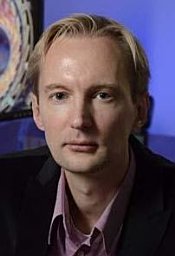 A. V. Gritsan合作论文数Johns Hopkins University593
 Blair Ratcliff合作论文数SLAC National Accelerator Laboratory;Stanford University590
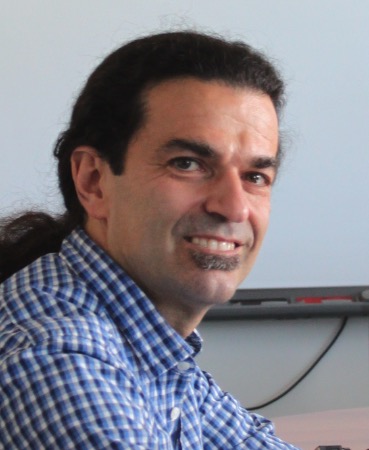 Lorenzo Vitale合作论文数Department of Engineering and Architecture, University of Trieste;Sezione di Trieste, INFN;Dipartimento di Fisica, University of Trieste590




