Dr. Robert W. Lucky, IEEE Communications Society's fourth President, passed away at his home in Fair Haven, New Jersey on March 10, 2022. Bob does not need any introduction as most ComSoc members know Bob through his numerous keynote speeches and writings in his Reflections column in IEEE Spectrum. To pay tribute to our former President and communications pioneer, we have assembled a group of four former ComSoc Presidents from the New York metropolitan area who worked or interacted with Bob at different periods of his distinguished career. Each writes about his recollection of Bob's friendship and inspiration.
The IEEE International Conference on Multimedia & Expo (ICME) has been the flagship multimedia conference sponsored by four IEEE societies since 2000. It aims at promoting exchange of the latest advances in multimedia technologies, systems, and applications from both the research and development perspectives. ICME attracts well over 1000 submissions each year, serving as the prime forum for the dissemination of knowledge in the multimedia field.
Dr. George Heilmeier, one of the most influential technology leaders of our era, passed away on April 21 in Plano, Texas at the age of 77. The cause of death was attributed to complications arising from Alzheimer's disease.
The IEEE Communications Society (ComSoc) is one of 45 technical societies and councils that provide the foundation for the IEEE s broad range of technical, professional, and humanitarian activities. Both ComSoc and IEEE offer a wide range of products and services to its members and the broader, global community. It is important for ComSoc s Golden Triangle (Young Engineers Industry Globalization) vision to take into consideration the wider IEEE landscape, and avoid silo thinking. This month s column, shared with Doug Zuckerman, Nim Cheung, and Roberto de Marca, provides perspectives on how the activities of ComSoc and its parent IEEE go hand in hand to enhance the value offered to IEEE and Society members.
ur members are the Society. ComSoc’s Membership Programs are designed to provide valuable services to our members for their professional development and, in turn, to build a robust Society. In the March 2006 article of this column, Byeong Gi Lee, ComSoc’s Vice President of Membership Development, and I gave a high-level overview of ComSoc’s Membership Development Program. This month, I have invited the six directors reporting to Byeong as coauthors to give you an overview of their areas of responsibility. These six ComSoc leaders together play a key role as front line contacts to all our members in our 176 ComSoc Chapters in every corner of the world. ComSoc members have carried the Communications Society to the top and kept it there through membership growth, aggressive programs of high technical quality, and excellent conferences over the years. Since its inception in1972, ComSoc grew steadily with a true global presence until 2001 with a peak membership of 62,000. More recently, with changes in the telecommunications climate, membership has declined to below 45,000, and the membership mix across the globe is also changing. In the last couple of years the membership has stabilized. With the dramatic growth of information technology in developing countries and areas such as China, India, Southeast Asia, Eastern Europe, and Latin America, we are poised for a renewed growth in membership. The Membership Development Council (MDC) administers the membership programs by working through four Regional Directors: Daehyoung Hong (Asia/Pacific), Andrzej Jajszczyk (Europe, Africa and Middle East), Araceli Garcia Gomez (Latin America), and T. Scott Atkinson (North America). Shri Goyal, Director of Membership Programs Development, is responsible for membership programs development and coordination, and Bob Shapiro, Director of Marketing, provides marketing support for the team. Carole Swaim, Department Head of Executive & Volunteer Services, provides enthusiastic and active support for the entire Membership Development Council. The 176 local Chapters and Chapter chairs participate closely in designing and managing the programs worldwide and they are very important contributors to ComSoc’s operations and activities. ComSoc has established many programs to help its members around the globe. New programs have been added and existing programs enhanced to meet member needs. Some of the major programs are: • Chapter Funding • Chapter Achievement Awards • Chapter Membership Growth Incentives • Distinguished Lecturers Tours (DLT) • Global and Regional Chapter Chairs Congresses • Membership Development Support Grants (MDSG) • Special programs for developing countries • Global and Regional Reach-out
Describes the ComSoc Awards program and lists the winners of the career awards, service awards and best paper awards.
Presents the President's message for this issue of the publication.
omSoc has a long history of contributing to IEEE standards development and has in recent years given this subject increased attention, first with the creation of an ad hoc Standards Committee in 2002 and later in the Board of Governors approved appointment of a Director of Standards and creation of the ComSoc Standards Board (http://www.comsoc.org/ socstr/org/operation/standcom/ index.html). This has provided a strong ComSoc standards infrastructure, which has contributed to the regeneration of ComSoc Technical Committee (TC) interests and related technical standards development. Examples from this year include synergies on the subject of cognitive radio in which a new family of standards projects, identified as P1900.x, will be developed and the creation of a new Technical Sub-Committee on Cognitive Networks. Additional cross benefits include related TC work on conferences, such as Dynamic Spectrum Access Networks (DySPAN), and on publication projects. Work on the subject of broadband over power line has also received ComSoc’s attention, in collaboration with the Power Engineering Society and others. This standards work will be covered under IEEE standards project P1901 and has seen the launch of a new ComSoc Technical Committee on Power Line Communications as well as the International Symposium on Power Line Communications (ISPLC). As we continue our work on standards development in the IEEE Standards Association (SA), we thought it might be of interest to see how the SA operates and its achievements in the past year. With that in mind, I invited the immediate past president of SA, Don Heirman, to describe the activities of SA in 2006, which was the last year of his term of office as president. Donald Heirman is president of Don Heirman Consultants, a training, standards, education, and electromagnetic compatibility (EMC) consultation corporation. He was president of the IEEE SA, and a member of the IEEE Board of Directors and Executive Committee in 2005 and 2006. He is presently a member of the SA Board of Governors, a member of the IEEE EMC Society Board of Directors and its Vice President for Standards, and Chair of its Technical Committee on EMC Measurements. Mr. Heirman is a Fellow of the IEEE. He is associate director for Wireless EMC at the University of Oklahoma Center for the Study of Wireless EMC. He has presented numerous workshop talks, tutorials, and technical papers internationally, and is listed in several Who’s Who publications. He is a retired Commander in the U.S. Navy Reserves. Let’s welcome Don Heirman to this column.
ast month we reported on ComSoc’s journal and magazine activities. This month I would like to give you an update on the other half of ComSoc services, the large portfolio of meetings and conferences sponsored by our Society. I have invited Dr. Fred Bauer, ComSoc’s Director of Meetings and Conferences, to co-author this article. Our 80 plus conferences are under the able guidance of Fred and his team of M&C volunteers and headquarters staff. Fred Bauer works in Nokia’s Enterprise Services Technology Office in Mountain View, California. Previously he worked at companies such as PacketHop, SRI, and Intel. Over the years, Fred has been an active participant in IEEE INFOCOM and SECON conferences. Most recently he has served as General Chair of INFOCOM in 2003 and as Standing Committee Chair for SECON. Fred has also served as Technical Activities Secretary (2004–2005), Distinguished Lecturer Selection Chair (2004–2005), and Director of Meetings & Conferences (2006–2007). Fred received his Ph.D. in computer engineering from the University of California at Santa Cruz in 1996.
his month marks the beginning of my second year as president of the IEEE Communications Society. At this time of each year, a group of ComSoc’s elected officers complete their terms and are replaced by another group of newly elected officers beginning their new terms. In this column I will brief you on the recent changes in ComSoc’s leadership, and report to you on some of the highlights in December and January. Curtis Siller completed his term as past president and chair of the Strategic Planning Committee in 2006. We are, however, pleased to have him returning to the board in a different capacity. Curtis has just been elected to the position of IEEE Division III Director-Elect 2007. The ComSoc Board of Governors voted in their November 2006 meeting that the Division III Director-Elect is a voting member of the board. As I mentioned in my January 2006 President’s Page, among his numerous accomplishments, Curtis was instrumental in guiding the Society back to a balanced budget over the past two years. ComSoc continued to exercise frugal financial management and proposed a third balanced budget for 2007. We want to thank Curtis for his outstanding contributions and look forward to working with him in his new capacity with IEEE. We also want to express thanks for the services of the four outgoing members of the Board of Governors (Class of 2004–2006): Scott Atkinson, Stanley Moyer, Naohisa Ohta, and Heinrich Stuettgen. In addition to their duties on the Board of Governors, these four leaders have served in many leadership positions over the past decade, and will continue to serve the Society in their different roles. In 2007 Scott will remain Director of North America Region, Stan will continue his second year as Treasurer, and Heinrich will continue to serve as Chair of the GLOBECOM/ICC Technical Content Committee (GITC). I am pleased to introduce Doug Zuckerman, ComSoc’s President-Elect for 2007. Doug will begin his two-year term as President in January 2008. Doug received his B.S., M.S., and Eng.Sc.D. degrees in electrical engineering from Columbia University in 1969, 1971, and 1976, and is an IEEE Fellow. His over 37 years of experience, mainly at Bell Labs, Bellcore, and Telcordia Technologies, span the operations, management, and engineering of emerging networks and services. For over 20 years, Doug’s energetic leadership across ComSoc’s technical committees, conferences, publications, chapters, and Society governance has maintained focus on member interests worldwide, especially making relevant technical information widely and quickly available online and at conferences, and encouraging more member interaction in the technical committees. In the several key positions he has held on the Board of Governors, he has motivated and led organizational changes that more directly addressed the needs of members and chapters. He co-founded technical committees on Network Operations & Management and Enterprise Networking, as well as the IEEE Network Operations & Management Symposium (NOMS). Doug also serves on the important IEEE Products/Services Committee and the GLOBECOM/ICC Management and Strategy Committee (GIMS). In addition to his PresidentElect position during 2007, Doug will be completing his two-year term as Vice President Society Relations and chairing ComSoc’s Strategic Planning Committee. He and I will work closely together on addressing a number of important issues facing our global Society, and the communications and information technology industry worldwide. In this month we have five new members of the Board of Governors instead of the normal class of four. I am pleased to welcome Sirin Tekinay, who became a member of the board in November 2006. She will complete the remaining term of the late Bob Blake, a member of the class of 2005–2007. Sirin joined the Division of Computing and Communications Foundations (CCF) of the National Science Foundation in September 2005. She is a program director for Theoretical Foundations in Communications Research. ComSoc will greatly benefit from her unique perspective on the government, in addition to her prior experience in industry and academics. We welcome four new members of the class of 2007–2009: Tom La Porta of Penn State University, Ted Rappaport of University of Texas at Austin, Catherine Rosenberg of the University of California, Los Angeles, and Gordon Stuber of Georgia Institute of Technology. These four board members have been long-time leaders of T
 tom mcbeath合作论文数6glenn parsons合作论文数6peter t s yum合作论文数6vimal kumar khanna合作论文数6
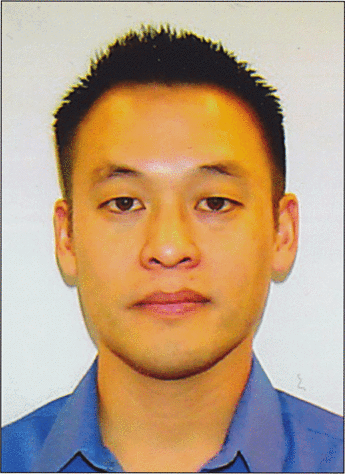 Eduardo Joo合作论文数6sean moore合作论文数6yingdar lin合作论文数6silvia giordano合作论文数6stefano galli合作论文数6amitabh mishra合作论文数6
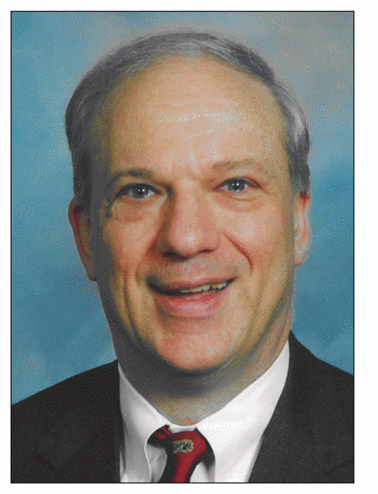 John Spencer合作论文数6
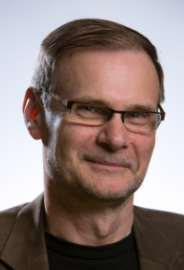 Janusz Konrad合作论文数Department of Electrical and Computer Engineering, Boston University6
 Luca Delgrossi合作论文数6
 Nelson L. S. Da Fonseca合作论文数Instituto de Computac;Universidade Estadual de Campinas;Instituto de Computac, Universidade Estadual de Campinas6
 Mario Kolberg合作论文数University of Stirling6Zhiwei Xu (徐志伟)合作论文数6
 Stan Moyer合作论文数6
 Edoardo S. Biagioni合作论文数Dept. of Information and Computer Sciences, University of Hawaii at Manoa6Nader F. Mir合作论文数Electrical Engineering Department of San Jose State University6
 Timo Kosch合作论文数6
 Antonio Sánchez-Esguevillas合作论文数Telefónica I+D6
 Paolo Bellavista合作论文数Department of Computer Science and Engineering, Universita Di Bologna6ad hoc合作论文数5tom w chen合作论文数5
 Yoichi Maeda合作论文数5
 Mostafa Hashem合作论文数5
 Zoran Zvonar合作论文数Analog Devices Inc.5
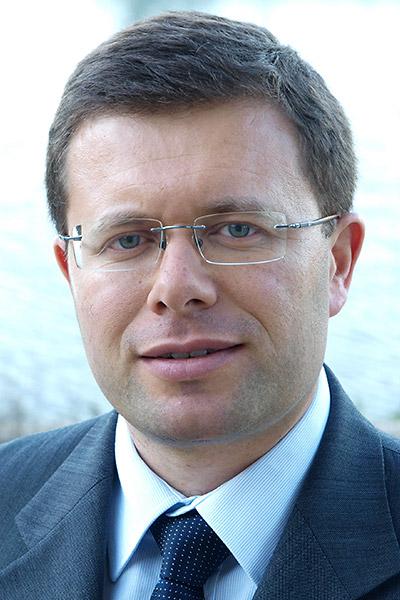 Joel Rodrigues合作论文数Instituto de Telecomunicações5
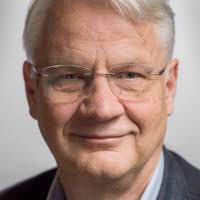 A. Pras (Aiko)合作论文数Department of Design and Analysis of Communication Systems, Faculty of Electrical Engineering, Mathematics and Computer Science, University of Twente5Tee-Hiang Cheng合作论文数5Osman S. Gebizlioglu合作论文数5
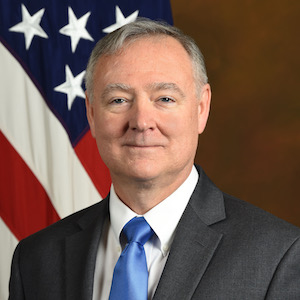 Joseph B. Evans合作论文数Department of Electrical Engineering & Computer Science, The University of Kansas;Information & Telecommunication Technology Center, The University of Kansas;STR5
 Vijay Jain合作论文数5S. Aissa合作论文数Université du Québec
Institut National de la Recherche Scientifique
Énergie, Matériaux et Télécommunications (INRS-EMT)5liverpool john moores合作论文数5
Vijay Jain合作论文数5S. Aissa合作论文数Université du Québec
Institut National de la Recherche Scientifique
Énergie, Matériaux et Télécommunications (INRS-EMT)5liverpool john moores合作论文数5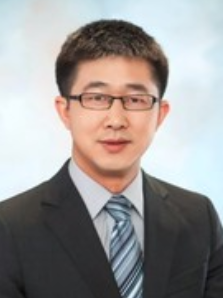 Chonggang Wang合作论文数InterDigital Communications5hady salloum合作论文数4Alexander M. Wyglinski合作论文数4
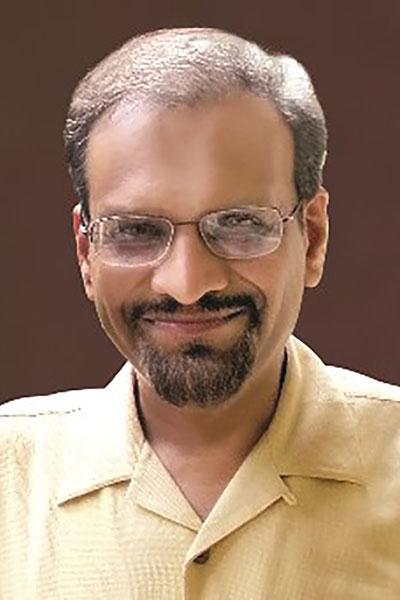 Sudhir Dixit合作论文数University of Oulu;Basic Internet Foundation;Trustyfi4Joan Garcia-Haro合作论文数Information Technologies and Communications;Polytechnic University of Cartagena (UPCT), Spain4Doug Zuckerman合作论文数4
 Mohammed Atiquzzaman合作论文数School of Computer Science, The University of Oklahoma4
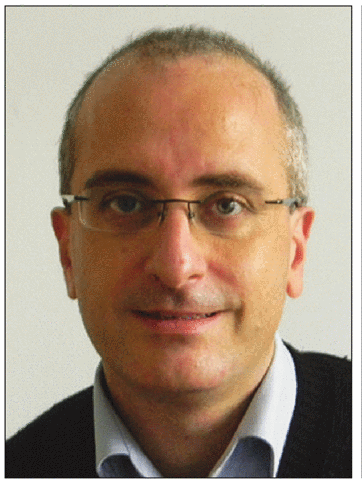 Salvatore Loreto合作论文数Ericsson Research4
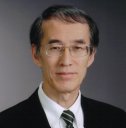 Hideo Kuwahara合作论文数Fujitsu4celia desmond合作论文数3Andrzej Jajszczyk合作论文数Department of Telecommunications, AGH University of Science and Technology in Krakow, Poland;Polish Academy of Sciences3
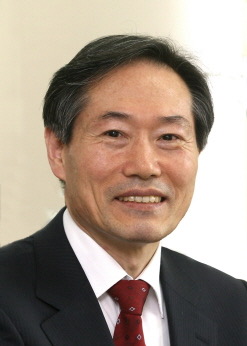 Byeong Gi Lee合作论文数Department of Electrical and Computer Engineering, Seoul National University3Admela Jukan合作论文数3Shri Goyal合作论文数3




