In recent years Flow Matching has become a prominent method for generative modeling robot motion generation. In its generic form Flow Matching is an ODE-based neural sampler that is trained by regressing empirical flow fields associated with motion samples as data. However, in robot motion generation we often have additional constraints that might not be present in the collected data. The majority of current approaches train the flow on the available data and use inference-time guidance to enforce task-specific constraints. To address this mismatch, we propose ConFlow, a constraint-guided flow matching framework that incorporates constraint information directly into the training objective via differentiable barrier or cost functions. To address design specifications such as smoothness and boundary conditions, we propose replacing the standard Gaussian source distribution used in flow matching training with a conditional Gaussian Process. Our approach also uses infeasible demonstrations as negative supervision, improving constraint satisfaction without requiring additional expert data. Experiments on a two-robot navigation task demonstrate that ConFlow achieves lower collision rates and higher trajectory quality than standard flow matching baselines, with or without inference-time guidance. These results validate training-time constraint integration as an effective approach to closing the training–inference gap in generative motion models.
Auto-encoder models that preserve similarities in the data are a popular tool in representation learning. In this paper we introduce several auto-encoder models that preserve local distances when mapping from the data space to the latent space. We use a local distance-preserving loss that is based on the continuous k-nearest neighbours graph which is known to capture topological features at all scales simultaneously. To improve training performance, we formulate learning as a constraint optimisation problem with local distance preservation as the main objective and reconstruction accuracy as a constraint. We generalise this approach to hierarchical variational auto-encoders thus learning generative models with geometrically consistent latent and data spaces. Our method provides state-of-the-art or comparable performance across several standard datasets and evaluation metrics.
One of the main challenges in modeling massive stars to the onset of core collapse is the computational bottleneck of nucleosynthesis during advanced burning stages. The number of isotopes formed requires solving a large set of fully coupled stiff ordinary differential equations, making the simulations computationally intensive and prone to numerical instability. To overcome this barrier, we design a nuclear neural network (NNN) framework with multiple hidden layers to emulate nucleosynthesis calculations and conduct a proof of concept to evaluate its performance. The NNN takes the temperature, density, and composition of a burning region as input and predicts the resulting isotopic abundances along with the energy generation and loss rates. We generate training sets for initial conditions corresponding to oxygen core depletion and beyond using large nuclear reaction networks, and compare the predictions of the NNNs to results from a commonly used small net. We find that the NNNs improve the accuracy of the electron fraction by 280%–660%, the average atomic and mass numbers by 150%–360%, and the nuclear energy generation by 250%–750%, consistently outperforming the small network across all time steps. They also achieve significantly better predictions of neutrino losses on relatively short timescales, with improvements ranging from 100% to 1,000,000%. While further work is needed to enhance their accuracy and applicability to different stellar conditions, integrating NNN-trained models into stellar evolution codes is promising for facilitating the large-scale generation of core-collapse supernova progenitors with higher physical fidelity.
Inferring physical properties can significantly enhance robotic manipulation by enabling robots to handle objects safely and efficiently through adaptive grasping strategies. Previous approaches have typically relied on either tactile or visual data, limiting their ability to fully capture properties. We introduce a novel cross-modal perception framework that integrates visual observations with tactile representations within a multimodal vision-language model. Our physical reasoning framework, which employs a hierarchical feature alignment mechanism and a refined prompting strategy, enables our model to make property-specific predictions that strongly correlate with ground-truth measurements. Evaluated on 35 diverse objects, our approach outperforms existing baselines and demonstrates strong zero-shot generalization.
A probabilistic graphical model is proposed, modeling the joint model parameter and multiplier evolution, with a hypervolume based likelihood, promoting multi-objective descent in structural risk minimization. We address multi-objective model parameter optimization via a surrogate single objective penalty loss with time-varying multipliers, equivalent to online scheduling of loss landscape. The multi-objective descent goal is dispatched hierarchically into a series of constraint optimization sub-problems with shrinking bounds according to Pareto dominance. The bound serves as setpoint for the low-level multiplier controller to schedule loss landscapes via output feedback of each loss term. Our method forms closed loop of model parameter dynamic, circumvents excessive memory requirements and extra computational burden of existing multi-objective deep learning methods, and is robust against controller hyperparameter variation, demonstrated on domain generalization tasks with multi-dimensional regularization losses.
Multi-modality magnetic resonance imaging(MRI) data facilitate the early diagnosis, tumor segmentation, and disease staging in the management of nasopharyngeal carcinoma (NPC). The lack of publicly available, comprehensive datasets limits advancements in diagnosis, treatment planning, and the development of machine learning algorithms for NPC. Addressing this critical need, we introduce the first comprehensive NPC MRI dataset, encompassing MR axial imaging of 277 primary NPC patients. This dataset includes T1-weighted, T2-weighted, and contrast-enhanced T1-weighted sequences, totaling 831 scans. In addition to the corresponding clinical data, manually annotated and labeled segmentations by experienced radiologists offer high-quality data resources from untreated primary NPC.
Most recent successes in robot reinforcement learning involve learning a specialized single-task agent. However, robots capable of performing multiple tasks can be much more valuable in real-world applications. Multi-task reinforcement learning can be very challenging due to the increased sample complexity and the potentially conflicting task objectives. Previous work on this topic is dominated by model-free approaches. The latter can be very sample inefficient even when learning specialized single-task agents. In this work, we focus on model-based multi-task reinforcement learning. We propose a method for learning multi-task visual world models, leveraging pre-trained language models to extract semantically meaningful task representations. These representations are used by the world model and policy to reason about task similarity in dynamics and behavior. Our results highlight the benefits of using language-driven task representations for world models and a clear advantage of model-based multi-task learning over the more common model-free paradigm.
The use of guidance to steer sampling toward desired outcomes has been widely explored within diffusion models, especially in applications such as image and trajectory generation. However, incorporating guidance during training remains relatively underexplored. In this work, we introduce energy-guided flow matching, a novel approach that enhances the training of flow models and eliminates the need for guidance at inference time. We learn a conditional velocity field corresponding to the flow policy by approximating an energy-guided probability path as a Gaussian path. Learning guided trajectories is appealing for tasks where the target distribution is defined by a combination of data and an energy function, as in reinforcement learning. Diffusion-based policies have recently attracted attention for their expressive power and ability to capture multi-modal action distributions. Typically, these policies are optimized using weighted objectives or by back-propagating gradients through actions sampled by the policy. As an alternative, we propose FlowQ, an offline reinforcement learning algorithm based on energy-guided flow matching. Our method achieves competitive performance while the policy training time is constant in the number of flow sampling steps.
The ability to distinctly and properly collate an individual researcher’s publications is crucial for ensuring appropriate recognition, guiding the allocation of research funding, and informing hiring decisions. However, accurately grouping and linking a researcher’s entire body of work with their individual identity is challenging because of widespread name ambiguity across the growing literature. Algorithmic author name disambiguation (AND) provides a scalable approach to disambiguating author identities, yet existing methods have limitations. Many modern AND methods rely on comprehensive metadata features such as email, venue, or affiliation. Despite advancements in digitally indexing publications, metadata is often unavailable or inconsistent in large digital libraries (e.g., SAO/NASA Astrophysics Data System). We introduce the Neural Author Name Disambiguator (NAND), a method that effectively disambiguates author identities in large digital libraries despite limited metadata availability. We formulate the AND task as a similarity learning problem by employing a Siamese neural network to disambiguate author names across publications relying solely on widely available publication metadata—author names, titles, and abstracts. We construct the Large-Scale Physics Open Researcher and Contributor ID (ORCID)-Linked dataset to evaluate the NAND method by cross-matching NASA/ADS publications ORCiD. By leveraging foundation models to embed metadata into features, the NAND achieves up to 94% accuracy in pairwise disambiguation and over 95% F1 in clustering publications into their correct researcher identities. We release the testing dataset as a benchmark for physics and astronomy, providing realistic evaluation conditions for future disambiguation methods. The NAND algorithm demonstrates effective disambiguation with minimal metadata, offering a scalable solution for name ambiguity in large-scale digital libraries.
We present a novel motion generation approach for robot arms, with high degrees of freedom, in complex settings that can adapt online to obstacles or new via points. Learning from Demonstration facilitates rapid adaptation to new tasks and optimizes the utilization of accumulated expertise by allowing robots to learn and generalize from demonstrated trajectories. We train a transformer architecture, based on conditional variational autoencoder, on a large dataset of simulated trajectories used as demonstrations. Our architecture learns essential motion generation skills from these demonstrations and is able to adapt them to meet auxiliary tasks. Additionally, our approach implements auto-regressive motion generation to enable real-time adaptations, as, for example, introducing or changing via-points, and velocity and acceleration constraints. Using beam search, we present a method for further adaption of our motion generator to avoid obstacles. We show that our model successfully generates motion from different initial and target points and that is capable of generating trajectories that navigate complex tasks across different robotic platforms.
Type Ia supernovae (SNe) remain poorly understood despite decades of investigation. Massive computationally intensive hydrodynamic simulations have been developed and run to model an ever-growing number of proposed progenitor channels. Further complicating the matter, a large number of subtypes of Type Ia SNe have been identified in recent decades. Due to the massive computational load required, inference of the internal structure of Type Ia SNe ejecta directly from observations using simulations has previously been computationally intractable. However, deep-learning emulators for radiation transport simulations have alleviated such barriers. We perform abundance tomography on 40 Type Ia SNe from optical spectra using the radiative transfer code TARDIS accelerated by the probabilistic DALEK deep-learning emulator. We apply a parametric model of potential outer ejecta structures to comparatively investigate abundance distributions and internal ionization fractions of intermediate-mass elements (IMEs) between normal and 1991T-like Type Ia SNe in the early phases. Our inference shows that the outer ejecta of 1991T-like Type Ia SNe is underabundant in the typical intermediate mass elements that heavily contribute to the spectral line formation seen in normal Type Ia SNe at early times. Additionally, we find that the IMEs present in 1991T-like Type Ia SNe are highly ionized compared to those in the normal Type Ia population. Finally, we conclude that the transition between normal and 1991T-like Type Ia SNe appears to be continuous observationally and that the observed differences come out of a combination of both abundance and ionization fractions in these SNe populations.
EDITORIAL article Front. Robot. AI, 09 January 2024Sec. Robot Learning and Evolution Volume 10 - 2023 | https://doi.org/10.3389/frobt.2023.1355576
Poor generalization performance caused by distribution shifts in unseen domains often hinders the trustworthy deployment of deep neural networks. Many domain generalization techniques address this problem by adding a domain invariant regularization loss terms during training. However, there is a lack of modular software that allows users to combine the advantages of different methods with minimal effort for reproducibility. DomainLab is a modular Python package for training user specified neural networks with composable regularization loss terms. Its decoupled design allows the separation of neural networks from regularization loss construction. Hierarchical combinations of neural networks, different domain generalization methods, and associated hyperparameters, can all be specified together with other experimental setup in a single configuration file. Hierarchical combinations of neural networks, different domain generalization methods, and associated hyperparameters, can all be specified together with other experimental setup in a single configuration file. In addition, DomainLab offers powerful benchmarking functionality to evaluate the generalization performance of neural networks in out-of-distribution data. The package supports running the specified benchmark on an HPC cluster or on a standalone machine. The package is well tested with over 95 percent coverage and well documented. From the user perspective, it is closed to modification but open to extension. The package is under the MIT license, and its source code, tutorial and documentation can be found at https://github.com/marrlab/DomainLab.
ObjectiveSubcutaneous Immunotherapy (SCIT) is the long-lasting causal treatment of allergic rhinitis (AR). How to enhance the adherence of patients to maximize the benefit of allergen immunotherapy (AIT) plays a crucial role in the management of AIT. This study aims to leverage novel machine learning models to precisely predict the risk of non-adherence of AR patients and related local symptom scores in 3 years SCIT.MethodsThe research develops and analyzes two models, sequential latent-variable model (SLVM) of Stochastic Latent Actor-Critic (SLAC) and Long Short-Term Memory (LSTM). SLVM is a probabilistic model that captures the dynamics of patient adherence, while LSTM is a type of recurrent neural network designed to handle time-series data by maintaining long-term dependencies. These models were evaluated based on scoring and adherence prediction capabilities.ResultsExcluding the biased samples at the first time step, the predictive adherence accuracy of the SLAC models is from 60% to 72%, and for LSTM models, it is 66%–84%, varying according to the time steps. The range of Root Mean Square Error (RMSE) for SLAC models is between 0.93 and 2.22, while for LSTM models it is between 1.09 and 1.77. Notably, these RMSEs are significantly lower than the random prediction error of 4.55.ConclusionWe creatively apply sequential models in the long-term management of SCIT with promising accuracy in the prediction of SCIT nonadherence in AR patients. While LSTM outperforms SLAC in adherence prediction, SLAC excels in score prediction for patients undergoing SCIT for AR. The state-action-based SLAC adds flexibility, presenting a novel and effective approach for managing long-term AIT.
Deep learning techniques have been applied to medical image segmentation and demonstrated expert-level performance. Due to the poor generalization abilities of the models in the deployment in different centres, common solutions, such as transfer learning and domain adaptation techniques, have been proposed to mitigate this issue. However, these solutions necessitate retraining the models with target domain data and annotations, which limits their deployment in clinical settings in unseen domains. We evaluated the performance of domain generalization methods on the task of MRI segmentation of nasopharyngeal carcinoma (NPC) by collecting a new dataset of 321 patients with manually annotated MRIs from two hospitals. We transformed the modalities of MRI, including T1WI, T2WI and CE-T1WI, from the spatial domain to the frequency domain using Fourier transform. To address the bottleneck of domain generalization in MRI segmentation of NPC, we propose a meta-learning approach based on frequency domain feature mixing. We evaluated the performance of MFNet against existing techniques for generalizing NPC segmentation in terms of Dice and MIoU. Our method evidently outperforms the baseline in handling the generalization of NPC segmentation. The MF-Net clearly demonstrates its effectiveness for generalizing NPC MRI segmentation to unseen domains (Dice = 67.59%, MIoU = 75.74% T1W1). MFNet enhances the model's generalization capabilities by incorporating mixed-feature meta-learning. Our approach offers a novel perspective to tackle the domain generalization problem in the field of medical imaging by effectively exploiting the unique characteristics of medical images.
This dataset contains two archives of data related to the paper "1991T-Like Type Ia Supernovae as an Extension of the Normal Population" The first dataset, TARDIS_Emulator_Config.tar.gz , contains the atomic data used to run TARDIS and a template configuration file from which samples are generated including the flags for the physics implementation used. The second dataset, InferenceScripts.tar.gz, contains the trained probabilistic neural network, the training/validation data (Under NNData), and scripts used to train the model and load and evaluate the model. Scripts that perform inference on spectra, as well as a folder of observed spectra (Under CorrectedSpectra), are included as well. A conda environment yaml file is included to rebuild the Python environment required to run all of the scripts. For questions please email John O'Brien.
Auto-encoder models that preserve similarities in the data are a popular tool in representation learning. In this paper we introduce several auto-encoder models that preserve local distances when mapping from the data space to the latent space. We use a local distance preserving loss that is based on the continuous k-nearest neighbours graph which is known to capture topological features at all scales simultaneously. To improve training performance, we formulate learning as a constraint optimisation problem with local distance preservation as the main objective and reconstruction accuracy as a constraint. We generalise this approach to hierarchical variational auto-encoders thus learning generative models with geometrically consistent latent and data spaces. Our method provides state-of-the-art performance across several standard datasets and evaluation metrics.
The use of machine learning in artistic music generation leads to controversial discussions of the quality of art, for which objective quantification is nonsensical. We therefore consider a music-generating algorithm as a counterpart to a human musician, in a setting where reciprocal interplay is to lead to new experiences, both for the musician and the audience. To obtain this behaviour, we resort to the framework of recurrent Variational Auto-Encoders (VAE) and learn to generate music, seeded by a human musician. In the learned model, we generate novel musical sequences by interpolation in latent space. Standard VAEs however do not guarantee any form of smoothness in their latent representation. This translates into abrupt changes in the generated music sequences. To overcome these limitations, we regularise the decoder and endow the latent space with a flat Riemannian manifold, i.e., a manifold that is isometric to the Euclidean space. As a result, linearly interpolating in the latent space yields realistic and smooth musical changes that fit the type of machine–musician interactions we aim for. We provide empirical evidence for our method via a set of experiments on music datasets and we deploy our model for an interactive jam session with a professional drummer. The live performance provides qualitative evidence that the latent representation can be intuitively interpreted and exploited by the drummer to drive the interplay. Beyond the musical application, our approach showcases an instance of human-centred design of machine-learning models, driven by interpretability and the interaction with the end user.
Supernova spectral time series can be used to reconstruct a spatially resolved explosion model known as supernova tomography. In addition to an observed spectral time series, a supernova tomography requires a radiative transfer model to perform the inverse problem with uncertainty quantification for a reconstruction. The smallest parametrizations of supernova tomography models are roughly a dozen parameters with a realistic one requiring more than 100. Realistic radiative transfer models require tens of CPU minutes for a single evaluation making the problem computationally intractable with traditional means requiring millions of MCMC samples for such a problem. A new method for accelerating simulations known as surrogate models or emulators using machine learning techniques offers a solution for such problems and a way to understand progenitors/explosions from spectral time series. There exist emulators for the TARDIS supernova radiative transfer code but they only perform well on simplistic low-dimensional models (roughly a dozen parameters) with a small number of applications for knowledge gain in the supernova field. In this work, we present a new emulator for the radiative transfer code TARDIS that not only outperforms existing emulators but also provides uncertainties in its prediction. It offers the foundation for a future active-learning-based machinery that will be able to emulate very high dimensional spaces of hundreds of parameters crucial for unraveling urgent questions in supernovae and related fields.
Auto-encoder models that preserve similarities in the data are a popular tool in representation learning. In this paper we introduce several auto-encoder models that preserve local distances when mapping from the data space to the latent space. We use a local distance-preserving loss that is based on the continuous k-nearest neighbours graph which is known to capture topological features at all scales simultaneously. To improve training performance, we formulate learning as a constraint optimisation problem with local distance preservation as the main ob-jective and reconstruction accuracy as a constraint. We generalise this approach to hierarchical variational auto-encoders thus learning generative models with geo-metrically consistent latent and data spaces. Our method provides state-of-the-art performance across several standard datasets and evaluation metrics.
 Patrick van der Smagt合作论文数Eötvös Loránd University;Foundation28
 Justin Bayer合作论文数Chair for Robotics and Embedded Systems, Insitut fur Informatik, Technische Universitat Munchen, Germany9
 Botond Cseke合作论文数Volkswagen AG8
 Alexej Klushyn合作论文数Machine Learning Research Lab, Volkswagen Group6Maximilian Karl合作论文数4Francesco Ferroni合作论文数4
 Wolfgang E. Kerzendorf合作论文数Department of Computational Mathematics, Science and Engineering, College of Natural Science, Michigan State University;Department of Physics & Astronomy, College of Natural Science, Michigan State University4
 Sebastian Urban合作论文数4
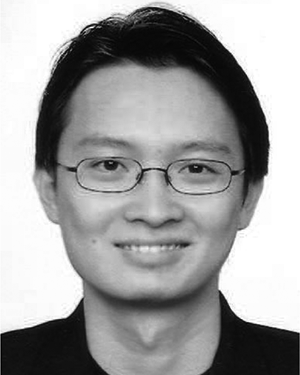 Keng Peng Tee合作论文数STAR’s Institute for Infocomm Research4Li Y (李引)合作论文数3Kai Wang合作论文数3
 Alexandros Paraschos合作论文数Tech Univ Darmstadt3Chee-Meng Chew合作论文数Division of Social Sciences
Department of Urban and Environmental Sociology3
Alexandros Paraschos合作论文数Tech Univ Darmstadt3Chee-Meng Chew合作论文数Division of Social Sciences
Department of Urban and Environmental Sociology3 Johannes Buchner合作论文数Max Planck Institute for extraterrestrial Physics3Jaladh Singhal合作论文数2John T. O'Brien合作论文数2
 Boon Siew Han合作论文数2Richard Kurle合作论文数2Jun Tang合作论文数2Marc Williamson合作论文数2
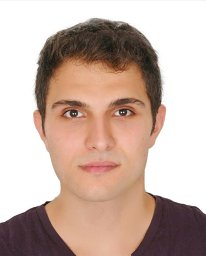 Elie Aljalbout合作论文数2C. Vogl合作论文数2
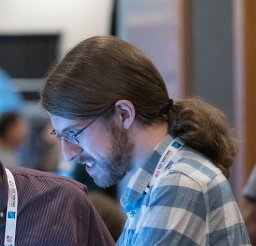 Andrew G. Fullard合作论文数Michigan State University2
 Alexej Gossmann合作论文数Center for Bioinformatics and Genomics, Department of Mathematics, Tulane University, New Orleans, LA, USA.2QingQing Yu (于青青)合作论文数2
 Xudong Sun合作论文数Helmholtz Zentrum Munchen2
 Carsten Marr合作论文数Inst Computat Biol, Helmholtz Zentrum Munchen2Djalel Benbouzid合作论文数Linear Accelerator Laboratory, University of Paris-Sud2
 Herke van Hoof合作论文数Informatics Institute, University of Amsterdam2
 Christian Osendorfer合作论文数Amazon2
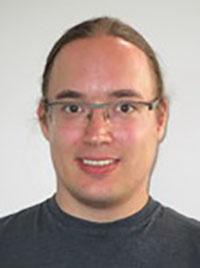 Ruediger Pakmor合作论文数Max Planck Institute for Astrophysics, Princeton University2Sotirakis, Nikolaos合作论文数1Maximilian Kar合作论文数1Marvin Alles合作论文数1daniela korhammer合作论文数1
 Albertus Hendrawan Adiwahono合作论文数1Tai Wen Chang合作论文数1Rachel Hornung合作论文数1Jack O'Brien合作论文数1Q X Wang合作论文数1Xiaojun Wu合作论文数1Hao Li合作论文数1Armin Gruber合作论文数1Xueyan Jiang合作论文数1
 Ebraheem Farag合作论文数Sch Earth & Space Explorat, Arizona State Univ1Göran Westling合作论文数1Zhantao Cao合作论文数1
 Sayedali Shetab Boushehri合作论文数Inst Hlth, Helmholtz Munich1




