Pulse shielding in Laser-Induced Breakdown of saline water on hydrodynamic time scales is experimentally characterized. Pairs of pulses from a Nd:YAG laser are focused into saline water with a controlled time delay between them. The Laser-Induced Breakdown produced by the first pulse creates a cavitation bubble that later collapses generating a plume of bubbles that evolves on hydrodynamic time scales. When the second pulse arrives, the light is scattered by this plume with a consequent reduction in the intensity at the focal spot resulting in a lower breakdown efficiency of this pulse. By means of acoustic measurements, we determine the breakdown energy threshold for the first pulse and characterize the shielding of the second pulse as a function of the salinity of the solution, the energy of the pulse, and the inter-pulse interval. A model for the blocking process that takes into account both linear and nonlinear absorption along the path is developed which satisfactorily explains the observations.
The ability to produce narrow optical pulses has been extensively investigated in laser systems with promising applications in photonics such as clock recovery, pulse reshaping, and recently in photonics artificial neural networks using spiking signal processing. Here, we investigate a neuromorphic opto-electronic integrated circuit (NOEIC) comprising a semiconductor laser driven by a resonant tunneling diode (RTD) photo-detector operating at telecommunication (1550 nm) wavelengths capable of excitable spiking signal generation in response to optical and electrical control signals. The RTD-NOEIC mimics biologically inspired neuronal phenomena and possesses high-speed response and potential for monolithic integration for optical signal processing applications.
We investigate the generation of mixed mode oscillations in a periodic forced optoelectronic circuit comprising a highspeed resonant tunneling diode (RTD) and a laser diode (LD). The driven RTD-LD exhibits a two-state level operation, characterized by either periodic or aperiodic intermittent patterns with a high amplitude followed by small amplitudes, that can be used for applications in switching at very fast modulation speeds and encoding of binary data sequences into the corresponding electrical and optical states of the dynamical system.
Summary form only given. Excitability is a well-established nonlinear dynamical concept in biological (neurons), and chemical (Belousov-Zhabotinsky reaction) systems [1]. The all-or-none response of an excitable system is a key effect of information processing in excitable oscillators. Excitability has been reported in lasers with promising applications in photonics such as clock recovery and pulse reshaping [2]. However, slow speed operation and bulky schemes make most of them too complex and slow for current and future information processing needs.In this work, we present a novel, compact, and simple excitable optoelectronic oscillator consisting of a AlAs/InGaAs double barrier quantum well (DBQW) resonant tunneling diode (RTD) driving a 1550 nm communications laser diode (LD) [3], Figs. 1(a) and (b). RTD-LD excitable optoelectronic systems exhibit a current-voltage (I-V) curve with a pronounced negative differential resistance (NDR), Fig. 1(c), and can operate at greater than GHz speeds [3] (RTDs can work up to THz). Here we present noise activated induced excitable and pulsed dynamics in both electrical and optical domains using RTD-LDs operating at room temperature. The RTD-LD is first DC biased, VDC, slightly below the peak, Fig. 1(c), i.e., in a non-oscillating equilibrium situation. For purposes of demonstration and experimental convenience, the driving signal consists of a stochastic voltage signal generated by a Gaussian white noise source, Vnoise, with a cut-off frequency of 80 MHz. The driving signal can be also injected optically, taking advantage of the optical input port of the RTD ridge waveguide [3], Fig. 1(a). The RTD-LD can emit excitable pulses in both electrical and optical outputs when the amplitude of the stochastic perturbation exceeds a given threshold, as presented in Fig. 1(d), showing upward and downward electrical pulses due to noise-induced RTD-LD switching from the peak-to-valley regions. The LD intensity output follows the switching current modulation induced by the RTD with a sequence of downward pulses of decreasing intensity with a FWHM around 200 ns. The FWHM of the pulses can go below 1 ns if an appropriate RTD-LD refractory time is chosen, determined by the circuit's resonant tank. For a given range of noise input the pulsed behavior is more regular, Fig. 2(a), with a time repetition determined by the RTD-LD refractory time. Interestingly, Fig. 2(b) shows multi-pulsing “bursting” behavior as a result of the asymmetric IV curve when the RTD-LD is DC biased closed to the valley region, which can be explored in novel applications such as signal pattern generation. We also present the numerical simulations of a system of differential equations comprising a nonlinear Liénard's oscillator that models the electrical circuit [3], stochastically driven by means of white Gaussian noise, Dξ(t) (D is the noise dimensionless amplitude, and ξ(t) the Gaussian function), and LD single mode laser rate equations [3]. As seen in Figs. 2(c) and (d), the Liénard oscillator-laser diode model subjected to stochastic fluctuations is in a very good agreement with the experimental results.We have shown excitability in a simple and compact RTD-LD optoelectronic circuit configuration. Since RTDs and LDs can be monolithic integrated, and the I-V N-shape of the optoelectronic system extends over a wide bandwidth, this approach can provide compact designs at GHz high-speed with improved performance for emerging applications in neural emulation, signal processing, and switching in optical networks.
Reaction of trans-Ru(DMSO)4Cl2 with DMAP (DMAP = 4-dimethylaminopyridine) yields the yellow [Ru(DMAP)6](2+) cation in good yield. The crystal and molecular structure of [Ru(DMAP)6]Cl2.6CH3CH2OH was determined by X-ray diffraction methods. The complex crystallizes in the trigonal R3 space group with a = b = 16.373(1), c = 20.311(1) A, gamma = 120 degrees , and Z = 3 molecules per unit cell. The reaction of [Ru(DMAP)6](2+) in aerobic water gives the red [Ru(III)(DMAP)5(OH)](2+) cation. This complex shows a chemical behavior similar to [Ru(III)(NH3)5Cl](2+) and allows the preparation of a family of [Ru(DMAP)5L](n+) complexes. Their electronic properties indicate that the {Ru(II)(DMAP)5} fragment is a weaker pi-donor than {Ru(II)(NH 3)5}. Our density functional theory (DFT) calculations show that in {Ru(II)(DMAP)5} the DMAP ligands can compete for the pi electron density of the ruthenium making the fragment a weaker pi-donor.
Reaction of trans-Ru(DMSO)4Cl2 with DMAP (DMAP = 4-dimethylaminopyridine) yields the yellow [Ru(DMAP)6](2+) cation in good yield. The crystal and molecular structure of [Ru(DMAP)6]Cl2.6CH3CH2OH was determined by X-ray diffraction methods. The complex crystallizes in the trigonal R3 space group with a = b = 16.373(1), c = 20.311(1) A, gamma = 120 degrees , and Z = 3 molecules per unit cell. The reaction of [Ru(DMAP)6](2+) in aerobic water gives the red [Ru(III)(DMAP)5(OH)](2+) cation. This complex shows a chemical behavior similar to [Ru(III)(NH3)5Cl](2+) and allows the preparation of a family of [Ru(DMAP)5L](n+) complexes. Their electronic properties indicate that the {Ru(II)(DMAP)5} fragment is a weaker pi-donor than {Ru(II)(NH 3)5}. Our density functional theory (DFT) calculations show that in {Ru(II)(DMAP)5} the DMAP ligands can compete for the pi electron density of the ruthenium making the fragment a weaker pi-donor.
The synthesis of phenanthro[9,10-c]-1,2,5-thiadiazole-1,1-dioxide (2) was achieved in nearly quantitative yield using a chlorosulfonic acid promoted Scholl reaction. Various other Brønsted and Lewis acids were also screened, though chlorosulfonic acid proved to be optimal in terms of yield and reaction time. This preparation, which uses benzil as a precursor to 1, is less expensive than a known route involving the acid-catalyzed condensation between sulfamide and 9,10-phenanthrenedione (a relatively more costly starting material). In addition, a new polycyclic aromatic derivative 3,6-dibenzophenanthro[9,10-c]-1,2,5-thiadiazole-1,1-dioxide (4), was also obtained in fair yield using the same reagent.
We study the behavior of time-periodic three-dimensional incompressible flows modelled by three-dimensional volume-preserving maps in the presence of a leakage. The distribution of residence times, and the chaotic saddle together with its stable and unstable invariant manifolds are described and characterized. They shed light. on typical filamentation of chaotic flows whose local stable and unstable manifolds are always of different, character (plane or line). We point out that leaking is a useful method which sheds light on typical filamentation of chaotic flows. In particular; the topology depends on the number of local expanding directions, and is the same in the leaked system as in the closed flow.
Experimental work in developmental biology has recently shown in mice that fluid flow driven by rotating cilia in the node, a structure present in the early stages of growth of vertebrate embryos, is responsible for determining the normal development of the left-right axis, with the heart on the left of the body, the liver on the right, and so on. The role of physics, in particular, of fluid dynamics, in the process is one of the important questions that remain to be answered. We show with an analysis of the fluid dynamics of the nodal flow in the developing embryo that the leftward flow that has been experimentally observed may be produced by the monocilia driving it being tilted toward the posterior. We propose a model for morphogen transport and mixing in the nodal flow and discuss how the development of left-right asymmetry might be initiated.
Reaction of the complex fac-[Mn(CNtBu)(CO)(3){(PPh2)(2)C-H}] (1) with dimethyl acetylenedicarboxylate and methyl propiolate affords the compounds fac-[Mn(CNtBu)(CO)(3){(PPh2)(2)CC(R) C(R')-H}] (2a, R = R' = CO2Me; 2b, R = H, R' = CO2Me), as a result of regio- and stereospecific insertion of the alkynes into the C-H bond of the diphosphanylmethanide ligand, allowing highly selective metal-assisted synthesis of new functionalized diphosphane derivatives.
When a chiral chemical compound crystallizes from solution or from its melt, stirring often results in the formation of crystals of just one of the two possible enantiomers, while without fluid advection both enantiomers are formed. We demonstrate with simulations of the dynamics of the system that secondary nucleation is a nonlinear autocatalytic phenomenon that can explain these observations. Furthermore, we present theoretical arguments and experimental results that suggest that at the microscale the mechanism of secondary nucleation is whisker crystal growth and dispersion in the fluid flow.
We show that the bailout embedding of a Hamiltonian dynamical system provides an example of blowout bifurcation with conservative dynamics on the invariant manifold. The detachment of the embedding trajectories from the original ones can thus be thought of as transient on-off intermittency.
We establish and investigate the conceptual connection between the dynamics of the bailout embedding of a Hamiltonian system and the dynamical regimes associated with the occurrence of bubbling and blowout bifurcations. The roles of the invariant manifold and the dynamics restricted to it, required in bubbling and blowout bifurcating systems, are played in the bailout embedding by the embedded Hamiltonian dynamical system. The Hamiltonian nature of the dynamics is precisely the distinctive feature of this instance of a bubbling or blowout bifurcation. The detachment of the embedding trajectories from the original ones can thus be thought of as transient on-off intermittency, and noise-induced avoidance of some regions of the embedded phase space can be recognized as Hamiltonian bubbling.
We experimentally study thermal effects in a semiconductor laser used as optical amplifier. We demonstrate that the paradigmatic Fitz Hugh-Nagumo equations provide a sufficient representation for all the observed dynamical behaviors.
Thermo-optical pulsing in semiconductor amplifiers is experimentally shown to correspond to a very common excitable scenario (the van der Pol-Fitzhugh-Nagumo system). Self-sustained oscillations appear in the sequence predicted by this simple dynamical model as we change either the injection level or the bias current. Periodic modulation of these parameters leads to the characteristic phase-locking structure. Furthermore, coherence resonance is observed when external noise is added to the system.
Observations of the peculiar behaviour of a drink of liqueur topped with cream led us to perform experiments showing that the instability is a convection phenomenon that arises through destabilizing surface-tension forces. The convection is solutal: driven by gradients of concentration of a solute, rather than by heat gradients as in the more commonly studied thermal convection. The convective patterns, vermiculated rolls and isolated cells, are quite unlike the usual planforms. They are associated with an elastic surface film, and the Marangoni number is high, characteristic of solutal convection. We have conducted further experiments that reproduce these patterns in simpler working fluids.
We introduce a technique, which we term bailout embedding, that can be used to target orbits having particular properties out of all orbits in a flow or map. We explicitly construct a bailout embedding for Hamiltonian systems so as to target invariant tori. We show how the bailout dynamics are able to lock onto extremely small regular islands in a chaotic sea.
 Diego Luis Gonzalez合作论文数University of Bologna16
 JHE Cartwright合作论文数13
 Mario Feingold合作论文数Dept. of Physics, Ben-Gurion University11
 Emilio Hernandez-Garcia合作论文数Institute for Cross-Disciplinary Physics and Complex Systems, Department of Complex Systems, Universitat de les Illes Balears10
 Victor M. Eguiluz合作论文数Department of Complex Systems, Instituto de Fisica Interdisciplinar y Sistemas Complejos8
 Salvador Balle Monjo合作论文数Physics Department, Universitat de les Illes Balears7
 Idan Tuval合作论文数Institut Mediterrani d'Estudis5
 Julien Joseph Pierre Javaloyes合作论文数Departamento de Física, Universitat de les Illes Balears4
 Jose Figueiredo合作论文数3
 Bruno Romeira合作论文数3
 Eduardo Ernesto Castellano合作论文数Instituto de Física de São Carlos, Universidade de São Paulo;Departamento de Física e Ciência Interdisciplinar, Universidade de São Paulo3
 M. Massimo Giudici合作论文数Institut de Physique de Nice, Université Côte d'Azur;Université de Nice-Sophia Antipolis2
 Raúl Toral合作论文数Departament de Física & Instituto de Física Interdisciplinar y Sistemas Complejos, Universitat de les Illes Balears2
 Maxi San Miguel合作论文数Institute for Cross-Disciplinary Physics and Complex Systems, Campus Universitat de les Illes Balears2
 Julyan Cartwright合作论文数Laboratorio de Estudios Cristalograficos2
 Osvaldo Anibal Rosso合作论文数Institute of Physics, Federal University of Alagoas2Ian C. Percival合作论文数2
 Nikola Buric合作论文数Institute of Physics2
 Pablo Albores合作论文数2Luis M. Baraldo合作论文数Department of Chemistry, Massachusetts Institute of Technology2Manuel R. Bermejo合作论文数2
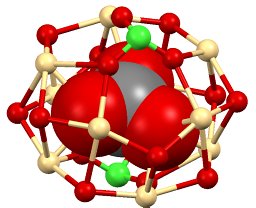 Ana M. Garcia-Deibe合作论文数Departamento de Química Inorgánica, Universidade de Santiago de Compostela2
 Marcelo O. Magnasco合作论文数Laboratory of Integrative Neuroscience, Rockefeller University2
 Stephane Barland合作论文数Institut de Physique de Nice, Université Côte d'Azur2
 Marcelo Magnasco合作论文数Rockefeller University2HA Larrondo合作论文数1A. Sousa‐Pedrares合作论文数1R. Quesada合作论文数1F. Marino合作论文数1Calvo, O.合作论文数1h i cantu合作论文数1A. C. González Baró合作论文数1
 Jr Tredicce合作论文数1
 Nadeem Abbas合作论文数1J. Sanmartín合作论文数1
 Jose Ruiz合作论文数1
 Vicente Perez-Munuzuri合作论文数1Avo, R.合作论文数1
 Tamás Tél合作论文数ELTE TTK Fizikai Intézet1
 Aamer Saeed Bhatti合作论文数Department of Chemistry, Quaid-i-Azam University1
 Sainz-Díaz C Ignacio合作论文数Instituto Andaluz de Ciencias de la Tierra (, CSIC-University of Granada),1
 David M. Leitner合作论文数Department of Chemistry, College of Science, University of Nevada1
 Shabir Ghulam合作论文数Department of Chemistry, Quaid-I-Azam University1
 Jessa Santillan合作论文数1
 Antonello Provenzale合作论文数1Victor Riera合作论文数1Daniel R Vega合作论文数1
 Guillermo Cecchi合作论文数IBM Research;PREDiCTOR Center1
 Alda Navaza合作论文数1




