Dynamic behaviors are becoming prevalent in tensor applications, like machine learning, where many widely used models contain data-dependent tensor shapes and control flow. However, the limited expressiveness of prior programming abstractions for spatial dataflow accelerators (SDAs) forces these dynamic behaviors to be implemented statically and/or unoptimized. To address these challenges, we present Streaming Tensor Programs (STeP), a streaming abstraction that enables dynamic tensor workloads to run efficiently on SDAs. STeP introduces flexible routing operators, an explicit memory hierarchy, and symbolic-shape semantics that expose dynamic data rates and tensor dimensions. These capabilities unlock new optimizations, like dynamic tiling, dynamic parallelization, and configuration time-multiplexing, that adapt SDA execution to dynamic behaviors while preserving dataflow efficiency. Using a cycle-approximate simulator on representative LLM layers and a full model with real-world traces, STeP enables: dynamic tiling that breaks the Pareto-optimal frontier from prior work, dynamic parallelization that improves latency by 2.72x, and configuration time-multiplexing that increases compute utilization by 2.64x over prior SDA abstractions and their implementations.
Even though some artificial-intelligence experts warn that scaling up large language models (LLMs) is hitting diminishing performance returns, companies are still coming out with ever larger AI tools. Meta's latest Llama release had a staggering 2 trillion parameters that define the model.
Decoupled Access-Execute (DAE) architectures separate memory accesses from computation in two specialized units. This design is becoming increasingly popular among hyperscalers to accelerate irregular embedding lookups in recommendation models. In this paper, we first broaden the scope by demonstrating the benefits of DAE architectures across a wider range of irregular embedding operations in several machine learning models. Then, we propose the Ember compiler to automatically compile all of these embedding operations to DAE architectures. Conversely from other DAE compilers, Ember features multiple intermediate representations specifically designed for different optimization levels. In this way, Ember can implement all optimizations to match the performance of hand-written code, unlocking the full potential of DAE architectures at scale.
As deep learning models scale, sparse computation and specialized dataflow hardware have emerged as powerful solutions to address efficiency. We propose FuseFlow, a compiler that converts sparse machine learning models written in PyTorch to fused sparse dataflow graphs for reconfigurable dataflow architectures (RDAs). FuseFlow is the first compiler to support general cross-expression fusion of sparse operations. In addition to fusion across kernels (expressions), FuseFlow also supports optimizations like parallelization, dataflow ordering, and sparsity blocking. It targets a cycle-accurate dataflow simulator for microarchitectural analysis of fusion strategies. We use FuseFlow for design-space exploration across four real-world machine learning applications with sparsity, showing that full fusion (entire cross-expression fusion across all computation in an end-to-end model) is not always optimal for sparse models-fusion granularity depends on the model itself. FuseFlow also provides a heuristic to identify and prune suboptimal configurations. Using Fuseflow, we achieve performance improvements, including a ~2.7x speedup over an unfused baseline for GPT-3 with BigBird block-sparse attention.
We introduce Stardust, a compiler that compiles sparse tensor algebra to reconfigurable dataflow architectures (RDAs). Stardust introduces new user-provided data representation and scheduling language constructs for mapping to resource-constrained accelerated architectures. Stardust uses the information provided by these constructs to determine on-chip memory placement and to lower to the Capstan RDA through a parallel-patterns rewrite system that targets the Spatial programming model. The Stardust compiler is implemented as a new compilation path inside the TACO open-source system. Using cycle-accurate simulation, we demonstrate that Stardust can generate more Capstan tensor operations than its authors had implemented and that it results in 138$\times$ better performance than generated CPU kernels and 41$\times$ better performance than generated GPU kernels.
ML libraries, often written in architecture-specific programming languages (ASPLs) that target domain-specific architectures, are key to efficient ML systems. However, writing these high-performance ML libraries is challenging because it requires expert knowledge of both ML algorithms and the ASPL. Large language models (LLMs), on the other hand, have shown general coding capabilities. However, challenges remain when using LLMs for generating ML libraries using ASPLs because 1) this task is complicated even for human experts and 2) there are limited code examples due to the esoteric and evolving nature of ASPLs. We present an adaptive self-improvement agentic system that enables LLMs to perform such complex reasoning under limited data by iteratively improving their capability through self-generated experience. In order to evaluate the effectiveness of our system, we construct a benchmark of a typical ML library and generate ASPL code with both open and closed-source LLMs on this benchmark. Our results show improvements of up to 3.9x over a baseline single LLM (1).
Onyx is a system-on-chip (SoC) with a coarse-grained reconfigurable array (CGRA) for accelerating sparse and dense tensor algebra and dense image processing and machine learning (ML) applications. To support multiple inputs, multiple dimensions, and fusion in sparse applications, Onyx utilizes composable memory primitives that operate on compressed storage and streams and compute primitives that eliminate unnecessary calculations. Onyx also improves performance on dense applications with application-specialized processing elements (PEs), area-optimized memory tiles, and hybrid clock gating in the global buffer (GLB). Onyx achieves a peak energy efficiency of 756 INT16 GOPS/W, up to 565x better energy-delay product (EDP) for sparse kernels versus CPUs with sparse libraries, and up to 76% and 85% lower EDP for image processing and ML, respectively, versus the state-of-the-art CGRA.
Irregular embedding lookups are a critical bottleneck in recommender models, sparse large language models, and graph learning models. In this paper, we first demonstrate that, by offloading these lookups to specialized access units, Decoupled Access-Execute (DAE) processors achieve 2.6× higher performance and 6.4× higher performance/watt than GPUs on end-to-end models. Then, we propose the Ember compiler for automatically generating optimized DAE code from PyTorch and TensorFlow. Conversely from other DAE compilers, Ember features multiple intermediate representations specifically designed for different optimization levels. In this way, Ember can implement all optimizations to match the performance of hand-written code, unlocking the full potential of DAE architectures at scale.
Recent research has focused on leveraging sparsity in hardware accelerators to improve the efficiency of applications spanning scientific computing to machine learning. Most such prior accelerators are fixed-function, which is insufficient for two reasons. First, applications typically include both dense and sparse components, and second, the algorithms that comprise these applications are constantly evolving. To address these challenges, we designed a programmable accelerator called Onyx for both sparse tensor algebra and dense workloads. Onyx extends a coarse-grained reconfigurable array (CGRA) optimized for dense applications with composable hardware primitives to support arbitrary sparse tensor algebra kernels. In this article, we show that we can further optimize Onyx by adding a small set of hardware features for parallelization that significantly increase both temporal and spatial utilization of the CGRA, reducing runtime by up to 6.2x.
We propose DFModel, a modeling framework for mapping dataflow computation graphs onto large-scale systems. Mapping a workload to a system requires optimizing dataflow mappings at various levels, including the inter-chip (between chips) level and the intra-chip (within a chip) level. DFModel is, to the best of our knowledge, the first framework to perform the optimization at multiple levels of the memory hierarchy and the interconnection network hierarchy. We use DFModel to explore a wide range of workloads on a variety of systems. Evaluated workloads include two state-of-the-art machine learning applications (Large Language Models and Deep Learning Recommendation Models) and two high-performance computing applications (High Performance LINPACK and Fast Fourier Transform). System parameters investigated span the combination of dataflow and traditional accelerator architectures, memory technologies (DDR, HBM), interconnect technologies (PCIe, NVLink), and interconnection network topologies (torus, DGX, dragonfly). For a variety of workloads on a wide range of systems, the DFModel provided a mapping that predicts an average of 1.25X better performance compared to the ones measured on real systems. DFModel shows that for large language model training, dataflow architectures achieve 1.52X higher performance, 1.59X better cost efficiency, and 1.6X better power efficiency compared to non-dataflow architectures. On an industrial system with dataflow architectures, the DFModel-optimized dataflow mapping achieves a speedup of 6.13X compared to non-dataflow mappings from previous performance models such as Calculon, and 1.52X compared to a vendor provided dataflow mapping.
•Applications ranging from scientific computing to machine learning can have extremely sparse inputs
Onyx is the first fully programmable accelerator for arbitrary sparse tensor algebra kernels. Unlike prior work, it supports higher-order tensors, multiple inputs, and fusion. It achieves this with a coarse-grained reconfigurable array (CGRA) that has composable memory primitives for storing compressed any-order tensors and compute primitives that eliminate ineffectual computations in sparse expressions. Further, Onyx improves dense image processing and machine learning (ML) with application-specialized compute tiles, memory tiles optimized for affine access patterns, and hybrid clock gating in the global buffer. We achieve up to 565x better energy-delay product (EDP) for sparse kernels vs. CPUs with sparse libraries, and up to 76% and 85% lower EDP for image processing and ML, respectively, vs. Amber [1].
Recent years have seen considerable work on compiling sparse tensor algebra expressions. This paper addresses a shortcoming in that work, namely how to generate efficient code (in time and space) that scatters values into a sparse result tensor. We address this shortcoming through a compiler design that generates code that uses sparse intermediate tensors (sparse workspaces) as efficient adapters between compute code that scatters and result tensors that do not support random insertion. Our compiler automatically detects sparse scattering behavior in tensor expressions and inserts necessary intermediate workspace tensors. We present an algorithm template for workspace insertion that is the backbone of our code generation algorithm. Our algorithm template is modular by design, supporting sparse workspaces that span multiple user-defined implementations. Our evaluation shows that sparse workspaces can be up to 27.12× faster than the dense workspaces of prior work. On the other hand, dense workspaces can be up to 7.58× faster than the sparse workspaces generated by our compiler in other situations, which motivates our compiler design that supports both. Our compiler produces sequential code that is competitive with hand-optimized linear and tensor algebra libraries on the expressions they support, but that generalizes to any other expression. Sparse workspaces are also more memory efficient than dense workspaces as they compress away zeros. This compression can asymptotically decrease memory usage, enabling tensor computations on data that would otherwise run out of memory.
We introduce the Bayesian Compiler Optimization framework (BaCO), a general purpose autotuner for modern compilers targeting CPUs, GPUs, and FPGAs. BaCO provides the flexibility needed to handle the requirements of modern autotuning tasks. Particularly, it deals with permutation, ordered, and continuous parameter types along with both known and unknown parameter constraints. To reason about these parameter types and efficiently deliver high-quality code, BaCO uses Bayesian optimiza tion algorithms specialized towards the autotuning domain. We demonstrate BaCO's effectiveness on three modern compiler systems: TACO, RISE ELEVATE, and HPVM2FPGA for CPUs, GPUs, and FPGAs respectively. For these domains, BaCO outperforms current state-of-the-art autotuners by delivering on average 1.36x-1.56x faster code with a tiny search budget, and BaCO is able to reach expert-level performance 2.9x-3.9x faster.
Underrepresented students face many significant challenges in their education. In particular, they often have a harder time than their peers from majority groups in building long-term high-quality study groups. This challenge is exacerbated in remote-learning scenarios, where students are unable to meet face-to-face and must rely on pre-existing networks for social support. We present a scalable system that removes structural obstacles faced by underrepresented students and supports all students in building inclusive and flexible study groups. One of our main goals is to make the traditionally informal and unstructured process of finding study groups for homework more equitable by providing a uniform but lightweight structure. We aim to provide students from underrepresented groups an experience that is similar in quality to that of students from majority groups. Our process is unique in that it allows students the opportunity to request group reassignments during the semester if they wish. Unlike other collaboration tools our system is not mandatory and does not use peer-evaluation. We trialed our approach in a 1000+ student introductory Engineering and Computer Science course that was conducted entirely online during the COVID-19 pandemic. We find that students from underrepresented backgrounds were more likely to ask for group-matching support compared to students from majority groups. At the same time, underrepresented students that we matched into study groups had group experiences that were comparable to students we matched from majority groups. B-range students in high-comfort and high-quality groups had improved learning outcomes.
This paper motivates the use of domain-specific abstract machines for designing hardware accelerators. Specifically, we describe how we built a reconfigurable dataflow accelerator for sparse tensor algebra, a relatively complex domain, using the Sparse Abstract Machine (SAM). We show that leveraging an abstract dataflow representation (and its compiler) lead to a slew of benefits, including computational generality within the application domain, easier verification and debugging, boosted design productivity, and decoupled development of the toolchain from the hardware design and generation. These benefits allowed us to build the accelerator within a short time-frame with only two designers.
We introduce Mosaic, a sparse tensor algebra compiler that can bind tensor expressions to external functions of other tensor algebra libraries and compilers. Users can extend Mosaic by adding new functions and bind a sub-expression to a function using a scheduling API. Mosaic substitutes the bound sub-expressions with calls to the external functions and automatically generates the remaining code using a default code generator. As the generated code is fused by default, users can productively leverage both fusion and calls to specialized functions within the same compiler. We demonstrate the benefits of our dual approach by showing that calling hand-written CPU and specialized hardware functions can provide speedups of up to 206× against fused code in some cases, while generating fused code can provide speedups of up to 3.57× against code that calls external functions in other cases. Mosaic also offers a search system that can automatically map an expression to a set of registered external functions. Both the explicit binding and automatic search are verified by Mosaic. Additionally, the interface for adding new external functions is simple and general. Currently, 38 external functions have been added to Mosaic, with each addition averaging 20 lines of code.
This paper presents the first fully integrated 2-D array of electronic-photonic ultrasound sensors targeting low-power miniaturized ultrasound probes for endoscopic applications. Fabricated in a zero-change 45nm CMOS-SOI technology this Electronic-Photonic System on Chip (EPSoC), utilizes micro-ring resonators (MRRs) as ultrasound sensors instead of the traditional piezoelectric or capacitive micromachined transducers (PMUTs or CMUTs). The photonic nature of the sensor enables remoting the power-hungry receive electronics outside the probe tip, lowering the power dissipation inside the human body, eliminates the electrical cabling and reduces fiber count by 4x using wavelength division multiplexed (WDM) MRR sensors coupled onto the same waveguide. The photonic sensing element demonstrates >30 MHz bandwidth, and 7.3 mV/kPa sensitivity, while consuming 0.43 mW of power.
We propose the Sparse Abstract Machine (SAM), an abstract machine model for targeting sparse tensor algebra to reconfigurable and fixed-function spatial dataflow accelerators. SAM defines a streaming dataflow abstraction with sparse primitives that encompass a large space of scheduled tensor algebra expressions. SAM dataflow graphs naturally separate tensor formats from algorithms and are expressive enough to incorporate arbitrary iteration orderings and many hardware-specific optimizations. We also present Custard, a compiler from a high-level language to SAM that demonstrates SAM's usefulness as an intermediate representation. We automatically bind from SAM to a streaming dataflow simulator. We evaluate the generality and extensibility of SAM, explore the performance space of sparse tensor algebra optimizations using SAM, and show SAM's ability to represent dataflow hardware.
The first optical ultrasound sensor with co-integrated read-out circuitry is presented. Based on a micro-ring resonator (MRR), it has a measured 7 . 3mV/kPa sensitivity, 480Pa minimum detectable pressure, operating at 80% fractional bandwidth around 5MHz.
 Fredrik Kjolstad合作论文数Department of Computer Science, Stanford University14
 Kunle Olukotun合作论文数Department of Electrical Engineering, Stanford University;Computer Science Department, School of Engineering, Stanford University;SambaNova Systems;Migo9
 Maxwell Strange合作论文数Stanford University6
 Kalhan Koul合作论文数Stanford University5
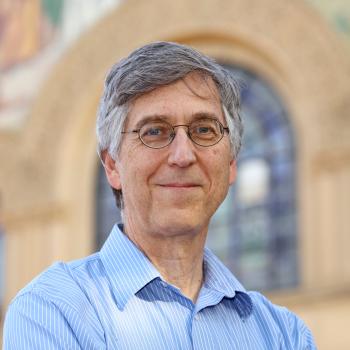 Mark Horowitz合作论文数Department of Electrical Engineering, Stanford University;Department of Computer Science, School of Engineering, Stanford University5
 Po-Han Chen合作论文数4
 Joel S. Emer合作论文数Department of Electrical Engineering and Computer Science, Massachusetts Institute of Technology;Nvidia4
 Priyanka Raina合作论文数Department of Electrical Engineering, Stanford University;Amazon4
 Panagiotis Zarkos合作论文数Dept Elect Engn & Comp Sci, Univ Calif Berkeley3
 Genghan Zhang (张庚瀚)合作论文数Department of Computer Science, Stanford University3
 Ritvik Sharma合作论文数Indian Institute of Technology Delhi3
 Alex Carsello合作论文数Stanford University3
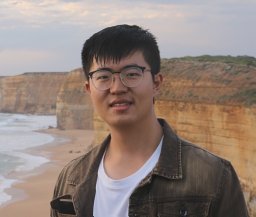 Qiaoyi Liu合作论文数Stanford University3
 Keyi Zhang合作论文数Bucknell University3
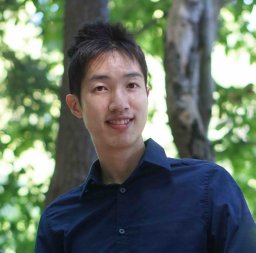 Christopher Torng合作论文数Cornell University3
 Vladimir Stojanovic合作论文数Berkeley Wireless Research Center, University of California, Berkeley;Center for Energy Efficient Electronics Science, University of California, Berkeley;Berkeley Emerging Technologies Research Center, University of California, Berkeley3Jake Whinnery合作论文数2
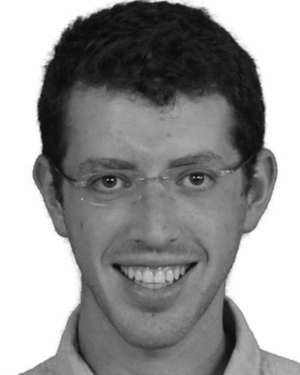 Sidney Buchbinder合作论文数2
 Sarika Madhvapathy合作论文数2Joshua Randall合作论文数2
 Gedeon Nyengele合作论文数Stanford Univ, Stanford, CA 94305 USA2
 Yuchen Mei合作论文数Stanford University2
 Taeyoung Kong合作论文数Stanford Univ, Stanford, CA 94305 USA2
 Marco Siracusa合作论文数Politecnico di Milano2
 Jackson Melchert合作论文数Electrical and Computer Engineering, University of Wisconsin Madison2
 Adamopoulos, C.G.合作论文数2
 Bhargava Pavan合作论文数Dept Elect Engn Comp Sci, Univ Calif Berkeley2
 Adrià Armejach合作论文数Barcelona Supercomputing Center, Universitat Politècnica de Catalunya2Weixin Liang合作论文数1Jaeyeon Won合作论文数1
 Manya Bansal合作论文数Massachusetts Institute of Technology1Rawn Henry合作论文数1Rubens Lacouture合作论文数1Neelesh Ramachandran合作论文数1
 Erik Orm Hellsten合作论文数Dept Management, Tech Univ Denmark1
 Johannes Lenfers合作论文数University of Münster1Sho Ko合作论文数1Sumer Kohli合作论文数1Adel Ejjeh合作论文数University of Illinois at Urbana-Champaign, Urbana, IL, USA1Alexander Rucker合作论文数Stanford University1Artur Souza合作论文数1Nathan Zhang合作论文数Stanford University1
 Michel Steuwer合作论文数School of Informatics, The University of Edinburgh1
 Stephen Y. Chou合作论文数Department of Electrical and Computer Engineering, School of Engineering and Applied Science, Princeton University;Princeton Materials Institute, Princeton University1
 Rohan Kumar Yadav合作论文数Center for Artificial Intelligence Research, Department of Information and Communication Technology, University of Agder1
 Luigi Nardi合作论文数Imperial College London1
 Ana Tudor合作论文数Paediatric Immunodepression Department, National Institute for Infectious Diseases1
 Zhao Tian合作论文数Simmons Comprehensive Cancer Center, University of Texas Southwestern Medical Center1
 Mikaela Angelina Uy合作论文数Stanford University;Google1




