Background—A noninvasive biomarker that could accurately diagnose acute rejection (AR) in heart transplant recipients could obviate the need for surveillance endomyocardial biopsies. We assessed the performance metrics of a novel high-sensitivity cardiac troponin I (cTnI) assay for this purpose. Methods and Results—Stored serum samples were retrospectively matched to endomyocardial biopsies in 98 cardiac transplant recipients, who survived ≥3 months after transplant. AR was defined as International Society for Heart and Lung Transplantation grade 2R or higher cellular rejection, acellular rejection, or allograft dysfunction of uncertain pathogenesis, leading to treatment for presumed rejection. cTnI was measured with a high-sensitivity assay (Abbott Diagnostics, Abbott Park, IL). Cross-sectional analyses determined the association of cTnI concentrations with rejection and International Society for Heart and Lung Transplantation grade and the performance metrics of cTnI for the detection of AR. Among 98 subjects, 37% had ≥1 rejection episode. cTnI was measured in 418 serum samples, including 35 paired to a rejection episode. cTnI concentrations were significantly higher in rejection versus nonrejection samples (median, 57.1 versus 10.2 ng/L; P<0.0001) and increased in a graded manner with higher biopsy scores (Ptrend<0.0001). The c-statistic to discriminate AR was 0.82 (95% confidence interval, 0.76–0.88). Using a cut point of 15 ng/L, sensitivity was 94%, specificity 60%, positive predictive value 18%, and negative predictive value 99%. Conclusions—A high-sensitivity cTnI assay seems useful to rule out AR in cardiac transplant recipients. If validated in prospective studies, a strategy of serial monitoring with a high-sensitivity cTnI assay may offer a low-cost noninvasive strategy for rejection surveillance.
Sirolimus is used in cardiac transplant recipients to prevent rejection, progression of cardiac allograft vasculopathy, and renal dysfunction. However, sirolimus has many potential side effects and its tolerability when used outside of clinical trials is not well established. We describe a decade of experience with sirolimus in cardiac transplant recipients at our institution. We retrospectively reviewed records of all adult cardiac transplant recipients living between September 1999 and February 2010 (n = 329) and identified 67 patients (20%) who received sirolimus. The indications for sirolimus were cardiac allograft vasculopathy (67%), renal dysfunction (25%), rejection (4%), and intolerability of tacrolimus (3%). One-third of patients discontinued sirolimus at a median (25th, 75th percentiles) of 0.9 (0.2, 1.6) yr of duration. Over 70% of subjects experienced an adverse event attributed to sirolimus. Adverse events were associated with higher average sirolimus levels (9.1 ng/mL vs. 7.1 ng/mL, p = 0.004). We conclude that sirolimus is frequently used in cardiac transplant recipients (20%) and commonly causes side effects, often necessitating discontinuation. Higher average sirolimus levels were associated with adverse events, suggesting that tolerability may improve if levels are maintained within the lower end of the current therapeutic range; however, the improvement in tolerability would need to be balanced with the potential for decreased efficacy.
Sirolimus is an immunosuppressive agent increasingly used in cardiac transplant recipients in the setting of allograft vasculopathy or worsening renal function. Recently, sirolimus has been associated with increased risk of venous thromboembolism (VTE) in lung transplant recipients. To investigate whether this association is also present in cardiac transplant recipients, we retrospectively reviewed the charts of 67 cardiac transplant recipients whose immunosuppressive regimen included sirolimus and 134 matched cardiac transplant recipients whose regimen did not include sirolimus. Rates of VTE were compared. Multivariable Cox proportional hazards models tested the association of sirolimus use with VTE. A higher incidence of VTE was seen in patients treated with vs. without sirolimus (8/67 [12%] vs. 9/134 [7%], log‐rank statistic: 4.66, p = 0.03). Lower body mass index (BMI) and total cholesterol levels were also associated with VTE (p < 0.05). The association of sirolimus with VTE persisted when adjusting for BMI (hazard ratio [95% confidence interval]: 2.96 [1.13, 7.75], p = 0.03) but not when adjusting for total cholesterol (p = 0.08). These data suggest that sirolimus is associated with an increased risk of VTE in cardiac transplant recipients, a risk possibly mediated through comorbid conditions. Larger, more conclusive studies are needed. Until such studies are completed, a heightened level of awareness for VTE in cardiac transplant recipients treated with sirolimus appears warranted.
BACKGROUND: Jugular venous pressure (JVP) is assessed to estimate volume status in patients with heart failure because right atrial pressure (RAP) reflects pulmonary capillary wedge pressure (PCWP). In a large cohort of heart failure patients spanning 14 years, we sought to further characterize the relationship between RAP and PCWP, including identifying temporal trends, to optimize estimates of PCWP by JVP. We also sought to determine whether the RAP to PCWP relationship impacts post-transplant mortality.METHODS: Hemodynamic data were obtained from 4,079 patients before cardiac transplantation. Elevated RAP was defined as >= 10 mm Hg and elevated PCWP >= 22 mm Hg. Hemodynamics were "concordant" when both RAP and PCWP were elevated or when both were not elevated. The frequency of concordant hemodynamics was assessed over 3 eras (1993 to 1997, 1998 to 2002, 2003 to 2007). Baseline characteristics were compared among quartiles of the ratio (RAP+1)/PCWP. The association of (RAP+1)/PCWP with 2-year mortality after cardiac transplantation was assessed using multivariate models.RESULTS: The frequency of concordant hemodynamics over time was stable (74%, 72%, 73%; p = 0.4). Increasing (RAP+ 1)/PCWP was associated with the following variables: female gender; cardiomyopathy etiology besides ischemic or non-ischemic; prior sternotomies; and lower creatinine clearance (p < 0.01 for all). Elevated (RAP+1)/PCWP was associated with post-transplant mortality (relative risk 1.2, 95% confidence interval 1.02 to 1.37, p = 0.02).CCONCLUSIONS: RAP and PCWP remain concordant in most heart failure patients, supporting the ongoing use of JVP to estimate PCWP. Easily identifiable patient characteristics were associated with an increased RAP/PCWP ratio, and their presence should alert clinicians that PCWP may be overestimated by JVP assessment. A higher RAP/PCWP ratio was an adverse risk factor for post cardiac transplant survival. J Heart Lung Transplant 2012;31:67-72 (C) 2012 International Society for Heart and Lung Transplantation. All rights reserved.
BACKGROUND Although risk factors for left ventricular (LV) hypertrophy in the native heart are well known as is its association with increased risk of adverse outcomes such information is poorly defined in heart transplant (HTx) recipients We determined whether increased LV mass and concentricity (mass/volume) were associated with death in patients after HTxMETHODS Between May 2003 and May 2006, 140 HTx recipients underwent cardiac magnetic resonance imaging (MRI) Clinical characteristics associated with increased LV mass were determined Cox proportional hazard models were constructed to assess the relationship of LV mass and concentricity with deathRESULTS MRIs were acquired a median of 6 0 years after transplant The top quartile of indexed LV mass and concentricity were 35 8 g/m(27) or higher and 1 5 g/ml or higher respectively History of rejection (odds ratio [OR], 5 9, 95% confidence interval [CI], 2 1-16 4, p < 001), diabetes (OR 3 3, 95% CI, 1 3-8 2, p = 0 01), and post-transplant year of MRI acquisition (OR 1 2 95% CI, 1 1-1 4, p < 0 01) were associated with the top quartile of LV mass in multrvariable models LV mass and concentricity were independently associated with cardiovascular death (hazard risk [HA], 1 11 per g/m (2) (7) HR, 10 1 per g/m1 p <= 001 respectively) LV concentricity was independently associated with all-cause mortality (HR, 44 per g/ml, p < 0 01)CONCLUSION A history of rejection and diabetes are associated with increased LV mass Increased LV mass particularly of a concentric phenotype is an independent risk factor for cardiovascular and all cause mortality after HTx J Heart Lung Transplant 2010 29 1369-79 (C) 2010 International Society for Heart and Lung Transplantation All rights reserved
Although risk factors for left ventricular (LV) hypertrophy in the native heart are well known, as is its association with increased risk of adverse outcomes, such information is poorly defined in cardiac transplant recipients.
Previous studies demonstrated a significant correlation between right atrial pressure (RAP) and pulmonary capillary wedge pressure (PCWP) in patients with advanced heart failure (HF). However, those studies were published nearly a decade ago and it is not known whether this relationship has remained stable over time. Further, it is not known which patient characteristics impact the RAP to PCWP relationship.
Background: immunofluorescence staining of endomyocardial biopsy (EMB) specimens to detect the complement fragment C4d is used to diagnose antibody-mediated rejection. However, data are limited regarding the utility of routine staining for C4d in clinical care.Methods: This study retrospectively reviewed the clinical course of adult cardiac transplant recipients who underwent >= 2 EMBs with immunofluorescence C4d staining at the University of Texas Southwestern Medical Center since September 2006. C4d staining was performed by the immunohistochemistry laboratory and interpreted by the members of the surgical pathology department, in conjunction with interpretation of the routine hematoxylin and eosin staining. Donor-specific antibodies (DSA) were routinely assessed at the time of clinical rejection.Results: Of 67 patients, specimens were positive for C4d (C4d+) in 14 and negative for C4d (C4d-) in 53. The frequency of acute cellular rejection (ACR) in these 2 groups was 57% (8 of 14, designated C4d+/ACR+) vs 11% (6 of 53, designated C4d-/ACR+; p < 0.001). Significantly more patients with a positive C4d specimen had a positive retrospective donor specific crossmatch, presence of DSA after transplantation, and depressed graft function (p < 0.01 for each).Conclusions: Positive C4d immunofluorescence staining on EMB specimens was associated with ACR, reduced allograft function, a positive retrospective crossmatch, and the presence of DSA after transplantation. The latter 2 observations support the contention that C4d deposition is a marker of antibody-mediated rejection. Routine evaluation of C4d staining is feasible in the clinical setting and may identify variable patterns of rejection. J Heart Lung Transplant 2009; 28:776-80. Copyright (C) 2009 by the International Society for Heart and Lung Transplantation.
P>Objective: Left ventricular assist devices (LVADs) are commonly used for critically ill patients awaiting heart transplantation, although their effect on long-term outcomes, relative to inotropic support alone, is still debated. Method: Data from Status 1 patients who underwent heart transplantation at our institution between 1990 and 2005 were reviewed (n = 180). They were divided into two groups: those who underwent LVAD implantation as a bridge to transplant (n = 31) and those treated with inotropic agents without the support of LVAD (n = 149). They were compared in terms of demographics and clinical outcome. Results: Both groups were similar in terms of patient and donor demographics. Relative to the inotrope group, the LVAD group did have a longer ischemic time (p = 0.032), a greater incidence of pretransplant transfusion (p < 0.00001), and a greater maximum level of pretransplant panel reactive antibodies (p < 0.001). Creatinine at listing significantly improved in LVAD patients awaiting transplantation (p < 0.0001). Comparisons of 5-year survival in addition to freedom from posttransplant infection, malignancy, revascularization, and acute rejection did not show significant difference between the two groups. The LVAD group did benefit from increased freedom from chronic rejection compared to the inotrope group (p = 0.049). Stepwise Cox Regression did not identify any independent factors affecting patient survival during the first 5 years after transplant. Conclusions: Status 1 patients successfully bridged to heart transplantation with LVADs had similar long-term clinical outcomes compared to those treated with inotropic agents.(J Card Surg 2009;24:756-762).
Patients bridged to transplant with left ventricular assist devices (LVAD) are often sensitized as measured by panel reactive antibodies (PRA). This study evaluates whether immunomodulatory therapy of sensitized LVAD patients improves survival to transplant.
BACKGROUND:Although the Cylex immune assay has been proposed as a means of tailoring immunosuppression after organ transplantation, there are limited data regarding its utility in cardiac transplant recipients. Therefore, we sought to determine the utility of the Cylex assay in assessing the risk of infection or rejection in cardiac transplant recipients.METHODS:This study is a retrospective review of the clinical course of all adult cardiac transplant recipients who underwent a Cylex assay at UT Southwestern Medical Center between January 2004 and September 2007.RESULTS:One hundred eleven patients were free of significant rejection or infection at the time of the first Cylex assay. Most patients (92%) were >1 year post-transplant. Over the next 157 +/- 41 (mean +/- SD) days, 2 patients had 3 episodes of rejection requiring therapy and 7 patients had 8 infections requiring therapy. The Cylex responses ranged from 17 to 894 ng/ml. No correlation was observed between the baseline Cylex response and subsequent risk of either infection or rejection within 6 months. Lower white blood cell count and African American ethnicity were correlated with a lower Cylex response.CONCLUSIONS:In this study, the Cylex assay had limited utility as an adjunct to routine clinical evaluation in assessing risk of infection or rejection in cardiac transplant recipients.
Delaying the start of cyclosporine in cardiac allograft recipients with basiliximab induction improves early post-transplant creatinine levels. We analyzed our institution's experience with basiliximab in order to investigate its effects on post-transplant renal function, freedom from acute rejection, and survival.
Whether human immunodeficiency virus (HIV) should be an absolute contraindication to heart transplantation has been a topic of recent discussion. There is a paucity of data regarding the expected outcome of heart transplantation in a recipient who is HIV positive. Herein, we report the case and long-term follow-up of a woman who was found to have seroconverted to HIV positive status 1 year after transplant.
BACKGROUND:Cytomegalovirus (CMV) infection remains a serious problem after heart transplantation. Recipients with D(+)/R(-) CMV serostatus often receive prophylaxis with valganciclovir, but the optimal duration of such therapy after heart transplant is unknown.METHODS:We retrospectively reviewed the clinical course of all adult cardiac transplant recipients with D(+)/R(-) CMV serostatus at the UT Southwestern Medical Center between January 2003 and December 2006. Standard immunosuppression included basiliximab induction therapy and the CMV prophylaxis included CMV hyperimmune globulin, 2 weeks of intravenous ganciclovir and 3 months of oral valganciclovir.RESULTS:Seven patients met the study criteria. Six of the 7 patients (86%) developed CMV disease. Five of these 6 patients presented with CMV disease within 3 months of the cessation of valganciclovir prophylaxis.CONCLUSIONS:There was a high incidence of CMV disease in D(+)/R(-) heart transplant recipients despite CMV hyperimmune globulin, 2 weeks of intravenous ganciclovir and 3 months of valganciclovir prophylaxis. CMV infection occurred consistently within 2 to 3 months of cessation of valganciclovir. Alternative strategies for CMV prophylaxis, including an extension of valganciclovir prophylaxis to 6 months after heart transplantation, needs to be investigated.
Purpose: Patients bridged to transplant with a left ventricular assist device (LVAD) often develop positive panel reactive antibodies (PRA). To reduce allosensitization many transplant centers utilize immunomodulation and require prospective cross-matching. However, the efficacy of treatment in reducing antibody production in sensitized patients is not yet proven. This study evaluates whether immunomodulatory treatment of sensitized LVAD patients reduces antibody production as assessed by degree of PRA levels.
BACKGROUND: Patients with muscular dystrophy are at risk of developing a dilated cardiomyopathy and can progress to advanced heart failure. At present, it is not known whether such patients can safely undergo cardiac transplantation.METHODS: This was a retrospective review of the Cardiac Transplant Research Database, a multi-institutional registry of 29 transplant centers in the United States, from the years 1990 to 2005. The post-cardiac transplant outcomes of 29 patients with muscular dystrophy were compared with 275 non-muscular dystrophy patients with non-ischemic cardiomyopathy, matched for age, body mass index, gender, and race.RESULTS: Becker's muscular dystrophy was present in 52% of the patients. Survival in the muscular dystrophy patients was similar to the controls at 1 year (89% vs 91%; p = 0.5) and at 5 years (83% vs 78%; p =- 0.5). The differences in rates of cumulative infection, rejection, or allograft vasculopathy between the 2 groups were not significant (p > 0.5 for all comparisons).CONCLUSIONS: Recognizing the limitations of the present investigation (ie, selection bias and data lacking in the functional capacity of the muscular dystrophy patients), the current study suggests that the clinical outcomes after cardiac transplantation in selected patients with muscular dystrophy are similar to those seen in age-matched patients with non-ischemic cardiomyopathy. J Heart Lung Transplant 2010;29:432-438 (C) 2010 International Society for Heart and Lung Transplantation. All rights reserved.
 Mark Drazner合作论文数Department of Internal Medicine, UT Southwestern Medical Center22
 Clyde W. Yancy合作论文数Feinberg School of Medicine, Northwestern University;Bluhm Cardiovascular Institute of Northwestern, Northwestern University13
 W Steves Ring合作论文数Department of Cardiovascular & Thoracic Surgery, Medical School, University of Texas Southwestern Medical Center12
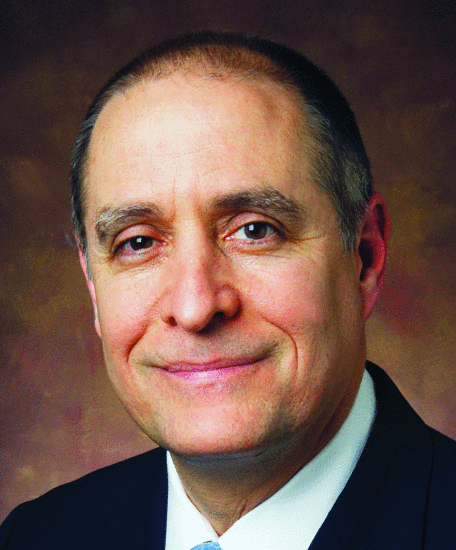 DiMaio J Michael合作论文数11
 Pradeep P A Mammen合作论文数Department of Internal Medicine, University of Texas Southwestern Medical Center10
 Ws Ring合作论文数8David W. Markham合作论文数8Parag C. Patel合作论文数6Colby Ayers合作论文数6Robert Brown合作论文数5Meyer D M合作论文数5
 Michael Jessen合作论文数Department of Cardiovascular & Thoracic Surgery, Medical School, The University of Texas Southwestern Medical Center5
 Marc Semigran合作论文数Massachusetts General Hospital;Harvard Medical School5Joseph D. Mishkin合作论文数5
 Michael Wait合作论文数5
 Joshua D. Mitchell合作论文数Sch Med, Washington Univ4Kirklin James K合作论文数4
 Peter Stastny合作论文数Rheumatic Diseases Division, Department of Internal Medicine, The University of Texas Southwestern Medical Center4
 David C. Naftel合作论文数Department of Surgery, University of Alabama at Birmingham4
 Robert C. Bourge合作论文数School of Medicine, University of Alabama at Birmingham;Division of Cardiovascular Disease, University of Alabama at Birmingham4David C Naftel合作论文数4D. W. Markham合作论文数4
 Jennifer T Thibodeau合作论文数4Neil P. Lewis合作论文数Department of Cardiology, University Hospital of Wales4J ODonnell合作论文数3KJ HEILMAN合作论文数3G Sneed合作论文数3a crosswy合作论文数3S Selman合作论文数3N Noedel合作论文数3M VEAZEY合作论文数3K Strasburg合作论文数3D Pacheco合作论文数3B Cocanougher合作论文数3N. Seimers合作论文数3M ORourke合作论文数3J. Pooser合作论文数3L Hiles合作论文数3D Dumas-Hicks合作论文数3P. Bruhn合作论文数3F Eales合作论文数3E BRAUNLIN合作论文数3A Darroca合作论文数3L EARLY合作论文数3KD LAKE合作论文数3SK ROWE合作论文数3VPH HORN合作论文数3GH Mudge合作论文数3CH VANMETER合作论文数3




