Understanding the nucleon spin structure in the regime where the strong interaction becomes truly strong poses a challenge to both experiment and theory. At energy scales below the nucleon mass of about 1 GeV, the intense interaction among the quarks and gluons inside the nucleon makes them highly correlated. Their coherent behaviour causes the emergence of effective degrees of freedom, requiring the application of non-perturbative techniques such as chiral effective field theory(1). Here we present measurements of the neutron's generalized spin polarizabilities that quantify the neutron's spin precession under electromagnetic fields at very low energy-momentum transfer squared down to 0.035 GeV2. In this regime, chiral effective field theory calculations(2-4) are expected to be applicable. Our data, however, show a strong discrepancy with these predictions, presenting a challenge to the current description of the neutron's spin properties.
N. Liyanage, B. D. Anderson, K. A. Aniol, L. Auerbach, F. T. Baker, J. Berthot, W. Bertozzi, P. -Y. Bertin, L. Bimbot, W. U. Boeglin, E. J. Brash, V. Breton, H. Breuer, E. Burtin, J. R. Calarco, L. Cardman, G. D. Cates, C. Cavata, C. C. Chang, J. -P. Chen, E. Cisbani, D. S. Dale, R. De Leo, A. Deur, B. Diederich, P. Djawotho, J. Domingo, B. Doyle, J. -E. Ducret, M. B. Epstein, L. A. Ewell, J. M. Finn, K. G. Fissum, H. Fonvieille, B. Frois, S. Frullani, J. Gao, F. Garibaldi, A. Gasparian, S. Gilad, R. Gilman, A. Glamazdin, C. Glashausser, J. Gomez, V. Gorbenko, T. Gorringe, F. W. Hersman, R. Holmes, M. Holtrop, N. d’Hose, C. Howell, G. M. Huber, C. E. Hyde-Wright, M. Iodice, C. W. de Jager, S. Jaminion, M. K. Jones, K. Joo, C. Jutier, W. Kahl, S. Kato, J. J. Kelly, S. Kerhoas, M. Khandaker, M. Khayat, K. Kino, W. Korsch, L. Kramer, K. S. Kumar, G. Kumbartzki, G. Laveissière, A. Leone, J. J. LeRose, L. Levchuk, M. Liang, R. A. Lindgren, G. J. Lolos, R. W. Lourie, R. Madey, K. Maeda, S. Malov, D. M. Manley, D. J. Margaziotis P. Markowitz, J. Martino, J. S. McCarthy, K. McCormick, J. McIntyre, R. L. J. van der Meer, Z. -E. Meziani, R. Michaels, J. Mougey, S. Nanda, D. Neyret, E. A. J. M. Offermann, Z. Papandreou, C. F. Perdrisat, R. Perrino, G. G. Petratos, S. Platchkov, R. Pomatsalyuk, D. L. Prout, V. A. Punjabi, T. Pussieux, G. Quéméner, R. D. Ransome, O. Ravel, Y. Roblin, R. Roche, D. Rowntree, G.A. Rutledge, P. M. Rutt, A. Saha, T. Saito, A. J. Sarty, A. Serdarevic-Offermann, T. P. Smith, A. Soldi, P. Sorokin, P. Souder, R. Suleiman, J. A. Templon, T. Terasawa, L. Todor, H. Tsubota, H. Ueno, P. E. Ulmer, G.M. Urciuoli, P. Vernin, S. van Verst, B. Vlahovic, H. Voskanyan, J. W. Watson, L. B. Weinstein, K. Wijesooriya, R. Wilson, B. Wojtsekhowski, D. G. Zainea, V. Zeps, J. Zhao, Z. -L. Zhou
The spin-structure functions g_1 and g_2, and the spin-dependent partial cross-section \sigma_{TT} have been extracted from the polarized cross-sections differences, \Delta \sigma_{||}(\nu,Q^2) and \Delta \sigma_{\perp}(\nu,Q^2) measured for the 3He(e,e')X reaction at Jefferson Lab. Polarized electrons with energies from 1.147 to 4.404 GeV were scattered at angles of 6^o and 9^o from a longitudinally or transversely polarized 3He target. The data cover the kinematic regions of the quasi-elastic, resonance and beyond. From the extracted spin-structure functions, the first moments \Gamma_1(Q^2), \Gamma_2(Q^2) and I_{TT}(Q^2) are evaluated with high precision for the neutron in the Q^2 range from 0.035 to 0.24 GeV^2. Finally, these low Q^2 results are used to test chiral perturbation theory calculations.
This Article is brought to you for free and open access by the Physics at ODU Digital Commons. It has been accepted for inclusion in Physics Faculty Publications by an authorized administrator of ODU Digital Commons. For more information, please contact digitalcommons@odu.edu. Repository Citation Urciuoli, G. M.; Hayes, D.; Hyde, C. E.; Ibrahim, H. F.; Ulmer, P.E.; and Jefferson Lab Hall A Collaboration, "Spectroscopy of Li-9 (Lambda) by Electroproduction" (2015). Physics Faculty Publications. 152. https://digitalcommons.odu.edu/physics_fac_pubs/152
Old Dominion University, Norfolk, VA 23529 California State University at Los Angeles, Los Angeles, CA 90032 Johannes Gutenberg-Universität, D-55099 Mainz, Germany Thomas Jefferson National Accelerator Facility, Newport News, VA 23606 Rutgers, The State University of New Jersey, Piscataway, NJ 08855 College of William and Mary, Williamsburg, VA 23187 University of Lund, P.O. Box 118, SE-221 00 Lund, Sweden Université Blaise Pascal/CNRS-IN2P3, F-63177 Aubière, France The Ohio State University, Lima, OH 45804 University of Virginia, Charlottesville, VA 22901 Florida State University, Tallahassee, FL 32306 Norfolk State University, Norfolk, VA 23504 Kent State University, Kent, OH 44242
In the absence of accurate data on the free two-body hyperon-nucleon interaction, the spectra of hypernuclei can provide information on the details of the effective hyperon-nucleon interaction. Electroproduction of the hypernucleus Lambda-9Li has been studied for the first time with sub-MeV energy resolution in Hall A at Jefferson Lab on a 9Be target. In order to increase the counting rate and to provide unambiguous kaon identification, two superconducting septum magnets and a Ring Imaging CHerenkov detector (RICH) were added to the Hall A standard equipment. The cross section to low-lying states of Lambda-9Li is concentrated within 3 MeV of the ground state and can be fitted with four peaks. The positions of the doublets agree with theory while a disagreement could exist with respect to the relative strengths of the peaks in the doublets. A Lambda separation energy of 8.36 +- 0.08 (stat.) +- 0.08 (syst.) MeV was measured, in agreement with an earlier experiment.
We present final results on the photon electroproduction ($$\vec{e}p\rightarrow ep\gamma$$) cross section in the deeply virtual Compton scattering (DVCS) regime and the valence quark region from Jefferson Lab experiment E00-110. Results from an analysis of a subset of these data were published before, but the analysis has been improved which is described here at length, together with details on the experimental setup. Furthermore, additional data have been analyzed resulting in photon electroproduction cross sections at new kinematic settings, for a total of 588 experimental bins. Results of the $Q^2$- and $x_B$-dependences of both the helicity-dependent and helicity-independent cross sections are discussed. The $Q^2$-dependence illustrates the dominance of the twist-2 handbag amplitude in the kinematics of the experiment, as previously noted. Thanks to the excellent accuracy of this high luminosity experiment, it becomes clear that the unpolarized cross section shows a significant deviation from the Bethe-Heitler process in our kinematics, compatible with a large contribution from the leading twist-2 DVCS$^2$ term to the photon electroproduction cross section. The necessity to include higher-twist corrections in order to fully reproduce the shape of the data is also discussed. The DVCS cross sections in this study represent the final set of experimental results from E00-110, superseding the previous publication.
C. Mertz, C. Vellidis, R. Alarcon, D.H. Barkhuff, A.M. Bernstein, W. Bertozzi, V. Burkert, J. Chen, J.R. Comfort, G. Dodson, S. Dolfini, K. Dow, M. Farkhondeh, J.M. Finn, S. Gilad, R.W. Gothe, X. Jiang, K. Joo, N.I. Kaloskamis, A. Karabarbounis, J.J. Kelly, S. Kowalski, C. Kunz, R.W. Lourie, J.I. McIntyre, B.D. Milbrath, R. Miskimen, J.H. Mitchell, C.N. Papanicolas, C.F. Perdrisat, A.J. Sarty, J. Shaw, S.-B. Soong, D. Tieger, C. Tschalær, W. Turchinetz, P.E. Ulmer, S. Van Verst, G.A. Warren, L.B. Weinstein, S. Williamson, R.J. Woo, A. Young Department of Physics and Astronomy, Arizona State University, Tempe, Arizona 85287 Institute of Accelerating Systems and Applications and Department of Physics, University of Athens, Athens, Greece Institute for Nuclear and Particle Physics and Department of Physics, University of Virginia, Charlottesville, Virginia 22901 Department of Physics, Laboratory for Nuclear Science and Bates Accelerator Center, Massachusetts Institute of Technology,
The five-fold differential cross section for the C-12(e,e'p)B-11 reaction was determined over a missing momentum range of 200-400 MeV c(-1), in a kinematics regime with x(B) > 1 and Q(2) = 2.0 (GeV c(-1))(2). A comparison of the results with previous lower missing momentum data and with theoretical models are presented. The extracted distorted momentum distribution is shown to be consistent with previous data and extends the range of available data up to 400 MeV c(-1). The theoretical calculations are from two very different approaches, one mean field and the other short range correlated; yet for this system the two approaches show striking agreement with the data and each other up to a missing momentum value of 325 MeV c(-1). For larger momenta, the calculations diverge which is likely due to the factorization approximation used in the short range approach.
The characteristics of the Jefferson Lab electron beam, together with those of the experimental equipment, offer a unique opportunity to study hypernuclear spectroscopy via electromagnetic induced (e,e′K+) reactions. Experiment 94-107 started a systematic study on 1p-shell targets, C12, Be9 and O16. For C12 for the first time measurable strength in the core-excited part of the spectrum between the ground state and the p state was shown in the BΛ12 spectrum. For O16 a high-quality NΛ16 spectrum was produced for the first time with sub-MeV energy resolution. A very precise Λ binding energy value for NΛ16, calibrated against the elementary (e,e′K+) reaction on hydrogen, has also been obtained. Preliminary data on the LiΛ9 spectrum shows some disagreement in strength for the second and third doublet with respect to the theory.
We measured with unprecedented precision the induced polarization P-y in He-4(e, e(l)(p) over right arrow)H-3 at Q(2) = 0.8 and 1.3 (GeV/c)(2). The induced polarization is indicative of reaction-mechanism effects beyond the impulse approximation. Our results are in agreement with a relativistic distorted-wave impulse approximation calculation but are overestimated by a calculation with strong charge-exchange effects. Our data are used to constrain the strength of the spin-independent charge-exchange term in the latter calculation.
We present measurements of the ep->ep pi^0 cross section extracted at two values of four-momentum transfer Q^2=1.9 GeV^2 and Q^2=2.3 GeV^2 at Jefferson Lab Hall A. The kinematic range allows to study the evolution of the extracted hadronic tensor as a function of Q^2 and W. Results will be confronted with Regge inspired calculations and GPD predictions. An intepretation of our data within the framework of semi-inclusive deep inelastic scattering has also been attempted.
The (2)H(e,e'p)n cross section at a momentum transfer of 3.5 (GeV/c)(2) was measured over a kinematical range that made it possible to study this reaction for a set of fixed missing momenta as a function of the neutron recoil angle θ(nq) and to extract missing momentum distributions for fixed values of θ(nq) up to 0.55 GeV/c. In the region of 35°≤θ(nq)≤45° recent calculations, which predict that final-state interactions are small, agree reasonably well with the experimental data. Therefore, these experimental reduced cross sections provide direct access to the high momentum component of the deuteron momentum distribution in exclusive deuteron electrodisintegration.
We measured with unprecedented precision the induced polarization P(y) in (4)He(e,e'p)(3)H at Q(2)=0.8 and 1.3 (GeV/c)(2). The induced polarization is indicative of reaction-mechanism effects beyond the impulse approximation. Our results are in agreement with a relativistic distorted-wave impulse approximation calculation but are overestimated by a calculation with strong charge-exchange effects. Our data are used to constrain the strength of the spin-independent charge-exchange term in the latter calculation.
 John M Finn合作论文数College of William and Mary, The College of William and Mary76
 Demetrius Margaziotis合作论文数California State University72Michaels R合作论文数71C. F. Perdrisat合作论文数70
 Kees de Jager合作论文数Jefferson Lab;University of Virginia69Bogdan Wojtsekhowski合作论文数Division of Physics, Jefferson Lab68J-P Chen合作论文数Thomas Jefferson National Accelerator Facility, Newport News, Virginia 23606, USA.66Franco Garibaldi合作论文数66
 Konrad Aniol合作论文数Department of Physics and Astronomy, College of Natural & Social Sciences, California State University64
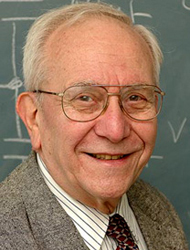 William Bertozzi合作论文数Massachusetts Institute of Technology63A Saha合作论文数60
 Pete Markowitz合作论文数Department of Physics, Florida International University;The Honors College, Florida International University59
 Salvatore Frullani合作论文数59R. Gilman合作论文数58Nilanga Liyanage合作论文数Massachusetts Institute of Technology55
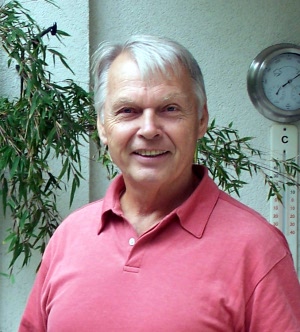 Gerfried Jürgen Kumbartzki合作论文数Rutgers, The State University of New Jersey49
 Lawrence Weinstein合作论文数Department of Physics, Old Dominion University49
 Eugene Chudakov合作论文数Jefferson Lab49
 Alexandre Deur合作论文数Thomas Jefferson National Accelerator Facility48
 Guido Maria Urciuoli合作论文数Istituto Nazionale di Fisica Nucleare48Rd Ransome合作论文数47R. De Leo合作论文数46
 Evaristo Cisbani合作论文数Istituto Superiore di Sanità46K. Mccormick合作论文数46S. Gilad合作论文数45J. J. LeRose合作论文数44
 A. Sarty合作论文数44Charles Earl Hyde-Wright合作论文数Old Dominion University44V. Punjabi合作论文数43Richard Madey合作论文数43
 Jhonatan Gomez合作论文数43
 Mark Kevin Jones合作论文数Division of Physics, Thomas Jefferson National Accelerator Facility42C. Glashausser合作论文数42
 K. Wijesooriya合作论文数42
 Douglas W. Higinbotham合作论文数Physics Division Operations, Jefferson Lab42M. B. Epstein合作论文数41R. Suleiman合作论文数38
 Mauro Iodice合作论文数Istituto Nazionale di Fisica Nucleare38
 Chung Yun Chang合作论文数Department of Physics, University of Maryland38E. Brash合作论文数Christopher Newport University38R. Roche合作论文数37l todor合作论文数37S. Malov合作论文数37Jr Calarco合作论文数36
 Justin I. Mcintyre合作论文数Pacific Northwest National Laboratory36O. Gayou合作论文数35H. Breuer合作论文数35
 Kevin Fissum合作论文数University of Lund35
 Werner U. Boeglin合作论文数Department of Physics, College of Arts, Sciences & Education, Florida International University35




