We demonstrate CEP stabilization using an AOM and a nanophotonic f–2f interferometer that enables full 0–2 π phase tuning by locking f ceo at arbitrary frequencies. The system is integrated into a compact, high-power fiber comb (37.5 nJ, 250 fs).
We report on imaging the optical near-fields in resonant periodic photonic structures with nanometer resolution using ultrafast 4D scanning transmission electron microscopy (U4DSTEM). In particular, U4DSTEM is applied to visualize the transverse component of the Lorentz force of a synchronous near-field mode excited by an infrared femtosecond pulse in a periodic silicon nanostructure designed for the photonic acceleration of electrons. Our results show that in addition to the accelerating/decelerating force acting on the electrons in the longitudinal direction along the electron propagation, the structures can be efficiently used for transverse electron streaking at optical frequencies when excited by light with polarization perpendicular to the electron trajectory. The measured spatial profile of the excited near-field mode intensity is consistent with the numerical simulations performed using the finite-difference time-domain technique.
Light-dressed materials hold enormous potential for generating new electronic properties. The band structure resulting from light-dressing can exhibit starkly different quantum and topological phenomena. So far, optical control of charge within a light-dressed band structure has been elusive. Here, we demonstrate optical control of electrons in light-dressed graphene. By focusing circularly polarized femtosecond laser pulses at 1550 nm on monolayer graphene, we generate a Floquet topological insulator (FTI). With a phase-locked second harmonic field, we dynamically control electrons in this FTI state. For the first time, we observe photocurrent circular dichroism, the all-optical anomalous Hall effect, and FTI valley-polarized currents. The photocurrents show strong sub-cycle phase-sensitivity, opening the door to ultrafast control within topologically protected electronics (topotronics), spectroscopy, and attosecond physics in novel quantum materials.
Correlations between ultrafast free electrons emitted from nanometric sources strongly influence electron beam formation and quality. When several electrons are emitted within nanometric volumes and femtosecond timescales, Coulomb interactions redistribute phase space longitudinally and transversely, thereby affecting energy spread, focusability, and brightness. At the same time, such correlations can be harnessed to prepare non-Poissonian beams: Earlier work established pronounced longitudinal energy anticorrelations for ultrafast emission from bare needle tips [1] and in strongly filtered electron microscope geometries [2]. Here we address the full three-dimensional behavior by resolving both energetic and spatial correlations of two-electron events emitted from a sharp tungsten needle tip. A key enabling element is an improved deep-learning-based multi-hit reconstruction for delay-line detectors, which substantially enhances the reliable recovery of near-coincident events [3]. The measurements reveal a continuous trade-off between longitudinal and transverse Coulomb repulsion: small mutual angles coincide with pronounced energetic separation, whereas events with small energy difference exhibit strong spatial avoidance. This also shows that an ordinary aperture, already present in most electron-beam setups, can act as an effective correlation filter and provide a particularly simple route toward sub-shot-noise ultrafast electron beams. Comparison with semiclassical particle simulations indicates that temporal confinement primarily governs the longitudinal energy splitting, whereas source geometry strongly influences the transverse repulsion.
When metallic needle tips are illuminated with intense femtosecond laser pulses, the photoemitted electrons can be driven strongly in the optical field at the surface of the needle tip. In particular, electrons can elastically rescatter at the tip, leading to tell-tale features in the electron spectra, such as the plateau and the cut-off. In this work, we first review intense two-color fields driving the electron dynamics. We show how from the two-color phase-dependent spectra one can obtain the optimal phase, i.e., the phase as function of energy, for which the count rate is maximized. We demonstrate that rich information can be extracted from this optimal phase. This first, review part sets the stage for the second part of the paper, containing original data on carrier-envelope phase-dependent spectra. We show that with a similar analysis we can reveal similarly rich information from the optimal phase also in the CEP variation case. In particular, we show that the optimal phase is highly sensitive to the driving pulse duration. We expect this work to widen the tool park of strong-field physics, with direct ramifications to the fields of attosecond physics and future petahertz electronics.
The bulk photogalvanic effect represents a powerful tool for generating photocurrents without external bias in light-matter systems that lack inversion symmetry. While these photocurrents are used in electronic applications such as current sources, switches, and photovoltaics, their presence can also be employed to probe material properties in and out of equilibrium. Here we advance this path of bulk photogalvanic photocurrent spectroscopy by utilizing tailored laser fields for ultrafast photocurrent generation to study time-reversal-symmetry (TRS) broken phases of matter in 2D systems. Combinations of bichromatic linearly polarized laser beams that separately respect mirror and time-reversal symmetries, individually precluding photocurrents, can break symmetries and generate photocurrents when combined. We show in graphene, both theoretically and experimentally, that specific choices of the relative polarization angle and two-color phase impose a forbidden photocurrent selection rule in TRS-invariant systems, as the tailored light maintains TRS while breaking all other symmetries. We then employ state-of-the-art ab initio simulations to validate this physical mechanism and, crucially, predict a broken photocurrent selection rule in materials with intrinsically broken TRS, such as the 2D magnet CrI3, creating a background-free signal for TRS-broken phenomena such as magnetism and Chern physics. Our work highlights a method for probing TRS-broken phases of matter in an ultrafast time-resolved manner, not requiring the application of external magnetic fields or even circularly polarized electric fields.
Photons in media have two types of momenta, Abraham’s and Minkowski’s. We measure them simultaneously via electron self-recoil from its radiation in photonic crystals, identifying regimes where these momenta point in opposite directions.
When two electrons are emitted from a metallic needle tip into a nanometric volume on femtosecond timescales, strong Coulomb correlations arise. While longitudinal correlations, manifested as energy shifts, have been observed both from bare tips and in electron microscopes, transverse correlations remain hardly explored. Here, we present the first complete experimental characterization of such 3D correlations from needle tips. We find that electron pairs of small transversal spatial separation exhibit a pronounced energy gap of 3.3 eV width, while electrons of small longitudinal energy separation show strong transverse repulsion, increasing their average mutual divergence angle by a substantial 34.5
Die Starkfeldphysik untersucht die Interaktion von intensivem Licht mit Materie. Während für entsprechende Experimente bisher praktisch ausschließlich klassisches Laserlicht verwendet wurde, haben wir mit Hilfe von Wolframspitzen untersucht, wie sich Starkfeld‐Phänomene verhalten, wenn stattdessen intensives Quantenlicht als Treiber verwendet wird.
We report on imaging the optical near-fields in resonant periodic photonic structures with nanometer resolution using ultrafast 4D scanning transmission electron microscopy (U4DSTEM). In particular, U4DSTEM is applied to visualize the transverse component of the Lorentz force of a synchronous near-field mode excited by an infrared femtosecond pulse in a periodic silicon nanostructure designed for the photonic acceleration of electrons. Our results show that in addition to the accelerating/decelerating force acting on the electrons in the longitudinal direction along the electron propagation, the structures can be efficiently used for transverse electron streaking at optical frequencies when excited by light with polarization perpendicular to the electron trajectory. The measured spatial profile of the excited near-field mode intensity is consistent with the numerical simulations performed using the finite-difference time-domain technique.
Though interference from different emission channels enabled a deeper understanding of strong-field photoemission in atoms and molecules, it remained out of reach for solids. Here, we explore metal needle tips under single-cycle pulses via classical trajectories extended by quantum interference and numerical solution of the time-dependent Schrödinger equation. We find interference of direct and backscattered electrons with fringe pattern encoding subcycle information on birth times and near-field driven acceleration dynamics, opening routes for ultrafast solid-state metrology.
Currently, the vast majority of atom probe instruments in use are commercial systems with closed, proprietary software. This is limiting for many experiments where low-level access to machine control, experiment data, or custom instrument setups is necessary. Over the past decade, advancements in off-the-shelf detector systems, fast data bus systems, and the availability of high-level programming languages such as Python have made it feasible to design and construct atom probe systems without extensive engineering expertise. Despite this progress, developing control system software, associated instruments, and data calibration algorithms remains a significant challenge for many projects. In this article, we introduce an atom probe control system that can be flexibly adapted to various hardware configurations. This system also includes essential instrument and experiment calibration algorithms, offering complete transparency to the user. This framework provides flexibility for innovative experiments and enhances calibration accuracy not possible with commercial systems. The methods and algorithms discussed are implemented in Python Control and Calibration for Atom Probe Tomography (PyCCAPT), which is an open-source solution for APT, addressing a gap in experimental control and data processing. While not compatible with commercial atom probes for data acquisition, its calibration module can be used for direct-flight-path systems and adapted for reflection-based instruments.
Attosecond science relies on driving electrons after photoemission with the strong optical field of a laser pulse, representing an intense classical coherent state of light. Bright squeezed vacuum (BSV) is a quantum state of light intense enough to drive strong-field physics. However, its mean optical electric field is zero, suggesting that, in a semiclassical view, electrons should not experience strong driving. The question arises if and how this quantum state of light can generate attosecond science signatures in strong-field photoemission. Here we show that the key signatures of strong-field physics - the high energy plateau and the 10-U_p-cut-off - also appear under BSV driving of a needle tip, but only when we post-select electron energy spectra on the individual photon number of each BSV pulse. When averaging over many BSV shots, we observe broad energy spectra featuring no plateau. This suggests that BSV-driven electrons behave as if driven by an ensemble of coherent states of light. Our findings bridge strong-field physics and quantum optics, offering insights into BSV and other quantum light states. Our work paves the way for electron quantum state engineering and the use of strongly driven electrons as quantum light sensors.
Attosecond science-the control of electrons by ultrashort laser pulses-is developing into lightfield-driven, or petahertz, electronics. Optical-field-driven nanostructures provide elements for such electronics, which rely on understanding electron dynamics in the optical near field. Here we report near-field-induced low-energy stripes in carrier-envelope-phase-dependent electron spectra-a spectral feature that appears in the direct electrons emitted from a strongly driven nanostructure. These stripes arise from the subcycle sensitivity of the ponderomotive acceleration of electrons injected into a strong near-field gradient by a few-cycle optical waveform. They allow the tracking of direct and rescattered electron emissions on subcycle timescales and provide access to the electron momentum width at emission. Because this effect occurs in the direct electron signal, a large fraction of the emitted electrons can be steered, enabling the isolation of individual attosecond electron bursts with high charge density.
We report successful electrostatic auto-ponderomotive (APE) electron beam guiding at electron energies of up to 9.5keV. We do so with electrons derived from a scanning electron microscope and demonstrate the guiding along an S-shaped trajectory. For this S-shaped guide, we use a mirror-symmetrical double-planar electrode layout and apply static voltages only. We study details of the APE guiding process and show that we can extend its operability over almost three orders of magnitude in beam energy. In particular, we reach a range of electron energies often used in conventional scanning electron microscopes.
We investigate two-electron interference in free space using two laser-triggered needle tips as independent electron sources, a fermionic realisation of the landmark Hanbury Brown and Twiss interferometer. We calculate the two-electron interference pattern in a quantum path formalism taking into account the fermionic nature and the spin configuration of the electrons. We also estimate the Coulomb repulsion in the setup in a semiclassical approach. We find that antibunching resulting from Pauli's exclusion principle and repulsion stemming from the Coulomb interaction can be clearly distinguished.
The extreme light-matter interaction has brought unique tools for the subfemtosecond control of electron dynamics [1] and ultra-fast spectroscopy [2]. Until recently, the strong-field regime was accessible only with coherent states of light, which can be well described by classical electric fields when many photons are present (Fig. 1a). With the use of intense states of non-classical light, this situation has changed. New opportunities emerge with bright squeezed vacuum (BSV), which can be generated from optical parametric amplification of quantum vacuum fluctuations. Unlike classical light, BSV is a quantum superposition of coherent states with an amplitudes spanning a range from zero to very high values, up to ~1 TW/cm2 [3]. BSV has a zero mean electric field and the variance of the electric field oscillates at the double carrier frequency (Fig. 1a). How such a non-classical electric field can affect the dynamics of photoemitted electrons was theoretically demonstrated recently [4]. Furthermore, the photon-number distribution of BSV has a very long tail in contrast to coherent light. These photon-number distributions can be imprinted onto the photon statistics of optical harmonics [3] and the statistics of electrons [5].
Modulating the free-electron wave function with light brings new opportunities to create attosecond electron pulse trains, to probe the quantum coherence of systems with significantly improved spatial resolution, and to generate classical and non-classical states of light with wide tunability. It is therefore crucial to efficiently generate free-electron wave functions that are suitable for these applications. In this study, we theoretically investigate an efficient free-space optical modulation of free electrons with two counter-propagating Gaussian beams. We find that the Gaussian beams' Gouy phase not only plays a crucial role in the interaction, but also enables straight-forward generation of valuable free-electron states, including comb-shape spectra with similar amplitudes, and states with high degree of coherence. We also discuss the feasibility of demonstrating these Gouy phase-related effects with chirped femto-second laser pulses. Our study establishes a theoretical foundation and physical intuition about the role of the Gouy phase. It can provide guidance to efficiently shape the free-electron wave function for a wide range of quantum applications.
Over the past century, continuous advancements in electron microscopy have enabled the synthesis, control, and characterization of high-quality free-electron beams. These probes carry an evanescent electromagnetic field that can drive localized excitations and provide high-resolution information on material structures and their optical responses, currently reaching the sub-Å and few-meV regime. Moreover, combining free electrons with pulsed light sources in ultrafast electron microscopy adds temporal resolution in the subfemtosecond range while offering enhanced control of the electron wave function. Beyond their exceptional capabilities for time-resolved spectromicroscopy, free electrons are emerging as powerful tools in quantum nanophotonics, on par with photons in their ability to carry and transfer quantum information, create entanglement within and with a specimen, and reveal previously inaccessible details on nanoscale quantum phenomena. This Roadmap outlines the current state of this rapidly evolving field, highlights key challenges and opportunities, and discusses future directions through a collection of topical sections prepared by leading experts.
Objective.Low energy electrons (LEEs) in the range of tens of keV combine high relative biological effectiveness with low penetration depth in tissue, making them an interesting tool for radiobiological studies. To harness these advantages, a reliable and comprehensible dosimetry method is essential.Approach.Unlaminated EBT3 GafChromic films were evaluated as potential LEE dosimeters, given the limitations of other dosimetry tools for LEE applications. The depth dose profile of the LEE in the film was simulated and then combined with the experimentally determined response of the film to a calibrated radiation source. Using this, the total response of the film for a given average dose was calculated.Main results.A calibration curve for unlaminated EBT3 GafChromic films for LEE in the energy range of 12-45 keV has been successfully developed for a range of average doses from 0 Gy to 16 Gy.Significance.The developed calibration curve enables direct, quantitative comparison of biological experiments using LEE with other types of radiation such as x-rays, facilitating the adoption of LEE in radiobiological research.
 Michael Kruger合作论文数Institut für Informatik, Friedrich-Schiller-Universität Jena29
 Martin Kozak合作论文数Faculty of Mathematics and Physics, Charles University, Ke Karlovu 3, 12116 Prague 2, Czech Republic28Norbert Schönenberger合作论文数Dept Phys, Friedrich Alexander Univ Erlangen Nurnberg FAU23
 Christian Heide合作论文数SLAC Natl Accelerator Lab, Stanford PULSE Inst23Joshua McNeur合作论文数21
 Theodor W. Hänsch合作论文数Max-Planck-Institut fur Quantenoptik;Faculty of Physics Laser Spectroscopy & Quantum Physics, Ludwig-Maximilians-Universität München20
 Robert Byer合作论文数Department of Applied Physics, Stanford University20
 Shiloh Roy合作论文数19Alexander Tafel合作论文数Chair Laser Phys, Univ Erlangen Nurnberg17sebastian thomas合作论文数16Ang Li合作论文数16Philip Dienstbier合作论文数Dept Phys, Friedrich Alexander Univ Erlangen Nurnberg FAU16
 Timo Paschen合作论文数Correlative Microscopy and Material Data, Fraunhofer Institute for Ceramic Technologies and Systems IKTS15Tomáš Chlouba合作论文数Phys Dept, Friedrich Alexander Univ Erlangen Nurnberg FAU15
 Matthias Kling合作论文数Department of Energy Sciences, Stanford University;SLAC National Accelerator Laboratory15
 Jakob Reichel合作论文数Max-Planck-Institut fur Quantenoptik und Sektion Physik der14Michael Forster合作论文数13Kenneth J. Leedle合作论文数Ginzton Lab, Stanford Univ12
 Lennart Seiffert合作论文数Institut für Physik, Universität Rostock12
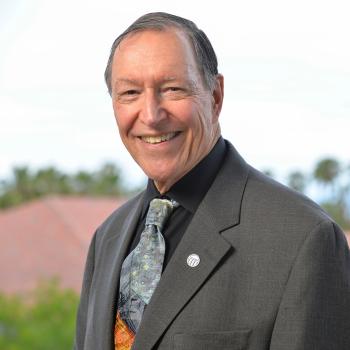 James S. Harris合作论文数Department of Electrical Engineering, Stanford University;Department of Materials Science & Engineering, Stanford University;Department of Applied Physics, Stanford University12
 Heiko B. Weber合作论文数Department Physik, Naturwissenschaftliche Fakultät, Friedrich-Alexander-Universität12
 Thomas Fennel合作论文数Max-Born-Institute for Nonlinear Optics and Short Pulse Spectroscopy;Institute for Physics, University of Rostock12John Breuer合作论文数11Deng Huiyang合作论文数11Stefan Meier合作论文数10Uwe Niedermayer合作论文数Inst Accelerator Sci & Electromagnet Fields, Tech Univ Darmstadt10Schenk Markus合作论文数10
 Peyman Yousefi合作论文数9Michael Seidling合作论文数Friedrich Alexander Univ Erlangen Nurnberg FAU, Dept Phys, Staudtstr 1, D-91058 Erlangen, Germany9
 Ido Kaminer合作论文数Faculty of Electrical and Computer Engineering, Technion – Israel Institute of Technology9
 Robert Joel England合作论文数Stanford Linear Accelerator Center, Stanford University9Schenk, M.合作论文数8Jonas Heimerl合作论文数Dept Phys, Laser Phys, Friedrich Alexander Univ Erlangen Nurnberg FAU8Jakob Hammer合作论文数8
 Mark Kasevich合作论文数Department of Physics, School of Humanities and Sciences, Stanford University;Department of Applied Physics, School of Humanities and Sciences, Stanford University8W. Hänsel合作论文数8
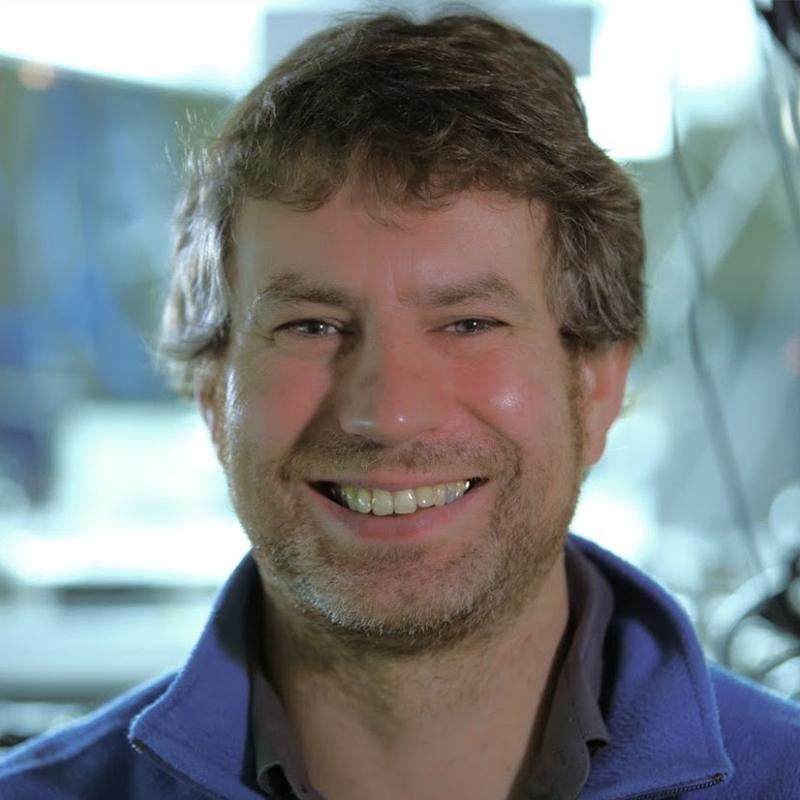 Ingmar Hartl合作论文数Deutsches Elektronen-Synchrotron8
 Olav Solgaard合作论文数Department of Electrical Engineering, School of Engineering, Stanford University;Edward L. Ginzton Laboratory, Stanford University8Yuya Morimoto合作论文数7Takuya Higuchi合作论文数Dept Phys, Laser Phys, Friedrich Alexander Univ Erlangen Nurnberg FAU7J. McNeur合作论文数Department of Physics, Friedrich-Alexander-Universität Erlangen-Nürnberg (FAU), Staudtstrasse 1, 91058 Erlangen, Germany7Dylan S. Black合作论文数Dept Elect Engn, Stanford Univ7Tobias Boolakee合作论文数7
 Wachter Georg合作论文数Institute for Theoretical Physics, Vienna University of Technology7
 Ferenc Krausz (费伦茨·克劳斯)合作论文数Laboratory for Attosecond Physics, Max Planck Institute of Quantum Optics;re for Advanced Laser Applications, Ludwig Maximilian University of Munich;International Max Planck Research School of Advanced Photon Science7
 Philipp Treutlein合作论文数Max-Planck-Institut fur Quantenoptik und Sektion Physik der7Hoffrogge, J.合作论文数6
 William Okell合作论文数Blackett Lab, Univ London Imperial6Tilo Steinmetz合作论文数6




