This paper studies an evolutionary representation/ crossover combination for permutation problems, which are met in many application fields. Many efficient methods exist to solve these various variants. Increasing performances of computers also permitted to tackle more complex instances. But real-life applications make new conjunctions of constraints appear every day. Then, searching new complementary ways to tackle efficiently these numerous constraints is still necessary. This paper focuses on such an approach. It deals with evolutionary algorithms, which have been already often used to solve permutation problems. It studies the behaviour of an evolutionary design, based on a Lehmer code representation coupled with a simple n-point crossover. The goal is not to propose a new problem-tailored method which provides good performances for solving a given variant of problem or for a given class of benchmarks. The paper uses various measures to study the transmission of properties from parents to children, and the behaviour in terms of exploitation and exploration. The paper gives a review on related works, illustrates the issues which remain quite ill-understood for this representation and also gives experimental results by comparison with the permutation encoding more classically used in the literature.
La mobilite intelligente dans le contexte urbain connait depuis ces dernieres annees une expansion fulgurante. L’augmentation simultanee des flux de transport de personnes et de marchandises pousse les decideurs a trouver des solutions pour lutter contre plusieurs phenomenes propres au contexte urbain : congestion reguliere, stationnement indisponible, pollution environnementale et sonore, cout important du dernier kilometre. Les collectivites urbaines doivent reorganiser les infrastructures pour s’adapter en consequence aux besoins. On assiste ainsi a l’emergence de nombreux services urbains comme le co-voiturage dynamique, le transport a la demande, les vehicules « libre-service », le stationnement intelligent ou encore les centres de distribution urbains. Mais les challenges sont encore nombreux pour exploiter au mieux les divers modes disponibles afin de repondre aux besoins des usagers. L’UTBM (equipe OPERA) et l’UFC (Institut FEMTO-ST) ont decide de mutualiser leurs competences dans le projet MOBILITECH MISC : Mobility in Smart Cities, finance par la Region Bourgogne Franche-Comte, ainsi que par l’Etat dans le cadre du projet Systemes Communicants pour la Mobilite (CPER 2015-2020). Labellise par le Pole Vehicule du Futur, le projet consiste a developper la multimodalite au travers d’une plateforme d’aide a la mobilite urbaine des personnes et des biens. Il s’appuie sur le developpement des nouvelles techniques de communication qui permettent de collecter et d’exploiter des donnees a moindre cout, offrant des leviers strategiques decisifs : en favorisant la cooperation des acteurs logistiques (consolidation des flux, mutualisation des ressources), en assurant une tracabilite de bout en bout grâce a l’association des technologies de geolocalisation et de l’informatique embarquee (IoT, intelligence artificielle), enfin en optimisant la qualite de service selon les objectifs definis par les utilisateurs.
This paper describes the state of the art of indoor positioning. It describes the Wi-Fi auto-calibration phase of a fast and adaptive algorithm to calculate the position of access-points in a heterogeneous environment such as a building, house or flat. Our proposal can track a mobile terminal in a building with a minimum of preparation. This deployment simplicity relies on the auto-calibration phase. Of course, this service must also provide good positioning accuracy. Therefore, the auto-calibration function described in this paper has two advantages: it serves to initialize and to model the environment using a set of environment parameters that the operator, using the web interface, can confirm or change.
This paper describes an adaptive algorithm to calculate the position of wireless mobile devices in a heterogeneous environment such as a building, house or flat. Because the environment is not static, it is very important to measure the signal strength of wireless communications periodically in order to take into account all the modifications in the indoor area. These continuous measurements are taken between Wi-Fi Access-points. Such an algorithm allows to keep a good level of accuracy avoiding a degradation of the calculated position over the time. Our adaptive algorithm has been integrated into fault tolerant, redundant and scalable architecture.
Provides a listing of current committee members and society officers.
Vehicle Routing Problems have been some of the most studied problems in combinatorial optimisation because they have many applications in transportation and supply chain. They are usually known as Vehicle Routing Problems or VRPs. The related literature is quite large and diverse both in terms of variants of the problems and in terms of solving approaches. To identify the different variants of routing problems, authors generally use initialisms, in which various prefixes and suffixes indicate the presence of different assumptions or constraints. But this identification based on initialisms is inefficient. For example, two variants of a problem may be identified by the same abbreviation, whereas different abbreviations may be assigned to the same problem. This paper proposes a new notation and a new formalism to identify and to classify instances of routing problems. This contribution aims at filling in the gaps of the current identification system. The goal is to allow everyone to position his work accurately in the literature, and to easily identify approaches and results comparable to his research. The proposed notation is inspired by the scheduling formalism. It has four fields (π/α/β/γ), respectively describing the type and horizon of the problem, the system structure, resources and demands, constraints and objectives to be optimized. 26 papers from the literature chosen for their disparity are classified using this notation to illustrate its usefulness and a software tool is proposed to make its use easier.
The case-based reasoning (CBR) approach consists in retrieving solutions from similar past problems and adapting them to new ones. Interpolation tools can easily be used as adaptation tools in CBR systems. The accuracies of interpolated results depend on the set of known solved problems with which the interpolation tools have previously been trained. To be sufficiently accurate, an interpolation tool must be trained with a large number of known cases. However, CBR systems are also relevant if the number of known cases is restricted. In addition, the training of interpolation tools is generally seen by users as a black box. This paper presents a generic method to optimise CBR adaptations driven by trained interpolation tools and also takes into account remarks made by users about known solution accuracy. This method was applied to the CBR system called EquiVox which retrieves, reuses (interpolates), revises and retains three-dimensional numerical representations of organ contours and thus enhances its own performance.
Phantoms are 3-dimensional (3D) numerical representations of the contours of organs in the human body. The quality of the dosimetric reports established when accidental overexposures to radiation occur is highly dependent on the phantom's reliability with respect to the subject. EquiVox is a Case-Based Reasoning platform which proposes an interpolation of the 3D Lung Contours (3DLC) of subjects during its adaptation phase. This interpolation is conducted by an Artificial Neural Network (ANN) trained to learn how to interpolate the 3DLC of a learning set (LS). ANN is a well-suited tool when known results are numerous. Since the cardinality of our learning set is restrained, the imperfections of each 3DLC have a great impact on interpolations. Thus, we explored the possibility of ignoring some of the 3DLC of LS via implementation of a new learning algorithm which associated Combination Vectors (CV) to LS. The results proved that this method could optimise interpolation accuracy. Furthermore, this study highlights the fact that some of the 3DLC were harmful for some interpolations whereas they increased the accuracy of others.
Complex processes, as geographical mobilities, cannot be always modeled by mathematical formulas or probability laws due to the number of parameters that characterize their behavior. For this reason, simulation is generally used to study movements in these systems. Multi-Agent Systems (MAS) are an interesting and intuitive way to model such complex systems as they divide the whole problem into simple ones. However, in this domain, there is a lack of a global methodology that supports scientists from the design to the implementation of a simulator. In this article we present the RAFALE-SP methodology that helps out the developer in the construction of spatial mobility models and in their simulation. The methodology is implemented in a framework that is composed of an oriented meta-model to describe spatial mobilities and an oriented toolkit to implement mobility simulators. This paper gives a complete description of the methodology and its concepts then it presents how to use it for the implementation of a simulator.
This paper compares the performances of genetic operators for the Capacitated Vehicle Routing Problem (CVRP). Two representations and some crossover and mutation operators are considered. Design of Experiment (DoE) is used to identify the best combination of the studied GA components. The goal is to determine the combination of features that maximizes the efficiency of the algorithm. Results provided from a computational experiment over common benchmarks showed which parameters and genetic operators affect the quality of provided solutions.
Advances in technology have enabled a proliferation of mobile devices and a broad spectrum of novel and out breaking solutions for new applications and services. In the present, more and more people and companies are demanding mobile access to multimedia services such as real-time rich media. Today, it is necessary to be able to predict adaptation behaviour which concerns and addresses not only the mobile usage or the infrastructure availability, but the service quality especially the continuity of service. Our chapter provides insight to new challenges of mobile multimedia services and applications: Wifi indoor positioning system adapted to heterogeneous building, static and learning mobility prediction, predictive handover policy for multimedia cache management, mobile multimedia guide (such as museum), and network scalability.
Advances in technology have enabled a proliferation of mobile devices and a broad spectrum of novel and outbreaking solutions for new applications and services. Presently more and more people and companies are demanding mobile access to multimedia services such as real-time rich media. Today, it is necessary to be able to predict adaptation behavior that concerns and addresses not only the mobile usage or the infrastructure availability, but also the service quality, especially the continuity of service. Our chapter provides insight to new challenges of mobile multimedia services and applications: wifi indoor positioning system adapted to heterogeneous building, static and learning mobility prediction, predictive handover policy for multimedia cache management, mobile multimedia guide (e.g., museums), and network scalability.
The advent of the World Wide Web (WWW) has led to the creation of many web publishing platforms. Patients are becoming more well-informed through drug and health-related information over the internet. The integration of interactive media technologies and the WWW provides an opportunity to improve the pharmaceutical care of patients on anticoagulant therapy. In this paper, the concept of 'pharmaco-cybernetics' is introduced through the creation of an interactive tool which consists of a pill-catching game and hangman game designed to enable users to learn about warfarin tablet strengths and drug interactions, based on user-centered (UCD), experience-centered (ECD), and activity-centered design (ACD) approaches. Currently, this tool is largely based on UCD and ECD. However, the potential of incorporating the ACD approach in the tool's design is definitely attractive. Pharmaco-cybernetics can empower patients with the appropriate knowledge regarding their therapy so that they can better participate in the management of their health.
If outdoor positioning is widely treated and quite precise, positioning indoors or, more generally, in heterogeneous environments, as well as mobility prediction, requires important devices. New wireless technologies (e.g., Wi-Fi, Ultra Wide Band) combine the mobility of terminals with large bandwidth. Terminal mobility is one of the major pillars of applications attempting to become context-aware, and a large bandwidth enables new services such as multimedia contents streaming towards mobile terminals. Being context-aware and able to provide services in a mobile environment requires the knowledge of spatial and temporal data about the terminal. The key phase in the achievement of mobility management is the positioning process. We propose a layered positioning system based on a model combining a reference point-based approach with a trilateration-based one. Several layers of refinement are offered based on the knowledge of the topology and devices deployed. The more data are known, the better adapted to its area the positioning system can be.
 Philippe Canalda合作论文数LIFC - Laboratoire dýInformatique de lý, Université de Franche-Comté18
 Francois Spies合作论文数Université de Franche-Comté16
 Christelle Bloch合作论文数16
 Frederic Lassabe合作论文数LIFC - Laboratoire dýInformatique de lý, Université de Franche-Comté11
 Laurent Philippe合作论文数Laboratoire d'Informatique de Franche-Comté, Université de France Comté9D. Charlet合作论文数5
 Christophe Espanet合作论文数5Nicolas Marilleau合作论文数UMI 209 UMMISCO, Institut de Recherche, pour le développment (IRD), Bondy, France5Damien Charlet合作论文数5
 Christophe Lang合作论文数Universite de Franche-Comte CNRS FRE 26615Didier Chamagne合作论文数Université de Franche-Comté5haj rachid合作论文数4Wahiba Ramdane Chérif-Khettaf合作论文数4Jean-Laurent Hippolyte合作论文数Université de Franche-Comté4
 Didier Josselin合作论文数CNRS, Université d'Avignon4
 Remy Chevrier合作论文数INRETS ESTAS, Univ. Lille Nord de France;c;INRETS ESTAS, Univ. Lille Nord de France3Geneviève Wimmer合作论文数3Alexis Godart合作论文数2
 Benedicte Herrmann合作论文数2
 Laurence Tianruo Yang (杨天若)合作论文数School of Computer and Artificial Intelligence, Zhengzhou University;School of Computer Science and Technology, Huazhong University of Science and Technology2Herve Manier合作论文数Laboratoire Systèmes et Transports, Université de Technologie de Belfort-Montbéliard2
 Timothy K. Shih (施國琛)合作论文数Department of Computer Science and Information Engineering, College of Electrical Engineering and Computer Science, National Central University2
 Marie-Ange Manier合作论文数Laboratoire Systèmes et Transports;Université de Technologie de Belfort-Montbéliard;UTBM Site de Belfort;Laboratoire Systèmes et Transports, Université de Technologie de Belfort-Montbéliard2
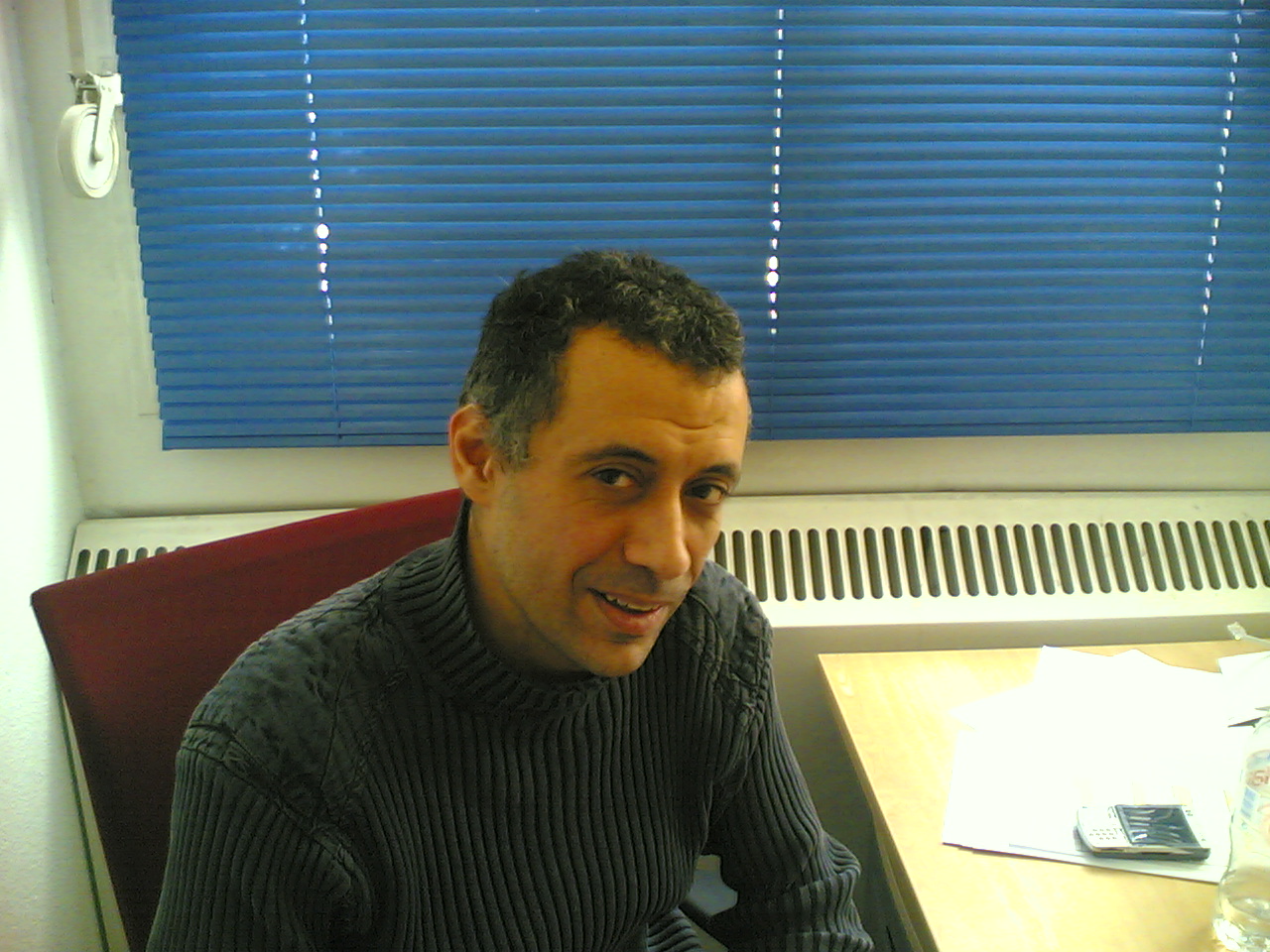 David Laiymani合作论文数Licence Professionnelle Systèmes Informatiques et Logiciels
Université de Franche-Comté / I.U.T. de Belfort-Montbéliard2
David Laiymani合作论文数Licence Professionnelle Systèmes Informatiques et Logiciels
Université de Franche-Comté / I.U.T. de Belfort-Montbéliard2 Julien Henriet合作论文数Universite de Franche-Comte;Institut FEMTO-ST2
 Oumaya Baala合作论文数SET Laboratory, UTBM2J. Lacan合作论文数1Jean-Baptiste Ernst-Desmulier合作论文数1javier garcia villalba合作论文数1
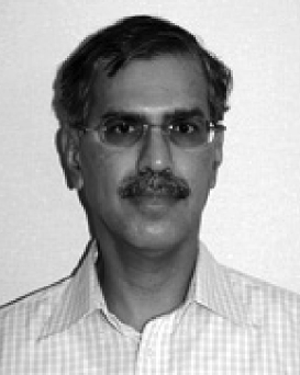 Goutam Chakraborty合作论文数1murat demirbas合作论文数1Priti Maheshwary合作论文数1Shigeru Fujita合作论文数First Department of Internal Medicine, Ehime University School of Medicine1
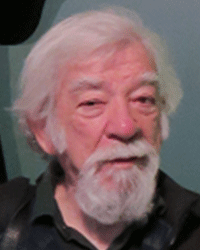 Eduardo B. Fernandez合作论文数Department of Computer Science and Engineering, College of Engineering and Computer Science, Florida Atlantic University1
 Osama Abu Oun合作论文数1
 Runhe Huang合作论文数Faculty of Computer and Information Sciences, Hosei University1
 Hui-Huang Hsu合作论文数Tamkang University1
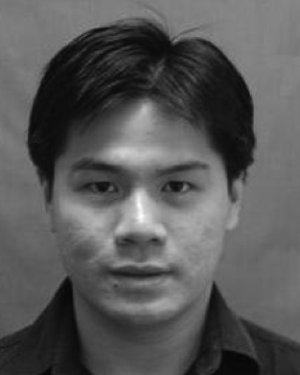 Agustinus Borgy Waluyo合作论文数1Bernady O. Apduhan合作论文数1
 Arjan Durresi合作论文数Department of Computer and Information Science, School of Science, Indiana University Purdue University Indianapolis1
 Abdelkader Hameurlain合作论文数Institut de Recherche en Informatique de Toulouse, Paul Sabatier University1
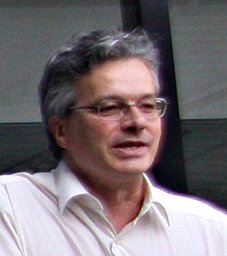 Jean Arlat合作论文数LAAS-CNRS1
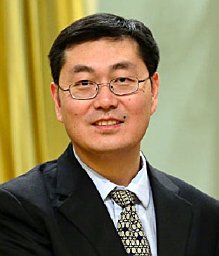 Jiangchuan Liu合作论文数School of Computing Science, Simon Fraser University1
 Sun Limin合作论文数1
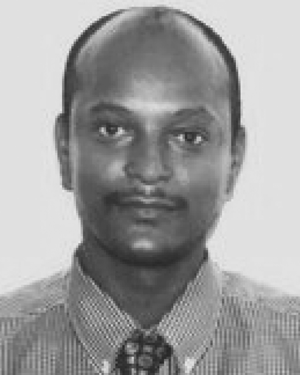 Mieso K. Denko合作论文数1
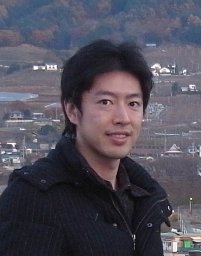 Naohiro Hayashibara合作论文数Tokyo Denki University1Leszek Lilien合作论文数Department of Computer Science, College of Engineering and Applied Sciences, Western Michigan University1
 Paal E. Engelstad合作论文数Department of Technology Systems, University of Oslo1
 Qun Jin (金群)合作论文数Department of Human Informatics and Cognitive Sciences, Faculty of Human Sciences, Waseda University;Networked Information Systems Laboratory, Graduate School of Human Sciences, Waseda University1




