Pervasive gaps in sensory information are completed in perception. Interestingly, humans are unaware of that perceptual completion in cases of proximal gaps, which are caused by properties of their own sensory system, and report high confidence for the inferred information in those gaps. Here, we investigated whether such overconfidence is also observed in perceptual completion of visual information in distal gaps (i.e., those caused by the properties of the stimulus). In three experiments, we asked participants to perform a perceptual (type 1) task and report their confidence (type 2 task) using stimuli that were either intact (full stimulus), with a partial cutout (stimulus with gap), partially occluded (amodal completion) or induced (modal completion). We examined whether participants report high confidence for amodal and modal completion in comparison to a full stimulus or stimulus with gap. Over three experiments, participants had the highest confidence for full stimuli, whereas amodal and modal completion led to comparable confidence as stimuli with gap. These findings demonstrate that there was low confidence for stimuli whose distal gaps are perceptually filled in. In combination with previous research, our results suggest that visibility of the gaps in information influences confidence judgments.
Human time perception is flexible and shaped by both structural constraints and contextual influences. Disentangling these sources of bias is essential for understanding the predictive mechanisms underlying temporal perception, yet no unified model currently integrates them. Here, we quantified precisely the structural and contextual biases in a duration discrimination task to constrain models of duration perception. Using a duration discrimination task, healthy participants judged which of two consecutive stimuli lasted longer. Stimuli were visual, auditory, or cross-modal. Consistent with previous findings, auditory stimuli were perceived as longer than visual stimuli of equal duration, reflecting intrinsic properties of audiovisual neural processing. Contextual biases were manipulated through different duration distributions known to influence temporal judgments. Our results show that duration discrimination relies on distinct representations of each stimulus distribution and is best explained by a combination of Bayesian inference and rescaling. While Bayesian inference accounts for contextual effects such as regression to the mean, rescaling mechanisms predict opposite effects by correcting perceived durations after repeated exposure. These findings challenge existing accounts of contextual effects in time perception and suggest that the brain normalizes temporal representations to adapt to environmental statistics. ### Competing Interest Statement The authors have declared no competing interest. Fondation pour la Recherche sur le Cerveau Anneliese Maier Award
The visual system operates by segmenting visual inputs into distinct perceptual objects. Segmentation is dynamic, as revealed by the tempo of perceptual choices and neural activity in visual cortex. Dynamics for natural stimuli however, are poorly understood because natural scene segmentation is ambiguous and subjective. We measured subjective human segmentation maps for natural images using an innovative paradigm, and uncovered richer spatiotemporal dynamics than predicted by current theories of segmentation. To explain these dynamics, we introduced Iterative Bayesian Inference algorithms for segmentation that iteratively integrate visual inputs with the prior expectation that objects are spatially compact. When visual inputs were consistent with such a spatial prior, iterative inference was faster. This predicted relationship between spatial prior and inferential dynamics was evident in our data, and correctly reflected each individual participant's spatial biases. We conclude that iterative Bayesian inference sets the tempo for a fundamental function of natural vision.
Fleming and Michel discuss the slowness of conscious vision and the predictions generated by an internal model of the world. However, these two points correspond to two different times. The slowness of consciousness puts the organisms in the past, whereas predictions give them a preview of the future. Given this tension between past and future representations, when is "now"?
Perceptual learning can occur without external feedback, raising questions about what internal signals might guide this learning. Here, we test the hypothesis that confidence, namely the observer's subjective sense of decision accuracy, is this internal teaching signal. In the present study, participants performed a visual motion discrimination task across 5 days without feedback. After every two trials, they indicated which decision they were more confident in, using a confidence forced-choice paradigm. In addition, following previous literature, we attempted to manipulate confidence independently of accuracy by varying dot density while holding signal-to-noise ratio constant (overall-strength manipulation), however, this manipulation did not consistently separate confidence from performance. In our study without feedback, we found that some participants improved their performance in the visual task, but other participants failed to become better. Those participants who improved their perceptual thresholds over time ("learners") also exhibited systematic changes in their confidence computations: not only sensory noise decreased, but confidence efficiency declined due to increases in confidence-specific noise. Learners also showed an increased reliance on additional evidence not used in the perceptual decision itself (confidence boost). Non-learners showed no comparable changes. These results suggest that confidence judgments evolve during perceptual learning and may serve as an index of how internal monitoring adapts during feedback-free training.
Natural visual scenes contain rich flows of pattern motion that vary not only in orientation but also in spatial sizes and temporal rhythms. To properly interpret the motion, the brain must extract individual features and integrate them into coherent parts, and sometimes also segregate these parts from each other. Here, we performed single-neuron recordings in the motion-sensitive higher-order visual cortex (PMLS) of awake ferrets to investigate how complex motion signals are encoded and combined. We presented motion clouds—naturalistic stimuli with parametrically controlled spatiotemporal frequency content—and found that motion features were encoded in a temporally ordered sequence: orientation and spatial frequency emerged within 120 ms after stimulus onset, while temporal frequency and direction followed at later latencies. Time-resolved decoding revealed that this selectivity evolved dynamically within neurons and was distributed across the population. To probe motion integration, we introduced compound motion clouds composed of two or three localized frequency components. Neuronal responses were well explained by a linear pooling model, suggesting a simple summation mechanism of the individual components. However, a distinct subset of neurons exhibited late responses sensitive to changes in speed content despite matched marginals, consistent with receptive fields differentiating along the speed gradient. Together, we have uncovered a structured and distributed code for motion in high-level visual cortex, and provide mechanistic insights into how the brain parses complex motion in natural scenes. ### Competing Interest Statement The authors have declared no competing interest. École Normale Supérieure - PSL, https://ror.org/05a0dhs15 Institut Universitaire de France Agence Nationale de la Recherche, https://ror.org/00rbzpz17, ANR-19-CE37-0016, ANR-19-NEUC-0003-01, ANR-17-EURE-0017, ANR-10-IDEX-0001-02
The visual systems of animals work in diverse and constantly changing environments where organism survival requires effective senses. To study the hierarchical brain networks that perform visual information processing, vision scientists require suitable tools, and Motion Clouds (MCs)-a dense mixture of drifting Gabor textons-serve as a versatile solution. Here, we present an open toolbox intended for the bespoke use of MC functions and objects within modeling or experimental psychophysics contexts, including easy integration within Psychtoolbox or PsychoPy environments. The toolbox includes output visualization via a Graphic User Interface. Visualizations of parameter changes in real time give users an intuitive feel for adjustments to texture features like orientation, spatiotemporal frequencies, bandwidth, and speed. Vector calculus tools serve the frame-by-frame autoregressive generation of fully controlled stimuli, and use of the GPU allows this to be done in real time for typical stimulus array sizes. We give illustrative examples of experimental use to highlight the potential with both simple and composite stimuli. The toolbox is developed for, and by, researchers interested in psychophysics, visual neurophysiology, and mathematical and computational models. We argue the case that in all these fields, MCs can bridge the gap between well- parameterized synthetic stimuli like dots or gratings and more complex and less controlled natural videos.
The image intensity depends on the illumination, the reflectance properties of objects but also on the reflectance and absorption properties of any intervening media. In this study we present observers with glossy objects behind partially transmissive materials. The transparent layer causes an achromatic color shift and compression in luminance contrast, which can affect the perception of the specular reflections of the object behind the layer. In two distinct experiments, we examine how an achromatic color shift and the compression of luminance contrast affect perceived gloss. Thanks to the maximum likelihood conjoint measurement paradigm, we estimate the contamination of different transparent layers on perceived gloss. In the follow-up experiment, observers were asked to match the albedo and the gloss of surfaces seen in plain view to surfaces seen behind a transparent layer. Our results indicate a high degree of gloss constancy with some small but significant contribution of the transparent layer when estimating gloss, especially in the case of light-colored transparent layers. Overall, gloss is significantly overestimated.
Previous studies examining confidence in perceptual completion in vision showed that observers can be unaware of missing sensory information and be even more confident in perceptually completed stimuli than veridical stimuli. In the current study, we aimed to investigate if auditory filling-in mechanisms would result in similar confidence biases. In two separate experiments, participants listened to continuous (uninterrupted) or discontinuous (interrupted) tones that were accompanied by noise. We examined confidence for continuity-discontinuity decisions by collecting confidence ratings (Experiment 1) and forced-choice confidence judgments (Experiment 2). Participants reported the interrupted sounds with masking noise more as uninterrupted, showing auditory filling-in. Confidence ratings in the first experiment followed response consistency. Forced-choice confidence judgments in the second experiment showed that participants were not able to distinguish the filled-in stimulus from a continuous stimulus with similar masking noise. Most importantly, there was no clear preference for a veridical compared to a perceptually completed stimulus. These results, extending findings from the visual modality, are the first to demonstrate that listeners are unaware of auditory filling-in and trust filled-in information almost as much as veridical information in the auditory sense.
According to the Bayesian framework, both our perceptual decisions and confidence about those decisions are based on the precision-weighted integration of prior expectations and incoming sensory information. While it is generally assumed that priors influence both decisions and confidence in the same way, previous work has found priors to have a stronger impact at the confidence level, challenging this assumption. However, these patterns were found for high-level probabilistic expectations that are flexibly induced in the task context. It remains unclear whether this generalizes to low-level perceptual priors that are naturally formed through long term exposure. Here we investigated human participants' confidence in decisions made under the influence of a long-term perceptual prior: the slow-motion prior. Participants viewed tilted moving-line stimuli for which the slow-motion prior biases the perceived motion direction. On each trial, they made two consecutive motion direction decisions followed by a confidence decision. We contrasted two conditions - one in which the prior impacted discrimination performance, and one in which it did not. We found a confidence bias favoring the condition in which the prior influenced discrimination decisions, even after accounting for performance differences. Computational modeling revealed this effect to be best explained by confidence using the prior-congruent evidence as an additional cue, beyond the posterior evidence used in the perceptual decision. This is in agreement with a confirmatory confidence bias favoring evidence congruent with low-level perceptual priors, revealing that, in line with high-level expectations, even long-term priors have a greater influence on the metacognitive level than on perceptual decisions.
The visual system is known to integrate sensory information across both space and time, but these dimensions are often studied separately. Here we provide novel behavioural evidence for an early integration over space and time, and propose a computational model of this integration that is biologically plausible. We designed a controlled task that forces human participants to integrate information over both space and time to perform well. Stimuli were temporally segmented rings of oriented elements and participants had to detect a missing element in the ring. We found that temporal integration was enhanced when successive visual events were temporally proximate, spatially aligned to form a continuous contour, but also, and more surprisingly, when they were brief. Notably, the spatial effects on integration are temporally asymmetric: integration is facilitated when more events are presented earlier in the sequence, and even more so when they form a collinear contour. These findings indicate that temporal integration is sensitive to both the spatial configuration and the number of visual events presented over time, supporting a continuous rather than discrete process at early visual stages. All of these results are well accounted for by a computational model in which temporal integration arises from the overlap of internal signals generated by individual visual events. These signals are shaped by a spatially and temporally tuned divisive normalisation mechanism and integrated via coincidence detection. Predictions from this model match human performance in seminal past work as well as novel stimulus displays, offering an account of how spatio temporal interactions determine what we perceive and when. ### Competing Interest Statement The authors have declared no competing interest. Agence Nationale de la Recherche, https://ror.org/00rbzpz17, ANR-22-CE28-0025
Visual perception has been described as a dynamic process where incoming visual information is combined with what has been seen before to form the current percept. Such a process can result in multiple visual aftereffects that can be attractive toward or repulsive away from past visual stimulation. A lot of research has been conducted on what functional role the mechanisms that produce these aftereffects may play. However, there is a lack of understanding of the role of stimulus uncertainty on these aftereffects. In this study, we investigate how the contrast of a stimulus affects the serial aftereffects it induces and how the stimulus itself is affected by these effects depending on its contrast. We presented human observers with a series of Gabor patches and monitored how the perceived orientation of stimuli changed over time with the systematic manipulation of orientation and contrast of presented stimuli. We hypothesized that repulsive serial effects would be stronger for the judgment of high-contrast than low-contrast stimuli, but the other way around for attractive serial effects. Our experimental findings confirm such a strong interaction between contrast and sign of aftereffects. We present a Bayesian model observer that can explain this interaction based on two principles, the dynamic changes of orientation-tuned channels in short timescales and the slow integration of prior information over long timescales. Our findings have strong implications for our understanding of orientation perception and can inspire further work on the identification of its neural mechanisms.
Over the last decade, different approaches have been proposed to interpret confidence rating judgments obtained after perceptual decisions. One very popular approach is to compute meta-d' which is a global measure of the sensibility to discriminate the confidence rating distributions for correct and incorrect perceptual decisions. Here, we propose a generative model of confidence based on two main parameters, confidence noise and confidence boost, that we call CNCB model. Confidence noise impairs confidence judgements above and beyond how sensory noise affects perceptual sensitivity. The confidence boost parameter reflects whether confidence uses the same information that was used for perceptual decisions, or some new information. This CNCB model offers a principled way to estimate a confidence efficiency measure that is a theory-driven alternative to the popular M-ratio. We then describe two scenarios to estimate the confidence boost parameter, one where the experiment uses more than two confidence levels, the other where the experiment uses more than two stimulus strengths. We also extend the model to experiments using continuous confidence ratings and describe how the model can be fitted without binning these ratings. The continuous confidence model includes a non-linear mapping between objective and subjective confidence probabilities that can be estimated. Altogether, the CNCB model should help interpret confidence rating data at a deeper level. This manuscript is accompanied by a toolbox that will allow researchers to estimate all the parameters of the CNCB model in confidence ratings datasets. Some examples of re-analyses of previous datasets are provided in S1 File.
Distinguishing between reliable and unreliable internal sensory representations is crucial for a successful interaction with the environment. Precise estimates of the uncertainty of sensory representations are critical to optimally integrate multiple sensory modalities and produce a coherent interpretation of the world. However, once a multisensory percept is produced, it is not yet known whether humans still have access to the uncertainty of each sensory modality. Here, we asked human participants to perform a series of temporal bisection tasks, in either unimodal visual or auditory conditions, or in bimodal audiovisual conditions where vision and audition could be congruent or not. The validity of their temporal bisection was assessed by asking participants to choose which of two consecutive decisions they felt more confident of being correct, focussing only on the visual modality. We found that once multisensory information is integrated, participants could no longer access the unisensory information to evaluate the validity of their decisions. Comparing three generative models of confidence, we show that confidence judgments are fooled by the fused bimodal percept. These results highlight that some critical information is lost between perceptual and metaperceptual stages of processing in the human brain. ### Competing Interest Statement The authors have declared no competing interest. French National Research Agency, ANR-18-CE28-0015, ANR-10-LABX-0087 IEC, ANR-17-EURE-0017
 Vincent de Gardelle合作论文数Ctr Econ Sorbonne, CNRS21
 Daniel J. Kersten合作论文数Department of Psychology, College of Liberal Arts, University of Minnesota19
 Michael S. Landy合作论文数Department of Psychology, College of Arts & Science, New York University18
 Guillaume S Masson合作论文数17
 Ljubica Jovanovic合作论文数16Balsdon Tarryn合作论文数Department of Experimental Psychology, University of Oxford14
 Nikos Gekas合作论文数Institute for Adaptive and Neural Computation, University of Edinburgh14
 Boubenec Yves合作论文数UPR 3293, Centre National de la Recherche Scientifique Gif-sur-Yvette14
 Laurence Maloney合作论文数Department of Psychology, College of Arts and Science, New York University14
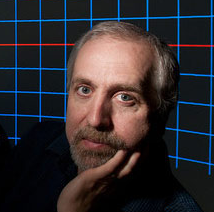 David C. Knill合作论文数Center for Visual Science, University of Rochester13
 Sabrina Hansmann-Roth合作论文数School of Health Sciences, University of Iceland11
 Jonathan Vacher合作论文数MAP5, UFR de Math´ematiques et Informatique, Université Paris Cité11
 Samuel Recht合作论文数Dept Expt Psychol, Univ Oxford10
 Valentin Wyart合作论文数Lab Neurosci Cognit & Computat, PSL Univ10
 Wendy J. Adams合作论文数Department of Psychology;University of Glasgow;Department of Psychology, University of Glasgow10
 Ross Goutcher合作论文数Psychol, Univ Stirling9
 Chopin Adrien合作论文数Sorbonne Paris Cité, Université Paris Descartes9
 Anna Montagnini合作论文数Team DyVA, CNRS & Aix-Marseille Université9
 Marie de montalembert合作论文数Site Transfusionnel de l'Hôpital Necker-Enfants Malades9
 Andrei Gorea合作论文数Université;Rutgers University;Université René | Rutgers University9JM Wallace合作论文数8
 Locke Shannon M合作论文数The Bosch Institute, The University of Sydney8Simon Barthelmé合作论文数GIPSA-lab, Univ. Grenoble Alpes8
 Ruben Coen-Cagli合作论文数Albert Einstein College of Medicine8
 Eli Brenner合作论文数Faculty of Human Movement Sciences, Vrije Universiteit7
 Bettina Friedrich合作论文数Department of Clinical, Educational and Health Psychology, University College London6Andrew Meso合作论文数Centre for Developmental Neurobiology, School of Neuroscience, Institute of Psychiatry, Psychology & Neuroscience, King’s College London6
 Cyril Vienne合作论文数Technicolor;vigné, France;c;Technicolor6
 Zannoli Marina合作论文数Laboratoire Psychologie de la Perception (CNRS UMR 8158), Université Paris Descartes6
 Heinrich Bülthoff合作论文数Department of Human Perception, Cognition and Action, Max Planck Institute for Biological Cybernetics;Eberhard Karls Universität in Tübingen6
 Laurent Blonde合作论文数6
 Pedro Cardoso-Leite合作论文数Laboratoire Psychologie de la Perception, René Descartes University6
 Julia Trommershäuser合作论文数Department of Psychology;Giessen University;Department of Psychology, Giessen University6D. R. Simmons合作论文数5Lena Klever合作论文数Justus Liebig Univ Giessen5Thomas U Otto合作论文数Corresponding authors.5
 Robert J van Beers合作论文数Radboud Univ Nijmegen, Donders Inst Brain Cognit & Behav, Nijmegen, Netherlands5
 David Alais合作论文数Faculty of Science, The University of Sydney5Wexler Mark合作论文数CNRS, Univ. Paris Descartes;c;CNRS, Univ. Paris Descartes5
 Kyle C Mcdermott合作论文数5
 Jeroen B. J. Smeets合作论文数Faculty of Behavioural and Movement Sciences, Vrije Universiteit Amsterdam5Jutta Billino合作论文数5Laurent Perrinet合作论文数Computational Neuroscience at the INCM (France5
 Nadia Hosseinizaveh合作论文数Dept Psychol, NYU4
 Simoncini Claudio合作论文数4Caziot Baptiste合作论文数4
 Narain Devika合作论文数MOVE Research Institute Amsterdam, VU University4
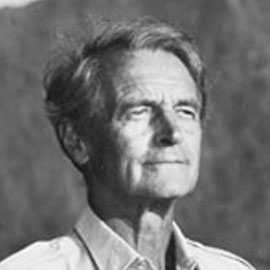 Ian Thornton合作论文数La Trobe University4L. Perrinet合作论文数Computational Neuroscience at the INCM (France4




