Large vision-language models (LVLMs) exhibit remarkable capabilities in cross-modal tasks but face significant safety challenges, which undermine their reliability in real-world applications. Efforts have been made to build LVLM safety evaluation benchmarks to uncover their vulnerability. However, existing benchmarks are hindered by their labor-intensive construction process, static complexity, and limited discriminative power. Thus, they may fail to keep pace with rapidly evolving models and emerging risks. To address these limitations, we propose VLSafetyBencher, the first automated system for LVLM safety benchmarking. VLSafetyBencher introduces four collaborative agents: Data Preprocessing, Generation, Augmentation, and Selection agents to construct and select high-quality samples. Experiments validates that VLSafetyBencher can construct high-quality safety benchmarks within one week at a minimal cost. The generated benchmark effectively distinguish safety, with a safety rate disparity of 70
Contrastive Vision-Language Pre-training (CLIP) has shown ground-breaking results in zero-shot and few-shot learning. Its success in the 2D domain sparks the curiosity to explore if CLIP, pre-trained with large-scale image-text pairs, can be adapted for 3D recognition. This chapter discusses PointCLIP and PointCLIP V2 and shows that it is indeed possible to align CLIP-encoded point clouds with 3D category text representations. PointCLIP projects a point cloud into multi-view 2D images, which helps in revealing geometric information from 3D to 2D. For better extraction of global features, PointCLIP features an interview adapter, significantly boosting the performance by just fine-tuning the lightweight adapter. After that, PointCLIP V2 is discussed to further improve the performance and enhance the generalization ability. V2 employs a shape projection module for the visual end, helping to synthesize more realistic depth maps and narrowing the domain gap between projected point clouds and natural images. Simultaneously, V2 combines CLIP and large language models (LLMs) to generate 3D-specific text, improving the feature extraction of CLIP's textual encoder. PointCLIP VI and V2 demonstrate remarkable generalization capabilities in unified 3D open-world learning, paving the way for better in-depth understanding and possible future improvements and extensions.
The success of large language models (LLMs) in scientific domains has heightened safety concerns, prompting numerous benchmarks to evaluate their scientific safety. Existing benchmarks often suffer from limited risk coverage and a reliance on subjective evaluation. To address thess problems, we introduce \textbf{SafeSci}, a comprehensive framework for safety evaluation and enhancement in scientific contexts. SafeSci comprises \textbf{SafeSciBench}, a multi-disciplinary benchmark with 0.25M samples, and \textbf{SafeSciTrain}, a large-scale dataset containing 1.5M samples for safety enhancement. SafeSciBench distinguishes between safety knowledge and risk to cover extensive scopes and employs objective metrics such as deterministically answerable questions to mitigate evaluation bias. We evaluate 21 advanced LLMs, revealing critical vulnerabilities in current models. Finally, we demonstrate that fine-tuning on SafeSciTrain significantly enhances the safety alignment of models. Our work provides both a diagnostic tool and a practical resource for building safer scientific AI systems.
The success of large language models (LLMs) in scientific domains has heightened safety concerns, prompting numerous benchmarks to evaluate their scientific safety. Existing benchmarks often suffer from limited risk coverage and a reliance on subjective evaluation. To address these problems, we introduce SafeSci, a comprehensive framework for safety evaluation and enhancement in scientific contexts. SafeSci comprises SafeSciBench, a multi-disciplinary benchmark with 0.25M samples, and SafeSciTrain, a large-scale dataset containing 1.5M samples for safety enhancement. SafeSciBench distinguishes between safety knowledge and risk to cover extensive scopes and employs objective metrics such as deterministically answerable questions to mitigate evaluation bias. We evaluate 24 advanced LLMs, revealing critical vulnerabilities in current models. We also observe that LLMs exhibit varying degrees of excessive refusal behaviors on safety-related issues. For safety enhancement, we demonstrate that fine-tuning on SafeSciTrain significantly enhances the safety alignment of models. Finally, we argue that knowledge is a double-edged sword, and determining the safety of a scientific question should depend on specific context, rather than universally categorizing it as safe or unsafe. Our work provides both a diagnostic tool and a practical resource for building safer scientific AI systems.
We introduce Lumina-Image 2.0, an advanced text-to-image generation framework that achieves significant progress compared to previous work, Lumina-Next. Lumina-Image 2.0 is built upon two key principles: (1) Unification - it adopts a unified architecture (Unified Next-DiT) that treats text and image tokens as a joint sequence, enabling natural cross-modal interactions and allowing seamless task expansion. Besides, since high-quality captioners can provide semantically well-aligned text-image training pairs, we introduce a unified captioning system, Unified Captioner (UniCap), specifically designed for T2I generation tasks. UniCap excels at generating comprehensive and accurate captions, accelerating convergence and enhancing prompt adherence. (2) Efficiency - to improve the efficiency of our proposed model, we develop multi-stage progressive training strategies and introduce inference acceleration techniques without compromising image quality. Extensive evaluations on academic benchmarks and public text-to-image arenas show that Lumina-Image 2.0 delivers strong performances even with only 2.6B parameters, highlighting its scalability and design efficiency. We have released our training details, code, and models at https://github.com/Alpha-VLLM/Lumina-Image-2.0.
Lumina-T2X is a nascent family of Flow-based Large Diffusion Transformers (Flag-DiT) that establishes a unified framework for transforming noise into various modalities, such as images and videos, conditioned on text instructions. Despite its promising capabilities, Lumina-T2X still encounters challenges including training instability, slow inference, and extrapolation artifacts. In this paper, we present Lumina-Next, an improved version of Lumina-T2X, showcasing stronger generation performance with increased training and inference efficiency. We begin with a comprehensive analysis of the Flag-DiT architecture and identify several suboptimal components, which we address by introducing the Next-DiT architecture with 3D RoPE and sandwich normalizations. To enable better resolution extrapolation, we thoroughly compare different context extrapolation methods applied to text-to-image generation with 3D RoPE, and propose Frequency- and Time-Aware Scaled RoPE tailored for diffusion transformers. Additionally, we introduce a sigmoid time discretization schedule for diffusion sampling, which achieves high-quality generation in 5-10 steps combined with higher-order ODE solvers. Thanks to these improvements, Lumina-Next not only improves the basic text-to-image generation but also demonstrates superior resolution extrapolation capabilities as well as multilingual generation using decoder-based LLMs as the text encoder, all in a zero-shot manner. To further validate Lumina-Next as a versatile generative framework, we instantiate it on diverse tasks including visual recognition, multi-views, audio, music, and point cloud generation, showcasing strong performance across these domains. By releasing all codes and model weights at https://github.com/Alpha-VLLM/Lumina-T2X, we aim to advance the development of next-generation generative AI capable of universal modeling.
Predicting cardiac indices has long been a focal point in the medical imaging community. While various deep learning models have demonstrated success in quantifying cardiac indices, they remain susceptible to mild input perturbations, e.g., spatial transformations, image distortions, and adversarial attacks. This vulnerability undermines confidence in using learning-based automated systems for diagnosing cardiovascular diseases. In this work, we describe a simple yet effective method to learn robust models for left ventricle (LV) quantification, encompassing cavity and myocardium areas, directional dimensions, and regional wall thicknesses. Our success hinges on employing the biologically inspired steerable pyramid transform (SPT) for fixed front-end processing, which offers three main benefits. First, the basis functions of SPT align with the anatomical structure of LV and the geometric features of the measured indices. Second, SPT facilitates weight sharing across different orientations as a form of parameter regularization and naturally captures the scale variations of LV. Third, the residual highpass subband can be conveniently discarded, promoting robust feature learning. Extensive experiments on the Cardiac-Dig benchmark show that our SPT-augmented model not only achieves reasonable prediction accuracy compared to state-of-the-art methods, but also exhibits significantly improved robustness against input perturbations. Code is available at https://github.com/yangyangyang127/RobustLV .
To reduce the reliance on large-scale datasets, recent works in 3D segmentation resort to few-shot learning. Current 3D few-shot segmentation methods first pre-train models on 'seen' classes, and then evaluate their generalization performance on 'unseen' classes. However, the prior pre-training stage not only introduces excessive time overhead but also incurs a significant domain gap on 'unseen' classes. To tackle these issues, we propose a Non-parametric Network for few-shot 3D Segmentation, Seg-NN, and its Parametric variant, Seg-PN. Without training, Seg-NN extracts dense representations by hand-crafted filters and achieves comparable performance to existing parametric models. Due to the elimination of pre-training, Seg-NN can alleviate the domain gap issue and save a substantial amount of time. Based on Seg-NN, Seg-PN only requires training a lightweight QUEry-Support Transferring (QUEST) module, which enhances the interaction between the support set and query set. Experiments suggest that Seg-PN outperforms previous state-of-the-art method by +4.19% and +7.71% mIoU on S3DIS and ScanNet datasets respectively, while reducing training time by -90%, indicating its effectiveness and efficiency.
To reduce the reliance on large-scale datasets, recent works in 3D segmentation resort to few-shot learning. Current 3D few-shot semantic segmentation methods first pre-train the models on `seen' classes, and then evaluate their generalization performance on `unseen' classes. However, the prior pre-training stage not only introduces excessive time overhead, but also incurs a significant domain gap on `unseen' classes. To tackle these issues, we propose an efficient Training-free Few-shot 3D Segmentation netwrok, TFS3D, and a further training-based variant, TFS3D-T. Without any learnable parameters, TFS3D extracts dense representations by trigonometric positional encodings, and achieves comparable performance to previous training-based methods. Due to the elimination of pre-training, TFS3D can alleviate the domain gap issue and save a substantial amount of time. Building upon TFS3D, TFS3D-T only requires to train a lightweight query-support transferring attention (QUEST), which enhances the interaction between the few-shot query and support data. Experiments demonstrate TFS3D-T improves previous state-of-the-art methods by +6.93 training time by -90
We introduce SAM2Point, a preliminary exploration adapting Segment Anything Model 2 (SAM 2) for zero-shot and promptable 3D segmentation. SAM2Point interprets any 3D data as a series of multi-directional videos, and leverages SAM 2 for 3D-space segmentation, without further training or 2D-3D projection. Our framework supports various prompt types, including 3D points, boxes, and masks, and can generalize across diverse scenarios, such as 3D objects, indoor scenes, outdoor environments, and raw sparse LiDAR. Demonstrations on multiple 3D datasets, e.g., Objaverse, S3DIS, ScanNet, Semantic3D, and KITTI, highlight the robust generalization capabilities of SAM2Point. To our best knowledge, we present the most faithful implementation of SAM in 3D, which may serve as a starting point for future research in promptable 3D segmentation. Online Demo: https://huggingface.co/spaces/ZiyuG/SAM2Point . Code: https://github.com/ZiyuGuo99/SAM2Point .
We introduce Point-Bind, a 3D multi-modality model aligning point clouds with 2D image, language, audio, and video. Guided by ImageBind, we construct a joint embedding space between 3D and multi-modalities, enabling many promising applications, e.g., any-to-3D generation, 3D embedding arithmetic, and 3D open-world understanding. On top of this, we further present Point-LLM, the first 3D large language model (LLM) following 3D multi-modal instructions. By parameter-efficient fine-tuning techniques, Point-LLM injects the semantics of Point-Bind into pre-trained LLMs, e.g., LLaMA, which requires no 3D instruction data, but exhibits superior 3D and multi-modal question-answering capacity. We hope our work may cast a light on the community for extending 3D point clouds to multi-modality applications. Code is available at https://github.com/ZiyuGuo99/Point-Bind_Point-LLM.
To reduce the reliance on large-scale datasets, recent works in 3D segmentation resort to few-shot learning. Current 3D few-shot semantic segmentation methods first pre-train the models on `seen' classes, and then evaluate their generalization performance on `unseen' classes. However, the prior pre-training stage not only introduces excessive time overhead, but also incurs a significant domain gap on `unseen' classes. To tackle these issues, we propose an efficient Training-free Few-shot 3D Segmentation netwrok, TFS3D, and a further training-based variant, TFS3D-T. Without any learnable parameters, TFS3D extracts dense representations by trigonometric positional encodings, and achieves comparable performance to previous training-based methods. Due to the elimination of pre-training, TFS3D can alleviate the domain gap issue and save a substantial amount of time. Building upon TFS3D, TFS3D-T only requires to train a lightweight query-support transferring attention (QUEST), which enhances the interaction between the few-shot query and support data. Experiments demonstrate TFS3D-T improves previous state-of-the-art methods by +6.93% and +17.96% mIoU respectively on S3DIS and ScanNet, while reducing the training time by -90%, indicating superior effectiveness and efficiency.
The popularity of Contrastive Language-Image Pretraining (CLIP) has propelled its application to diverse downstream vision tasks. To improve its capacity on downstream tasks, few-shot learning has become a widelya-dopted technique. However, existing methods either exhibit limited performance or suffer from excessive learnable parameters. In this paper, we propose APE, an Adaptive Prior rEfinement method for CLIP’s pre-trained knowledge, which achieves superior accuracy with high computational efficiency. Via a prior refinement module, we analyze the inter-class disparity in the downstream data and decouple the domain-specific knowledge from the CLIP-extracted cache model. On top of that, we introduce two model variants, a training-free APE and a training-required APE-T. We explore the trilateral affinities between the test image, prior cache model, and textual representations, and only enable a lightweight category-residual module to be trained. For the average accuracy over 11 benchmarks, both APE and APE-T attain state-of-the-art and respectively outperform the second-best by +1.59% and +1.99% under 16 shots with ×30 less learnable parameters. Code is available at https://github.com/yangyangyang127/APE.
Large-scale pre-trained models have shown promising open-world performance for both vision and language tasks. However, their transferred capacity on 3D point clouds is still limited and only constrained to the classification task. In this paper, we first collaborate CLIP and GPT to be a unified 3D open-world learner, named as PointCLIP V2, which fully unleashes their potential for zero-shot 3D classification, segmentation, and detection. To better align 3D data with the pre-trained language knowledge, PointCLIP V2 contains two key designs. For the visual end, we prompt CLIP via a shape projection module to generate more realistic depth maps, narrowing the domain gap between projected point clouds with natural images. For the textual end, we prompt the GPT model to generate 3D-specific text as the input of CLIP's textual encoder. Without any training in 3D domains, our approach significantly surpasses PointCLIP by +42.90%, +40.44%, and +28.75% accuracy on three datasets for zero-shot 3D classification. On top of that, V2 can be extended to few-shot 3D classification, zero-shot 3D part segmentation, and 3D object detection in a simple manner, demonstrating our generalization ability for unified 3D open-world learning.
 Renrui Zhang合作论文数Multimedia Laboratory, The Chinese University of Hong Kong11
 Peng Gao合作论文数Alpha-VLLM Team, OpenGVLab, Shanghai Artificial Intelligence Laboratory10
 Bowei He (何博威)合作论文数Department of Machine Learning, Mohamed bin Zayed University of Artificial Intelligence4
 Ziyu Guo合作论文数The Chinese University of Hong Kong;Google DeepMind3
 Zicheng Zhang (张子澄)合作论文数Shanghai Artificial Intelligence Laboratory3
 Han Xiao合作论文数Multimedia Laboratory, The Chinese University of Hong Kong3
 Yu Qiao (乔宇)合作论文数Multimedia Laboratory, Shenzhen Institutes of Advanced Technology, Chinese Academy of Sciences;Shanghai AI Laboratory;Shenzhen University of Advanced Technology3
 Hongsheng Li (李鴻升)合作论文数Department of Electronic Engineering, The Chinese University of Hong Kong;Multimedia Laboratory, The Chinese University of Hong Kong3
 Yuan Tian (田元)合作论文数Shanghai Artificial Intelligence Laboratory2
 Le Zhuo合作论文数Krea AI2
 Ruoyi Du (杜若一)合作论文数Pattern Recognition and Intelligent System Laboratory, School of Artificial Intelligence, Beijing University of Posts and Telecommunications2
 Dong-Yang Liu合作论文数Key Lab of Intell. Info. Process., Inst. of Comput. Tech., Chinese Academy of Sciences;University of Chinese Academy of Sciences2
 Wei Sun (孙伟)合作论文数School of Information and Electronic Engineering, East China Normal University2
 Jiaming Liu (刘家铭)合作论文数National Key Laboratory for Multimedia Information Processing, School of Computer Science, Peking University2
 Hao Dong (董豪)合作论文数Center on Frontiers of Computing Studies, School of Computer Science, Peking University2
 Chaoyou Fu (傅朝友)合作论文数School of Intelligence Science and Technology, Nanjing University2
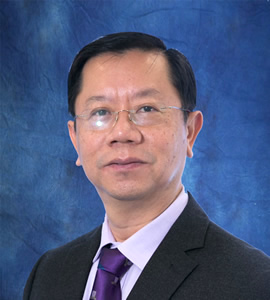 Pheng Ann Heng (王平安)合作论文数Department of Computer Science and Engineering, The Chinese University of Hong Kong2Victor Perez合作论文数1Erwann Millon合作论文数1Will Beddow合作论文数1Xinyue Li合作论文数1Zhen Li合作论文数1Qi Qin合作论文数University of Sydney1Chengzhuo Tong合作论文数1Lirui Zhao合作论文数1Yiwen Tang合作论文数1Zipeng Qin合作论文数1Yiting Lu合作论文数University of Science and Technology of China1Wenze Liu合作论文数School of Artificial Intelligence and Automation, Huazhong University of Science and Technology1Kexin Chen合作论文数1
 Chunyi Li合作论文数1
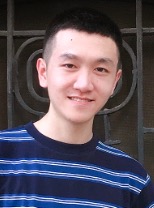 Xu Luo (罗旭)合作论文数Center of Future Media, University of Electronic Science and Technology of China1
 Zehan Wang (王泽寒)合作论文数College of Computer Science, Zhejiang University1
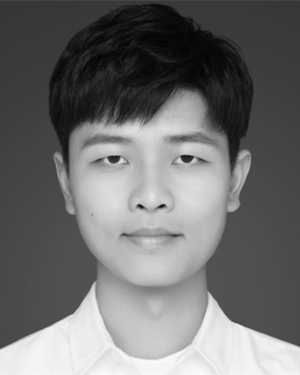 Zijian Chen合作论文数School of Information Science and Engineering, East China University of Science and Technology1
 Dongrui Liu合作论文数John Hopcroft Center for Computer Science, Shanghai Jiao Tong University1
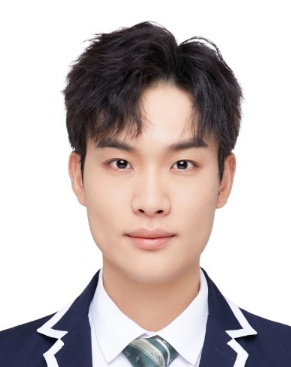 Ziyao (Adonis) Zeng (曾子尧)合作论文数Yale University;University of Pennsylvania Engineering1Bin Fu合作论文数1
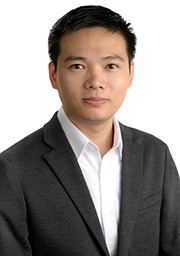 Chang Xu (徐畅)合作论文数School of Computer Science, Faculty of Engineering, The University of Sydney1
 Jing Shao (邵婧)合作论文数SenseTime;Shanghai Jiao Tong University;Nanyang Technological University Singapore1
 Shanghang Zhang (仉尚航)合作论文数Institute for Visual Technology, School of Computer Science, Peking University;Institute for Artificial Intelligence, Peking University1
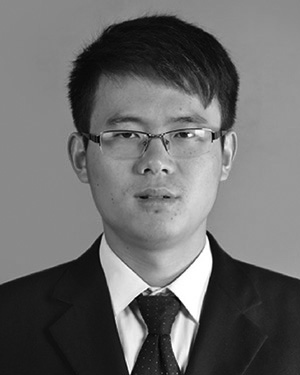 Aojun Zhou (周奥军)合作论文数Department of Electronic Engineering, The Chinese University of Hong Kong1
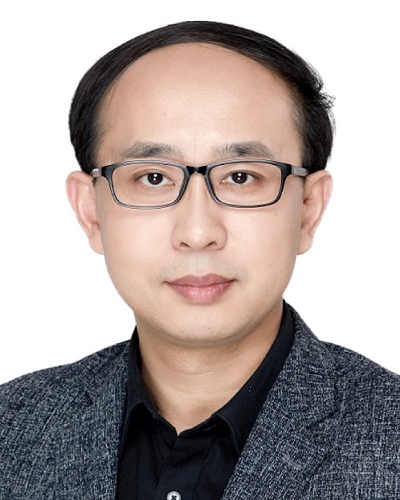 Zhanyu Ma (马占宇)合作论文数PRIS Laboratory, School of Artificial Intelligence, Beijing University of Posts and Telecommunications1
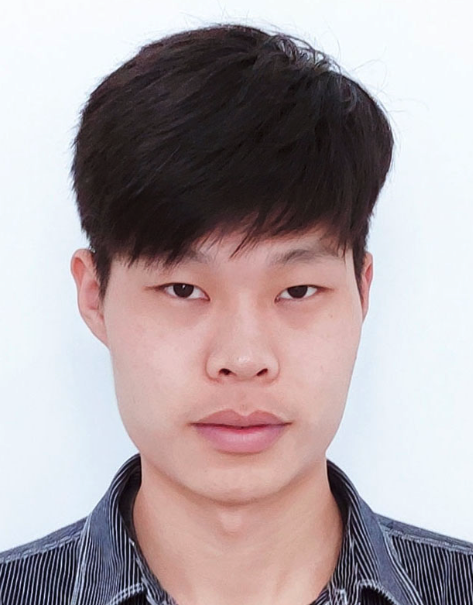 Jiaming Han (韩佳明)合作论文数Multimedia Laboratory, The Chinese University of Hong Kong;Bytedance Seed1
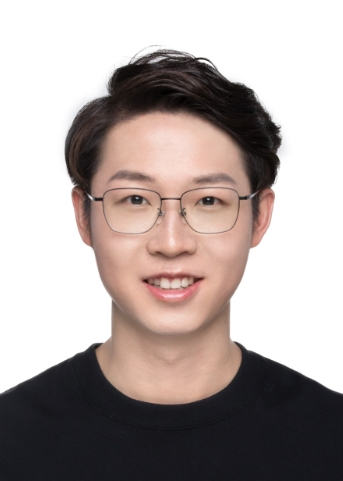 Bo Zhang合作论文数Shanghai Aritifcal Intelligence Laboratory1
 Yangguang Li合作论文数SenseTime/Shanghai Artificial Intelligence Laboratory1
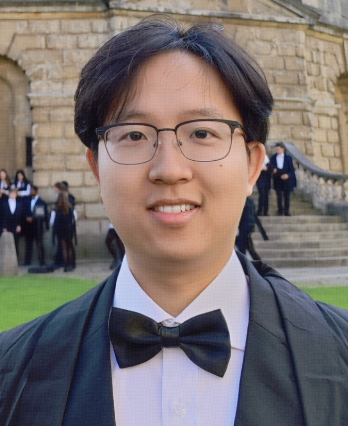 Xianzheng Ma (马宪政)合作论文数Active Vision Laboratory, Department of Engineering Science, University of Oxford1




