NASA’s LCROSS (Lunar Crater Observation and Sensing Satellite) mission was designed to explore the nature of previously detected enhanced levels of hydrogen near the lunar poles. The LCROSS mission impacted the spent upper stage of the launch vehicle into a permanently shadowed region of the lunar surface to create an ejecta plume. The resultant impact crater and plume were then observed by the LCROSS Shepherding Spacecraft as well as a cadre of telescopes on the Earth and in space to determine the nature of the materials contained within the permanently shadowed region. The Shepherding Spacecraft then became a second impactor which was also observed by multiple assets. The LCROSS Observation Campaign was a key component of the LCROSS mission. The goal of the Observation Campaign was to realize the scientific benefits of extending the LCROSS observations to multiple ground and space-based assets. This paper describes the LCROSS Observation Campaign and provides an overview of the Campaign coordination and logistics as well as a summary of the observation techniques utilized at a multitude of observatories. Lessons learned from the LCROSS Observation Campaign are also discussed to assist with the planning of future unique observing events.
In the cm-wavelength range, an extraterrestrial electromagnetic narrow band (sine wave) beacon is an excellent choice to get alien attention across interstellar distances because 1) it is not strongly affected by interstellar / interplanetary dispersion or scattering, and 2) searching for narrowband signals is computationally efficient (scales as Ns log(Ns) where Ns = number of voltage samples). Here we consider a special case wideband signal where two or more delayed copies of the same signal are transmitted over the same frequency and bandwidth, with the result that ISM dispersion and scattering cancel out during the detection stage. Such a signal is both a good beacon (easy to find) and carries arbitrarily large information rate (limited only by the atmospheric transparency to about 10 GHz). The discovery process uses an autocorrelation algorithm, and we outline a compute scheme where the beacon discovery search can be accomplished with only 2x the processing of a conventional sine wave search, and discuss signal to background response for sighting the beacon. Once the beacon is discovered, the focus turns to information extraction. Information extraction requires similar processing as for generic wideband signal searches, but since we have already identified the beacon, the efficiency of information extraction is negligible.
The Search for ExtraTerrestrial Intelligence (SETI) finally has its own full-time telescope. The Allen telescope array (ATA) in Northern California was dedicated on October 11, 2007. This array, which will eventually be composed of 350 small radio antennas, each 6.1m in diameter, is being built as a partnership between the SETI Institute and the University of California Radio Astronomy Laboratory. Last October, Paul G. Allen (who provided the funds for the technology development and the first phase of array construction) pushed a silver button and all 42 antennas of the current ATA-42 slewed to point in the direction of the distant galaxy M81. Specialized electronic backend detectors attached to the ATA began making a radio map of that galaxy and simultaneously began SETI observations of HIP48573, a G5V star near M81 on the sky and a distance of 264 light years from Earth. The Allen telescope array will greatly improve the speed of conducting SETI searches over the next few decades, and it will allow a suite of different search strategies to be undertaken. This paper summarizes some of the earliest SETI observations from the array, and describes the search strategies currently being planned.
The Allen Telescope Array (ATA) at the Hat Creek Radio Observatory (HCRO) is a wide‐field panchromatic radio telescope currently consisting of 42 offset‐Gregorian antennas each with a 6 m aperture, with plans to expand the array to 350 antennas. Through unique back‐end hardware, the ATA performs real‐time wideband beamforming with independent subarray capabilities and customizable beam shaping. The beamformers enable science observations requiring the full gain of the array, time domain (nonintegrated) output, and interference excision or orthogonal beamsets. In this paper we report on the design of this beamformer, including architecture and experimental results. Furthermore, we address some practical considerations in large‐N wideband beamformers implemented on field programmable gate array platforms, including device utilization, methods of calibration and control, and interchip synchronization.
The Allen Telescope Array (ATA) is a cm-wave interferometer in California, comprising 42 antenna elements with 6-m diameter dishes. We characterize the antenna optical accuracy using two-antenna interferometry and radio holography. The distortion of each telescope relative to the average is small, with RMS differences of 1% of beam peak value. Holography provides images of dish illumination, characterizing as-built mirror surfaces. Maximal distortions across ~ 2 meter lengths appear to result from mounting stresses or solar radiation. Experimental RMS errors are 0.7 mm at night and 3 mm under worst-case solar illumination. For frequencies 4, 10, and 15 GHz, the nighttime values indicate sensitivity losses of 1, 10 and 20%, respectively. ATA's wide-bandwidth receiver permits observations over a continuous range 0.5-11.2 GHz. We probe the antenna optical gain and beam pattern stability as a function of focus position and observation frequency, concluding that ATA can produce high fidelity images over a decade of simultaneous observation frequencies. We quantify solar heating effects on antenna sensitivity and pointing accuracy. We find that during the day, observations >;5 GHz will suffer some sensitivity loss and it may be necessary to make antenna pointing corrections on a 1-2 hourly basis.
The story of NASA and SETI begins with John Billingham, whose chapter (most appropriately) precedes mine. John was an RAF physician who worked on the Apollo missions to the moon, and came to the Life Sciences division at NASA Ames research center in Mountain View, CA. There, he became interested in SETI. In 1970, he invited Barney Oliver, then Vice President of Research and Development at Hewlett Packard, to head up a summer engineering study called Project Cyclops. The goal of Project Cyclops was to design a system to detect Earth-level technology at a distance of 1000 light years.
We present the Allen Telescope Array Twenty-centimeter Survey (ATATS), a multi-epoch (12 visits), 690 square degree radio image and catalog at 1.4GHz. The survey is designed to detect rare, very bright transients as well as to verify the capabilities of the ATA to form large mosaics. The combined image using data from all 12 ATATS epochs has RMS noise sigma = 3.94mJy / beam and dynamic range 180, with a circular beam of 150 arcsec FWHM. It contains 4408 sources to a limiting sensitivity of S = 20 mJy / beam. We compare the catalog generated from this 12-epoch combined image to the NRAO VLA Sky Survey (NVSS), a legacy survey at the same frequency, and find that we can measure source positions to better than ~20 arcsec. For sources above the ATATS completeness limit, the median flux density is 97% of the median value for matched NVSS sources, indicative of an accurate overall flux calibration. We examine the effects of source confusion due to the effects of differing resolution between ATATS and NVSS on our ability to compare flux densities. We detect no transients at flux densities greater than 40 mJy in comparison with NVSS, and place a 2-sigma upper limit on the transient rate for such sources of 0.004 per square degree. These results suggest that the > 1 Jy transients reported by Matsumura et al. (2009) may not be true transients, but rather variable sources at their flux density threshold.
The Pi GHz Sky Survey (PiGSS) is a key project of the Allen Telescope Array. PiGSS is a 3.1 GHz survey of radio continuum emission in the extragalactic sky with an emphasis on synoptic observations that measure the static and time-variable properties of the sky. During the 2.5-year campaign, PiGSS will twice observe ~250,000 radio sources in the 10,000 deg^2 region of the sky with b > 30 deg to an rms sensitivity of ~1 mJy. Additionally, sub-regions of the sky will be observed multiple times to characterize variability on time scales of days to years. We present here observations of a 10 deg^2 region in the Bootes constellation overlapping the NOAO Deep Wide Field Survey field. The PiGSS image was constructed from 75 daily observations distributed over a 4-month period and has an rms flux density between 200 and 250 microJy. This represents a deeper image by a factor of 4 to 8 than we will achieve over the entire 10,000 deg^2. We provide flux densities, source sizes, and spectral indices for the 425 sources detected in the image. We identify ~100$ new flat spectrum radio sources; we project that when completed PiGSS will identify 10^4 flat spectrum sources. We identify one source that is a possible transient radio source. This survey provides new limits on faint radio transients and variables with characteristic durations of months.
The 1959 Nature article by Giuseppe Cocconi and Phil Morrison(1) provided the theoretical underpinnings for SETI, accompanied in 1960 by Project Ozma(2), the first radio search for signals by Frank Drake at the National Radio Astronomy Observatory (NRAO). Well over 100 search programs have been conducted since that time, primarily at radio and optical wavelengths, (see www.seti.org/searcharchives) without any successful signal detection. Some have suggested that this means humans are alone in the cosmos. But that is far too strong a conclusion to draw from far too small an observational sampling. Instead of concluding that intelligent life on Earth is unique, it is more appropriate to note that in 50 years our ability to search for electromagnetic signals has improved by at least 14 orders of magnitude and that these improvements are still occurring at an exponential rate. At the SETI Institute we are in the process of re-inventing the way we search in order to fully utilize these technological enhancements. We are now building the setiQuest community and we intend to get the world involved in making our searches better. We need to find ways to harness the intelligence of all Earthlings in order to better seek out extraterrestrial intelligence. If we do it right, we just might succeed, and we might also change how we see ourselves, and make our own world a better place.
Peter Backus – SETI Institute Samantha Blair – SETI Institute Jim Cordes – Cornell University Gerald Harp – SETI Institute Richard Conn Henry – Johns Hopkins University Paul Horowitz – Harvard University Andrew W. Howard – Space Sciences Lab, UC Berkeley Tom Kilsdonk – SETI Institute Eric J. Korpela – Space Sciences Lab, UC Berkeley Joseph Lazio – Naval Research Lab Steven Levin – JPL G. Seth Shostak – SETI Institute Dan Werthimer – Space Sciences Lab, UC Berkeley
ACKNOWLEDGMENT The first phase of the ATA was funded through generous grants from the Paul G. Allen Family Foundation. UC Berkeley, the SETI Institute, the National Science Foundation (Grant No. 0540599), Sun Microsystems, Xilinx, Nathan Myhrvold, Greg Papadopoulos, and other corporations and individual donors contributed additional funding. ALLEN TELESCOPE ARRAY The ATA is a joint effort of the SETI Institute and the U.C. Berkeley Radio Astronomy Lab. Ultimately, the array will consist of 350 6-meter dishes with sensitivity equivalent to a 114-meter dish and the resolution of a 700 meter dish. The initial configuration of the array consists of 42 dishes spanning an area of 320 by 200 meters, with the sensitivity of a 40 meter dish. The array has four independent 100 MHz wide RF/IF systems tunable anywhere within the receiver bandwidth from 0.5 to 11.2 GHz. There are two imaging correlators and two dual-polarization phased array beams for radio astronomy and SETI observations. A third correlator and beam are under construction. A large number of relatively small dishes provide a wide field of view and good U-V coverage with obvious advantages for imaging and radio surveys. There are also advantages for SETI observations in terms of RFI mitigation and increased telescope time through commensal (piggy-back) observing.
The first 42 elements of the Allen Telescope Array (ATA-42) are beginning to deliver data at the Hat Creek Radio Observatory in northern California. Scientists and engineers are actively exploiting all of the flexibility designed into this innovative instrument for simultaneously conducting surveys of the astrophysical sky and conducting searches for distant technological civilizations. This paper summarizes the design elements of the ATA, the cost savings made possible by the use of commercial off-the-shelf components, and the cost/performance tradeoffs that eventually enabled this first snapshot radio camera. The fundamental scientific program of this new telescope is varied and exciting; some of the first astronomical results will be discussed.
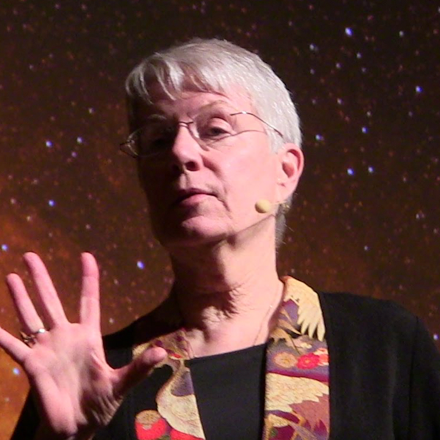 Jill Tarter合作论文数Center for SETI Research, SETI Institute21
 G. Harp合作论文数ohio university16
 Tom Kilsdonk合作论文数16Jane Jordan合作论文数11John Dreher合作论文数10
 Seth Shostak合作论文数10
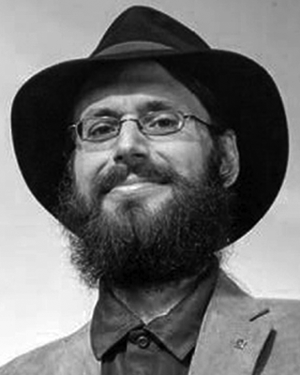 William C. Barott合作论文数9John Ross合作论文数8Matt Dexter合作论文数Department of Astronomy, University of California, Berkeley7J. R. Forster合作论文数7Oren Milgrome合作论文数7Robert Ackermann合作论文数7
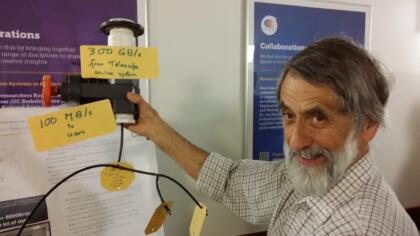 Melvyn Wright合作论文数Department of Astronomy, University of California, Berkeley6
 Dan Werthimer合作论文数Department of Astronomy, University of California, Berkeley6
 Geoffrey Bower (包傑夫)合作论文数Institute of Astronomy and Astrophysics, Academia Sinica6Shannon Atkinson合作论文数6Leo Blitz合作论文数6Tucker Bradford合作论文数6Colby Gutierrez-Kraybill合作论文数6Karen Randall合作论文数6Calvin Cheng合作论文数6
 Samantha Blair合作论文数6Garrett A Keating合作论文数6Susanne Jorgensen合作论文数6Tom Pierson合作论文数6Lynn Urry合作论文数6Douglas Thornton合作论文数6Greg Engargiola合作论文数6tamara toby helfer合作论文数6John Lugten合作论文数6J. van Leeuwen合作论文数5Michael Davis合作论文数5Steve Croft合作论文数Department of Astronomy, University of California, Berkeley5
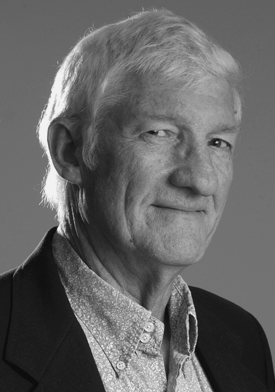 Jack Welch合作论文数5Dave Macmahon合作论文数5Rob Ackermann合作论文数5Dave Deboer合作论文数5Matt Fleming合作论文数5
 Niklas Wadefalk合作论文数JPL/Caltech5Ed Fields合作论文数5Artyom Vitouchkine合作论文数5Chris Cork合作论文数5Ken Smolek合作论文数5David Whysong合作论文数4douglas c j bock合作论文数4
 Andrew Siemion合作论文数Berkeley SETI Research Center;Department of Astronomy, University of California, Berkeley4
 Peter McMahon合作论文数School of Applied and Engineering Physics, College of Engineering, Cornell University4
 Casey J Law合作论文数Cahill Center for Astronomy and Astrophysics & Owens Valley Radio Observatory, Caltech4
 Peter K. G. Williams合作论文数Harvard-Smithsonian Center for Astrophysics4




