The Allen Telescope Array (ATA) is a cm-wave interferometer in California, comprising 42 antenna elements with 6-m diameter dishes. We characterize the antenna optical accuracy using two-antenna interferometry and radio holography. The distortion of each telescope relative to the average is small, with RMS differences of 1% of beam peak value. Holography provides images of dish illumination, characterizing as-built mirror surfaces. Maximal distortions across ~ 2 meter lengths appear to result from mounting stresses or solar radiation. Experimental RMS errors are 0.7 mm at night and 3 mm under worst-case solar illumination. For frequencies 4, 10, and 15 GHz, the nighttime values indicate sensitivity losses of 1, 10 and 20%, respectively. ATA's wide-bandwidth receiver permits observations over a continuous range 0.5-11.2 GHz. We probe the antenna optical gain and beam pattern stability as a function of focus position and observation frequency, concluding that ATA can produce high fidelity images over a decade of simultaneous observation frequencies. We quantify solar heating effects on antenna sensitivity and pointing accuracy. We find that during the day, observations >;5 GHz will suffer some sensitivity loss and it may be necessary to make antenna pointing corrections on a 1-2 hourly basis.
We present the Allen Telescope Array Twenty-centimeter Survey (ATATS), a multi-epoch (12 visits), 690 square degree radio image and catalog at 1.4GHz. The survey is designed to detect rare, very bright transients as well as to verify the capabilities of the ATA to form large mosaics. The combined image using data from all 12 ATATS epochs has RMS noise sigma = 3.94mJy / beam and dynamic range 180, with a circular beam of 150 arcsec FWHM. It contains 4408 sources to a limiting sensitivity of S = 20 mJy / beam. We compare the catalog generated from this 12-epoch combined image to the NRAO VLA Sky Survey (NVSS), a legacy survey at the same frequency, and find that we can measure source positions to better than ~20 arcsec. For sources above the ATATS completeness limit, the median flux density is 97% of the median value for matched NVSS sources, indicative of an accurate overall flux calibration. We examine the effects of source confusion due to the effects of differing resolution between ATATS and NVSS on our ability to compare flux densities. We detect no transients at flux densities greater than 40 mJy in comparison with NVSS, and place a 2-sigma upper limit on the transient rate for such sources of 0.004 per square degree. These results suggest that the > 1 Jy transients reported by Matsumura et al. (2009) may not be true transients, but rather variable sources at their flux density threshold.
The Pi GHz Sky Survey (PiGSS) is a key project of the Allen Telescope Array. PiGSS is a 3.1 GHz survey of radio continuum emission in the extragalactic sky with an emphasis on synoptic observations that measure the static and time-variable properties of the sky. During the 2.5-year campaign, PiGSS will twice observe ~250,000 radio sources in the 10,000 deg^2 region of the sky with b > 30 deg to an rms sensitivity of ~1 mJy. Additionally, sub-regions of the sky will be observed multiple times to characterize variability on time scales of days to years. We present here observations of a 10 deg^2 region in the Bootes constellation overlapping the NOAO Deep Wide Field Survey field. The PiGSS image was constructed from 75 daily observations distributed over a 4-month period and has an rms flux density between 200 and 250 microJy. This represents a deeper image by a factor of 4 to 8 than we will achieve over the entire 10,000 deg^2. We provide flux densities, source sizes, and spectral indices for the 425 sources detected in the image. We identify ~100$ new flat spectrum radio sources; we project that when completed PiGSS will identify 10^4 flat spectrum sources. We identify one source that is a possible transient radio source. This survey provides new limits on faint radio transients and variables with characteristic durations of months.
The first 42 elements of the Allen Telescope Array (ATA-42) are beginning to deliver data at the Hat Creek Radio Observatory in northern California. Scientists and engineers are actively exploiting all of the flexibility designed into this innovative instrument for simultaneously conducting surveys of the astrophysical sky and conducting searches for distant technological civilizations. This paper summarizes the design elements of the ATA, the cost savings made possible by the use of commercial off-the-shelf components, and the cost/performance tradeoffs that eventually enabled this first snapshot radio camera. The fundamental scientific program of this new telescope is varied and exciting; some of the first astronomical results will be discussed.
 Steve Croft合作论文数Department of Astronomy, University of California, Berkeley8Leo Blitz合作论文数8John Ross合作论文数8Tucker Bradford合作论文数8Colby Gutierrez-Kraybill合作论文数8Jane Jordan合作论文数8Tom Kilsdonk合作论文数8
 Peter K. G. Williams合作论文数Harvard-Smithsonian Center for Astrophysics8Garrett A Keating合作论文数8Lynn Urry合作论文数8Greg Engargiola合作论文数8
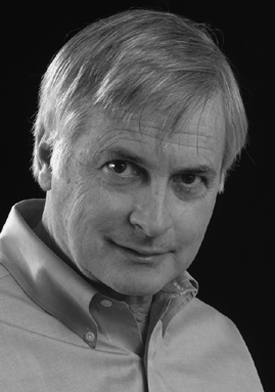 Seth Shostak合作论文数8
 Dan Werthimer合作论文数Department of Astronomy, University of California, Berkeley7Matt Dexter合作论文数Department of Astronomy, University of California, Berkeley7
 Geoffrey Bower (包傑夫)合作论文数Institute of Astronomy and Astrophysics, Academia Sinica7Shannon Atkinson合作论文数7
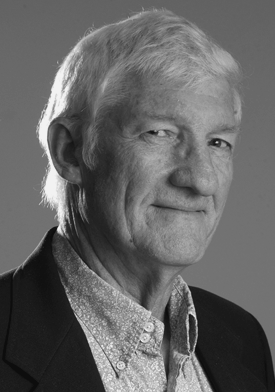 Jack Welch合作论文数7Dave Macmahon合作论文数7
 G. Harp合作论文数ohio university7Karen Randall合作论文数7Calvin Cheng合作论文数7
 Niklas Wadefalk合作论文数JPL/Caltech7Ed Fields合作论文数7J. R. Forster合作论文数7
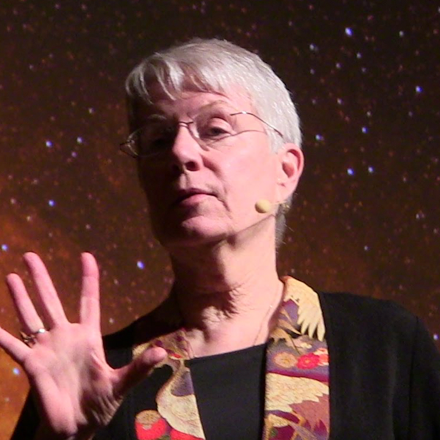 Jill Tarter合作论文数Center for SETI Research, SETI Institute7Peter Backus合作论文数7Susanne Jorgensen合作论文数7Oren Milgrome合作论文数7Artyom Vitouchkine合作论文数7Douglas Thornton合作论文数7John Dreher合作论文数7tamara toby helfer合作论文数7John Lugten合作论文数7J. van Leeuwen合作论文数6
 Andrew Siemion合作论文数Berkeley SETI Research Center;Department of Astronomy, University of California, Berkeley6
 Peter McMahon合作论文数School of Applied and Engineering Physics, College of Engineering, Cornell University6
 Casey J Law合作论文数Cahill Center for Astronomy and Astrophysics & Owens Valley Radio Observatory, Caltech6Dave Deboer合作论文数6Matt Fleming合作论文数6
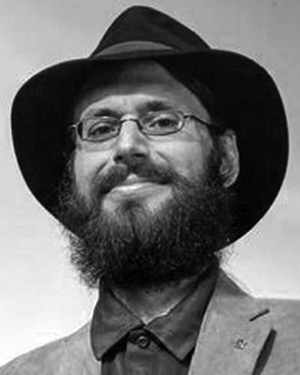 William C. Barott合作论文数6Amber Bauermeister合作论文数6Chris Cork合作论文数6Ken Smolek合作论文数6Chat Hull合作论文数5David Whysong合作论文数5douglas c j bock合作论文数5
 Melvyn Wright合作论文数Department of Astronomy, University of California, Berkeley5Don Backer合作论文数5Mike Davis合作论文数4




