Life histories are how organisms grow, survive, and reproduce over time. Organisms face many trade-offs between growing, surviving, and reproducing. These trade-offs are key to understanding the diversity of life histories in the world. Growing for a longer time requires later reproduction. Growing faster or reproducing at a higher rate generally decreases survival. Within reproduction, organisms face a trade-off between the number and size of offspring they can produce. Predation risk interacts with all elements of life histories since the behaviors needed for greater growth or reproduction generally lead to greater predation risk. Experiments, and situations resembling experiments, confirm the importance of predators to the evolution of life histories.
Urban areas are densely populated with humans and have a high proportion of impervious surfaces that form our shelters and roadways. Animals adjust many aspects of their lives to live in cities and near humans, especially their behaviour. Predator escape behaviour is an important aspect of behaviour because avoiding predation is essential for future fitness. We examined the escape behaviour of lizards in an ancient town (Taormina, Sicily, Italy) made of concrete and stone compared to lizards in a nearby undeveloped area on a volcano (Mt. Etna, Sicily, Italy). We also considered if refuge distance, temperature, and substrate type affected their escape decisions. Lizards in the town started from positions farther from refuge and allowed much closer approaches before fleeing from an approaching human. Town lizards were less likely to flee into the closest refuge and stopped fleeing outside of a refuge 30% of the time. Lizards in the town faced a wider variety of substrates and temperatures than lizards outside the town, yet any effects of substrate or temperature on fleeing decisions were secondary to the effect of site. Our results suggest that lizards living with humans in urban areas face substantially different ecological and environmental pressures that result in more bold and variable behaviour than lizards living in nearby non-urban areas.
Island taxa are frequently susceptible to introduced predators. This susceptibility is thought to be caused by the loss of key ancestral antipredator physiological adaptations during long periods of evolution under reduced predation pressures. Here, we test the hypothesis that island species have reduced locomotor abilities. While locomotor abilities are critical for escaping predation, little is known on how the presence of different types of native predators influences these abilities by maintaining selective pressure. To fill this gap, we documented sprint speed in the Aegean wall lizard (Podarcis erhardii) from the Aegean islands (Greece) with varying levels of predation pressure. We show that lizards from islands where mammalian predators were present sprinted fastest. Lizards sprinted at an intermediate speed where predators other than mammals were present, and lizards sprinted slowest on islands where no predators were present. Longer periods of evolutionary isolation in island environments were also associated with diminished sprinting speeds. These results indicate that lizards from the lowest-predation islands are the most vulnerable and preventing the introduction of invasive predators should be prioritized for these island systems.
While global patterns in body size evolution in island vertebrates have been described extensively, the ecological processes that generate these patterns are not well understood. Here we used variation among lizard populations occupying an archipelago to test hypotheses about body size evolution. We examined 35 populations of Aegean wall lizards ( Podarcis erhardii , Lacertidae), a species widely distributed across the Balkan mainland and hundreds of Aegean islands. We evaluated measures of resource availability (island area and seabird density), intraspecific competition (lizard abundance) and predation risk (presence of rats, carnivorous mammals, vipers, and birds of prey) as possible factors affecting lizard body size. Lizard body size increased with island size overall, as well as with seabird colony density, suggesting a role for increased food resources and especially seabird subsidies in the evolution of body size. Lizards were larger where lizard population density was higher, suggesting a possible role for intraspecific competition in the evolution of body size. In our sample, rats, carnivorous mammals, and vipers did not have obvious effects on lizard body size, and lizards were smaller on islands with resident birds of prey. Males were larger than females on average, yet sexual dimorphism did not vary consistently with measures of resource availability and competition. Overall, our results suggest that local resource levels predict population density and body size in these lizards, and that nesting seabirds in particular can substantially affect lizard body size.
Eldridge S. Adams, Stephen C. Adolph, Bart Adriaenssens, Ça glar Akçay, Erol Akçay, C. J. Amlaner, Jr, J. R. Anderson, Rindy C. Anderson, M. Apollonio, Christopher Warren Appelt, K. E. Arnold, Gareth Arnott, Lucy Asher, Mark Asplen, Thierry Aubin, Jesús Miguel Avilés, Gwendolyn C. Bachman, Patricia R. Y. Backwell, B. Baer, V. Baglione, Nathan W. Bailey, Myron C. Baker, Karen Bales, Barbara Ballentine, Thorsten Balsby, Colleen A. Barber, Kim A. Bard, Paul Bardunias, Zoltan Barta, Ludek Bartos, P. W. Bateman, Lucy Bates, Melissa Bateson, Raymond T. Bauer, Alexander Taylor Baugh, William M. Baum, Luis M. Bautista, Christopher David Beatty, Guy Beauchamp, Christa Beckmann, James Bednarz, Peter A. Bednekoff, Mark A. Bee, Brianne A. Beisner, Alison Bell, Lauryn Benedict, Fred B. Bercovitch, Patrick Bergeron, SusanM. Bertram,Werner Bessei, Robert Biegler, EmmaM. Birdsey, D. Biro, A. Bisazza, Pierre Bize, Sean Blamires, Bronwyn Heather Bleakley, Daniel T. Blumstein, KirstenM. Bohn, Sue Boinski, Eddie Bokkers, Veronika Bokony, Elisabeth Bolund, Giuseppe Boncoraglio, Neeltje Boogert, Seth Bordenstein, Renee M. Borges, Nick Bos, Carlos Andrés Botero, Sandra Bouwhuis, Ryan Boyko, Alice Boyle, Sarah T. Boysen, Victoria A. Braithwaite, Juliane Bräuer, Michael D. Breed, Thomas Breithaupt, Lauren Brent, Casper Johannes Breuker, M. Briffa, A. Brodin, Alison K. Brody, John Brookfield, Culum Brown, Grant E. Brown, J. S. Brown, Mark J. F. Brown, Henrik Brumm, Katherine L. Buchanan, Sergey Budaev, Christina D. Buesching, Thomas Bugnyar, C. M. Bull, Melissa Burns-Cusato, Theresa M Burt de Perera, John A. Byers, Richard Byrne, Nancy G. Caine, François Calatayud, Michael Caldwell, Stuart Campbell, Daniela Canestrari, Michael A. Cant, Gonçalo Cardoso, C. Carere, Patricia Carrera, Toby Carter, Paulyn Cartwright, J. Casas, Sergio Castellano, C. K. Catchpole, Andrea Cavagna, Sonia Cavigelli, Francisco Ceacero, Ben Chapman, Colin A. Chapman, J. W. Chapman, Nadine C. Chapman, Mark Chappell, Gloriana Chaverri, K. Cheng, M. I. Cherry, Andre Chiaradia, Chen Chiu, Douglas Patrick Chivers, Janne Winther Christensen, Parry Clarke, Reginald Cocroft, Edward A. Codling, Blaine J. Cole, Kristine Coleman, Ross Antony Coleman, T. S. Collett, Lisa Collins, Steven Cooke, Timothy Coppack, Rickey Cothran, Sheena Cotter, P. A. Cotton, Jeremy Chase Crawford, Scott Creel, Sylvia Cremer, Daniel A. Cristol, Davide Csermely, Elena Cunningham, E. Curio, Robert L. Curry, Marco Dadda, James Dale, Sarah Dalesman, Safi K. Darden, Morgan David, Marian S. Dawkins, Amy Elizabeth Deacon, Richard B. D’Eath, Dominic Demma, Julie K. Desjardins, Patrizia D’Ettorre, Cédric Devigne, Shannon M. Digweed, Lobke Dillen, Niels Jeroen Dingemanse, John Dittami, Tobias Dittmann, Ned A. Dochtermann, Robert J. Dooling, Reuven Dukas, Robin I. M. Dunbar, Alan John Duncan, Aimee S. Dunlap, Fabienne Dupuy, Kristina Durante, Audrey Dussutour, Emily Halsey DuVal, M. L. Dyson, Teresa L. Dzieweczynski, Ryan Earley, Perri Eason, Luis Ebensperger, Martin Edvardsson, Sandra Edwards, Marcel Eens, Bernd Egger, Damian Octavio Elias, R. W. Elwood, Patrick Emery, MelissaEmeryThompson, LeifEngqvist,ClaudeEveraerts, BonnieFairbanks,Xavier Fauvergue,TimFawcett,KenFedorka,DavidRussell Feinberg, Michael H. Ferkin, Florencia Fernandez Campon, Esteban Fernández-Juricic, Marco Festa-Bianchet, Julia Fischer, Patrick Fitze, Lauren Patricia Fitzsimmons, Leo J. Fleishman, Gaunet Florence, Tom Flower, Jim Fogleman, Elisabet Forsgren, Anders Forsman, W. Forstmeier, Rebecca Fox, Dorothy Fragaszy, Daniel W. Franks, Nigel R. Franks, Orlaith N. Fraser, Megan E. Frederickson, Todd M. Freeberg, Leonard Freed, Rafael Freire, Alejandro Frid, Cecile Fruteau, Jean-Michel Gaillard, Brian Gall, Ismael Galván, G. Gamberale-Stille, Robert J. Gegear, F. Gherardi, Megan Elizabeth Gibbons, Robert M. Gibson, Phillip Gienapp, Lynne B. Gilbert-Norton, Ian Christopher Gilby, Jason Scott Gilchrist, Andrew Gill, Luc-Alain Giraldeau, Jean-Guy Godin, Brendan Godley, Eben Bowditch Goodale, Sarah Goodwin, Marlene Goubault, Wolfgang Goymann, Jacqualine Grant, J. A. Graves, David A. Gray, Michael J. Greene, Emma Greig, Gerhard Gries, Andrea Sigride Griffin, S. C. Griffith,MatteoGriggio, Uri Grodzinski, T. G. G. Groothuis, Rick Grosberg, C. Groves,Michael DavidGumert, Noëlle Gunst, Darryl T. Gwynne, Marcel Philipp Haesler, Adrian Hailey, Tim Hain, Wouter Halfwerk, Ally Rachel Harari, Ian C. W. Hardy, Brian Hare, James F. Hare, LaurenAlixHarrington, RichardHarrison, Christopher Harshaw,Mark E. Hauber,M. Hausberger, DanaM.Hawley, LorenHayes, Brian A. Hazlett, Susan Healy, Eileen A. Hebets, Michael Heithaus, Heikki Helanterä, S. Held, Fabrice Helfenstein, E. Elizabeth Henderson, Justin Henningsen, Ian Henshaw, S. P. Henzi, Frank H. Heppner, M. E. Herberstein, James Herbert-Read, Denise L. Herzing, James P. Higham, Heather M. M. Hill, Peggy S. M. Hill, R. A. Hill, Edna Hillmann, Ben T. Hirsch, Katharina Hirschenhauser, S. Hochscheid, Dieter Hochuli, J. K. Hodges, Walter Hödl, GerlindeHoebel,DavidHof,ChristyHoffman,A.Hoikkala, J.Höjesjö,ThomasHolmes, JohnL.Hoogland, LydiaHopper,WilliamJohnEdwardHoppitt, Andrew G. Horn, Richard D. Howard, Yuying Hsu, Robert Hubrecht, Raymond Huey, M. A. Huffman, Melissa Hughes, William Hughes, Sarah C. Humfeld, James H. Hunt, Anya E. Illes, Robert R. Jackson, Alain Jacot, Rodolfo Jaffé Ribbi, Elizabeth M. Jakob, Patrick A. Jansen, Arne Janssen, Jodie Jawor, Stephen H. Jenkins, Dómhnall John Jennings, Chris Jiggins, Christine M. Johnson, Magnus L. Johnson, Katherine Ann Jones, Veijo T. Jormalainen, Christian Jost, Timothy M. Judd, Kevin Andrew Judge, Peter G. Judge, A. Kaitala, Allan Kalueff, Nicholas Andreas Kamenos, Claudia Kasper, Martin Kavaliers, Christine Keefe, A. Kelber, Jennifer Kelley, Katrin Kellner, Clint D. Kelly, R. E. Kenward, Kiyoshi Kikuchi, R. M. Kilner, Andrew J. King, Silke Kipper, Sonia M. Kleindorfer, Markus Knaden, Mirjam Knörnschild, Hiroki Koda, H. Kokko, Gyula Koppany Gajdon, Lee Koren, Vladimir Kovalzon, Alan Krakauer, Indrikis Krams, Nina Kraus, Sarah Elizabeth Ksiazek, Rolf Kümmerli, Hansjoerg Paul Kunc, Shannon Kundey, Nobuyuki Kutsukake, Charlotta Kvarnemo, Toni Laaksonen, Eileen A. Lacey, Kirk E. LaGory, Mark Erik Laidre, Simon Lailvaux, Paola Laiolo, Joanna Lambert, Jeffrey Lane, Jan Langbein, John Emerson Layne, Stephen E. G. Lea, David Leavens, P. C. Lee, Esa Lehikoinen, A. Lenoir, Anne Leonard, Janet L. Leonard, Erin Hoerl Leone, Katherine LeVan, F. Liechti, Hangkyo Lim, Steven L. Lima, Bente Limmer, Carita Lindstedt, Susan Lingle, Heather Elizabeth Mostman Liwanag, Anne Lizé,
Trade-offs occur when two good things cannot be maximized at once. In animal behavior, trade-offs have long been studied, but the term trade-off became widespread later as studying fitness costs and benefits in animal behavior was developed into the field of behavioral ecology. This article examines trade-offs with predation risk in behavioral ecology. I will explore how predation risk was incorporated into the study of foraging behavior, illustrate trade-offs between reproduction and predation risk, and examine some reasons why trade-offs with predation risk are common. I also argue that animals act to reduce the consequences of trade-offs when they can.
Previous articleNext article No AccessZoologyZebra Stripes. By Tim Caro. Chicago (Illinois): University of Chicago Press. $45.00. xviii + 268 p. + 31 p.; ill.; index. ISBN: 978-0-226-41101-9 (hc); 978-0-226-41115-6 (eb). 2016.Peter A. BednekoffPeter A. BednekoffBiology, Eastern Michigan University, Ypsilanti, Michigan Search for more articles by this author Biology, Eastern Michigan University, Ypsilanti, MichiganPDFPDF PLUSFull Text Add to favoritesDownload CitationTrack CitationsPermissionsReprints Share onFacebookTwitterLinkedInRedditEmail SectionsMoreDetailsFiguresReferencesCited by The Quarterly Review of Biology Volume 92, Number 4December 2017 Published in association with Stony Brook University Article DOIhttps://doi.org/10.1086/694999 Views: 26Total views on this site For permission to reuse, please contact [email protected]PDF download Crossref reports no articles citing this article.
Exotic predators have driven the extinction of many island species. We examined impacts of feral cats on the abundance and anti-predator behaviours of Aegean wall lizards in the Cyclades (Greece), where cats were introduced thousands of years ago. We compared populations with high and low cat density on Naxos Island and populations on surrounding islets with no cats. Cats reduced wall lizard populations by half. Lizards facing greater risk from cats stayed closer to refuges, were more likely to shed their tails in a standardized assay, and fled at greater distances when approached by either a person in the field or a mounted cat decoy in the laboratory. All populations showed phenotypic plasticity in flight initiation distance, suggesting that this feature is ancient and could have helped wall lizards survive the initial introduction of cats to the region. Lizards from islets sought shelter less frequently and often initially approached the cat decoy. These differences reflect changes since islet isolation and could render islet lizards strongly susceptible to cat predation.
Organisms generally have many defenses against predation, yet may lack effective defenses if from populations without predators. Evolutionary theory predicts that "costly" antipredator behaviors will be selected against when predation risk diminishes. We examined antipredator behaviors in Aegean wall lizards, Podarcis erhardii, across an archipelago of land-bridge islands that vary in predator diversity and period of isolation. We examined two defenses, flight initiation distance and tail autotomy. Flight initiation distance generally decreased with declining predator diversity. All predator types had distinctive effects on flight initiation distance with mammals and birds having the largest estimated effects. Rates of autotomy observed in the field were highest on predator-free islands, yet laboratory-induced autotomy increased linearly with overall predator diversity. Against expectation from previous work, tail autotomy was not explained solely by the presence of vipers. Analyses of populations directly isolated from rich predator communities revealed that flight initiation distance decreased with increased duration of isolation in addition to the effects of current predator diversity, whereas tail autotomy could be explained simply by current predator diversity. Although selection against costly defenses should depend on time with reduced threats, different defenses may diminish along different trajectories even within the same predator-prey system.
Previous articleNext article No AccessReviews and Brief NoticesAnimal Behavior: An Evolutionary Approach. Edited by Victor S. Lamoureux. Ontario (Canada): Apple Academic Press. $99.95. 320 p.; ill.; index. ISBN: 978-1-926692-78-4. 2011. Animal Behavior: An Evolutionary Approach. Tenth Edition. By John Alcock. Sunderland (Massachusetts): Sinauer Associates. $89.95 (paper). xvii + 522 p.; ill.; index. ISBN: 978-0-87893-966-4. 2013.Peter A. BednekoffPeter A. BednekoffBiology, Eastern Michigan University, Ypsilanti, Michigan Search for more articles by this author PDFPDF PLUSFull Text Add to favoritesDownload CitationTrack CitationsPermissionsReprints Share onFacebookTwitterLinkedInRedditEmail SectionsMoreDetailsFiguresReferencesCited by The Quarterly Review of Biology Volume 89, Number 2June 2014 Published in association with Stony Brook University Article DOIhttps://doi.org/10.1086/676074 Views: 96Total views on this site Copyright © 2014 by The University of Chicago Press. All rights reserved.PDF download Crossref reports no articles citing this article.
Clark's nutcrackers, Nucifraga columbiana, cache and recover stored seeds in high alpine areas including areas where snowfall, wind, and rockslides may frequently obscure or alter cues near the cache site. Previous work in the laboratory has established that Clark's nutcrackers use spatial memory to relocate cached food. Following from aspects of this work, we performed experiments to test the importance of large, structural cues for Clark's nutcracker spatial memory. Birds were no more accurate in recovering caches when more objects were on the floor of a large experimental room nor when this room was subdivided with a set of panels. However, nutcrackers were consistently less accurate in this large room than in a small experimental room. Clark's nutcrackers probably use structural features of experimental rooms as important landmarks during recovery of cached food. This use of large, extremely stable cues may reflect the imperfect reliability of smaller, closer cues in the natural habitat of Clark's nutcrackers. This article is part of a Special Issue entitled: CO3 2013.
Kevin Richard Abbott, Thomas Carlton Adam, Elizabeth Adkins-Regan, Ingi Agnarsson, Christian Agrillo, David Ainley, Ça glar Akçay, Susan C. Alberts, John Alcock, V. Altbäcker, Lee Altenberg, Mirjam Amcoff, Christopher Anderson, Maydianne C. B. Andrade, Clare P. Andrews, Lucy Aplin, M. Apollonio, Yimen Araya, Elizabeth A. Archie, Daniel Ardia, Walter Arnold, Andrea S. Aspbury, Filippo Aureli, Amir Ayali, Patricia R. Y. Backwell, Vittorio Baglione, Emily Jean Baird, Maria Sol Balbuena, Barbara Ballentine, Thorsten Balsby, Jesse Barber, Flavia Barbosa, Isabel Barja, Ludek Bartos, Jitka Bartosova, Alexandra L. Basolo, William M. Baum, Bruno Baur, Sepideh Bazazi, Laura Beani, Christopher David Beatty, Guy Beauchamp, Gabriel J. L. Beckers, Oliver Beckers, Christa Beckmann, Peter A. Bednekoff, Jacinta Catherine Beehner, Madeleine Beekman, Marc Bélisle, Alison Bell, Matthew Bell, Lauryn Benedict, Olivier Bénichou, John F. Benson, Fred B. Bercovitch, Paulo Sergio Bernarde, Susan M. Bertram, Robert Biegler, John Bienenstock, T. Bilde, Andrew Birnie, D. Biro, Peter Biro, David Blehert, Daniel T. Blumstein, Nikolai Bode, Markus Boeckle, Susanne den Boer, Katie Boes, Richard Bon, Francesco Bonadonna, Giuseppe Boncoraglio, Kristin E. Bonnie, Isobel Booksmythe, Asa Borg, Gerald Borgia, Raphael R. Boulay, E. Keith Bowers, Denis Boyer, Ryan Boyko, Jack W. Bradbury, Yoni Brandt, Lauren J. N. Brent, Elodie Floriane Briefer, Ben Brilot, Grant E. Brown, Henrik Brumm, Juerg Michael Brunnschweiler, Nichola Brydges, Katherine L. Buchanan, Sergey Budaev, Matthew Bulbert, Gordon M. Burghardt, Darren Burke, Theresa M. Burt de Perera, Maxwell Nicholas Burton-Chellew, Michael Butler, B. Buwalda, John A. Byers, W. H. Cade, Christine A. Caldwell, Daniela Campobello, U. Candolin, Hernán Alberto Cañon Jones, Manuela Capello, John P. Capitanio, Pau Carazo, C. Carere, Michèle Carlier, Pascal Carlier, Sarah D. Carnegie, Alecia J. Carter, Rachel Cartwright, Jon Cavanaugh, Sarah Certel, Alexis S. Chaine, Nadine C. Chapman, Ronald Chase, Douglas Patrick Chivers, J. H. Christy, Phillip Clapham, Christopher J. Clark, Fay E. Clark, Zanna Clay, Ian Cleasby, Bruce Cochran, T. S. Collett, Sarah Amanda Collins, Guadalupe Corcobado, Adolfo Cordero Rivera, Marina Cords, David Costantini, Luiz Ernesto Costa-Schmidt, I. Côté, Rickey Cothran, Margaret J. Couvillon, Alice Cowie, Adam Crane, Jeremy Chase Crawford, Scott Creel, Margaret Chatham Crofoot, Darren Paul Croft, David B. Croft, Adam L. Cronin, Fiona Cross, Molly Elizabeth Cummings, Elena Cunningham, J. Thomas Curtis, I. C. Cuthill, Marco Dadda, Christine Dahlin, Jonathan N. Daisley, Sarah Dalesman, Melanie Dammhahn, Safi K. Darden, Marian S. Dawkins, Shermin De Silva, Vincent Debat, Javier delBarco-Trillo, Elisa Demuru, Dale DeNardo, Sebastien Deregnaucourt, Emmanuel Desouhant, C. Detrain, Cédric Devigne, Andre A. Dhondt, Anthony Di Fiore, Janis L. Dickinson, Lawrence M. Dill, Niels Jeroen Dingemanse, John Philip Dittami, Laura M. Dixon, Matina Carmel Donaldson-Matasci, Amélie N. Dreiss, Christine Dreyer, Hugh Drummond, Hannah L. Dugdale, Reuven Dukas, Audrey Dussutour, Teresa L. Dzieweczynski, Ryan Earley, Marion East, Allan Edelsparre, Matthew Edenbrow, Martin Edvardsson, R. W. Elwood, Louise Emmerson, Leif Engqvist, Amanda Lynn Ensminger, David Arthur Enstrom, Sophie E. F. Evison, Bonnie Fairbanks, Tara Marie Farrell, Peter J. Fashing, Donald H. Feener, Jr, William Edgar Feeney, Ofer Feinerman, Michael H. Ferkin, Florencia Fernandez Campon, Ola M. Fincke, Julia Fischer, Tecumseh Fitch, Patrick Fitze, Andrea Flack, Owen R. Floody, Steffen Foerster, Susanne Foitzik, Scott Forbes, Jukka Forsman, W. Forstmeier, Kevin Foster, Rebecca Fox, Michael Fraker, Tamara Frank, Daniel W. Franks, Nigel R. Franks, Mathias Franz, Todd M. Freeberg, Leonard Freed, Rafael Freire, Claire Fuller, Anna Gagliardo, Jean-Michel Gaillard, Bennett G. Galef, Jr, Dave Gammon, Hugo Gante, Laszlo Zsolt Garamszegi, Ellen Clare Garland, Simon Garnier, Jacques Gautrais, Nicole Geberzahn, Sabine Gebhardt-Henrich, Robert Gegear, Nicole M. Gerlach, Thomas Getty, Cameron Ghalambor, Francesca Gherardi, Irene Giardina, F. Gilbert, Ian Christopher Gilby, Erin Hanora Gillam, Katie Gilmour, Jean-François Giroux, Doris Gomez, Luis M. Gomez-Laplaza, Eben Goodale, Deborah M. Gordon, L. M. Gosling, Patrick Gouat, Marlene Goubault, Harold Gouzoules, Anna Greenwood, Emma Greig, Greg Grether, Michael Griesser, Matteo Griggio, T. G. G. Groothuis, Matt James Grove, Thibaud Gruber, Christoph Grueter, Palestina Guevara-Fiore, Lauren Guillette, Jennifer M. Gumm, Markus Gusset, Marcel Philipp Haesler, Julie C. Hagelin, Adrian Hailey, Tim Hain, Steven Hamblin, Ian Michael Hamilton, Tessa van der Hammen, Erina Hara, Tomohiro Harano, James F. Hare, Jeff Harvey, Mark E. Hauber, Susan Healy, Eileen A. Hebets, J. Heinze, Jens Herberholz, Marie Herberstein, Neill Andrew Herbert, James Herbert-Read, Gabor Herczeg, Andrew David Higginson, Heather M. M. Hill, Katherine Hinde, Ben T. Hirsch, Gerlinde Hoebel, Frauke Hoffmann, Erik Höglund, Jacob Höglund, Herbert Hoi, Robert Iain Holbrook, Marie-Jeanne Holveck, Lydia Hopper, Andrew G. Horn, Bailey House, Piet van den Hout, Daniel R. Howard, Michael Hrncir, Wen-san Huang, Melissa Hughes, William Hughes, T. Andrew Hurly, Jerry Husak, John M. C. Hutchinson, Jeremy Hyman, Elina Immonen, Pablo Iraeta, Murray Itzkowitz, Lucia F. Jacobs, David Jacoby, Elizabeth M. Jakob, Alex James, Arne Janssen, Jodie Jawor, Raphael Jeanson, Dómhnall John Jennings, Keith Jensen, Arild Johnsen, J. Chadwick Johnson, Joseph Samuel Johnson, L. Scott Johnson, Pierre Jouventin, Alan C. Kamil, Apostolos Kapranas, P. Karell, Kristina Karlsson, Ioanna Katsiadaki, Allison B. Kaufman, Martin Kavaliers, Tamar Keasar, Nina M. Keil, Jennifer Kelley, Laura A. Kelley, Clint D. Kelly, Darrell J. Kemp, Bart Kempenaers, R. M. Kilner, Petter Kjellander, Karin Kjernsmo, Oddmund Kleven, Mathias Koelliker, Hanna Kokko, Petr E. Komers, Fränzi Korner, Peter Korsten, Amanda Korstjens, K. Kotrschal, Simona Kralj-Fi ser, Donald L. Kramer, Indrikis Krams, Kellie Kuhn, Hansjoerg Kunc, Kirk E. LaGory, David C. Lahti, David Laloi, Dunja K. Lamatsch, Tom A. Langen,
We examined the spatial perception of predator targeting by prey during simulated hawk attacks on house finch, Carpodacus mexicanus, flocks, with an overall goal of gaining insight into the targeting process itself. Predator targeting of specific prey during attacks determines how danger is distributed among group members, and thereby determines key aspects of the safety of feeding in groups, such as risk dilution and its relationship to antipredator vigilance. During the main experiment, a model hawk suddenly appeared at either 3 m or 9 m from finches feeding near protective cover. The 9 m attacks always caused nearly all birds to flee to cover. During 3 m attacks, only birds directly in the line of attack fled to cover; the other birds instead consistently flew nearly perpendicular to the attack and away from cover. These results suggest that most finches did not perceive themselves to be targeted for attack when the hawk appeared at close range; otherwise, all birds appeared to perceive themselves as potential targets. A second experiment demonstrated that information about predator targeting is derived from observation of the predator itself rather than the behaviour of flockmates in the direct line of attack. A third experiment demonstrated that distance to cover also influenced the birds' response to targeting; thus, reactions to apparent nontargeting were not simply a matter of moving away from the line of attack. The differential perception of targeting during an attack is probably a widespread phenomenon in social birds and other animals. (C) 2011 The Association for the Study of Animal Behaviour. Published by Elsevier Ltd. All rights reserved.
The marked range shifts seen with global warming suggest that ranges are limited by temperature. Other findings, however, suggest winter survival is directly tied to food availability. We studied Carolina wrens Thryothorus ludovicianus at the northern edge of their range to understand the roles of temperature and food in limiting this species. We established 21 transects over 3 habitats (residential, city park, and rural) with varying degrees of human influence on temperature and food supply. The three habitat types showed variations in wren density, temperature, and feeder presence. While wren densities showed similar seasonal patterns in all habitats, significantly higher densities of birds were observed in the city park and residential habitats. Post‐winter densities of Carolina wrens were predicted by the presence of bird feeders, and not by January mean minimum temperatures. Our findings suggest the winter range limits for endotherms is more directly related to food supply, and only indirectly related to temperature. Therefore supplemental feeding and other changes in food supply may modify the range shifts predicted from temperature changes alone.
Previous articleNext article No AccessNew Biological BooksAnimal Behavior: An Evolutionary Approach. Ninth Edition. By John Alcock. Sunderland (Massachusetts): Sinauer Associates. $84.95 (paper). xvi + 606 p.; ill.; index. ISBN: 978‐0‐87893‐225‐2. 2009.Peter A. BednekoffPeter A. BednekoffBiology, Eastern Michigan University, Ypsilanti, Michigan Search for more articles by this author Biology, Eastern Michigan University, Ypsilanti, MichiganPDFPDF PLUSFull Text Add to favoritesDownload CitationTrack CitationsPermissionsReprints Share onFacebookTwitterLinkedInRedditEmail SectionsMoreDetailsFiguresReferencesCited by The Quarterly Review of Biology Volume 85, Number 1March 2010 Published in association with Stony Brook University Article DOIhttps://doi.org/10.1086/650244 Views: 46Total views on this site Citations: 1Citations are reported from Crossref © 2010 by The University of Chicago Press. All rights reserved.PDF download Crossref reports the following articles citing this article:Ningning Zhao, Xichun Teng, Wenting Li, Yanhua Li, Shuaiming Wang, Hongbo Wen, Mengya Yi A path model for metacognition and its relation to problem-solving strategies and achievement for different tasks, ZDM 51, no.44 (Jul 2019): 641–653.https://doi.org/10.1007/s11858-019-01067-3
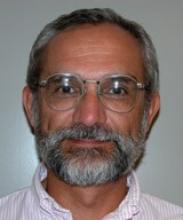 Steven L. Lima合作论文数Department of Biology, College of Arts and Sciences, Indiana State University6
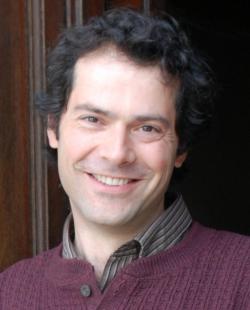 Johannes Foufopoulos合作论文数School for Environment and Sustainability, University of Michigan-Ann Arbor5
 Kinsey M Brock合作论文数School of Natural Resources &Environment, University of Michigan;School of Natural Resources & Environment, University of Michigan4
 Lauryn Benedict合作论文数Museum of Vertebrate Zoology, University of California Berkeley3
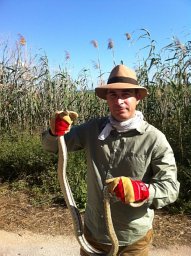 Panayiotis Pafilis合作论文数School of Natural Resources & Environment Dana Building, University of Michigan3
 Patricia R. Y. Backwell合作论文数2Sl Lima合作论文数2Katherine L. Buchanan合作论文数2M. Apollonio合作论文数2Ludek Bartos合作论文数2
 Peter Arcese合作论文数Department of Forest & Conservation Sciences, Faculty of Forestry, The University of British Columbia2
 Michael D. Beecher合作论文数Department of Psychology, University of Washington2
 Bergvall Ulrika A合作论文数Department of Ecology, Swedish University of Agricultural Sciences2
 Oskar Brattstrom合作论文数School of Life Sciences, University of Glasgow;African Butterfly Research Institute2
 Michael P Domjan合作论文数Department of Psychology, College of Liberal Arts, The University of Texas at Austin2Burley Nancy Tyler合作论文数2
 Henrik Brumm合作论文数Max Planck Institute for Biological Intelligence2
 Zoltán Barta合作论文数Department of Evolutionary Zoology, University of Debrecen;Faculty of Science and Technology, University of Debrecen;Institute of Biology and Ecology, University of Debrecen2Laura M. Dixon合作论文数2Ingrid Ahnesjo合作论文数2
 Alexander T. Baugh合作论文数Section of Integrative Biology, The University of Texas2Tobias Dittmann合作论文数2
 Christopher D Beatty合作论文数Department of Biology, Carleton University2
 Vittorio Baglione合作论文数Department of Agro-forestry, University of Valladolid2Glen E. Woolfenden合作论文数2Robert J. Dooling合作论文数Department of Psychology, University of Maryland2Anna Dornhaus合作论文数2
 Sarah T. Boysen合作论文数Ohio State University;Southeast, Inc.2Fred B Bercovitch合作论文数2
 Katherine Louise Barry合作论文数Department of Biological Sciences, Macquarie University2
 Luisa Amo de Paz合作论文数Departamento de Ecología Evolutiva2
 Patricia Ruth Yvonne Backwell合作论文数SmithsonianTropical Research Institute2Barbara Ballentine合作论文数2
 Luis M. Bautista合作论文数Departamento de Ecología Evolutiva, Museo Nacional de Ciencias Naturales CSIC;Fax: 34-1-5645078;e-mail: Alonso@cc.csic.es ES;Departamento de Ecología Evolutiva, Museo Nacional de Ciencias Naturales CSIC2B Ballentine合作论文数2Miles E. Becker合作论文数1Gareth Arnott合作论文数1Ryan Boyko合作论文数1Elodie Floriane Briefer合作论文数1Christian Agrillo合作论文数1
 Jesus M. Aviles合作论文数1Ron Ritter合作论文数1Sophie Evison合作论文数1
 Binbin Li (李彬彬)合作论文数Environmental Research Center, Duke Kunshan University;Nicholas School of the Environment, Duke University1Gabriel J. L. Beckers合作论文数1
 C. Navis合作论文数Warnell Sch Forestry & Nat Resources, Univ Georgia1
 Flavia Barbosa合作论文数Dept Biol, Lake Forest Coll1C. M. Berman合作论文数1
 Mirjam Amcoff合作论文数Department of Zoology/Ethology, Stockholm University1




