All is not lost in accelerated phase/blast crisis and after tyrosine kinase inhibitors fail in chronic myeloid leukaemia: a retrospective study of allogeneic stem cell transplant outcomes in Australia and New Zealand
SummaryThe International Histocompatibility Working Group is a collaborative international effort to understand the HLA and non‐HLA genetics of the transplantation barrier. The Working Group is comprised of experts in the fields of histocompatibility and immunogenetics, hematopoietic cell transplantation and outcomes research. Data for 25 855 unrelated donor transplants were submitted in support of research studies for the 16th International Histocompatibility Workshop. Active investigation is in progress in seven key areas: the impact of HLA matching, role of race and ethnicity, identification of permissible HLA mismatches, haplotype‐associated determinants, minor histocompatibility antigens, immune response genes and KIR genetics. New hypotheses for the 16th workshop were developed for immunogenetic studies in cord blood and haploidentical‐related donor transplantation.
doi:10.1182/blood-2011-08-374363Prepublished online December 6, 2011;2012 119: 1283-1291€€€€D. Hickstein, Marshall S. Horwitz, Christopher N. Hahn, Hamish S. Scott and Natasha L. HarveyBabic, Peter G. Bardy, Akiko Shimamura, Michael Y. Zhang, Tom Walsh, Steven M. Holland, DennisCuellar-Rodriguez, Amy P. Hsu, Sarah Dyack, Conrad V. Fernandez, Chan-Eng Chong, Milena Jan Kazenwadel, Genevieve A. Secker, Yajuan J. Liu, Jill A. Rosenfeld, Robert S. Wildin, Jennifer€
Donor HLA mismatching is a known risk factor for morbidity and mortality after unrelated hematopoietic cell transplantation (HCT). The frequency of donor and recipient HLA phenotypes differs between ethnically diverse populations, as does the incidence of acute graft-versus-host disease (GVHD). Certain high-risk HLA mismatches are responsible for acute GVHD risk in the Japanese experience (Kawase et al Blood 2007). We tested the hypothesis that clinical outcome after HLA-C mismatched unrelated HCT depends on the specific mismatch combinations, and that risks are different depending on the HLA phenotypes of the transplant population. The International Histocompatibility Working Group dataset enables us to compare clinical outcome between Caucasian and Japanese populations to test these hypotheses. High resolution HLA typing was available for the Japanese (n = 5986) and Caucasian pairs (n = 9379). Multivariable Cox regression models adjusted for HLA matching status other than HLA-C and non-HLA factors known to influence GVHD risk. In both Japanese and Caucasian recipients, the presence of an HLA-C mismatch/KIR ligand match was associated with increased risk of grades III-IV acute GVHD compared to an HLA-C match (HR 1.69 [p < 0.001] and 1.23 [p < 0.001], respectively). KIR2DL ligand mismatching had an even stronger effect among the Japanese than the Caucasian recipients (HRs for HLA-C allele mismatch and KIR mismatch in GVH direction were 2.51 (p < 0.001) and 1.21 (p = 0.017), respectively). Since it is known that certain mismatches that occur in the Japanese population occur very infrequently (if at all) in the Caucasian population, and vice verse, we conducted the same analyses but limited to subjects who have HLA-C mismatch combinations occurring in more than 10 subjects in both populations. Compared to HLA-C matches, HLA-C mismatch/KIR ligand match and HLA-C mismatch/KIR ligand mismatch were associated with a statistically significantly increased risk of GVHD in Japanese (HR 1.39 [p = 0.003] and HR 3.13 [p < 0.001], respectively) but not in Caucasian recipients (HR 1.18 [p = 0.128] and HR 0.91 [p = 0.588]). These results suggest that the magnitude of risks associated with HLA-C disparity after unrelated HCT may be different in recipients of Japanese compared to Caucasian background, particularly in the presence of a KIR ligand mismatch. Risks may also depend on the specific HLA-C allele mismatch combinations.
Eng, H S.1,2; Campbell, S3; Russ, G1,2,4,5; Toby, P; Coates, H1,2,5; Bardy, P1,5,6; Bennett, G5; Chang, S4; Tait, B7 Author Information
Objective: The RCAα block (Regulators of Complement Activation, 1q32) contains critical complement regulatory genes such as CR1 and MCP. This study examined RCAα block haplotype associations with both disease susceptibility and diversification of the anti-Ro/La autoantibody response in primary Sjögren syndrome (pSS). Methods: 115 patients with pSS and 98 controls were included in the study. 93 of 109 (85%) of the patients with pSS were seropositive for Ro/La autoantibodies. The Genomic Matching Technique (GMT) was used to define RCAα block ancestral haplotypes (AH). Results: RCAα block haplotypes, AH1 and AH3, were both associated with autoantibody-positive pSS (p = 0.0003). Autoantibody associations with both HLA DR3 and DR15 have been previously defined. There was an epistatic interaction (p = 0.023) between RCAα AH1 and HLA DR3, and this genotypic combination was present in 48% of autoantibody-positive patients with pSS compared with 8% of controls. This epistasis is most simply attributable to an interaction between C4 and its receptor, CR1, encoded within the RCAα block. Both DR3 and a relative C4 deficiency are carried on the major histocompatibility complex 8.1 ancestral haplotype. Only four of 92 (4%) autoantibody-positive patients with pSS did not carry any risk RCAα or HLA haplotype, compared with 36 of 96 (38%) controls, and there were differences in haplotype frequencies within autoantibody subsets of pSS. Conclusions: Normal population variation in the RCAα block, in addition to the major histocompatibility complex, contributes genetic susceptibility to systemic autoimmune disease and the autoantibody response. This finding provides evidence for the role of regulation of complement activation in disease pathogenesis.
Tsiopelas, E; Deayton, S; Fleet, A; Bennett, G; Bardy, P; Coughlan, P; Russ, G; Coates, P Author Information
Eng, H S.; Bennett, G; Tsiopelas, E; Chang, S; Bardy, P; Russ, G R.; Coates, P T.H. Author Information
Worthley, D1; Johnson, D2; Eisen, D3; Heatley, S4; Dean, M5; Tung, J-P5; Harley, H6; Padbury, R7; Scott, J8; Mullighan, C9; Angus, P10; Bardy, P11,12 Author Information
 Jeffrey Szer合作论文数Royal Melbourne Hosp16
 Andrew Grigg合作论文数Eastern Haematology Oncology Group15
 Sue Lester合作论文数Faculty of Health and Medical Sciences, University of Adelaide8
 Patrick Toby Coates合作论文数Sch Med, Univ Adelaide7
 Timothy Hughes合作论文数Adelaide Medical School, Faculty of Health and Medical Sciences, The University of Adelaide;South Australian Health and Medical Research Institute7
 LB TO合作论文数6G. Bennett合作论文数6
 Maureen Rischmueller合作论文数University College London Hospital6
 Sue Heatley合作论文数Kingston University and St. George’s, University of London6M. Kutyna合作论文数5G. Russ合作论文数5D. Hiwase合作论文数5
 James McCluskey合作论文数The Peter Doherty Institute for Infection and Immunity, Faculty of Medicine, Dentistry and Health Sciences, The University of Melbourne5H S. Eng合作论文数5
 Noemi Horvath合作论文数5K Pile合作论文数4C H Hui合作论文数4S Moore合作论文数4R. Chhetri合作论文数4Deepak Singhal合作论文数Adelaide Medical School, University of Adelaide4I. Lewis合作论文数4S Chang合作论文数4Eibhlin Conneally合作论文数4T P Gordon合作论文数4
 Connie Eaves合作论文数School of Biomedical Engineering, University of British Columbia;Department of Medical Genetics, Faculty of Medicine, University of British Columbia4Eleni Tsiopelas合作论文数4V Limaye合作论文数3I Humphreys合作论文数3A. Schwarer合作论文数3
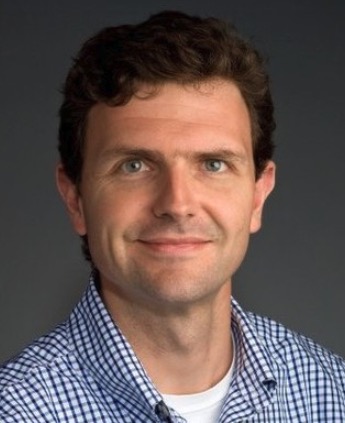 Charles G. Mullighan合作论文数Department of Pathology, St. Jude Children's Research Hospital;Comprehensive Cancer Center, St. Jude Children's Research Hospital3
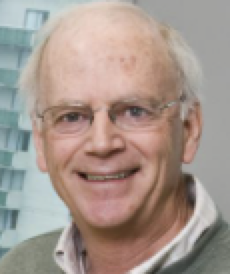 R. Keith Humphries合作论文数University of British Columbia;Terry Fox Laboratory, BC Cancer Research Institute3
 Hamish S Scott合作论文数3
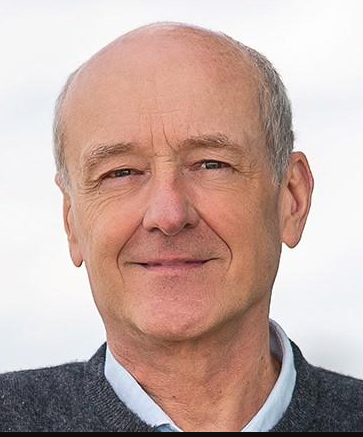 Peter M Lansdorp合作论文数Department of Medicine, Faculty of Medicine, The University of British Columbia3D. Thorp合作论文数3
 Graeme Russ合作论文数Central and Northern Adelaide Renal and Transplantation Services, Royal Adelaide Hospital;University of Adelaide;Summit Health3S Downie-Doyle合作论文数3Bik To合作论文数Royal Adelaide Hospital3R. Holdsworth合作论文数3
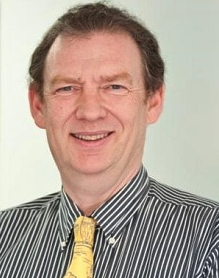 Simon Durrant合作论文数Icon Cancer Centre;Royal Brisbane Hospital;University of Queensland3S Chappel合作论文数2B Tait合作论文数2RJ KIMBER合作论文数2D. White合作论文数2R Hoyt合作论文数2M M Roberts合作论文数2JQK HO合作论文数2CA JUTTNER合作论文数2Bd Tait合作论文数2




