A terrestrial population of room-temperature millicharged particles can arise if they make up a dark matter subcomponent or if they are light enough to be produced in cosmic ray air showers. In a companion paper, we showed that a simple electrified shell acts as an efficient accumulator for such particles, parametrically enhancing their local density by many orders of magnitude. Here we demonstrate that Cavendish tests of Coulomb's Law, performed since the late 18th century, function as both quasistatic accumulators and detectors for this overdensity. Reinterpretations of these past Cavendish tests thus provide some of the strongest bounds on a terrestrial millicharge population. We also propose surrounding a Cavendish test with an additional charged shell, which significantly improves the sensitivity and can even enable detection of the irreducible density of millicharged particles generated from cosmic rays. Using decades-old technology, this can outperform future accelerator searches for sub-GeV masses.
We use the dynamical heating of stars in ultrafaint dwarf (UFD) galaxies to set limits on Massive Compact Halo Objects (MACHOs). In our analysis we study the robustness of the bounds under uncertainties in key UFD parameters, such as the half-light radius, stellar velocity dispersion, total halo mass and dark matter and stellar density profiles. We apply this framework to both well-established UFD candidates, as well as the recently discovered UFD candidate Ursa Major III/UNIONS 1. We find that multiple UFDs yield consistently strong limits in the mass range 10M0 MMACHO 109M0, underscoring the robustness of a previous analysis solely based on Segue I. We also demonstrate that Ursa Major III, if confirmed as an UFD, would improve the constraints significantly, providing the strongest constraints on MACHO dark matter in the mass range 1M0 MMACHO 105M0.
Mergers of white dwarf binaries are a possible progenitor channel for Type Ia supernovae. While white dwarfs are abundant in the Universe and relatively well understood, their gravitational wave signals have not yet been directly observed. In order to detect gravitational waves from merging white dwarf binaries, a detector in the mid-band between LIGO-Virgo-KAGRA and LISA appears necessary. In this paper, we compute and discuss the gravitational waves emitted by inspiraling and merging white dwarf binaries, and assess their detectability with proposed space-based atom-interferometer detectors such as MAGIS Space and AEDGE. Gravitational waves from massive white dwarf binaries can be observed for many years before merger, offering a unique early warning of their final explosion. Our projections suggest that MAGIS Space could detect signals from Type Ia supernova progenitors at least once every four years, while AEDGE could observe at least a few hundred such events annually. The prolonged gravitational wave emission captured by atom interferometers provides precise sky localization and can allow observation of the final explosion with electromagnetic telescopes. The combined observation with electromagnetic radiation from the white dwarf binary coalescence could open a new pathway for multimessenger astronomy involving some of the brightest transient events in the Universe.
The QCD axion has important connections to early universe cosmology. For example, it is often said that isocurvature limits rule out a combination of high axion decay constant, fa, and high inflationary Hubble scale, HI. High scales are theoretically motivated, so it is important to ask how robust this constraint is. We demonstrate that this constraint is naturally evaded when the quartic coupling of the complex U(1)PQ-breaking field is small (e.g. ≲ 10−6). In this case, fa changes from a larger value during inflation to a smaller value in the later universe, suppressing isocurvature perturbations. Importantly, we show that in large parts of parameter space this solution is not jeopardised by overproduction of the axion through parametric resonance. The isocurvature bounds are thus dependent on UV physics. We have found that, even for the minimal QCD axion, large parts of UV parameter space at both high fa and high HI are in fact allowed, not ruled out by isocurvature constraints.
Many models of dark matter include self-interactions beyond gravity. A variety of astrophysical observations have previously been used to place limits on the strength of such self-interactions. However, previous works have generally focused either on short-range interactions resulting in individual dark matter particles scattering from one another, or on effectively infinite-range interactions which sum over entire dark matter halos. In this work, we focus on the intermediate regime: forces with range much larger than dark matter particles' inter-particle spacing, but still shorter than the length scales of known halos. We show that gradients in the dark matter density of such halos would still lead to observable effects. We focus primarily on effects in the Bullet Cluster, where finite-range forces would lead either to a modification of the collision velocity of the cluster or to a separation of the dark matter and the galaxies of each cluster after the collision. We also consider constraints from the binding of ultrafaint dwarf galaxy halos, and from gravitational lensing of the Abell 370 cluster. Taken together, these observations allow us to set the strongest constraints on dark matter self-interactions over at least five orders of magnitude in range, surpassing existing limits by many orders of magnitude throughout.
We propose using highly excited cyclotron states of a trapped electron to detect meV axion and dark-photon dark matter, marking a significant improvement over our previous proposal and demonstration [One-electron quantum cyclotron as a milli-ev dark-photon detector, Phys. Rev. Lett. 129, 261801 (2022).]. When the axion mass matches the cyclotron frequency omega c, the cyclotron state is resonantly excited, with a transition probability proportional to its initial quantum number, nc. The sensitivity is enhanced by taking nc similar to 106(0.1 meV omega c )2. By optimizing key experimental parameters, we minimize the required averaging time for cyclotron detection to tave similar to 10-6 s, permitting detection of such a highly excited state before its decay. An open-end-cap trap design enables the external photon signal to be directed into the trap, rendering our background-free detector compatible with large focusing cavities, such as the BREAD proposal, while capitalizing on their strong magnetic fields. Furthermore, the axion conversion rate can be coherently enhanced by incorporating layers of dielectrics with alternating refractive indices within the cavity. Collectively, these optimizations enable us to probe the QCD axion parameter space from 0.1 to 2.3 meV (25-560 GHz), covering a substantial portion of the predicted postinflationary QCD axion mass range. This sensitivity corresponds to probing the kinetic mixing parameter of the dark photon down to & varepsilon; approximate to 2 x 10-16.
Dark matter's existence is known thanks to its gravitational interaction with Standard Model particles, but it remains unknown whether this is the only force present between them. While many searches for such new interactions with dark matter focus on short-range, contact-like interactions, it is also possible that there exist weak, long-ranged forces between dark matter and the Standard Model. In this work, we present two types of constraints on such new interactions. First, we consider constraints arising from the fact that such a force would also induce long range interactions between Standard Model particles themselves, as well as between dark matter particles themselves. Combining the constraints on these individual forces generally sets the strongest constraints available on new Standard Model-dark matter interactions. Second, we consider the possibility of constraining new long-ranged interactions between dark matter and the Standard Model using the effects of dynamical friction in ultrafaint dwarf galaxies, especially Segue I. Such new interactions would accelerate the transfer of kinetic energy from stars to their surrounding dark matter, slowly reducing their orbits; the present-day stellar half-light radius of Segue I therefore allows us to exclude new forces which would have reduced stars' orbital radii below this scale by now.
The Proton EDM Experiment (pEDM) is the first direct search for the proton electric dipole moment (EDM) with the aim of being the first experiment to probe the Standard Model (SM) prediction of any particle EDM. Phase-I of pEDM will achieve 10^-29 e·cm, improving current indirect limits by four orders of magnitude. This will establish a new standard of precision in nucleon EDM searches and offer a unique sensitivity to better understand the Strong CP problem. The experiment is ideally positioned to explore physics beyond the Standard Model (BSM), with sensitivity to axionic dark matter via the signal of an oscillating proton EDM and across a wide mass range of BSM models from 𝒪(1GeV) to 𝒪(10^3TeV). Utilizing the frozen-spin technique in a highly symmetric storage ring that leverages existing infrastructure at Brookhaven National Laboratory (BNL), pEDM builds upon the technological foundation and experimental expertise of the highly successful Muon g-2 Experiments. With significant R&D and prototyping already underway, pEDM is preparing a conceptual design report (CDR) to offer a cost-effective, high-impact path to discovering new sources of CP violation and advancing our understanding of fundamental physics. It will play a vital role in complementing the physics goals of the next-generation collider while simultaneously contributing to sustaining particle physics research and training early-career researchers during gaps between major collider operations.
While much supersymmetric weakly interacting massive particle (WIMP) parameter space has been ruled out, one remaining important candidate is Higgsino dark matter. The Higgsino can naturally realize the "inelastic dark matter" scenario, where the scattering off a nucleus occurs between two nearly-degenerate states, making it invisible to WIMP direct detection experiments if the splitting is too large to be excited. It was realized that a "luminous dark matter" detection process, where the Higgsino upscatters in the Earth and subsequently decays into a photon in a large neutrino detector, offers the best sensitivity to such a scenario. We consider the possibility of adding a large volume of a heavy element, such as Pb or U, around the detector. We also consider the presence of U and Th in the Earth itself, and the effect of an enhanced high-velocity tail of the dark matter distribution due to the presence of the Large Magellanic Cloud. These effects can significantly improve the sensitivity of detectors such as JUNO, SNO+, KamLAND, and Borexino, potentially making it possible in the future to cover much of the remaining parameter space for this classic supersymmetric WIMP dark matter.
There is a large and growing interest in observations of small-scale structure in dark matter. We propose a new way to probe dark matter structures in the $\sim 10 - 10^8 \, M_\odot$ range. This allows us to constrain the primordial power spectrum over shorter distances scales than possible with direct observations from the CMB. For $k$ in the range $\sim 10 - 1000 \, {\rm Mpc}^{-1}$ our constraints on the power spectrum are orders of magnitude stronger than previous bounds. We also set some of the strongest constraints on dark matter isocurvature perturbations. Our method relies on the heating effect such dark matter substructures would have on the distribution of stars in an ultra-faint dwarf galaxy. Many models of inflation produce enhanced power at these short distance scales and can thus be constrained by our observation. Further, many dark matter models such as axion dark matter, self-interacting dark matter and dissipative dark matter, produce dense structures which could be constrained this way.
DMRadio-m^3 is an experiment that is designed to be sensitive to KSVZ and DFSZ QCD axion models in the 10–200 MHz (41 neV/c^2 – 0.83 μeV/c^2) range. The experiment uses a solenoidal dc magnetic field to convert an axion dark-matter signal to an ac electromagnetic response in a coaxial copper pickup. The current induced by this axion signal is measured by dc SQUIDs. In this work, we present the electromagnetic modeling of the response of the experiment to an axion signal over the full frequency range of DMRadio-m^3, which extends from the low-frequency, lumped-element limit to a regime where the axion Compton wavelength is only a factor of two larger than the detector size. With these results, we determine the live time and sensitivity of the experiment. The primary science goal of sensitivity to DFSZ axions across 30–200 MHz can be achieved with a 3σ live scan time of 2.9 years.
We place limits on dark matter made up of compact objects significantly heavier than a solar mass, such as MACHOs or primordial black holes (PBHs). In galaxies, the gas of such objects is generally hotter than the gas of stars and will thus heat the gas of stars even through purely gravitational interactions. Ultrafaint dwarf galaxies (UFDs) maximize this effect. Observations of the half-light radius in UFDs thus place limits on MACHO dark matter. We build upon previous constraints with an improved heating rate calculation including both direct and tidal heating, and consideration of the heavier mass range above $10^4 \, M_\odot$. Additionally we find that MACHOs may lose energy and migrate in to the center of the UFD, increasing the heat transfer to the stars. UFDs can constrain MACHO dark matter with masses between about $10 M_\odot$ and $10^8 M_\odot$ and these are the strongest constraints over most of this range.
Gravitational Waves (GWs) have been detected in the ∼ 100 Hz and nHz bands, but most of the gravitational spectrum remains unobserved. A variety of detector concepts have been proposed to expand the range of observable frequencies. In this work, we study the capability of GW detectors in the “mid-band”, the ∼ 30 mHz– 10 Hz range between LISA and LIGO, to measure the signals from and constrain the properties of ∼ 1 – 100 M ⊙ compact binaries. We focus on atom-interferometer-based detectors. We describe a Fisher matrix code, AIMforGW , which we created to evaluate their capabilities, and present numerical results for two benchmarks: terrestrial km-scale detectors, and satellite-borne detectors in medium Earth orbit. Mid-band GW detectors are particularly well-suited to pinpointing the location of GW sources on the sky. We demonstrate that a satellite-borne detector could achieve sub-degree sky localization for any detectable source with chirp mass ℳ c ≲ 50 M ⊙ . We also compare different detector configurations, including different locations of terrestrial detectors and various choices of the orbit of a satellite-borne detector. As we show, a network of only two terrestrial single-baseline detectors or one single-baseline satellite-borne detector would each provide close-to-uniform sky-coverage, with signal-to-noise ratios varying by less than a factor of two across the entire sky. We hope that this work contributes to the efforts of the GW community to assess the merits of different detector proposals.
We correct several minor mistakes in equations in section 4.1 and update the viable parameter range of the model quoted in section 4.2 accordingly.
We correct several minor mistakes in equations in section 4.1 and update the viable parameter range of the model quoted in section 4.2 accordingly.
We correct several minor mistakes in equations in section 4.1 and update the viable parameter range of the model quoted in section 4.2 accordingly.
Significant effort has been devoted to searching for new fundamental forces of nature. At short length scales (below approximately 10 nm), the strongest experimental constraints come from neutron scattering from individual nuclei in gases. The leading experiments at longer length scales instead measure forces between macroscopic test masses. We propose a hybrid of these two approaches: scattering neutrons off of a target that has spatial structure at nanoscopic length scales. Such structures will give a coherent enhancement to small-angle scattering, where the new force is most significant. This can considerably improve the sensitivity of neutron scattering experiments for new forces in the 0.1 - 100 nm range. We discuss the backgrounds due to Standard Model interactions and a variety of potential target structures that could be used, estimating the resulting sensitivities. We show that, using only one day of beam time at a modern neutron scattering facility, our proposal has the potential to detect new forces as much as two orders of magnitude beyond current laboratory constraints at the appropriate length scales.
Earth can act as a transducer to convert ultralight bosonic dark matter (axions and hidden photons) into an oscillating magnetic field with a characteristic pattern across its surface. Here we describe the first results of a dedicated experiment, the Search for Non-Interacting Particles Experimental Hunt (SNIPE Hunt), that aims to detect such dark-matter-induced magnetic-field patterns by performing correlated measurements with a network of magnetometers in relatively quiet magnetic environments (in the wilderness far from human-generated magnetic noise). Our experiment constrains parameter space describing hidden-photon and axion dark matter with Compton frequencies in the 0.5-5.0 Hz range. Limits on the kinetic-mixing parameter for hidden-photon dark matter represent the best experimental bounds to date in this frequency range.
Strong motivation for investing in quantum sensing arises from the need to investigate phenomena that are very weakly coupled to the matter and fields well described by the Standard Model. These can be related to the problems of dark matter, dark sectors not necessarily related to dark matter (for example sterile neutrinos), dark energy and gravity, fundamental constants, and problems with the Standard Model itself including the Strong CP problem in QCD. Resulting experimental needs typically involve the measurement of very low energy impulses or low power periodic signals that are normally buried under large backgrounds. This report documents the findings of the 2023 Quantum Sensors for High Energy Physics workshop which identified enabling quantum information science technologies that could be utilized in future particle physics experiments, targeting high energy physics science goals.
 Surjeet Rajendran合作论文数William H. Miller III Department of Physics & Astronomy, Krieger School of Arts and Sciences, Johns Hopkins University78
 Jason Hogan合作论文数Physics Department, School of Humanities and Sciences, Stanford University19
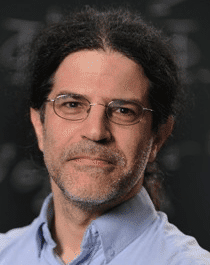 David Kaplan合作论文数William H. Miller III Department of Physics & Astronomy, Krieger School of Arts & Sciences, Johns Hopkins University18
 Dmitry Budker合作论文数Helmholtz Institute, Johannes Gutenberg University, Mainz;Department of Physics, University of California, Berkeley17
 Mark Kasevich合作论文数Department of Physics, School of Humanities and Sciences, Stanford University;Department of Applied Physics, School of Humanities and Sciences, Stanford University16
 Kent Irwin合作论文数Physics Department, School of Humanities and Sciences, Stanford University;Hansen Experimental Physics Laboratory, Stanford University15
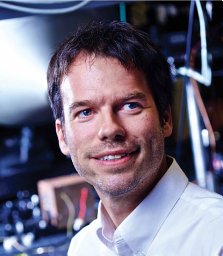 Derek F Kimball合作论文数Department of Physics, California State University, East Bay13
 Michael A. Fedderke合作论文数Dept Phys & Astron, Johns Hopkins Univ12
 Roni Harnik合作论文数Physics Department, SITP;Stanford University;Stanford University, Stanford University12
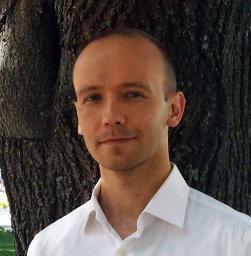 Alex Sushkov合作论文数Department of Physics, College of Arts & Sciences, Boston University12
 Saptarshi Chaudhuri合作论文数Dept. of Phys., Stanford Univ.;c;Dept. of Phys., Stanford Univ.11
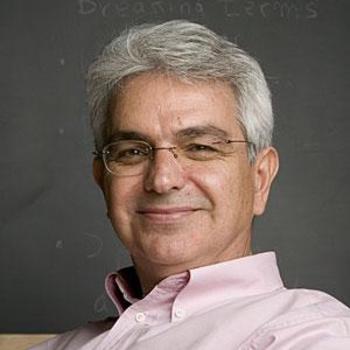 Savas Dimopoulos合作论文数Department of Physics, Stanford University11
 Harikrishnan Ramani合作论文数Stanford Inst Theoret Phys, Stanford Univ10
 a phipps合作论文数Department of Physics, University of California9
 Arne Wickenbrock合作论文数Department of Physics and Astronomy, University College London9
 John W. Blanchard合作论文数9Konstantin Zioutas合作论文数9
 Nataniel Figueroa Leigh合作论文数Johannes Gutenberg Univ Mainz8
 Antoine Garcon合作论文数Johannes Gutenberg Univ Mainz, Helmholtz Inst Mainz, D-55128 Mainz, Germany8Mardon Jeremy合作论文数8
 Betty A Young合作论文数8
 Hsiao-Mei Sherry Cho合作论文数SLAC National Accelerator Laboratory8William DeRocco合作论文数7
 Stephen E. Kuenstner合作论文数Stanford University7
 Tim Kovachy合作论文数Department of Physics and Astronomy, Weinberg College of Arts and Sciences, Northwestern University7Julia K. Vogel合作论文数Lawrence Livermore Natl Lab7
 Wang Tao合作论文数School of Instrument Science and Opto-Electronics Engineering, Beihang University7
 Dale Li合作论文数7
 Teng Wu (吴腾)合作论文数School of Electronics, Peking University7Bogdan Wojtsekhowski合作论文数Division of Physics, Jefferson Lab7A. Lindner合作论文数7Alexander Gasparian合作论文数Hampton University7Joerg Jaeckel合作论文数7Brian Batell合作论文数7
 James R. Boyce合作论文数Jefferson Lab, 12000 Jefferson Avenue, Newport News, VA 23606, USA7Amanda Weltman合作论文数7
 Rouven Essig合作论文数Department of Physics and Astronomy, College of Arts and Sciences, Stony Brook University;C.N. Yang Institute for Theoretical Physics, Stony Brook University7
 Asimina Arvanitaki合作论文数Perimeter Institute for Theoretical Physics7Ja Jaros合作论文数6
 m j pivovaroff合作论文数Natl Accelerator Lab, SLAC6
 Andreas Ringwald合作论文数6Hermann Merkel合作论文数6R. Cowan合作论文数Massachusetts Institute of Technology,Massachusetts Inst. of Technology, MIT6
 Bertrand Echenard合作论文数California Institute of Technology6
 Jason H. Steffen合作论文数University of Nevada Las Vegas6
 Yonatan Frederick Kahn合作论文数Department of Physics, The Grainger College of Engineering, University of Illinois at Urbana-Champaign6
 David Tanner合作论文数Department of Physics, College of Liberal Arts and Sciences, University of Florida6
 Igor G. Irastorza合作论文数Laboratorio de Fisica Nuclear;Universidad de Zaragoza;Laboratorio de Fisica Nuclear, Universidad de Zaragoza6
 David Mckeen合作论文数Enrico Fermi Institute;Department of Physics;University of Chicago;Enrico Fermi Institute, University of Chicago6




