The end-Cretaceous Chicxulub impact triggered Earth's last mass-extinction, extinguishing ~ 75% of species diversity and facilitating a global ecological shift to mammal-dominated biomes. Temporal details of the impact event on a fine scale (hour-to-day), important to understanding the early trajectory of mass-extinction, have largely eluded previous studies. This study employs histological and histo-isotopic analyses of fossil fish that were coeval with a unique impact-triggered mass-death assemblage from the Cretaceous-Paleogene (KPg) boundary in North Dakota (USA). Patterns of growth history, including periodicity of ẟ18O and ẟ13C and growth band morphology, plus corroborating data from fish ontogeny and seasonal insect behavior, reveal that the impact occurred during boreal Spring/Summer, shortly after the spawning season for fish and most continental taxa. The severity and taxonomic symmetry of response to global natural hazards are influenced by the season during which they occur, suggesting that post-impact perturbations could have exerted a selective force that was exacerbated by seasonal timing. Data from this study can also provide vital hindsight into patterns of extant biotic response to global-scale hazards that are relevant to both current and future biomes.
Recent evidence for feathers in theropods has led to speculations that the largest tyrannosaurids, including Tyrannosaurus rex, were extensively feathered. We describe fossil integument from Tyrannosaurus and other tyrannosaurids (Albertosaurus, Daspletosaurus, Gorgosaurus and Tarbosaurus), confirming that these large-bodied forms possessed scaly, reptilian-like skin. Body size evolution in tyrannosauroids reveals two independent occurrences of gigantism; specifically, the large sizes in Yutyrannus and tyrannosaurids were independently derived. These new findings demonstrate that extensive feather coverings observed in some early tyrannosauroids were lost by the Albian, basal to Tyrannosauridae. This loss is unrelated to palaeoclimate but possibly tied to the evolution of gigantism, although other mechanisms exist.
This study reports on a new ceratopsid, Spiclypeus shipporum gen et sp. nov., from the lower Coal Ridge Member of the Judith River Formation in Montana, USA, which dates to ~76 Ma (upper Campanian). The species is distinguished by rugose dorsal contacts on the premaxillae for the nasals, laterally projecting postorbital horncores, fully fused and anteriorly curled P1 and P2 epiparietals, and a posterodorsally projecting P3 epiparietal. The holotype specimen is also notable for its pathological left squamosal and humerus, which show varied signs of osteomyelitis and osteoarthritis. Although the postorbital horncores of Spiclypeus closely resemble those of the contemporaneous 'Ceratops', the horncores of both genera are nevertheless indistinguishable from those of some other horned dinosaurs, including Albertaceratops and Kosmoceratops; 'Ceratops' is therefore maintained as a nomen dubium. Cladistic analysis recovers Spiclypeus as the sister taxon to the clade Vagaceratops + Kosmoceratops, and appears transitional in the morphology of its epiparietals. The discovery of Spiclypeus adds to the poorly known dinosaur fauna of the Judith River Formation, and suggests faunal turnover within the formation.
Most dromaeosaurids were small-to medium-sized cursorial, scansorial, and arboreal, sometimes volant predators, but a comparatively small percentage grew to gigantic proportions.Only two such giant "raptors" have been described from North America.Here, we describe a new giant dromaeosaurid, Dakotaraptor steini gen.et sp.nov., from the Hell Creek Formation of South Dakota.The discovery represents the first giant dromaeosaur from the Hell Creek Formation, and the most recent in the fossil record worldwide.A row of prominent ulnar papilli or "quill knobs" on the ulna is our first clear evidence for feather quills on a large dromaeosaurid forearm and impacts evolutionary reconstructions and functional morphology of such derived, typically flight-related features.The presence of this new predator expands our record of theropod diversity in latest Cretaceous Laramidia, and radically changes paleoecological reconstructions of the Hell Creek Formation.
The luckiest people on this planet are the ones that have also made their passion their career.This is equally true for vertebrate paleontologists and commercial fossil dealers.We have other things in common as well.We all agree that fossils are important.We agree that it is our responsibility to educate the public about fossils.And we agree that scientifically important specimens should be in museums.Fossils have been collected, bartered, bought and sold for thousands of years (Mayor 2000).Commercialism has remained a crucial and functionally key element of paleontology throughout its history.Although all facets of paleontology are permeated with continuing scientific contributions by commercial entities (Manning 2001), this essay will only reference a few of the more notable.In Europe, much of what we know about the Jurassic marine faunas and environments of the Posidonia Shale Lagerstätten of Holzmaden (Germany), and the Blue Lias of Lyme Regis, Dorset (England) are based upon collections made by people who sold fossils.Mary Anning, an iconic person in the field of paleontology, is one of the more famous commercial collectors.Academics and curators at British institutions accepted Anning as a colleague, despite her lack of a formal degree or position at a university (McGowan 2001, Emling 2009).A congenial and civilized working relationship still exists today in England between commercial "professional" collectors and museum and university academics (Manning 2001).In Germany the government actively buys important specimens from private collectors (Rupert Wild, personal communication).The production of fossils from the Messel Lagerstätten was increased more than a thousand-fold by the work and ingenuity of commercial and private collectors.Most of the specimens that have been saved from these Eocene lake deposits are the result of a preparation transfer of the fossil to a resin matrix, a technique first pioneered by commercial collectors (Thomas Perner and Jurgen Henzel, personal communication).This new method permitted the recovery of articulated vertebrate remains with skin, feathers and stomach contents (Schaal and Ziegler 1992).One commercially collected specimen, a complete primate described
Charles Darwin acknowledged the importance of colour in the natural selection of bird plumage. Colour can indicate age, sex, and diet, as well as play roles in camouflage, mating and establishing territories. Feather and integument colour depend on both chemical and structural characteristics and so melanosome structure and trace metal biomarkers can be used to infer colour and pigment patterns in a range of extant and fossil organisms. In this study, three key specimens of Archaeopteryx were subjected to non-destructive chemical analysis in order to investigate the potential preservation of original pigmentation in early fossil feathers. Synchrotron Rapid Scanning X-ray Fluorescence (SRS-XRF) maps are combined with sulphur X-ray Absorption Near Edge Structure (XANES) spectroscopy to provide the first map of organic sulphur distribution within whole fossils, and demonstrate that organically derived endogenous compounds are present. The distribution of trace-metals and organic sulphur in Archaeopteryx strongly suggests that remnants of endogenous eumelanin pigment have been preserved in the feathers of this iconic fossil. These distributions are used here to predict the complete feather pigment pattern and show that the distal tips and outer vanes of feathers were more heavily pigmented than inner vanes, contrary to recent studies. This pigment adaptation might have impacted upon the structural and mechanical properties of early feathers, steering plumage evolution in Archaeopteryx and other feathered theropod dinosaurs.
Feeding strategies of the large theropod, Tyrannosaurus rex , either as a predator or a scavenger, have been a topic of debate previously compromised by lack of definitive physical evidence. Tooth drag and bone puncture marks have been documented on suggested prey items, but are often difficult to attribute to a specific theropod. Further, postmortem damage cannot be distinguished from intravital occurrences, unless evidence of healing is present. Here we report definitive evidence of predation by T. rex : a tooth crown embedded in a hadrosaurid caudal centrum, surrounded by healed bone growth. This indicates that the prey escaped and lived for some time after the injury, providing direct evidence of predatory behavior by T. rex . The two traumatically fused hadrosaur vertebrae partially enclosing a T. rex tooth were discovered in the Hell Creek Formation of South Dakota.
The carnivorous Tyrannosauridae are among the most iconic dinosaurs: typified by large body size, tiny forelimbs, and massive robust skulls with laterally thickened teeth. The recently described small-bodied tyrannosaurid Raptorex kreigsteini is exceptional as its discovery proposes that many of the distinctive anatomical traits of derived tyrannosaurids were acquired in the Early Cretaceous, before the evolution of large body size. This inference depends on two core interpretations: that the holotype (LH PV18) derives from the Lower Cretaceous of China, and that despite its small size, it is a subadult or young adult. Here we show that the published data is equivocal regarding stratigraphic position and that ontogenetic reanalysis shows there is no reason to conclude that LH PV18 has reached this level of maturity. The probable juvenile status of LH PV18 makes its use as a holotype unreliable, since diagnostic features of Raptorex may be symptomatic of its immature status, rather than its actual phylogenetic position. These findings are consistent with the original sale description of LH PV18 as a juvenile Tarbosaurus from the Upper Cretaceous of Mongolia. Consequently, we suggest that there is currently no evidence to support the conclusion that tyrannosaurid skeletal design first evolved in the Early Cretaceous at small body size.
 Robert A DePalma合作论文数Univ Kansas, Dept Geol, Lawrence, KS 66045 USA5
 Phillip Manning合作论文数Department of Earth and Environmental Sciences, School of Natural Sciences, Faculty of Science and Engineering, The University of Manchester5David A. Burnham合作论文数Biodiversity Institute, University of Kansas5Jan Smit合作论文数Faculty of Science, Geology and Geochemistry, Vrije Universiteit Amsterdam4Loren Gurche合作论文数3
 Roy A. Wogelius合作论文数School of Earth and Environmental Sciences, The University of Manchester3
 Nicholas Paul Edwards合作论文数3Klaudia F. Kuiper合作论文数Faculty of Earth and Life Science, Vrije Universiteit3
 Uwe Bergmann合作论文数Department of Materials Science and Engineering, University of Wisconsin-Madison/Department of Physics, University of Wisconsin-Madison/SLAC National Accelerator Laboratory3Robert T. Bakker合作论文数2
 Pim Kaskes合作论文数Lab G Time, Univ Libre Bruxelles2Egerton Victoria M合作论文数2Larry D. Martin合作论文数2Anton E. Oleinik合作论文数2
 Hemmo A. Abels合作论文数Department of Geoscience & Engineering, Faculty of Civil Engineering and Geosciences, Delft University of Technology2Anne S. Schulp合作论文数Natuurhistorisch Museum Maastricht2C. Beets合作论文数1R. Alonso Mori合作论文数1Jeremy J Klingler合作论文数1joshua d schmerge合作论文数1Daniela Schwarz合作论文数1
 David Evans合作论文数Department of Ecology and Evolutionary Biology, Faculty of Arts and Science, University of Toronto1
 W I Sellers合作论文数Department of Earth and Environmental Sciences, School of Natural Sciences, Faculty of Science and Engineering, The University of Manchester1
 Roberto Alonso-Mori合作论文数SLAC National Accelerator Laboratory, Stanford University;Biochemistry and Condensed Phase Chemistry Group, Chemical Sciences Department, Stanford University1
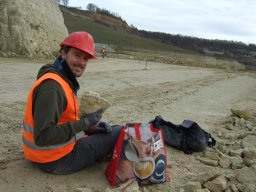 Johan Vellekoop合作论文数Faculty of Geosciences, Utrecht University;Faculty of Geosciences, Utrecht University1Freedman Elizabeth A合作论文数1
 Holly Woodward Ballard合作论文数Museum of the Rockies, Montana State University1Holly E. Barden合作论文数University of Manchester, University of Manchester1Christopher J. Ott合作论文数1
 W. Scott Persons合作论文数1
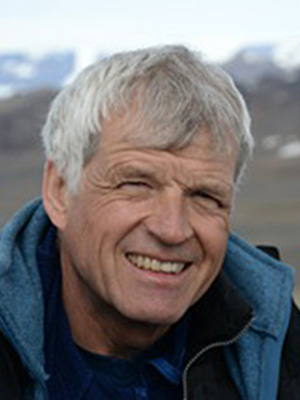 Philip J.Currie合作论文数University of Alberta,Biological Sciences1Phil R. Bell合作论文数Pipestone Creek Dinosaur Initiative, Pipestone Creek Dinosaur Initiative1
 Bruce M Rothschild (Bruce Rothschild)合作论文数Laboratory of Biological Anthropology, College of Liberal Arts & Sciences, Kansas University;Museum of Natural History, Kansas University;Department of Medicine, Indiana University BallMemorial Hospital;College of Medicine, The Northeastern Ohio University;Department of Earth Sciences, Carnegie Museum1
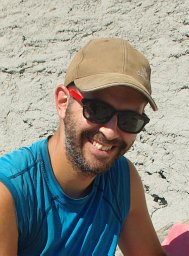 Nicolas E. Campione合作论文数Palaeobiol Programme, Uppsala Univ1
 Jordan C. Mallon合作论文数1Florentin Maurrasse合作论文数1
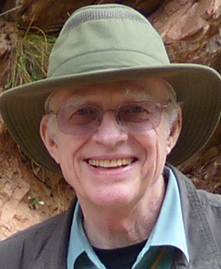 Walter Alvarez合作论文数Department of Earth and Planetary Science, College of Letters & Science, University of California, Berkeley;Graduate School, University of California, Berkeley1
 Darren Tanke合作论文数Royal Tyrrell Museum of Palaeontology1
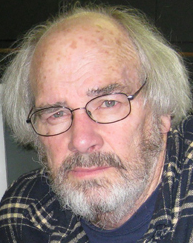 John R. Jack Horner (John R. Horner)合作论文数Chapman University1
 Mark Richards合作论文数Department of Earth and Planetary Science, University of California, Berkeley1Maarten A. Prins合作论文数Vrije Universiteit Amsterdam, Vrije Universiteit Amsterdam1
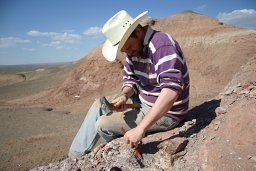 Denver W Fowler合作论文数Section of Paleontology;State Museum of Pennsylvania;Section of Paleontology, State Museum of Pennsylvania1




