Unraveling the origin(s) of carbon on Earth has remained challenging, not only because of the multiple isotopic fractionation episodes that may have occurred during planet formation processes but also because the end point of these processes, the current isotopic value of Earth’s deep carbon reservoirs remains poorly constrained. Here, we present carbon isotopic measurements on rare undegassed mid-ocean ridge basalts from the Pacific, Atlantic, and Arctic Oceans that have preserved the isotopic signature of their mantle source. We find that Earth’s present-day convecting upper mantle has variable δ 13 C value from ~−10 to −4‰, significantly different from the δ 13 C value of peridotitic diamonds and with the highest values being restricted to the Atlantic. Evidence for significant mantle heterogeneity contrasts with previous assumptions and its origin remains puzzling being uncorrelated with geochemical markers associated with either subduction and surficial recycling processes or lower mantle contributions. The data do not preclude other causes such as primordial mantle heterogeneity. We suggest that the δ 13 C value of the bulk silicate Earth may need to be revised.
We use high-precision analyses of fresh basalt glasses from the submarine, Cretaceous Ontong Java Plateau (OJP) recovered by the Ocean Drilling Programs (ODP) to test for long submarine lava flows. Major elements and Cl show that glasses from ODP Holes 1185B and 1186A, which are 200 km apart, are compositionally identical and must have erupted simultaneously from the same well-mixed magma chamber. Identical CO(2 )contents show they erupted at the same water depth, but 1185B is directly downslope from 1186A and has a corrected basement depth that is >700 m deeper. Remarkably, <2 C-degrees cooling took place over 200 km, requiring a cooling rate <0.01 C-degrees/km. Further evidence of long flows is the lack of vesicles in OJP's glasses, in contrast to mid-ocean ridge basalt glasses that almost always contain vesicles and are often oversaturated in dissolved CO2.. We propose that OJP's lavas degassed to saturation levels of dissolved CO2 +H2O and lost all bubbles because they remained liquid for much longer periods during long distance flow. Dissolved CO2+H2O +H2O are used to estimate paleoeruption depths which are compared to current corrected basement depths. Using a fixed value of plateau subsidence (500 m) we reconstruct flow distances of 0 to 900 km for eight lava groups from six drill sites. Eruption depths in Hole 807 C are 3040 m for Kwaimbaita-type lavas but 1110 m for Singgalo-type lavas that directly overlie them suggesting that the Singgalo lavas erupted 900 km away (near Site 1183). Paleoeruption depths for Cretaceous glasses from the Jurassic East Mariana and Nauru Basins adjacent to OJP are shallower than most glasses recovered from OJP even though their reconstructed basement depths are 1500-3800 m deeper. It is very likely that the basins' lavas were erupted on OJP and flowed up to 1600 km: longer than any lava flow known on Earth. Flow distances are shorter (<= 1000 km) if a plateau subsidence of 1500 m is used in the calculations. Extremely high Cl in Nauru Basin glasses also supports eruption from OJP. Long distance flow with minimal cooling was facilitated on OJP by favorable slopes, lack of barriers, insulation of rapidly forming glass, and possibly by flow within lava tubes. Lava effusion rates were probably >100 m/sec and flow rapid: >1 m/sec.
We analyzed the carbon isotope composition of vesicle CO2, plus He isotopes and He and CO2 concentrations in the vesicle (vapor) and glass (melt) phases of 37 submarine basalts from the summit, north and south rifts, and east flank of Loihi Seamount. Tholeiites and transitional basalts lie in a narrow range of vesicle 813C = -4.6 to -0.9%o, while alkali basalts range from -7.2 to -2.1%o. Calculated total (vesicle+glass) 813C for the majority of the basalts ranges from -6 to -2%o assuming the vapor-melt fractionation factor A (= 8vapor - 8melt) is +2 to +4%o as measured in basaltic systems. This relatively narrow range of 813C resembles mantle source values deduced from gas-rich mid-ocean ridge basalts and basalts from Iceland, and for Kilauea volcano deduced from its fumarole gas. However, this similarity presents a conundrum because Loihi basalts have degassed >97% of their initial CO2 as deduced from CO2 - Ba systematics and crystal fractionation modeling. Loihi parental magma (MgO=18 wt.%) had initial CO2 concentrations of 0.6 to 1.9 wt.%. Most tholeiitic and transitional basalts appear to have followed a quasi closed-system degassing history. Correcting for this degassing indicates the median 813C for Loihi undegassed parental magmas is -1.5%o and the 813C range is -4 to +1%o. Estimates of this 813C range are only weakly dependent on the choice of A and initial [CO2] in closed-system degassing scenarios. The Loihi mantle plume source is therefore characterized by 813C values that are higher than the range of -6 to -4%o prevalent in mantle-derived basalts and many diamonds. This could be due to primordial carbon isotope heterogeneity in Earth's mantle, exchange of carbon at the core-mantle boundary between ultra-low velocity zone silicates and the metallic liquid outer core, or to the presence of a small fraction (<1% by mass) of surficial carbonate that was tectonically recycled to the Hawaiian plume source region. Currently, an origin from recycled carbonate has the most supporting evidence.
Subduction of oceanic crust has long been considered a major cause of mantle heterogeneity. The oceanic lithospheric mantle, the largest volume of recycled plates, however, is often inferred but rarely observed. Here we report a collection of evidence suggesting that the Gakkel Ridge sampled recycled refractory ocean litho-sphere. (1) A gradient in composition in the western volcanic zone (WVZ) approaching the sparsely magmatic zone (SMZ) suggests lower extents of melting of more depleted sources. (2) The SMZ itself contains substantial portions of sea floor formed by mantle emplaced at the surface. (3) Sparse enriched basalts from the SMZ are consistent with melting of refractory but metasomatized lithosphere. (4) Unique high-Ti basalts at the WVZ-SMZ boundary originated by deep melting of oxide-gabbro-bearing ocean lithosphere mantle. The volume of recycled ocean lithospheric mantle is enormous- it equals roughly 25 % of the entire mantle per gigayear. However, it is almost never observed as an isolated source. If the crustal portion of the lithosphere is isolated to form discrete sources in the mantle, ten to fifteen times as much depleted mantle lithospheric sources would be formed. The rarity of this source material thus suggests that ordinarily recycled ocean crust and mantle lithosphere become well mixed during mantle convection. The enclosed basin and ultra-slow spreading rate of the Gakkel Ridge may have provided inhibited mixing conditions where recycled oceanic mantle lithosphere was able to be preserved.
Basalts erupted within intra-transform spreading centers can be valuable probes of geochemical components in Earth's upper mantle, and provide constraints on the proportions of mantle carbon that are juvenile (primordial) vs. tectonically recycled. Here we present new results for submarine basalt glasses, erupted within the Garrett Transform Fault (GTF) and to its north and south along the East Pacific Rise (EPR). Analyses of He-3/He-4, and He and CO2 concentrations in vesicles and glass were performed, through a series of crushing and melting experiments plus FTIR spectroscopy. Trace elements were analyzed by laser ablation ICP-MS.The GTF basalts provide further tests for the origin of volatile-undersaturated basalts using CO2/Ba and CO2/Nb systematics. CO2 is highly correlated with Ba and Nb in basalts erupted in the transform domain (n = 13, including 5 undersaturated basalts) and does not show the variability expected from mixing between undegassed and variably degassed melts. Rather, the melts appear to originate from a heterogeneous mantle source that was variably depleted through partial melting, and limited mixing of melts is involved in their generation. The CO2/Ba and CO2/Nb weight ratios of 106 +/- 8 and 308 +/- 27, respectively, are similar to values determined previously for a global suite of undersaturated mid-ocean ridge basalts (MORBs).The ridge and transform domains have distinct He-3/He-4 ratios. Along the nearby EPR, He-3/He-4 = 8.5 - 9.1 R-A, while within the Garrett Transform Fault He-3/He-4 = 9.2 - 10.1 R-A. These two basalt populations are also distinct in their Pb-Sr-Nd isotope compositions based on earlier regional studies. The distinct populations result from partial melting of two different mantle source compositions. Melting of depleted mantle containing a small amount (similar to 1 to 5%) of enriched, ancient heterogeneities occurs beneath the EPR. Melting of ultradepleted mantle (in which the heterogeneities have been removed by earlier melting beneath the EPR) occurs beneath the GTF. This explains the distinction between intra-transform and spreading ridge domains for He-3/He-4, if the heterogeneities were enriched in U, Th and He and had low He-3/He-4 as would be found in tectonically recycled material. The enriched mantle component sampled by the EPR basalts has molar CO2/He-3 = 2 x 10(9), and it dominates the CO2/He-3 ratio generally ascribed to the upper mantle source for mid-ocean ridge basalts. In contrast, the ultradepleted MORE mantle component sampled by the GTF basalts has CO2/He-3 = 3 x 10(8) or less. This indicates that most of the carbon in Earth's upper mantle originates from tectonic recycling. (C) 2020 Elsevier B.V. All rights reserved.
The plate tectonic cycle produces chemically distinct mid-ocean ridge basalts and arc volcanics, with the latter enriched in elements such as Ba, Rb, Th, Sr and Pb and depleted in Nb owing to the water-rich flux from the subducted slab. Basalts from back-arc basins, with intermediate compositions, show that such a slab flux can be transported behind the volcanic front of the arc and incorporated into mantle flow. Hence it is puzzling why melts of subduction-modified mantle have rarely been recognized in mid-ocean ridge basalts. Here we report the first mid-ocean ridge basalt samples with distinct arc signatures, akin to back-arc basin basalts, from the Arctic Gakkel Ridge. A new high precision dataset for 576 Gakkel samples suggests a pervasive subduction influence in this region. This influence can also be identified in Atlantic and Indian mid-ocean ridge basalts but is nearly absent in Pacific mid-ocean ridge basalts. Such a hemispheric-scale upper mantle heterogeneity reflects subduction modification of the asthenospheric mantle which is incorporated into mantle flow, and whose geographical distribution is controlled dominantly by a "subduction shield" that has surrounded the Pacific Ocean for 180 Myr. Simple modeling suggests that a slab flux equivalent to ~13% of the output at arcs is incorporated into the convecting upper mantle.
Despite progress in understanding seafloor accretion at ultraslow spreading ridges, the ultimate driving force is still unknown. Here we use 40Ar/39Ar isotopic dating of mid-ocean ridge basalts recovered at variable distances from the axis of the Gakkel Ridge to provide new constraints on the spatial and temporal distribution of volcanic eruptions at various sections of an ultraslow spreading ridge. Our age data show that magmatic-dominated sections of the Gakkel Ridge spread at a steady rate of ~11.1 ± 0.9 mm/yr whereas amagmatic sections have a more widely distributed melt supply yielding ambiguous spreading rate information. These variations in spreading rate and crustal accretion correlate with locations of hotter thermochemical anomalies in the asthenosphere beneath the ridge. We conclude therefore that seafloor generation in ultra-slow spreading centres broadly reflects the distribution of thermochemical anomalies in the upper mantle.
Mineral-hosted melt inclusions have become an important source of information on magmatic processes. As the number of melt inclusion studies increases, so does the need to establish recommended practice guidelines for collecting and reporting melt inclusion data. These guidelines are intended to ensure certain quality criteria are met and to achieve consistency among published melt inclusion data in order to maximize their utility in the future. Indeed, with the improvement of analytical techniques, new processes affecting melt inclusions are identified. It is thus critical to be able to reprocess any previously published data, such that reporting the raw data is one of the first 'recommended practices' for authors and a publication-criteria that reviewers should be sensitive to. Our guidelines start with melt inclusion selection, which is a critical first step, and then continue on to melt inclusion preparation and analysis, covering the entire field of methods applicable to melt inclusions. Dedication: In March of 2000, a melt inclusion workshop was held at the Chateau de Sassenage in Grenoble and a companion issue of Chemical Geology entitled 'Melt Inclusions at the Millennium' was published. Erik Hauri was heavily involved with the meeting and contributed two landmark papers to the topical issue of Chemical Geology on the use of secondary ion mass spectrometry to analyze volatiles in melt inclusions. When the melt inclusion community re-convened at Woods Hole Oceanographic Institution (WHOI) in August of 2018, we were saddened that Erik was unable to join us due to his failing health. Less than a month later came the devastating news of his passing at only 52 years of age. In recognition of his incredible contributions to science in general and to the in situ analysis of melt inclusions in particular, the participants and organizers of the WHOI melt inclusion workshop dedicate this collegial paper to Erik Hauri, our colleague, mentor and friend. Thank you Erik.
Boninite is a mafic to ultramafic “high-Mg andesite” magma type with exceptionally high Si and low Ti as measured in the whole rock [1]. Since 2 Ga in the rock record it is mostly associated with subduction zone settings [2]. Submarine West Mata volcano in the NE Lau Basin (Tonga) represents Earth’s only known Historical location of Boninite Volcanism [3]. It and 8 nearby small submarine volcanoes of the Mata Group, which have also exclusively erupted pristine, geologically modern Boninite lavas, provide an excellent location with which to study the compositional, mineralogical, textural, and geochemical characteristics of this magma type. The whole rock compositional extreme of Mata Boninite extends to MgO 20 wt%, SiO 2 57 wt% and Ti 2 O 0.3 wt%, although the rocks populate a fairly wide array of the Si-Mg-Ti chemical definition space between oxide values (given as % MgO, SiO 2 , Ti 2 O) of 20, 51, 0.5 to 8.5, 58, 0.4 to 18, 54.5, 0.3. As a group they make trends that extend outside of the Boninite definition sensu-strictu, perhaps from mixing with non-Boninite parent magmas, potentially complicating the extent to which their trace element compositions can be related unequivocally to mantle wedge and introduced fluid sources of specifically boninite parentage, as is commonly done.
In arc lavas, correlation between ( 238 U/ 230 Th) and Ba/Th suggest that U enrichment reflects recent fluid addition. Positively sloped linear arrays on the ( 230 Th/ 232 Th) vs ( 238 U/ 232 Th) equiline diagram are often treated as isochrons with slopes that suggest 10-80 Kyr elapsed since metasomatism. However, this interpretation assumes that 1) the slab component is U-rich fluid with negligible Th and 2) the mantle wedge has constant ( 238 U/ 232 Th). If either assumption is false, the time-significance of these arrays becomes less clear. Additionally, timescales given by ( 238 U/ 230 Th) conflict with those of ( 226 Ra/ 230 Th), which suggest fluid addition occurred within 10 Kyr. Although previous studies proposed explanations that reconcile these timescales [1], further research is needed. To examine this problem, we measured 238 U-series disequilibria in Eastern Lau Spreading Center samples (ELSC, 19.4-22.6°S). Excluding samples from ELSC-IV (20.8-21.1°S), which have distinct 238 U-230 Th systematics, the data form a positively sloped array in ( 238 U/ 232 Th) vs ( 230 Th/ 232 Th) space, which could be interpreted as a 50 Kyr isochron. ( 238 U/ 230 Th) correlates well with Ba/Th, whereas ( 226 Ra/ 230 Th) correlates weakly, suggesting fluid enrichment influences 238 U-230 Th-226 Ra disequilibria. Arc-ridge distance
The global endmember ultra-slow spreading Arctic Gakkel ridge is an ideal place to study mantle melting and the contributions of different mantle components to ridge volcanism. We carried out a high-resolution geochemical study of basalts from a seemingly normal section of the ultraslow-spreading Arctic Gakkel Ridge between 40°E and 60°E, which we refer to as EVZ2. While the majority of volcanics sampled from EVZ2 could be characterized as normal Mid-Ocean Ridge Basalts (NMORB), we identified a group of Isotopically Enriched, Incompatible Element Depleted MORB (IEDMORB) with low MREE/HREE ratios (i.e., “ghost garnet” signature). EVZ2 IEDMORB are mostly found near the rift valley walls away from axial volcanic centers. We propose that IEDMORB are the products of two stages of melting. They are shallow secondary melts of incompatible trace element enriched low-solidus mantle components that had lost some initial melt in the presence of residual garnet at depth. While the deep initial melts are more likely to be focused toward axial volcanic centers and subsequently diluted by normal peridotite melts, some of the shallow secondary melts could erupt as IEDMORB via pre-existing crustal weaknesses, such as deep-rooted high-angle normal faults that are ubiquitous along ultra-slow spreading ridges, thereby preserving their enriched isotopic compositions. While most dredges that sampled IEDMORB also recovered other types of MORB, all the samples from Dredge 55 are IEDMORB with distinctive arc-type trace element signatures, including relative depletion in Nb (and Ta), as well as enrichment in Th and fluid mobile elements (e.g., high Th/Nb, La/Nb, Pb/Ce, and H2O/Ce). These signatures suggest that they sampled recycled metasomatized arc-mantle wedge material. Other EVZ2 IEDMORB also show relative enrichment in fluid mobile elements and depletion in Nb (e.g., high La/Nb), but lack enrichment in Th. As Th has extremely low mobility in aqueous fluids, Th enrichment requires metasomatism involving silicate melts. Thus, we propose that the high Th/Nb, high La/Nb IEDMORB contain silicate-melt metasomatized arc mantle wedge material while the low-Th/Nb, high La/Nb IEDMORB only contain aqueous-fluid metasomatized arc mantle wedge material. Globally, IEDMORB with ghost garnet signatures are mostly found along ridges near mantle plumes where low-solidus, incompatible element and isotopically enriched mantle components that suffered initial melt loss at depth could be entrained in the upwelling subridge mantle and undergo further melting. However, most near-plume IEDMORB do not show arc-type geochemical signatures. Therefore, the discovery of IEDMORB from 20% of dredges along EVZ2, where most ridge volcanics are NMORB with depleted isotopic compositions, reflects the sporadic distribution of recycled arc mantle wedge material in the Arctic mantle and the prevalence of pre-existing crustal conduits, such as high-angle normal faults, along ultra-slow spreading ridges that facilitate melt migration with limited melt pooling and mixing.
High chlorine contents in mid-ocean ridge basalts (MORB) are most likely due to assimilation of hydrothermally influenced materials.Most studies have considered the role of dense brines in surrounding rocks as the source of the elevated chlorine in MORB.Experimental studies of phase separation of seawater together with variable salinities in hydrothermal vent fluids support the creation of dense brines in rocks overlying magma chambers.I propose here that halite assimilation, in addition to (or instead of) brine assimilation may play an important role for high chlorine in MORB, and discuss the implications.Depleted basalt through dacite glasses from Galapagos Spreading Center (85°W) range from 8% to 1% MgO, and contain up to 4000ppm Cl.Their H 2 O/Ce (172-213) is similar to Pacific MORB and is not correlated with MgO.After adjusting for assimilation of saline brine (50 wt.% NaCl), H 2 O/Ce ratios are unrealistically low (79-154) and are correlated with MgO.A similar brine subtraction for fresh, high-Cl tholeiitic flood basalt glasses from the Cretaceous Nauru Basin results in negative H 2 O contents.These two cases best constrain the role of H 2 O because they involve depleted, low-H 2 O glasses which are sensitive to hypothetical correction for brine.Halite saturation has been proposed for continental copper porphyry hydrothermal systems, where it might decrease permeability for fluids, and lead to metal deposition [1].The pressures of stability of halite and brine [2] suggest that a halite-only (brine-free) system would only exist at low pressures: <500 meters below the seafloor.It is likely that both brine and halite are present in mid-ocean ridge hydrothermal systems, although they may end up in different locations.Some implications of halite assimilation by MORB are that:-H 2 O/Ce ratios will be too low if adjusted for brine.-The use of Cl, Br, and I and their ratios to rule out assimilation in MORB or OIB may not be straightforward.-Some hydrothermal systems and perhaps their underlying magma chambers maybe be at very shallow levels in the oceanic crust.
Coupled Magmatic and Eruption Dynamics of the Puipui and Nearby Submarine Eruptions (Tonga) KEN H. RUBIN, DAVID CLAGUE , PETER MICHAEL, CHRIS RUSSO, FRAN JENNER, JIM GILL, ERIN TODD, VAL FINLAYSON, STÉPHANE ESCRIG, BOB EMBLEY Univ. of Hawaii Manoa, Honolulu, HI; krubin@hawaii.edu MBARI, Moss Landing, CA; clague@mbari.org Univ. of Tulsa, Tulsa, OK; pjm@utulsa.edu CEOAS, Oregon State University, Portland, OR CEPSAR, Open University, Milton Keynes, UK Earth and Planetary Sciences, UCSC; gillord@ucsc.edu Alaska SC, USGS, Anchorage, AK etodd@usgs.gov EPFL, Lausanne, Switzerland CIMRS, Oregon State University, Newport, OR
Abstract The plate tectonic cycle produces chemically distinct mid-ocean ridge basalts (MORB) and arc volcanics, with the latter enriched in fluid-mobile elements and depleted in Nb owing to fluxes from the subducted slab. Basalts from back-arc basins (BABB), with intermediate compositions, show that the subduction flux can escape the arc. Hence it is puzzling why arc signatures have rarely been recognized in MORB. Here we report the first MORB samples with distinct arc signatures, akin to BABB, from the Arctic Gakkel Ridge. A new high precision dataset for 576 Gakkel samples suggests a pervasive subduction influence. This influence can also be identified in Atlantic and Indian MORB with a “BABB filter”, but is nearly absent in Pacific MORB. This global distribution reflects the control of a “subduction shield” that has surrounded the Pacific Ocean for 180Myr. Statistics suggest that a flux equivalent to ~ 13% of output at arcs is incorporated into the convecting upper mantle.
The Troodos Ophiolite on the island of Cyprus is a Cretaceous supra-subduction zone ophiolite. It formed by seafloor spreading in the vicinity of a subduction zone, but the exact tectonic setting in which it formed is debated. We determined H2O contents together with other volatiles (S, Cl and CO2) and Sr, Nd and Pb isotope compositions of fresh Troodos volcanic glasses, previously measured for major and trace element contents. Glass compositions range from boninite to tholeiitic andesite. The least degassed glasses have H2O contents of 1.7 to 2.7 wt%, and H2O/Ce ratios of 4400 to 33,600. The most depleted glasses with low Zr/Yb have the highest fractionation-corrected H2O contents and H2O/Ce, and the highest subduction zone input (highest Th/La, Ba/Zr and Sr-87/Sr-86). The high H2O contents, enrichment in fluid-mobile elements, and depletion in Zr, Hf and heavy rare-earth elements are consistent with formation above a subduction zone, very close to a trench in a fore-arc position, likely at water depths of -5000 m. The enrichment in both fluid-mobile (e.g. Rb, Cs) and melt soluble (e.g. Th) elements indicate that the Troodos Ophiolite formed by propagation of a back-arc rift into the forearc region of an active subduction zone. (C) 2019 Elsevier B.V. All rights reserved.
The mantle sources of mid-ocean ridge basalts beneath the Indian and Pacific oceans have distinct isotopic compositions with a long-accepted boundary at the Australian–Antarctic Discordance along the Southeast Indian Ridge. This boundary has been widely used to place constraints on large-scale patterns of mantle flow and composition in the Earth’s upper mantle. Sampling between the Indian and Pacific ridges, however, has been lacking, especially along the remote 2,000 km expanse of the Australian–Antarctic Ridge. Here we present Sr, Nd, Hf and Pb isotope data from this region that show the Australian–Antarctic Ridge has isotopic compositions distinct from both the Pacific and Indian mantle domains. These data define a separate Zealandia–Antarctic domain that appears to have formed in response to the deep mantle upwelling and ensuing volcanism that led to the break-up of Gondwana 90 million years ago, and currently persists at the margins of the Antarctic continent. The relatively shallow depths of the Australian–Antarctic Ridge may be the result of this deep mantle upwelling. Large offset transforms to the east may be the boundary with the Pacific domain.
 Charles Langmuir合作论文数Department of Earth and Planetary Sciences, Harvard University60
 Steven L. Goldstein合作论文数Department of Earth and Environmental Sciences, Columbia University;Lamont-Doherty Earth Observatory, Columbia Climate School, Columbia University30
 David Graham合作论文数College of Earth, Ocean, and Atmospheric Sciences, Oregon State University28
 Henry J. B. Dick合作论文数Woods Hole Oceanographic Institution23
 Jonathan Edward Snow合作论文数Woods Hole Oceanographic Institution23
 Stephane Escrig合作论文数Institut de Physique du Globe de Paris, Université Denis Diderot Paris 718
 Antoine Bezos合作论文数Laboratoire de Planetologie et de Géodynamique de Nantes, Faculte des Sciences, Nantes, France16
 Wilfried Jokat合作论文数Institute for Polar and Marine Research14Kurras, G.J.合作论文数8
 Jörn Thiede合作论文数Institute of Earth Sciences, Saint Petersburg State University8
 Sung Hyun Park合作论文数Department of Statistics, Seoul National University8
 Jim Gill合作论文数Institute of Marine Sciences, University of California, Santa Cruz;Department of Earth & Planetary Sciences, University of California, Santa Cruz8
 Kenneth W Sims合作论文数Department of Geology and Geophysics, Woods Hole Oceanographic Institution8
 Sean Scott合作论文数7
 David A. Clague合作论文数Monterey Bay Aquarium Research Institute7
 Eric Hellebrand合作论文数Department of Earth Sciences, Utrecht University7
 Kerstin A. Lehnert合作论文数Lamont-Doherty Earth Observatory, Columbia University7H. N. Edmonds合作论文数7Edward T. Baker合作论文数6
 Janne Blichert Toft合作论文数Laboratoire de Geologie de Lyon Terre, Planetes, Environnement6
 Paul Asimow合作论文数Division of Geological and Planetary Sciences, California Institute of Technology6G Soffer合作论文数5Andrew K. Matzen合作论文数5
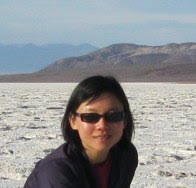 Yue Cai合作论文数Lamont-Doherty Earth Observatory of Columbia University, 61 Rt. 9W, Palisades, NY 10964, USA5
 Seung-Sep Kim合作论文数5Frank C. Ramos合作论文数Department of Geology, Washington State University5
 Jared J. Standish合作论文数5
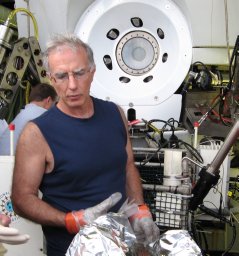 Michael R. Perfit合作论文数Department of Geological Sciences, University of Florida5
 Ken H. Rubin合作论文数Department of Geology and Geophysics, University of Hawaii5
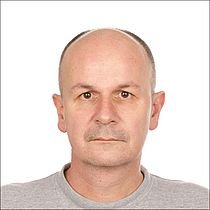 Folkmar Hauff合作论文数IFM-GEOMAR, Leibniz-Institut für Meereswissenschaften5Daniel J. Fornari合作论文数5hugo f schouten合作论文数4a von der handt合作论文数4
 Jorn Hatzky合作论文数4HJB Dick合作论文数4
 Hakkyum Choi合作论文数Div Polar Earth Syst Sci, Korea Polar Res Inst4
 Kaj Alexander Hoernle (Kaj Hoernle)合作论文数GEOMAR Helmholtz Centre for Ocean Research Kiel, Universitat Kiel4
 Christopher R. German (Chris German)合作论文数Woods Hole Oceanographic Institution4john c h lin合作论文数3n s keller合作论文数3
 Michael O. Garcia合作论文数Department of Geology & Geophysics, University of Hawaii;School of Ocean and Earth Science and Technology, University of Hawai‘i at Manoa3
 Kenneth Rubin合作论文数Department of Human Development and Quantitative Methodology, College of Education, University of Maryland;Laboratory for the Study of Child and Family Relationships, Center for Children, Relationships, and Culture, University of Maryland3
 Paul Van den Bogaard合作论文数3
 Michael J. Cheadle合作论文数Department of Geology and Geophysics, University of Wyoming3
 Douglas P Connelly合作论文数National Oceanography Centre, University of Southampton—Waterfront Campus3Doshik Hahm合作论文数3
 Joseph A Resing合作论文数Joint Institute for the Study of the Atmosphere and Ocean, University of Washington3
 Terry Plank合作论文数Department of Earth and Environmental Sciences, Lamont-Doherty Earth Observatory, Columbia University3
 Enrico Bonatti合作论文数Lamont-Doherty Earth Observatory, Columbia Climate School, Columbia University3




