Document processing pipelines traditionally cascade optical character recognition (OCR) engines with downstream models for structured information extraction, leading to multi-stage error propagation. We fine-tune SmolDocling, a compact 256M-parameter vision-language model (VLM), to perform end-to-end key-value extraction directly from document images, jointly solving identification, localization, and association in a single pass without OCR preprocessing. We extend DocTags with specialized key, value, region, and link tags, enabling many-to-many relationships in a unified output sequence. To address data limitations, we design an augmentation pipeline combining synthetic form filling and graph-based crops that preserve complete key-value subgraphs. We further introduce a layout-aware evaluation framework extending text matching with spatial bounding box verification. On FUNSD, XFUND, and a large-scale private dataset, our model outperforms larger zero-shot VLM baselines under layout-aware evaluation, while being 27 × smaller than Qwen2.5-VL (7B) and over 5 × faster at inference. The model weights will be released publicly after publication.
Modern computer-use agents (CUA) must perceive a screen as a structured state, what elements are visible, where they are, and what text they contain, before they can reliably ground instructions and act. Yet, most available grounding datasets provide sparse supervision, with and labels that annotate only a small subset of task-relevant elements per screen, which limits both coverage and generalization; moreover, practical deployment requires efficiency to enable low-latency, on-device use. We introduce , a large-scale dataset for screen parsing, with dense annotations of all visible UI elements (boxes, 55-class types, and text) across 771K web screenshots (21M elements). ScreenParse is generated by , an automated, scalable pipeline that renders diverse urls, extracts annotations and applies VLM-based relabeling and quality filtering. Using ScreenParse, we train , a compact, 316M-parameter vision language model (VLM) that decodes a compact ScreenTag markup representation with a structure-aware loss that upweights structure-critical tokens. ScreenVLM substantially outperforms much larger foundation VLMs on dense parsing (e.g., 0.592 vs. 0.294 PageIoU on ScreenParse) and shows strong transfer to public benchmarks. Moreover, finetuning foundation VLMs on ScreenParse consistently improves their grounding performance, suggesting that dense screen supervision provides transferable structural priors for UI understanding. The dataset, model and code will be made publicly available.
Automatically extracting chemical structures from documents is essential for the large-scale analysis of the literature in chemistry. Automatic pipelines have been developed to recognize molecules represented either in figures or in text independently. However, methods for recognizing chemical structures from multimodal descriptions (Markush structures) lag behind in precision and cannot be used for automatic large-scale processing. In this work, we present MarkushGrapher-2, an end-to-end approach for the multimodal recognition of chemical structures in documents. First, our method employs a dedicated OCR model to extract text from chemical images. Second, the text, image, and layout information are jointly encoded through a Vision-Text-Layout encoder and an Optical Chemical Structure Recognition vision encoder. Finally, the resulting encodings are effectively fused through a two-stage training strategy and used to auto-regressively generate a representation of the Markush structure. To address the lack of training data, we introduce an automatic pipeline for constructing a large-scale dataset of real-world Markush structures. In addition, we present IP5-M, a large manually-annotated benchmark of real-world Markush structures, designed to advance research on this challenging task. Extensive experiments show that our approach substantially outperforms state-of-the-art models in multimodal Markush structure recognition, while maintaining strong performance in molecule structure recognition. Code, models, and datasets are released publicly.
Automatically extracting chemical structures from documents is essential for information retrieval in the chemistry domain and for creating training datasets for machine learning models. Automatic pipelines have been developed to recognize molecules represented either in figures or in text independently. However, methods for recognizing chemical structures from multimodal descriptions (Markush structures) lag behind in precision and cannot be used for automatic large-scale processing.In this work, we present MarkushGrapher-2, an end-to-end approach for the multimodal recognition of chemical structures in documents. First, our method employs a dedicated OCR model to extract text from chemical images. Second, the text, image, and layout information are jointly encoded through a Vision-Text-Layout encoder and an Optical Chemical Structure Recognition vision encoder. Finally, the resulting encodings are effectively fused through a two-stage training strategy and used to auto-regressively generate a representation of the Markush structure.To address the lack of training data, we introduce an automatic pipeline for constructing a large-scale dataset of real-world Markush structures. In addition, we present IP5-M-1k, a large manually-annotated benchmark of real-world Markush structures, designed to advance research on this challenging task. Extensive experiments show that our approach substantially outperforms state-of-the-art models in multimodal Markush structure recognition, while maintaining strong performance in molecule structure recognition. Code, models, and datasets will be released publicly.
Large language models, commonly known as LLMs, are showing promise in tacking some of the most complex tasks in AI. In this perspective, we review the wider field of foundation models—of which LLMs are a component—and their application to the field of materials discovery. In addition to the current state of the art—including applications to property prediction, synthesis planning and molecular generation—we also take a look to the future, and posit how new methods of data capture, and indeed modalities of data, will influence the direction of this emerging field.
ABSTRACT Patents are integral to our shared scientific knowledge, requiring companies and inventors to stay informed about them to conduct research, find licensing opportunities, and manage legal risks. However, the rising rate of filings has made this task increasingly challenging over the years. To address this issue, we introduce ChemQuery, a tool for easily exploring chemistry‐related patents using natural language questions. Traditional systems rely on simplistic keyword‐based searches to find patents that might be relevant to a user's request. In contrast, ChemQuery uses up‐to‐date information to return specific answers, along with their sources. It also offers a more comprehensive search experience to the users, thanks to capabilities like extracting molecules from diagrams, integrating information from PubChem, and allowing complex queries about molecular structures. We conduct a thorough empirical evaluation of ChemQuery and compare it with several baseline approaches. The results highlight the practical utility and limitations of our tool.
Retrieval Augmented Generation (RAG) systems are a widespread application of Large Language Models (LLMs) in the industry. While many tools exist empowering developers to build their own systems, measuring their performance locally, with datasets reflective of the system's use cases, is a technological challenge. Solutions to this problem range from non-specific and cheap (most public datasets) to specific and costly (generating data from local documents). In this paper, we show that using public question and answer (Q A) datasets to assess retrieval performance can lead to non-optimal systems design, and that common tools for RAG dataset generation can lead to unbalanced data. We propose solutions to these issues based on the characterization of RAG datasets through labels and through label-targeted data generation. Finally, we show that fine-tuned small LLMs can efficiently generate Q A datasets. We believe that these observations are invaluable to the know-your-data step of RAG systems development.
We introduce Granite Vision, a lightweight large language model with vision capabilities, specifically designed to excel in enterprise use cases, particularly in visual document understanding. Our model is trained on a comprehensive instruction-following dataset, including document-related tasks, such as content extraction from tables, charts, diagrams, sketches, and infographics, as well as general image tasks. The architecture of Granite Vision is centered around visual modality alignment with a decoder-only, 2 billion parameter Granite large language model. Additionally, we introduce a dedicated safety classification approach in test-time that leverages a sparse set of attention vectors to identify potential harmful inputs. Despite its lightweight architecture, Granite Vision achieves strong results in standard benchmarks related to visual document understanding, as well as on the LiveXiv benchmark, which is designed to avoid test set contamination by using a constantly updated corpus of recently published Arxiv papers. We are releasing the model under the Apache-2 license, allowing for both research and commercial use, while offering complete visibility into the training data and other relevant details. See https://huggingface.co/ibm-granite/ for model weights.
We introduce Docling, an easy-to-use, self-contained, MIT-licensed, open-source toolkit for document conversion, that can parse several types of popular document formats into a unified, richly structured representation. It is powered by state-of-the-art specialized AI models for layout analysis (DocLayNet) and table structure recognition (TableFormer), and runs efficiently on commodity hardware in a small resource budget. Docling is released as a Python package and can be used as a Python API or as a CLI tool. Docling's modular architecture and efficient document representation make it easy to implement extensions, new features, models, and customizations. Docling has been already integrated in other popular open-source frameworks (e.g., LangChain, LlamaIndex, spaCy), making it a natural fit for the processing of documents and the development of high-end applications. The open-source community has fully engaged in using, promoting, and developing for Docling, which gathered 10k stars on GitHub in less than a month and was reported as the No. 1 trending repository in GitHub worldwide in November 2024.
We introduce SmolDocling, an ultra-compact vision-language model targeting end-to-end document conversion. Our model comprehensively processes entire pages by generating DocTags, a new universal markup format that captures all page elements in their full context with location. Unlike existing approaches that rely on large foundational models, or ensemble solutions that rely on handcrafted pipelines of multiple specialized models, SmolDocling offers an end-to-end conversion for accurately capturing content, structure and spatial location of document elements in a 256M parameters vision-language model. SmolDocling exhibits robust performance in correctly reproducing document features such as code listings, tables, equations, charts, lists, and more across a diverse range of document types including business documents, academic papers, technical reports, patents, and forms – significantly extending beyond the commonly observed focus on scientific papers. Additionally, we contribute novel publicly sourced datasets for charts, tables, equations, and code recognition. Experimental results demonstrate that SmolDocling competes with other Vision Language Models that are up to 27 times larger in size, while reducing computational requirements substantially. The model is currently available, datasets will be publicly available soon.
The automated analysis of chemical literature holds promise to accelerate discovery in fields such as material science and drug development. In particular, search capabilities for chemical structures and Markush structures (chemical structure templates) within patent documents are valuable, e.g., for prior-art search. Advancements have been made in the automatic extraction of chemical structures from text and images, yet the Markush structures remain largely unexplored due to their complex multi-modal nature. In this work, we present MarkushGrapher, a multimodal approach for recognizing Markush structures in documents. Our method jointly encodes text, image, and layout information through a Vision-Text-Layout encoder and an Optical Chemical Structure Recognition vision encoder. These representations are merged and used to autoregressively generate a sequential graph representation of the Markush structure along with a table defining its variable groups. To overcome the lack of real-world training data, we propose a synthetic data generation pipeline that produces a wide range of realistic Markush structures. Additionally, we present M2S, the first annotated benchmark of real-world Markush structures, to advance research on this challenging task. Extensive experiments demonstrate that our approach outperforms state-of-the-art chemistry-specific and general-purpose vision-language models in most evaluation settings. Code, models, and datasets are available (1).
Environment, Social, and Governance (ESG) KPIs assess an organization's performance on issues such as climate change, greenhouse gas emissions, water consumption, waste management, human rights, diversity, and policies. ESG reports convey this valuable quantitative information through tables. Unfortunately, extracting this information is difficult due to high variability in the table structure as well as content. We propose Statements, a novel domain agnostic data structure for extracting quantitative facts and related information. We propose translating tables to statements as a new supervised deep-learning universal information extraction task. We introduce SemTabNet - a dataset of over 100K annotated tables. Investigating a family of T5-based Statement Extraction Models, our best model generates statements which are 82 similar to the ground-truth (compared to baseline of 21 advantages of statements by applying our model to over 2700 tables from ESG reports. The homogeneous nature of statements permits exploratory data analysis on expansive information found in large collections of ESG reports.
This technical report introduces Docling, an easy to use, self-contained, MIT-licensed open-source package for PDF document conversion. It is powered by state-of-the-art specialized AI models for layout analysis (DocLayNet) and table structure recognition (TableFormer), and runs efficiently on commodity hardware in a small resource budget. The code interface allows for easy extensibility and addition of new features and models.
We study clustering in a query-based model where the learner can repeatedly query an oracle to determine if two items belong to the same cluster. However, these queries are costly and the oracle's responses are marred by inconsistency and noise. The learner's goal is to adaptively make a small number of queries and return the correct clusters for all n items with high confidence. We develop efficient algorithms for this problem using the sequential hypothesis testing framework. We derive high probability upper bounds on their sample complexity (the number of queries they make) and complement this analysis with an information-theoretic lower bound. In particular, we show that our algorithm for two clusters is nearly optimal when the oracle's error probability is a constant. Our experiments verify these findings and highlight a few shortcomings of our algorithms. Namely, we show that their sample complexity deviates from the lower bound when the error probability of the oracle depends on n. We suggest an improvement based on a more efficient sequential hypothesis test and demonstrate it empirically.
Large language models (LLMs) trained on general domain corpora showed remarkable results on natural language processing (NLP) tasks. However, previous research demonstrated LLMs trained using domain-focused corpora perform better on specialized tasks. Inspired by this insight, we developed INDUS, a comprehensive suite of LLMs tailored for the closely-related domains of Earth science, biology, physics, heliophysics, planetary sciences and astrophysics, and trained using curated scientific corpora drawn from diverse data sources. The suite of models include: (1) an encoder model trained using domain-specific vocabulary and corpora to address NLP tasks, (2) a contrastive-learning based text embedding model trained using a diverse set of datasets to address information retrieval tasks and (3) smaller versions of these models created using knowledge distillation for applications which have latency or resource constraints. We also created three new scientific benchmark datasets, Climate-Change NER (entity-recognition), NASA-QA (extractive QA) and NASA-IR (IR) to accelerate research in these multi-disciplinary fields. We show that our models outperform both general-purpose (RoBERTa) and domain- specific (SciBERT) encoders on these new tasks as well as existing tasks in the domains of interest. Furthermore, we demonstrate the use of these models in two industrial settings- as a retrieval model for large-scale vector search applications and in automatic content tagging systems.
Background: The task of writing structured content reviews and guidelines has grown stronger and more complex. We propose to go beyond search tools and toward curation tools by automating time-consuming and repetitive steps of extracting and organizing information. Methods: SciScribe is built as an extension of IBM's Deep Search platform, which provides document processing and search capabilities. This platform was used to ingest and search full-content publications from PubMed Central (PMC) and official, structured records from the ClinicalTrials and OpenPayments databases. Author names and NCT numbers, mentioned within the publications, were used to link publications to these official records as context. Search strategies involve traditional keyword-based search as well as natural language question and answering via large language models (LLMs). Results: SciScribe is a web-based tool that helps accelerate literature reviews through key features: (1) accumulating a personal collection from publication sources, such as PMC or other sources; (2) incorporating contextual information from external databases into the presented papers, promoting a more informed assessment by readers; (3) semantic questioning and answering of documents to quickly assess relevance and hierarchical organization; and (4) semantic question answering for each document within a collection, collated into tables. Conclusions: Emergent language processing techniques are opening new avenues to accelerate and enhance the literature review process, for which we have demonstrated a use case implementation in cardiac surgery. SciScribe automates and accelerates this process, mitigates errors associated with repetition and fatigue, and contextualizes results by linking relevant external data sources instantaneously.
In recent years, the challenge of extracting information from business documents has emerged as a critical task, finding applications across numerous domains. This effort has attracted substantial interest from both industry and academy, highlighting its significance in the current technological landscape. Most datasets in this area are primarily focused on Key Information Extraction (KIE), where the extraction process revolves around extracting information using a specific, predefined set of keys. Unlike most existing datasets and benchmarks, our focus is on discovering key-value pairs (KVPs) without relying on predefined keys, navigating through an array of diverse templates and complex layouts. This task presents unique challenges, primarily due to the absence of comprehensive datasets and benchmarks tailored for non-predetermined KVP extraction. To address this gap, we introduce KVP10k , a new dataset and benchmark specifically designed for KVP extraction. The dataset contains 10707 richly annotated images. In our benchmark, we also introduce a new challenging task that combines elements of KIE as well as KVP in a single task. KVP10k sets itself apart with its extensive diversity in data and richly detailed annotations, paving the way for advancements in the field of information extraction from complex business documents.
We present Deep Search DocQA. This application enables information extraction from documents via a question-answering conversational assistant. The system integrates several technologies from different AI disciplines consisting of document conversion to machine-readable format (via computer vision), finding relevant data (via natural language processing), and formulating an eloquent response (via large language models). Users can explore over 10,000 Environmental, Social, and Governance (ESG) disclosure reports from over 2000 corporations. The Deep Search platform can be accessed at: https://ds4sd.github.io.
 Dolfi Michele合作论文数Theoretische Physik, ETH Zurich20
 Christoph Auer合作论文数Inst Med Biometry Informat, Heidelberg Univ18
 Ahmed Nassar合作论文数IBM Research – Zurich Laboratory17
 Lucas Morin合作论文数IBM Research;Department of Information Technology and Electrical Engineering, ETH Zürich12
 Thomas C. Schulthess合作论文数Institute for Theoretical Physics, ETH Zurich;Dep. of Physics, ETH Zurich12
 Thomas Maier合作论文数Department of Physics and Astronomy, University of Tennessee;Computational Science and Engineering Division, Center For Nanophase Materials Sciences, Oak Ridge National Laboratory11
 Costas Bekas合作论文数Citadel Securities11
 Maksym Lysak合作论文数10
 Nikolaos Livathinos合作论文数10Cesar Berrospi Ramis合作论文数9Valéry Weber合作论文数9
 Shubham Gupta合作论文数Statistics and Machine Learning Group, Department of Computer Science and Automation, Indian Institute of Science Bangalore7Rafael Teixeira de Lima合作论文数5Anton Kozhevnikov合作论文数5G. I. Meijer合作论文数5
 Heiner Giefers合作论文数IBM Research Zurich5
 Kasper Dinkla合作论文数Eindhoven University of Technology5
 Alessandro Curioni合作论文数IBM Research5Lokesh Mishra合作论文数4
 Panagiotis Kl. Barkoutsos合作论文数IBM Quantum, IBM Res Europe4
 Ivano Tavernelli合作论文数IBM Research4
 Nikolaj Moll合作论文数Boehringer Ingelheim4Matteo Omenetti合作论文数3Michael S. Summers合作论文数3Panagiotis Vagenas合作论文数3T. A. Maier合作论文数3Urs Haehner合作论文数3Viktor Kuropiatnyk合作论文数3
 Assaf Arbelle合作论文数Ben-Gurion University of the Negev3
 Udi Barzelay合作论文数IBM3
 Roei Herzig合作论文数Berkeley AI Research Lab, University of California, Berkeley3
 Diego Antognini合作论文数Google DeepMind;Lucerne University of Applied Sciences and Arts3
 Francesco Fusco合作论文数IBM Research3
 Eli Schwartz合作论文数IBM Research AI3
 Sivan Harary合作论文数IBM3
 Leonid Karlinsky合作论文数MIT-IBM Watson AI Lab, IBM Research3
 A. Cristiano I. Malossi合作论文数Mathematics Institute of Computational Science and Engineering, ícole Polytechnique Fédérale de Lausanne3
 Teodoro Laino合作论文数IBM Research - Zurich Laboratory3
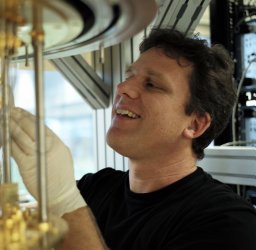 Andreas Fuhrer合作论文数Solid State Physics Laboratory, ETH Zürich3Ophir Azulai合作论文数3
 Fisher Yu合作论文数Huawei Technologies Ltd.3
 Oshri Naparstek合作论文数3
 Raffaele Solca合作论文数3
 Matthias Troyer合作论文数Swiss Joint Research Center, Microsoft;Stellenbosch University3
 Rogerio Schmidt Feris合作论文数MIT-IBM Watson AI Lab, IBM Research3Edward O. Pyzer-Knapp合作论文数2Adi Raz Goldfarb合作论文数2
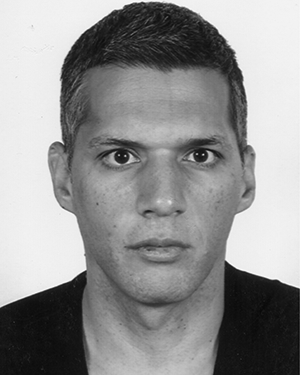 Stelios Kaloutsakis合作论文数2André Carvalho合作论文数2




