Ergodic search enables optimal exploration of an information distribution with guaranteed asymptotic coverage of the search space. However, current methods typically have exponential computational complexity and are limited to Euclidean space. We introduce a computationally efficient ergodic search method. Our contributions are two-fold as follows: First, we develop a kernel-based ergodic metric, generalizing it from Euclidean space to Lie groups. We prove this metric is consistent with the exact ergodic metric and ensures linear complexity. Second, we derive an iterative optimal control algorithm for trajectory optimization with the kernel metric. Numerical benchmarks show our method is two orders of magnitude faster than the state-of-the-art method. Finally, we demonstrate the proposed algorithm with a peg-in-hole insertion task. We formulate the problem as a coverage task in the space of SE(3) and use a 30-s-long human demonstration as the prior distribution for ergodic coverage. Ergodicity guarantees the asymptotic solution of the peg-in-hole problem so long as the solution resides within the prior information distribution, which is seen in the 100% success rate.
Game-theoretic models are effective tools for modeling multi-agent interactions, especially when robots need to coordinate with humans. However, applying these models requires inferring their specifications from observed behaviors -- a challenging task known as the inverse game problem. Existing inverse game approaches often struggle to account for behavioral uncertainty and measurement noise, and leverage both offline and online data. To address these limitations, we propose an inverse game method that integrates a generative trajectory model into a differentiable mixed-strategy game framework. By representing the mixed strategy with a conditional variational autoencoder (CVAE), our method can infer high-dimensional, multi-modal behavior distributions from noisy measurements while adapting in real-time to new observations. We extensively evaluate our method in a simulated navigation benchmark, where the observations are generated by an unknown game model. Despite the model mismatch, our method can infer Nash-optimal actions comparable to those of the ground-truth model and the oracle inverse game baseline, even in the presence of uncertain agent objectives and noisy measurements.
A major challenge to deploying robots widely is navigation in human-populated environments, commonly referred to as social robot navigation. While the field of social navigation has advanced tremendously in recent years, the fair evaluation of algorithms that tackle social navigation remains hard because it involves not just robotic agents moving in static environments but also dynamic human agents and their perceptions of the appropriateness of robot behavior. In contrast, clear, repeatable, and accessible benchmarks have accelerated progress in fields like computer vision, natural language processing and traditional robot navigation by enabling researchers to fairly compare algorithms, revealing limitations of existing solutions and illuminating promising new directions. We believe the same approach can benefit social navigation. In this paper, we pave the road towards common, widely accessible, and repeatable benchmarking criteria to evaluate social robot navigation. Our contributions include (a) a definition of a socially navigating robot as one that respects the principles of safety, comfort, legibility, politeness, social competency, agent understanding, proactivity, and responsiveness to context, (b) guidelines for the use of metrics, development of scenarios, benchmarks, datasets, and simulators to evaluate social navigation, and (c) a design of a social navigation metrics framework to make it easier to compare results from different simulators, robots and datasets.
A widely accepted explanation for robots planning overcautious or overaggressive trajectories alongside human is that the crowd density exceeds a threshold such that all feasible trajectories are considered unsafe -- the freezing robot problem. However, even with low crowd density, the robot's navigation performance could still drop drastically when in close proximity to human. In this work, we argue that a broader cause of suboptimal navigation performance near human is due to the robot's misjudgement for the human's willingness (flexibility) to share space with others, particularly when the robot assumes the human's flexibility holds constant during interaction, a phenomenon of what we call human robot pacing mismatch. We show that the necessary condition for solving pacing mismatch is to model the evolution of both the robot and the human's flexibility during decision making, a strategy called distribution space modeling. We demonstrate the advantage of distribution space coupling through an anecdotal case study and discuss the future directions of solving human robot pacing mismatch.
Robots navigating in crowded areas should negotiate free space with humans rather than fully controlling collision avoidance, as this can lead to freezing behavior. Game theory provides a framework for the robot to reason about potential cooperation from humans for collision avoidance during path planning. In particular, the mixed strategy Nash equilibrium captures the negotiation behavior under uncertainty, making it well suited for crowd navigation. However, computing the mixed strategy Nash equilibrium is often prohibitively expensive for real-time decision-making. In this paper, we propose an iterative Bayesian update scheme over probability distributions of trajectories. The algorithm simultaneously generates a stochastic plan for the robot and probabilistic predictions of other pedestrians’ paths. We prove that the proposed algorithm is equivalent to solving a mixed strategy game for crowd navigation, and the algorithm guarantees the recovery of the global Nash equilibrium of the game. We name our algorithm Bayesian Recursive Nash Equilibrium (BRNE) and develop a real-time model prediction crowd navigation framework. Since BRNE is not solving a general-purpose mixed strategy Nash equilibrium but a tailored formula specifically for crowd navigation, it can compute the solution in real-time on a low-power embedded computer. We evaluate BRNE in both simulated environments and real-world pedestrian datasets. BRNE consistently outperforms non-learning and learning-based methods regarding safety and navigation efficiency. It also reaches human-level crowd navigation performance in the pedestrian dataset benchmark. Lastly, we demonstrate the practicality of our algorithm with real humans on an untethered quadruped robot with fully onboard perception and computation.
Robot navigation in crowded public spaces is a complex task that requires addressing a variety of engineering and human factors challenges. These challenges have motivated a great amount of research resulting in important developments for the fields of robotics and human-robot interaction over the past three decades. Despite the significant progress and the massive recent interest, we observe a number of significant remaining challenges that prohibit the seamless deployment of autonomous robots in crowded environments. In this survey article, we organize existing challenges into a set of categories related to broader open problems in robot planning, behavior design, and evaluation methodologies. Within these categories, we review past work and offer directions for future research. Our work builds upon and extends earlier survey efforts by (a) taking a critical perspective and diagnosing fundamental limitations of adopted practices in the field and (b) offering constructive feedback and ideas that could inspire research in the field over the coming decade.
Cooperatively avoiding collision is a critical functionality for robots navigating in dense human crowds, failure of which could lead to either overaggressive or overcautious behavior. A necessary condition for cooperative collision avoidance is to couple the prediction of the agents' trajectories with the planning of the robot's trajectory. However, it is unclear that trajectory based cooperative collision avoidance captures the correct agent attributes. In this work we migrate from trajectory based coupling to a formalism that couples agent preference distributions. In particular, we show that preference distributions (probability density functions representing agents' intentions) can capture higher order statistics of agent behaviors, such as willingness to cooperate. Thus, coupling in distribution space exploits more information about inter-agent cooperation than coupling in trajectory space. We thus introduce a general objective for coupled prediction and planning in distribution space, and propose an iterative best response optimization method based on variational analysis with guaranteed sufficient decrease. Based on this analysis, we develop a sampling-based motion planning framework called DistNav that runs in real time on a laptop CPU. We evaluate our approach on challenging scenarios from both real world datasets and simulation environments, and benchmark against a wide variety of model based and machine learning based approaches. The safety and efficiency statistics of our approach outperform all other models. Finally, we find that DistNav is competitive with human safety and efficiency performance.
Constructing realistic and real time human-robot interaction models is a core challenge in crowd navigation. In this paper we derive a robot-agent interaction density from first principles of probability theory; we call our approach “first order interacting Gaussian processes” (foIGP). Furthermore, we compute locally optimal solutions—with respect to multi-faceted agent “intent” and “flexibility”—in near real time on a laptop CPU. We test on challenging scenarios from the ETH crowd dataset and show that the safety and efficiency statistics of foIGP is competitive with human safety and efficiency statistics. Further, we compute the safety and efficiency statistics of dynamic window avoidance, a physics based model variant of foIGP, a Monte Carlo inference based approach, and the best performing deep reinforcement learning algorithm; foIGP outperforms all of them.
Real-time navigation in dense human environments is a challenging problem in robotics. Most existing path planners fail to account for the dynamics of pedestrians because introducing time as an additional dimension in search space is computationally prohibitive. Alternatively, most local motion planners only address imminent collision avoidance and fail to offer long-term optimality. In this work, we present an approach, called Dynamic Channels, to solve this global to local quandary. Our method combines the high-level topological path planning with low-level motion planning into a complete pipeline. By formulating the path planning problem as graph-searching in the triangulation space, our planner is able to explicitly reason about the obstacle dynamics and capture the environmental change efficiently. We evaluate efficiency and performance of our approach on public pedestrian datasets and compare it to a state-of-the-art planning algorithm for dynamic obstacle avoidance.
In this article we present the basics of manifold relevance determination (MRD) as introduced in \cite{mrd}, and some applications where the technology might be of particular use. Section 1 acts as a short tutorial of the ideas developed in \cite{mrd}, while Section 2 presents possible applications in sensor fusion, multi-agent SLAM, and human-appropriate robot movement (e.g. legibility and predictability~\cite{dragan-hri-2013}). In particular, we show how MRD can be used to construct the underlying models in a data driven manner, rather than directly leveraging first principles theories (e.g., physics, psychology) as is commonly the case for sensor fusion, SLAM, and human robot interaction. We note that [Bekiroglu et al., 2016] leveraged MRD for correcting unstable robot grasps to stable robot grasps.
Human machine teaming has, for decades, been conceptualized as a function allocation (FA) or levels of autonomy (LOA) process: the human is suited for some tasks, while the machine is suitable for others, and as machines improve they take over duties previously assigned to humans. A wide variety of methods-including adaptive, adjustable, blended, supervisory and mixed initiative control, implemented discretely or continuously, as potential fields, as virtual fixture interfaces, or haptic interfaces-are derivatives of FA/LOA. We formalize FA/LOA (and all their derivatives) under a single mathematical formulation called classical shared control (CSC). Despite the widespread adoption of CSC, we prove that it fails to optimize human and robot agreement and intent if either the human or robot model displays "intention ambiguity" (e.g., the human's intended goal is unclear or the robot finds multiple viable solutions). Practically, this suboptimality can manifest as unnecessary and unresolvable disagreement (an unnecessary deadlock). For instance, if the robot chooses to go left around an obstacle and the human chooses to go right, CSC only provides two solutions: freeze in place or collide with the obstacle (we provide a wide variety of failure examples in [52], https://arxiv.org/abs/1611.09490). We find that CSC suboptimality stems from arbitrating over model samples, rather than over models. Our key insight is thus to arbitrate over human and robot distributions; we prove this method optimizes human and robot agreement and intent and resolves deadlocking. Our key contribution is computationally efficient distribution arbitration: if the human and robot carry N-t(h) and N-t(R) "intentions," the joint (naively) has N-t(h) N-t(R) intentions. In our approach, deadlock solutions have vanishingly small coefficients and only N-min = arg min {N-t(h); N-t(R)} non-zero coefficients remain: our joint has fewer modes than the individual agent models. We call our approach N-min-sparse generalized shared control.
Some people with severe mobility impairments are unable to operate powered wheelchairs reliably and effectively, using commercially available interfaces. This has sparked a body of research into "smart wheelchairs", which assist users to drive safely and create opportunities for them to use alternative interfaces. Various "shared control" techniques have been proposed to provide an appropriate level of assistance that is satisfactory and acceptable to the user. Most shared control techniques employ a traditional strategy called linear blending (LB), where the user's commands and wheelchair's autonomous commands are combined in some proportion. In this paper, however, we implement a more generalised form of shared control called probabilistic shared control (PSC). This probabilistic formulation improves the accuracy of modelling the interaction between the user and the wheelchair by taking into account uncertainty in the interaction. In this paper, we demonstrate the practical success of PSC over LB in terms of safety, particularly for novice users.
We study the sparsity and optimality properties of crowd navigation and find that existing techniques do not satisfy both criteria simultaneously: either they achieve optimality with a prohibitive number of samples or tractability assumptions make them fragile to catastrophe. For example, if the human and robot are modeled independently, then tractability is attained but the planner is prone to overcautious or overaggressive behavior. For sampling based motion planning of joint human-robot cost functions, for n t agents and T step lookahead, 0(2 2n t T ) samples are needed for coverage of the action space. Advanced approaches statically partition the action space into free-space and then sample in those convex regions. However, if the human is moving into free-space, then the partition is misleading and sampling is unsafe: free space will soon be occupied. We diagnose the cause of these deficiencies - optimization happens over trajectory space - and propose a novel solution: optimize over trajectory distribution space by using a Gaussian process (GP) basis. We exploit the “kernel trick” of GPs, where a continuum of trajectories are captured with a mean and covariance function. By using the mean and covariance as proxies for a trajectory family we reason about collective trajectory behavior without resorting to sampling. The GP basis is sparse and optimal with respect to collision avoidance and robot and crowd intention and flexibility. GP sparsity leans heavily on the insight that joint action space decomposes into free regions; however, the decomposition contains feasible solutions only if the partition is dynamically generated. We call our approach 0(2 n t )-sparse interacting Gaussian processes.
Independent mobility is important for the self-esteem and well-being of people with mobility impairments. For people with severe disabilities, there is a body of research investigating how best to share control of motion between a person with disabilities and a "smart wheelchair". Traditionally in "shared control", the control law is a linear combination of the human's intended velocity and the path planner's velocity. However, this formulation of sharing control between a human and a machine does not guarantee safety on a theoretical level. To guarantee safety in formulating the blending of the human's input velocity and planner's velocity, we implement a practical form of probabilistic shared control formulated by Trautman. We tested this shared control by conducting experiments in a simulation where participants drive a wheelchair. The results of the experiment suggest probabilistic shared control has similar performance to linear blending in terms of significant reduction in number of collisions. However, for the sip-puff switch (a particularly difficult interface to use), probabilistic shared control yielded a greater reduction in collisions than linear blending.
We begin with a disquieting paradox: human machine teaming (HMT) often produces results worse than either the human or machine would produce alone. Critically, this failure is not a result of inferior human modeling or a suboptimal autonomy: even with perfect knowledge of human intention and perfect autonomy performance, prevailing teaming architectures still fail under trivial stressors~\cite{trautman-smc-2015}. This failure is instead a result of deficiencies at the \emph{decision fusion level}. Accordingly, \emph{efforts aimed solely at improving human prediction or improving autonomous performance will not produce acceptable HMTs: we can no longer model humans, machines and adversaries as distinct entities.} We thus argue for a strong but essential condition: HMTs should perform no worse than either member of the team alone, and this performance bound should be independent of environment complexity, human-machine interfacing, accuracy of the human model, or reliability of autonomy or human decision making.
Shared control fuses operator inputs and autonomy inputs into a single command. However, if environmental or operator predictions are multimodal, state of the art approaches are suboptimal with respect to safety, efficiency, and operator-autonomy agreement: even under mildly challenging conditions, existing approaches can fuse two safe inputs into an \emph{unsafe} shared control. Multimodal conditions are common to many real world applications, such as search and rescue robots navigating disaster zones, teleoperated robots facing communication degradation, and assistive driving technologies. In~\cite{trautman-smc-2015}, we introduced a novel approach called \emph{interacting random trajectories} (IRT) that simultaneously optimizes autonomy objectives (e.g., safety and efficiency) and operator-autonomy agreement under multimodal conditions; this optimality prevents such unsafe shared control. In this paper, we describe those results in more user friendly language by using illustrations and text.
Shared control fuses operator inputs and autonomy inputs into a single command. However, if environmental or operator predictions are multimodal, state of the art approaches are suboptimal with respect to safety, efficiency, and operator-autonomy agreement: even under mildly challenging conditions, existing approaches can fuse two safe inputs into an unsafe shared control [13]. Multi-modal conditions are common to many real world applications, such as search and rescue robots navigating disaster zones, teleoperated robots facing communication degradation, and assistive driving technologies. In [11, 13], we introduced a novel approach called generalized shared control (GSC) that simultaneously optimizes autonomy objectives (e.g., safety and efficiency) and operator-autonomy agreement under multimodal conditions; this optimality prevents such unsafe shared control. In this paper, we describe those results in more user friendly language by using illustrations and text.
We present a possible method for integrating high level and low level planning. To do so, we introduce the global plan random trajectory η_0 [1,T] →ℝ^2, measured by goals G_i and governed by the distribution p(η_0 |{ G_i}_i=1^m). This distribution is combined with the low level robot-crowd planner p(𝐟^R,𝐟^1,…,𝐟^n|𝐳_1:t) (from ) in the distribution p(η_0,𝐟^(R),𝐟|𝐳_1:t). We explore this integrated planning formulation in three case studies, and in the process find that this formulation 1) generalizes the ROS navigation stack in a practically useful way 2) arbitrates between high and low level decision making in a statistically sound manner when unanticipated local disturbances arise and 3) enables the integration of an onboard operator providing real time input at either the global (e.g., waypoint designation) or local (e.g., joystick) level. Importantly, the integrated planning formulation p(η_0,𝐟^(R),𝐟|𝐳_1:t) highlights failure modes of the ROS navigation stack (and thus for standard hierarchical planning architectures); these failure modes are resolved by using p(η_0,𝐟^(R),𝐟|𝐳_1:t). Finally, we conclude with a discussion of how results from formal methods can guide our factorization of p(η_0,𝐟^(R),𝐟|𝐳_1:t).
We explore the probabilistic foundations of shared control in complex dynamic environments. In order to do this, we formulate shared control as a random process and describe the joint distribution that governs its behavior. For tractability, we model the relationships between the operator, autonomy, and crowd as an undirected graphical model. Further, we introduce an interaction function between the operator and the robot, that we call "agreeability", in combination with the methods developed in [26], we extend a cooperative collision avoidance autonomy to shared control. We therefore quantify the notion of simultaneously optimizing over agreeability (between the operator and autonomy), and safety and efficiency in crowded environments. We show that for a particular form of interaction function between the autonomy and the operator, linear blending is recovered exactly. Additionally, to recover linear blending, unimodal restrictions must be placed on the models describing the operator and the autonomy. In turn, these restrictions raise questions about the flexibility and applicability of the linear blending framework. Additionally, we present an extension of linear blending called "operator biased linear trajectory blending" (which formalizes some recent approaches in linear blending such as [10]) and show that not only is this also a restrictive special case of our probabilistic approach, but more importantly, is statistically unsound, and thus, mathematically, unsuitable for implementation. Instead, we suggest a statistically principled approach that guarantees data is used in a consistent manner, and show how this alternative approach converges to the full probabilistic framework. We conclude by proving that, in general, linear blending is suboptimal with respect to the joint metric of agreeability, safety, and efficiency.
We discuss some of the challenges facing shared autonomy. In particular, we explore 1) shared autonomy over unreliable networks, 2) how we can model individual human operators (in contrast to the average of a human operator), and 3) how our approach naturally models and integrates sliding autonomy into the joint human-machine system. We include a Background Section for completeness.
 Muchen Sun合作论文数4
 Todd D. Murphey合作论文数Interactive & Emergent Autonomy Lab, Center for Robotics and Biosystems, Northwestern University4
 Francesca Baldini合作论文数CALTECH, Pasadena, CA 91125 USA3
 Andreas Krause合作论文数Learning & Adaptive Systems Group, Machine Learning Institute, Department of Computer Science, ETH Zurich;Swiss Data Science Center;Max Planck Institute for Intelligent Systems;AI Center, ETH Zurich;LatticeFlow3
 Chinemelu Ezeh合作论文数Aspire Create, Univ Coll London2
 Tom Carlson合作论文数2
 Hui Li 合作论文数2
 Dirk Morr合作论文数Department of Physics, College of Liberal Arts and Sciences, University of Illinois Chicago2
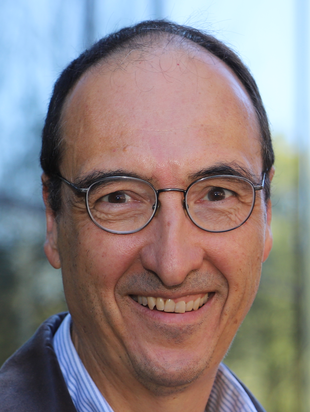 Richard M. Murray合作论文数Division of Biology and Biological Engineering, California Institute of Technology2
 Jeremy Ma合作论文数2
 Max Muchen Sun合作论文数Center for Robotics and Biosystems, Northwestern University1
 Hao-Tien Lewis Chiang合作论文数1
 Chengshu (Eric) Li合作论文数OpenAI1
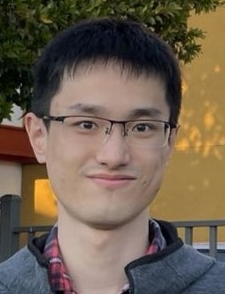 Allan Wang合作论文数Miraikan Accessibility Laboratory1Karankumar Patel合作论文数1
 Luis J. Manso合作论文数1
 Michael J. Graf合作论文数1
 Peng Xu合作论文数Google DeepMind1
 Dapeng Zhao合作论文数Robotics Institute, Carnegie Mellon University1
 Abhijat Biswas合作论文数Robot Inst, Carnegie Mellon Univ1
 Xuesu Xiao合作论文数Department of Computer Science, George Mason University;Unsorted1
 Justin Hart合作论文数Department of Computer Science, College of Natural Sciences, University of Texas at Austin1
 Edward Lee合作论文数1
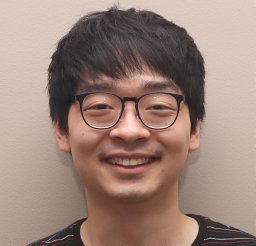 Naoki Yokoyama合作论文数Apple;Georgia Institute of Technology1
 Phani Teja Singamaneni合作论文数IIIT Hyderabad, Robot Res Lab, Hyderabad 500032, TS, India1
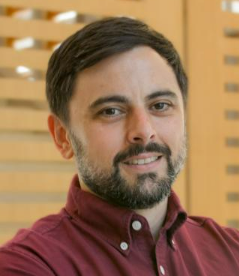 Roberto Martín-Martín合作论文数Department of Computer Science, College of Natural Sciences, The University of Texas at Austin1
 Devigne Louise合作论文数1
 Marynel Vázquez合作论文数Department of Computer Science, Yale University1
 Catherine Holloway合作论文数Division of Psychology and Language Sciences, Faculty of Brain Sciences, University College London1
 Aniket Bera合作论文数Department of Computer Science, Purdue University;Intelligent Design for Empathetic and Augmented Systems Lab, Purdue University;University of Maryland, College Park1
 Michael Everett合作论文数Department of Electrical & Computer Engineering, Northeastern University;Khoury College of Computer Sciences, Northeastern University;Autonomy & Intelligence Laboratory, Northeastern University1
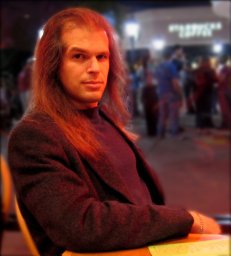 Anthony Francis合作论文数Salesian Pontifical Univ Rome Italy1
 Nathan Tsoi合作论文数Computer Science Department, Stanford University;Social Robotics Lab, Stanford University1
 Chao Cao合作论文数Hangzhou Normal University, Hangzhou Normal University1
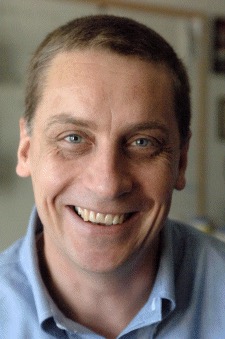 Jonathan P. How合作论文数Aerospace Controls Laboratory, Department of Aeronautics and Astronautics, Massachusetts Institute of Technology1
 Aaron Steinfeld合作论文数Robotics Institute, School of Computer Science, Carnegie Mellon University1
 Rachid Alami合作论文数Laboratory for Analysis and Architecture of Systems, CNRS;Artificial and Natural Intelligence Toulouse Institute1
 Joydeep Biswas合作论文数Department of Computer Science, College of Natural Sciences, The University of Texas at Austin1Soshi Iba合作论文数Honda Research Institute USA1
 Soren Pirk合作论文数Visual Computing and Artificial Intelligence lab, Department of Computer Science, Kiel University1
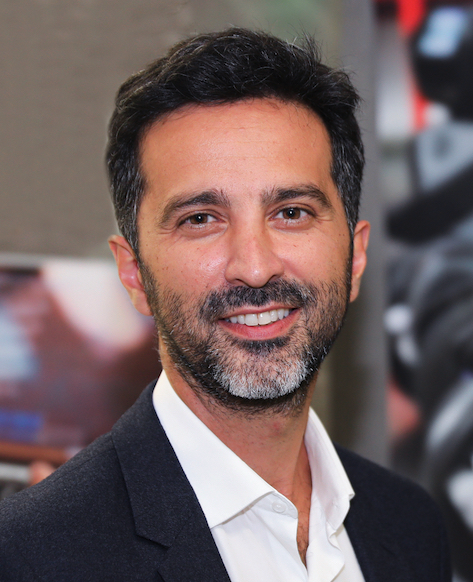 Alexandre Alahi合作论文数École Polytechnique Fédérale De Lausanne1
 Rohan Chandra合作论文数University of Texas, Austin1
 Haresh Karnan 合作论文数The University of Texas at Austin1
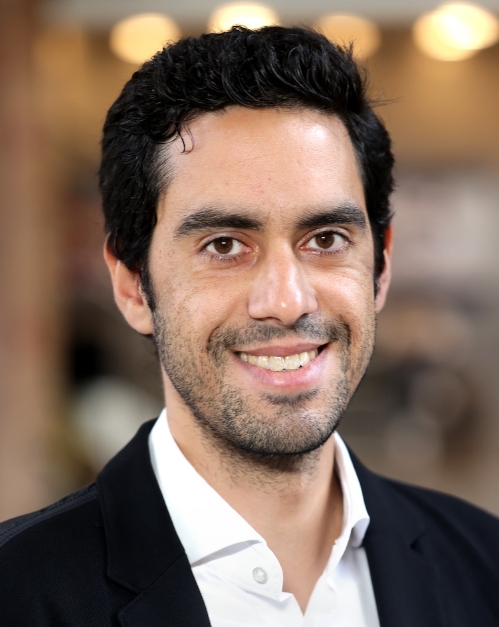 Chris Mavrogiannis合作论文数Fluent Robotics Lab, Department of Robotics, University of Michigan1
 Reuth Mirsky合作论文数Goal Optimization Using Learning and Decision-Making Lab, Department of Computer Science, School of Engineering, Tufts University1
 Fei Xia (夏斐)合作论文数Google DeepMind1
 Peter Stone合作论文数Department of Computer Science, College of Natural Sciences, The University of Texas at Austin;Sony AI;Sony Research1
 Claudia Pérez-D'Arpino合作论文数Massachusetts Institute of Technology1
 Matthias J. Graf合作论文数Theoretical Division;Los Alamos National Laboratory;Theoretical Division, Los Alamos National Laboratory1




