The deactivation mechanisms of the Au/CeO2 catalyst in steady-state and shutdown/start-up WGS reactions were investigated in realistic reformate at 250°C. Catalyst deactivation due to sintering was excluded. After steady-state operation, the original activity was not recovered by removing the deposited carbonate species. The influences of the component gases of realistic reformate on the activity suggest that loss of the Au–CeO2 interaction caused by the reducing H2 and CO is the main reason for catalyst deactivation. Under the shutdown/start-up condition, the catalyst suffered more drastic deactivation, although it underwent a lesser degree of reduction. A good correlation between the extent of deactivation and the amount of the carbonate species indicates that catalyst deactivation is mainly caused by enhanced formation of the carbonate species, especially through a combined effect of CO2 and H2O, during the low-temperature shutdown and start-up steps. The implications of these findings for improved applications of the Au/CeO2 catalyst in WGS are indicated.
Cu/ZnO catalysts with Cu loadings of 44-5 wt% were prepared by coprecipitation and evaluated in temperature-dependant and shut-down/start-up water-gas shift (WGS) reactions using realistic reformate. These catalysts had similar Cu crystallite sizes, and the metallic Cu surface area and surface Cu content increased with the Cu loading. In temperature-dependent reactions, the CO conversion on the 25wt%Cu/ZnO catalyst slightly exceeded that on 44wt%Cu/ZnO. In shut-down/start-up operation, which is imperative for mobile and residential fuel cell applications, the catalysts with Cu loadings higher than 5 wt % suffered slight activity loss. Among them, the 15wt%Cu/ZnO catalyst deactivated the most reluctantly. As a result, after three shut-down/start-up cycles the CO conversion on 15wt% Cu/ZnO, 25wt%Cu/ZnO, and 44wt%Cu/ZnO became comparable. These results demonstrate the feasibility to lower the Cu loading without degrading the WGS performance of the Cu/ZnO catalyst in shut-down/start-up operation, which will guarantee the operation safety when the catalyst will be operated unattended for domestic small-scale fuel cell applications. Unexpectedly, the CO conversion was doubled on 5wt%Cu/ZnO after one shut-down/start-up cycle, which is interpreted as the redispersion of Cu nanoparticles based on transmission electron microscopy (TEM) and temperature-programmed reduction (TPR). Copyright (C) 2012, Hydrogen Energy Publications, LLC. Published by Elsevier Ltd. All rights reserved.
The preparing process of precipitation precursors was studied for the methanol synthesis catalyst.The precursors are mainly Cu-Zn-Al hydroxycarbonates as revealed by the XRD pattern.The decomposition process was investigated with the TG/MS technique,which showed that the loss of weight happened at around 250 ℃.Increasing the calcination temperature could promote the decomposition of the precursors,which resulted in the great change of surface area and growing up of Cu crystals.
Cu/ZnO catalysts with a Cu/Zn molar ratio of 1 : 1 were prepared by the coprecipitation method. The effect of the calcination temperature in the range of 350 similar to 550 degrees C was investigated in static state and cyclic shut-down/start-up water-gas shift (WGS) reactions. The Cu/ZnO catalyst calcined at 350 degrees C exhibited the highest activity in the static state operation, and the reaction rate in terms of CO amounted to 2080 cm(3).g(cat) (-1).h(-1). In the shut-down/start-up operation, these catalysts showed better stability than CeO(2)-supported noble metal catalysts reported in the literature. Moreover, the CO conversion on the Cu/ZnO catalyst calcined at 550 degrees C was enhanced substantially after one shut-down/start-up cycle.
Mesoporous siliceous SBA-15-supported Cu catalysts have been prepared by different methods and systematically characterized. The results revealed that the incipient wetness impregnation (IWI) method gives poor dispersion of copper species, whereas much better dispersion is found in catalysts prepared by the deposition precipitation (DP), grafting, and homogeneous deposition precipitation (HDP) methods. The Cu/SBA-15 catalyst prepared by the grafting method is rich in Cu+, while a partial destruction of the hexagonal mesostructure of SBA-15 occurs in the catalyst prepared by the HDP method. In gas phase hydrogenolysis of dimethyl maleate (DMM) to 1,4-butanediol (BDO), the hydrogenolysis activities of the catalysts follow the sequence of the metallic Cu surface areas; the catalyst prepared by the HDP method exhibits the highest activity and selectivity. Irrespective of the much smaller metallic Cu surface area of the catalyst prepared by the grafting method, this catalyst exhibits only slightly lower activity than that prepared by the DP method, suggesting that Cu+ also participates in DMM hydrogenolysis. The reaction conditions are further investigated over the Cu/SBA-15 catalyst prepared by the HDP method, aiming to obtain a high yield of BDO. (C) 2008 Elsevier B.V. All rights reserved.
The water–gas shift performances of Cu/ZnO and Cu/ZnO/Al2O3 catalysts in the challenging shut-down/start-up operation were investigated. The Cu/ZnO catalyst showed comparable activity to the Cu/ZnO/Al2O3 catalyst but better stability in shut-down/start-up cycles, although the latter had much higher Cu surface area and smaller Cu crystallite size. The Cu–ZnO interface sites were thus suggested to participate directly in the reaction. Based on the characterizations, the deactivation of the Cu/ZnO/Al2O3 catalyst was mainly attributed to the loss of active sites due to the formation of carbonate species rather than the sintering of Cu crystallites.
A non-pyrophoric Ni catalyst (NP Ni) was prepared by alkali leaching of a Ni50Al50 alloy using only similar to 1/10 of the amount of NaOH required for the preparation of the conventional Raney Ni catalyst. Characterizations reveal that the as-prepared NP Ni catalyst can be looked at as a Ni-Al(OH)(3) composite catalyst with Ni in the metallic state and Al(OH)(3) in forms of gibbsite and bayerite. After 100 h on stream in aqueous-phase reforming (APR) of ethylene glycol, phase transformation of gibbsite and bayerite to flake-like boehmite occurred, along with the growth of Ni crystallites and partial oxidation of metallic Ni to Ni(OH)(2). Under identical reaction conditions for APR of ethylene glycol, the NP Ni catalyst is about 40-52% more active than Raney Ni in terms of the conversion of ethylene glycol to gas products, which is attributed to the stabilizing effect of hydrated alumina on Ni crystallites. The higher selectivity toward H-2 and the lower concentration of CO in the product gas on the NP Ni catalyst are attributed to the activation of water by hydrated alumina which is beneficial to the water-gas shift reaction.
Cu/SiO2 catalysts prepared by the ammonia-evaporation (AE) method have been systematically characterized focusing on the effect of the AE temperature during catalyst preparation. It is found that the texture, composition, and structure of the calcined and reduced Cu/SiO2 catalysts were profoundly affected by the AE temperature. Based on characterizations and previous findings, the copper species on calcined Cu/SiO2 samples and reduced Cu/SiO2 catalysts were assigned. In gas-phase hydrogenation of dimethyl oxalate (DMO) to ethylene glycol (EG), the evolution of the catalytic activity with the Cu0 and Cu+ surface areas suggested that Cu+ also participated in the hydrogenation process. The cooperative effect between Cu0 and Cu+ is proposed to be responsible for the highest hydrogenation activity of the Cu/SiO2 catalyst prepared at the AE temperature of 363 K, on which an EG yield of 98% was obtained under the optimized hydrogenation conditions.
The adsorption and reaction of dipropyl sulfide on Raney Ni and rapidly quenched skeletal Ni (RQ Ni) were studied in ultrahigh vacuum by means of X-ray photoelectron spectroscopy (XPS). Dipropyl sulfide physisorbed on both substrates at 103 K. At 173 K, for Raney Ni, the physisorbed dipropyl sulfide disappeared and the chemisorbed dipropyl sulfide was formed, accompanied by the commencement of C-S bond scission. At the same temperature, for RQ Ni, however, physisorbed dipropyl sulfide was still present, bearing comparable intensity with the chemisorbed dipropyl sulfide, and no atomic S from C-S bond scission was detectable. The lower reactivity of RQ Ni toward dipropyl sulfide is attributed to lattice expansion of the Ni crystallites in RQ Ni posed by rapid quenching. By 473 K, the C Is peak intensity was totally lost, leaving only atomic S on both substrates. The implication of this work on the regeneration and design of metallic Ni-based adsorbents was addressed.
Binary CoB and ternary CoFeB amorphous alloy catalysts with different Fe contents were prepared by the chemical reduction method. In liquid-phase hydrogenation of crotonaldehyde, incorporation of Fe into the CoB catalyst reduced the overall activity while effectively improving the selectivity and yield to crotyl alcohol. On the optimum CoFeB-3 catalyst with a nominal Fe/(Co+Fe) molar ratio of 0.6, the initial selectivity amounted to 71%, and the yield of crotyl alcohol reached 63%. It is found that the selectivity enhancement was due to the lower decrement in the intrinsic formation rate of crotyl alcohol compared with that of butanal, not to the increment in the activation of the CO bond. Based on the characterizations, including X-ray photoelectron spectroscopy and X-ray absorption spectroscopy, and previous findings, the enhanced selectivity from Fe modification was tentatively attributed to an ensemble size effect.
采用浸渍-化学还原法制备了不同载体负载的Cu-B催化剂,并用于马来酸二甲酯气相加氢反应中.用N2物理吸附研究了催化剂的比表面积、孔型和孔径分布,用X射线光电子能谱(XPS)分析了催化剂中Cu组分的化学状态.实验结果表明,MgO负载的Cu-B催化剂由于Cu仅被还原为Cu+,所以加氢活性极差;而孔径单一的Cu-B催化剂可能并不利于目标产物四氢呋喃的生成.以ZrO2、γ-Al2O3和TiO2为载体有利于DMM选择加氢生成四氢呋喃,其中以γ-Al2O3为最优.
制备了Ru/La(OH)3、Ru/Mg(OH)2、Ru/TiO2·nH2O、Ru/AlOOH等几种氢氧化物负载型催化剂,使用XRD、XPS对催化剂进行了表征,并研究了其在苯液相选择加氢反应中的应用.结果表明,该类催化剂在没有添加剂修饰的情况下即具有较高的苯选择加氢选择性,远高于浸渍法制备的相应氧化物负载的催化剂.在Ru/La(OH)3催化剂上最高环己烯摩尔收率达到24%、选择性为40%.无机添加剂硫酸锌对反应性能的影响随载体变化而变化.对Ru/AlOOH催化剂,在4.0 g硫酸锌作用下,环己烯摩尔收率可达到35.8%.
Based on the Ru/ZrO_2·xH_2O catalyst prepared by the coprecipitation method, the influences of some inorganic and organic modifiers on benzene selective hydrogenation have been studied. It is found that the presence of zinc sulfate during catalyst reduction drastically improves the cyclohexene yield to 43.4%. The addition of a suitable amount of methanol in the benzene-water system can moderately increase cyclohexene yield. While the promoting effect of the inorganic promoters such as zinc, chromium and cobalt is minimal.
采用共沉淀法制备了Ru/A1OOH催化剂,以XRD,TG/DTA,TEM和氮物理吸附等手段对其基本物化性质进行了表征.在苯液相选择加氢制备环己烯的反应中,该催化剂显示了很高的苯选择加氢活性和选择性,环己烯得率可达35.8%,优于原位焙烧上述催化剂或浸渍法制得的Ru/γ-A12O3催化剂.催化剂结构与催化性能的对比研究进一步揭示催化剂的亲水性和孔结构在苯选择加氢反应中的重要作用.
A novel 4 wt% Ru/AlOOH catalyst was prepared by the coprecipitation method and characterized by XRD, TG/DTA, TEM and nitrogen physisorption. In liquid phase benzene partial hydrogenation, Ru/AlOOH catalyst exhibited much higher cyclohexene selectivity and moderate activity than Ru/γ-Al 2O3 catalyst prepared by calcining the titled catalyst or by the wetness impregnation method. It is suggested that the surface hydroxyl groups and the large pores in boehmite be essential for a high yield of cyclohexene.
 Minghua Qiao (乔明华)合作论文数Department of Chemistry, Fudan University17
 Kangnian Fan (范康年)合作论文数Department of Chemistry, Fudan University17
 Shirun Yan (闫世润)合作论文数Department of Chemistry, Fudan University7
 Yan Pei (裴燕)合作论文数6Liang-Feng Chen合作论文数5
 Hualong Xu (徐华龙)合作论文数Department of Chemistry, Fudan University5Xiaoyu Liu合作论文数3Xingli He (何兴理)合作论文数School of Electronic and Information Engineering, Soochow University3YANG Ju-qun (杨菊群)合作论文数2
 Xiaoxin Zhang (张晓昕)合作论文数2
 Jianqiang Wang (王建强)合作论文数School of Vehicle and Mobility, Tsinghua University2
 Wei Shen (沈伟)合作论文数Department of Chemistry, Fudan University2
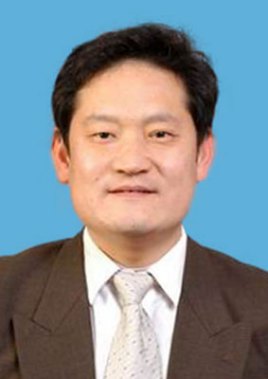 Baoning Zong (宗保宁)合作论文数SINOPEC Research Institute of Petroleum Processing Co.,Ltd.2Zhengkang Zhao (赵正康)合作论文数2Xianwen Chu合作论文数2Huarong Hu合作论文数1
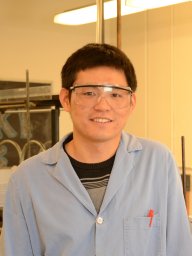 Bin Wang合作论文数NEAT ORU, Univ Calif Davis1Yuan Zhu合作论文数1Gongbing Zhou合作论文数1Wenyan LIU (刘文艳)合作论文数1GuoBin Yu (余国彬)合作论文数1
 Shuangming Chen (陈双明)合作论文数University of Science and Technology of China1
 Juan Bu (卜娟)合作论文数Department of Macromolecular Science, Fudan University1
 Zheng Jiang (姜政)合作论文数University of Sciences and Technology of China1Zhenhua Xie (谢振华)合作论文数1Songhai Xie (谢颂海)合作论文数1
 Hui Li (李辉)合作论文数Department of Materials Science and Engineering, South University of Science and Technology1Qiu-Yun Yang合作论文数1




