An end effector system is disclosed for a robotic system that includes a primary acquisition system that includes a primary end effector, and a secondary retention system that substantially surrounds at least a portion of the primary acquisition system, wherein at least a portion of the primary acquisition system may be drawn up within at least a portion of the secondary retention system such that the primary end effector system may be used to select an object from a plurality of objects, and the secondary retention system may be used to secure the object for rapid transport to an output destination.
A processing system including a singulation system is disclosed. The singulation system includes a conveying system for moving objects to be sorted from a source area along a first direction, a detection system for detecting objects at the conveying system, and for selecting certain selected objects for removal from the conveying system, and a removal system for removing the certain selected objects from the conveying system for providing a singulated stream of objects.
A processing system is disclosed for processing objects. The processing system includes a perception system for providing perception data regarding an object, and a primary transport system for providing transport of the object along a primary direction toward a processing location that is identified based on the perception data.
A system including a programmable motion device and an end effector for grasping objects to be moved by the programmable motion device is disclosed. The system includes a vacuum source that provides a high flow vacuum such that an object may be grasped at an end effector opening while permitting a substantial flow of air through the opening, and a dead-head limitation system for limiting any effects of dead-heading on the vacuum source in the event that a flow of air to the vacuum source is interrupted.
An object processing system is disclosed that includes a plurality of track sections, and a plurality of remotely actuatable carriers for controlled movement along at least portions of the plurality of track sections, wherein each of the remotely controllable carriers is adapted to support and transport an object processing bin.
Household manipulation presents a challenge to robots because it requires perceiving a variety of objects, planning multi-step motions, and recovering from failure. This paper presents practical techniques that improve performance in these areas by considering the complete system in the context of this specific domain. We validate these techniques on a table-clearing task that involves loading objects into a tray and transporting it. The results show that these techniques improve success rate and task completion time by incorporating expected real-world performance into the system design.
L'invention concerne un systeme robotique qui comprend un bras articule et un premier systeme de perception permettant l'inspection d'un objet ainsi qu'une pluralite de systemes de perception supplementaires, dont chacun est agence pour etre dirige vers une zone commune dans laquelle un objet peut etre positionne par le bras robotique de sorte qu'une pluralite de vues a l'interieur de la zone commune puisse etre obtenue par la pluralite de systemes de perception supplementaires.
Est divulguee une trieuse automatique a navette comprenant un chariot qui est mobile depuis une position de chargement dans laquelle le chariot peut etre charge, et au moins deux emplacements de destination dans lesquels le contenu du chariot, quel qu'il soit, peut etre fourni depuis le chariot.
L'invention concerne un manipulateur de detection d'un bras articule. Le manipulateur de detection comprend une section souple et un systeme de detection de mouvement prevu le long d'une premiere direction de la section souple, de sorte que le mouvement de la section souple le long de la premiere direction et d'au moins une direction transversale a ladite premiere direction soit detectable par le systeme de detection de mouvement.
L'invention concerne un effecteur terminal pour un bras articule dans un systeme robotise. L'effecteur terminal comprend une membrane flexible interne generalement sous la forme d'un espace annulaire qui contient un fluide a l'interieur de la membrane.
In Spring 2014, the Personal Robotics Lab at CMU collaborated with the School of Drama to develop, produce and stage a live theatrical performance at the Purnell Center for the Arts in Pittsburgh. This paper describes some of our unique experiences collaborating with drama faculty, the director and the actor. We highlight the challenges arising from theatrical performance and specifically describe some of the technical tools we developed: a bidirectional Blender interface for robot animation, an interactive system for manipulating speech prosody, and a conductor's console for online improvisation and control during rehearsal and performance. It also explores some of the remaining challenges to our goal of developing algorithms and open-source tools that can enable any roboticist in the world to create their own dramatic performance.
In this paper, we outline a low cost multi-robot autonomous platform for a broad set of applications including water quality monitoring, flood disaster mitigation and depth buoy verification. By working cooperatively, fleets of vessels can cover large areas that would otherwise be impractical, time consuming and prohibitively expensive to traverse by a single vessel. We describe the hardware design, control infrastructure, and software architecture of the system, while additionally presenting experimental results from several field trials. Further, we discuss our initial efforts towards developing our system for water quality monitoring, in which a team of watercraft equipped with specialized sensors autonomously samples the physical quantity being measured and provides online situational awareness to the operator regarding water quality in the observed area. From canals in New York to volcanic lakes in the Philippines, our vessels have been tested in diverse marine environments and the results obtained from initial experiments in these domains are also discussed.
We explore the combined planning of pregrasp manipulation and transport tasks. We formulate this problem as a simultaneous optimization of pregrasp and transport trajectories to minimize overall cost. Next, we reduce this simultaneous optimization problem to an optimization of the transport trajectory with start-point costs and demonstrate how to use physically realistic planners to compute the cost of bringing the object to these start-points. We show how to solve this optimization problem by extending functional gradient-descent methods and demonstrate our planner on two bimanual manipulation platforms.
An interesting class of multi-agent POMDP planning problems can be solved by having agents iteratively solve individual POMDPs, find interactions with other individual plans, shape their transition and reward functions to encourage good interactions and discourage bad ones and then recompute a new plan. D-TREMOR showed that this approach can allow distributed planning for hundreds of agents. However, the quality and speed of the planning process depends on the prioritization scheme used. Lower priority agents shape their models with respect to the models of higher priority agents. In this paper, we introduce a new prioritization scheme that is guaranteed to converge and is empirically better, in terms of solution quality and planning time, than the existing prioritization scheme for some problems.
 Paul Scerri合作论文数Carnegie Mellon University;Robotics Institute33
 Katia Sycara合作论文数Advanced Agent-Robotics Technology Lab, Robotics Institute, School of Computer Science, Carnegie Mellon University;Center for Advanced Learning and Discovery, Carnegie Mellon University;Human-Computer Interaction Institute, Carnegie Mellon University24
 Huadong Wang合作论文数16
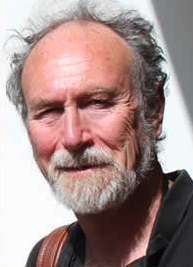 Charles Michael Lewis合作论文数Department of Informatics and Networked Systems, School of Computing and Information, University of Pittsburgh16
 Siddhartha Srinivasa合作论文数Personal Robotics Lab, Paul G. Allen School of Computer Science & Engineering, University of Washington13
 Gene Temple Price合作论文数12Kevin Ahearn合作论文数12Kyle Maroney合作论文数12Thomas Koletschka合作论文数GRASP Lab., Univ. of Pennsylvania;c;GRASP Lab., Univ. of Pennsylvania12Daniel Smith合作论文数12
 Christopher Geyer合作论文数Berkshire Grey12Michael Dawson-Haggerty合作论文数11Thomas Wagner合作论文数11
 Matthew T. Mason合作论文数Robotics Institute, School of Computer Science, Carnegie Mellon University;Computer Science Department, School of Computer Science, Carnegie Mellon University;College of Engineering, Carnegie Mellon University10
 Joseph M. Romano合作论文数Berkshire Grey10
 Thomas F. Allen合作论文数Dept of Mech Eng, California Inst of Technol9
 Benjamin J. Cohen合作论文数Department of Political Science, University of California Santa Barbara8
 Michael C. Koval合作论文数The Robotics Institute, Carnegie Mellon University6
 Shih-Yi Chien合作论文数University of Pittsburgh6
 Abhinav Valada合作论文数Robot Learning Lab, University of Freiburg;Department of Computer Science, University of Freiburg6
 Balajee Kannan合作论文数GE Global Res6Christopher Tomaszewski合作论文数The Robotics Institute, Carnegie Mellon University6
 George A. Kantor合作论文数The Robotics Institute, Carnegie Mellon University5Jennifer King合作论文数The Robotics Institute, Carnegie Mellon University4
 William Mcmahan合作论文数University of Pennsylvania4William Hartman Fort合作论文数3Amend Jr John Richard合作论文数3Bill Luis合作论文数3
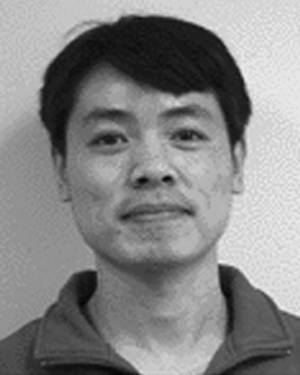 Jijun Wang合作论文数3
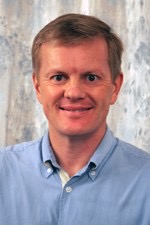 John M. Dolan合作论文数Institute for Complex Engineered Systems, Carnegie Mellon University;The Robotics Institute, School of Computer Science, Carnegie Mellon University;Vision and Autonomous Systems Center, Carnegie Mellon University3Adrian Scerri合作论文数3Breelyn Kane合作论文数Carnegie Mellon University3Oleg Prokopyev合作论文数Department of Industrial Engineering
University of Pittsburgh
3
John M. Dolan合作论文数Institute for Complex Engineered Systems, Carnegie Mellon University;The Robotics Institute, School of Computer Science, Carnegie Mellon University;Vision and Autonomous Systems Center, Carnegie Mellon University3Adrian Scerri合作论文数3Breelyn Kane合作论文数Carnegie Mellon University3Oleg Prokopyev合作论文数Department of Industrial Engineering
University of Pittsburgh
3 Kumar Shaurya Shankar合作论文数Carnegie Mellon University3Jennifer Eileen King合作论文数2SY Chien合作论文数2
 Pradeep Varakantham合作论文数CARE.AI Lab, School of Computing and Information Systems, Singapore Management University2
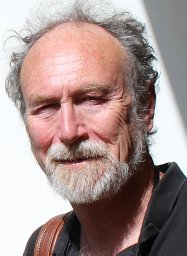 Michael Lewis合作论文数University of Pittsburgh2
 Nathan Brooks合作论文数Law Division2Christopher M. Dellin合作论文数2
 Aaron Johnson合作论文数Mechanical Engineering, Carnegie Mellon University2Hui Jun Tay合作论文数1WH Fort合作论文数1Steven Shamlian合作论文数1
 David Butterworth合作论文数National Robotics Engineering Center, Carnegie Mellon University1Garth Zeglin合作论文数1Allison Thackston合作论文数Toyota Res Inst, Ann Arbor, MI 48105 USA1
 Aaron Walsman合作论文数Harvard University1Zhaodong Zheng合作论文数1




