Household manipulation presents a challenge to robots because it requires perceiving a variety of objects, planning multi-step motions, and recovering from failure. This paper presents practical techniques that improve performance in these areas by considering the complete system in the context of this specific domain. We validate these techniques on a table-clearing task that involves loading objects into a tray and transporting it. The results show that these techniques improve success rate and task completion time by incorporating expected real-world performance into the system design.
In this work, we present an anytime planner for creating open-loop trajectories that solve rearrangement planning problems under uncertainty using nonprehensile manipulation. We first extend the Monte Carlo Tree Search algorithm to the unobservable domain. We then propose two default policies that allow us to quickly determine the potential to achieve the goal while accounting for the contact that is critical to rearrangement planning. The first policy uses a learned model generated from a set of user demonstrations. This model can be quickly queried for a sequence of actions that attempts to create contact with objects and achieve the goal. The second policy uses a heuristically guided planner in a subspace of the full state space. Using these goal informed policies, we are able to find initial solutions to the problem quickly, then continuously refine the solutions as time allows. We demonstrate our algorithm on a 7 degree-of-freedom manipulator moving objects on a table.
As we work to move robots out of factories and into human environments, we must empower robots to interact freely in unstructured, cluttered spaces. Humans do this easily, using diverse, whole-arm, nonprehensile actions such as pushing or pulling in everyday tasks. These interaction strategies make difficult tasks easier and impossible tasks possible. In this thesis, we aim to enable robots with similar capabilities. In particular, we formulate methods for planning robust open-loop trajectories that solve the rearrangement planning problem. In these problems, a robot must plan in a cluttered environment, reasoning about moving multiple objects in order to achieve a goal. The problem is difficult because we must plan in continuous, high-dimensional state and action spaces. Additionally, during planning we must respect the physical constraints induced by the nonprehensile interaction between the robot and the objects in the scene. Our key insight is that by embedding physics models directly into our planners we can naturally produce solutions that use nonprehensile interactions such as pushing. This also allows us to easily generate plans that exhibit full arm manipulation and simultaneous object interaction without the need for programmer defined high-level primitives that specifically encode this interaction. We show that by generating these diverse actions, we are able to find solutions for motion planning problems in highly cluttered, unstructured environments. The first focus of this thesis will formulate the rearrangement planning problem as a classical motion planning problem. We show that we can embed physics simulators into randomized planners. We propose methods for reducing the search space and speeding planning time in order to make the planners useful in real-world scenarios. The second focus of this thesis will aim to deal with the imperfect and imprecise worlds that reflect the true reality for robots working in human environments. We pose the rearrangement planning under uncertainty problem as an instance of conformant probabilistic planning and offer methods for solving the problem. We believe the methods we develop in this thesis have broad impact. This thesis will demonstrate the power of these planners on the home care robot HERB. We will show that this planner improves autonomous operation of the robot, allowing HERB to work better in high clutter, completing previously infeasible tasks and speeding feasible task execution. In addition, we will show these planners increase autonomy for the NASA rover K-Rex. Our planner will allow the rover to actively interact with the environment. We will demonstrate that this interaction leads to faster traversal in cluttered areas and adds new autonomous capabilities, such as landing site clearing. Finally, we provide open-source implementations of our algorithms so that they may continue to be applied in new domains.
We present a method to apply heuristic search algorithms to solve rearrangement planning by pushing problems. In these problems, a robot must push an object through clutter to achieve a goal. To do this, we exploit the fact that contact with objects in the environment is critical to goal achievement. We dynamically generate goal-directed primitives that create and maintain contact between robot and object at each state expansion during the search. These primitives focus exploration toward critical areas of state-space, providing tractability to the high-dimensional planning problem. We demonstrate that the use of these primitives, combined with an informative yet simple to compute heuristic, improves success rate when compared to a planner that uses only primitives formed from discretizing the robot's action space. In addition, we show our planner outperforms RRT-based approaches by producing shorter paths faster. We demonstrate our algorithm both in simulation and on a 7-DOF arm pushing objects on a table.
This paper addresses the problem of rearrangement planning, i.e. to find a feasible trajectory for a robot that must interact with multiple objects in order to achieve a goal. We propose a planner to solve the rearrangement planning problem by considering two different types of actions: robot-centric and object-centric. Object-centric actions guide the planner to perform specific actions on specific objects. Robot-centric actions move the robot without object relevant intent, easily allowing simultaneous object contact and whole arm interaction. We formulate a hybrid planner that uses both action types. We evaluate the planner on tasks for a mobile robot and a household manipulator.
We propose a number of “divergence metrics” to quantify the robustness of a trajectory to state uncertainty for under-actuated or under-sensed systems. These metrics are inspired by contraction analysis and we demonstrate their use to guide randomized planners toward more convergent trajectories through three extensions to the kinodynamic RRT. The first strictly thresholds action selection based on these metrics, forcing the planner to find a solution that lies within a contraction region over which all initial conditions converge exponentially to a single trajectory. However, finding such a monotonically contracting plan is not always possible. Thus, we propose a second method that relaxes these strict requirements to find “convergent” (i.e., low-divergence) plans. The third algorithm uses these metrics for postplanning path selection. Two examples test the ability of these metrics to lead the planners to more robust trajectories: a mobile robot climbing a hill and a manipulator rearranging objects on a table.
We present a randomized kinodynamic planner that solves rearrangement planning problems. We embed a physics model into the planner to allow reasoning about interaction with objects in the environment. By carefully selecting this model, we are able to reduce our state and action space, gaining tractability in the search. The result is a planner capable of generating trajectories for full arm manipulation and simultaneous object interaction. We demonstrate the ability to solve more rearrangement by pushing tasks than existing primitive based solutions. Finally, we show the plans we generate are feasible for execution on a real robot.
In this work we present a fast kinodynamic RRT-planner that uses dynamic nonprehensile actions to rearrange cluttered environments. In contrast to many previous works, the presented planner is not restricted to quasi-static interactions and monotonicity. Instead the results of dynamic robot actions are predicted using a black box physics model. Given a general set of primitive actions and a physics model, the planner randomly explores the configuration space of the environment to find a sequence of actions that transform the environment into some goal configuration.In contrast to a naive kinodynamic RRT-planner we show that we can exploit the physical fact that in an environment with friction any object eventually comes to rest. This allows a search on the configuration space rather than the state space, reducing the dimension of the search space by a factor of two without restricting us to non-dynamic interactions.We compare our algorithm against a naive kinodynamic RRT-planner and show that on a variety of environments we can achieve a higher planning success rate given a restricted time budget for planning.
We present an algorithm for generating open-loop trajectories that solve the problem of rearrangement planning under uncertainty. We frame this as a selection problem where the goal is to choose the most robust trajectory from a finite set of candidates. We generate each candidate using a kinodynamic state space planner and evaluate it using noisy rollouts. Our key insight is we can formalize the selection problem as the “best arm” variant of the multi-armed bandit problem. We use the successive rejects algorithm to efficiently allocate rollouts between candidate trajectories given a rollout budget. We show that the successive rejects algorithm identifies the best candidate using fewer rollouts than a baseline algorithm in simulation. We also show that selecting a good candidate increases the likelihood of successful execution on a real robot.
We explore the combined planning of pregrasp manipulation and transport tasks. We formulate this problem as a simultaneous optimization of pregrasp and transport trajectories to minimize overall cost. Next, we reduce this simultaneous optimization problem to an optimization of the transport trajectory with start-point costs and demonstrate how to use physically realistic planners to compute the cost of bringing the object to these start-points. We show how to solve this optimization problem by extending functional gradient-descent methods and demonstrate our planner on two bimanual manipulation platforms.
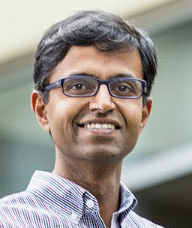 Siddhartha Srinivasa合作论文数Personal Robotics Lab, Paul G. Allen School of Computer Science & Engineering, University of Washington10
 Prasanna Velagapudi合作论文数The Robotics Institute,Carnegie Mellon University4
 Michael C. Koval合作论文数The Robotics Institute, Carnegie Mellon University4
 Michael Dawson-Haggerty合作论文数2Gene Temple Price合作论文数2Kevin Ahearn合作论文数2Kyle Maroney合作论文数2Thomas Koletschka合作论文数GRASP Lab., Univ. of Pennsylvania;c;GRASP Lab., Univ. of Pennsylvania2Thomas Wagner合作论文数2Daniel Smith合作论文数2
 Joshua A Haustein合作论文数Division of Robotics Perception and Learning RPL, KTH Royal Institute of Technology2
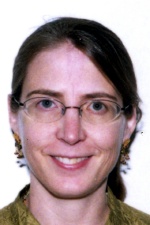 Nancy Pollard合作论文数The Robotics Institute, Carnegie Mellon University;Computer Science Department, Carnegie Mellon University2
 William Mcmahan合作论文数University of Pennsylvania2
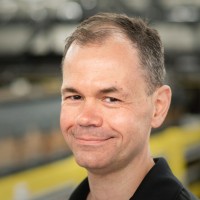 Christopher Geyer合作论文数Berkshire Grey2Christopher M. Dellin合作论文数2
 Aaron Johnson合作论文数Mechanical Engineering, Carnegie Mellon University2Tarrum Asfour合作论文数1William Hartman Fort合作论文数1Amend Jr John Richard合作论文数1WH Fort合作论文数1
 David Butterworth合作论文数National Robotics Engineering Center, Carnegie Mellon University1Allison Thackston合作论文数Toyota Res Inst, Ann Arbor, MI 48105 USA1Vinitha Ranganeni合作论文数The Robotics Institute, Carnegie Mellon University1
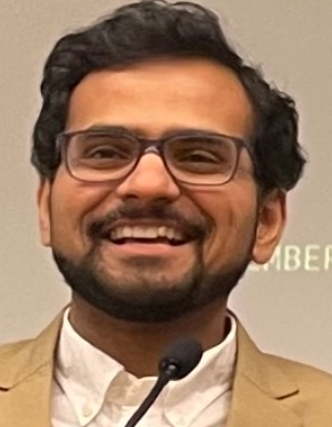 Shushman Choudhury合作论文数Google1
 Thomas F. Allen合作论文数Dept of Mech Eng, California Inst of Technol1
 Gilwoo Lee合作论文数Zordi1
 Matthew T. Mason合作论文数Robotics Institute, School of Computer Science, Carnegie Mellon University;Computer Science Department, School of Computer Science, Carnegie Mellon University;College of Engineering, Carnegie Mellon University1
 Benjamin J. Cohen合作论文数Department of Political Science, University of California Santa Barbara1
 Matthew Harding合作论文数Centre for International Economics1
 Tamim Asfour合作论文数High Performance Humanoid Technologies Lab, Institut for Anthropomatics and Robotics, Karlsruhe Institute of Technology1
 Mehmet Dogar合作论文数School of Computing, Faculty of Engineering and Physical Sciences, University of Leeds1
 Joseph M. Romano合作论文数Berkshire Grey1
 Marco Cognetti合作论文数Dipartimento di Ingegneria Informatica, Sapienza Università di Roma1Matthew Klingensmith合作论文数1




