Here, 3-sulfonyl-azaspiro[4.5]trienones are now accessible via a versatile visible-light-driven dearomative strategy under metal- and (photo)catalyst-free conditions, starting from differently substituted N-aryl propiolamides and arylazo sulfones. The protocol employs ethyl acetate as a benign solvent and tert-butyl hydroperoxide as the oxidant. The reaction proceeds through direct photoexcitation of the arylazo sulfone, which acts simultaneously as a light absorber and a sulfonyl-radical source, enabling ipso-spirocyclization of aromatic amides. This transformation combines a broad substrate scope with mild conditions and operational simplicity, providing a valuable synthetic entry to sulfur-containing spiroheterocycles of pharmacological interest.
The photochemical conversion of phytocannabinoids Cannabinol (CBN) into phenanthrene CNP was investigated in detail via a combined steady state/time resolved approach. The elucidated mechanism describes a two-photon cascade reaction where CBN is initially converted to cannabidinol (CBDN) via a C-O photoinduced cleavage, which in turn undergoes to 6π electron cyclization of the cannabinoid intermediate.
Thiol-ene reactions are highly valuable for the formation of C & horbar;S bonds, offering potential applications across various fields. This project presents several advantages over traditional synthesis methods, as a metal-free and eco-friendly approach for the anti-Markovnikov hydrothiolation of olefins, using carbon dots (CDs) as organic and bio-derived photo initiators. This process is characterized by mild conditions, it takes place in aqueous media under visible light, and it is compatible with a broad range of thiols (aliphatic, aromatic, and with different substituents on the ring), alkenes, and alkynes. CDs prepared from citric acid were used for the optimization of the reaction conditions and the scope. Subsequently, the reaction was performed using CDs synthesized with a hydrothermal treatment from industrial fruit waste (raspberries, blackberries, blueberries, pomegranate, and wild strawberries previously extracted with supercritical CO2). This protocol operates under mild conditions and aligns with the principles of a circular economy, focusing on waste valorization rather than simple recycling. The reaction mechanism was finally probed by performing Stern-Volmer quenching studies in the presence of increasing amounts of CCl3Br, as well as carrying out clock experiments.
3 beta-(p-Fluorobenzoyloxy)tropane (fluorotropacocaine, pFBT) is an emerging new psychoactive substance (NPS) structurally related to cocaine and increasingly detected in products purchased online. The rapid diversification of NPS calls for analytical workflows that are both selective and readily deployable for seized materials and biological matrices. Here, we report a comprehensive electrochemical characterization of pFBT in an ethanol/LiClO4 medium using cyclic voltammetry, differential pulse voltammetry (DPV), chronoamperometry at macroelectrodes, and rotating-disk electrode measurements, and we translate the mechanistic and kinetic findings into a DPV-based method for pFBT determination. Under optimized conditions, DPV provided an LOQ of 0.20 & micro;g mL-1 and a dynamic range up to 150 & micro;g mL-1. The method was applied to a simulated "street tablet" matrix and to fortified synthetic and human urine samples, showing good selectivity toward common excipients and typical coformulants as well as co-occurring amine-containing NPS (xylazine and nitracaine). For urine analysis, Florisil-based solid-phase extraction (SPE) was implemented for clean-up and enrichment; Design of Experiments (DoE) optimization afforded enrichment factors up to 50 & times; and enabled quantification down to 0.050 & micro;g mL-1 in fortified urine. Recoveries between 79% and 105% across the investigated matrices support the applicability of the proposed workflow to forensic and clinical toxicology contexts.
The excited-state dynamics and photochemical behavior of mono-, di-, and trisubstituted triphenylamines were investigated in different media by nanosecond laser flash photolysis. Photoexcitation produces the triplet excited state of the triarylamines, which undergoes competitive radiationless decay and intramolecular [6π]-electrocyclization to form the corresponding triplet N-aryl-4a,4b-dihydrocarbazoles. These intermediates subsequently yield singlet dihydrocarbazoles that undergo back-electrocyclization, disproportionation, or oxygen trapping. The transient species were characterized by their absorption spectra, lifetimes, quantum yields, and kinetic parameters. Both the efficiency of electrocyclization and the rate of radiationless deactivation depend strongly on solvent polarity and substituent electronic effects. Linear correlations between rate constants and Reichardt's solvent polarity parameter point out that cyclization is favored in polar solvents, whereas radiationless decay predominates in nonpolar media. Hammett analyses further demonstrate systematic substituent effects on the competing excited-state pathways, including triarylamines bearing perfluoroalkyl substituents. These results provide a comprehensive kinetic and mechanistic description of the photoinduced electrocyclization of substituted triphenylamines and establish quantitative relationships between molecular structure, solvent environment, and excited-state reactivity.
A strategy combining the unique properties of arylazo sulfones as dyedauxiliary group-bearing substrates for arylation reactions and Co2(CO)8 as a catalyst in carbonylation processes was used to prepare aromatic amides. This versatile method was utilized to create a library of aroyl amides with good to excellent yields.
Throughout the years, biscoumarin derivatives, known for their diverse biological properties, have attracted extensive synthetic interest. In pursuit of a sustainable, versatile, and cost‐effective protocol, we studied the reaction between 4‐hydroxycoumarin and various aldehydes, using arylazo sulfones as the photoacid generators. Hence, we developed a mild, visible‐light‐driven approach for the synthesis of biscoumarins, utilizing arylazo sulfones under 467 nm irradiation, affording products in moderate‐to‐high yields. The effectiveness and the limited waste production of our protocol, combined with its simplicity, including the purification by recrystallization, highlight its great potential for pharmaceutical applications.
The beta-amino alcohol moiety is commonly present in either natural and labmade bioactive compounds with multifaceted applications, spanning pharmaceutics, material sciences and asymmetric synthesis. Among the different strategies adopted to achieve this target, the aminolysis of epoxides in the presence of either Bronsted or Lewis acids is mainly followed. We present herein a versatile, visible light promoted protocol for the preparation of beta-amino alcohols from epoxides, by exploiting the peculiar reactivity of photoactivatable arylazo sulfones as Photo Acid Generators (PAGs).
A metal-free C(sp3)-H bond thiolation of common organic solvents to give valuable aryl sulfides was carried out under very mild conditions upon visible light irradiation of colored diarylazo sulfides.
1,2-Biscyclopropanes are privileged structural motifs found in natural products, pharmaceuticals, and functional materials, yet their assembly remains challenging. We report the first radical intermolecular strategy for the synthesis of highly functionalized 1,2-biscyclopropanes. Visiblelight-mediated energy transfer (EnT) provides access to a triplet diradical species that, through an ordered intermolecular radical addition, furnishes a rare bis-homoallylic diradical intermediate. This strategy activates the 3-exo-trig radical cyclization triggered by an irreversible intersystem crossing (ISC) step. The method is compatible with naturally occurring functional groups, providing efficient access to polycyclic architectures bearing otherwise inaccessible protic functionalities. Furthermore, the resulting products serve as versatile intermediates for downstream diversification. This work marks a milestone in the development of new mechanistic approaches for the synthesis of highly challenging molecules, highlighting the potential of EnT-enabled diradical reactivity to overcome longstanding limitations in the construction of small rings.
Due to the growing commercial availability of cannabinoids as active principles for recreational use, the use of preparations including among the others extracts and edible products (e.g., gummy sweets) is gaining popularity when compared to smoking, the more classical method of cannabinoid consumption. In this context, along with the widely known cannabidiol (CBD) and D9-tetrahydrocannabinol (D9-THC), hexahydrocannabinol (HHC) and D8-tetrahydrocannabinol (D8-THC) have recently been openly sold in a range of products worldwide, having been neglected by some regulatory authorities. When dealing with complex matrices such as edibles, the commonly available methods for the identification and quantification of natural and semi-synthetic cannabinoids-GC-MS and LC-MS-must be implemented. In this work, we describe a GC-MS protocol for the analysis of the different cannabinoids present in seized gummy sweets after liquid extraction of the active ingredients. The protocol has been optimized and validated (according to the current guidelines) by using spiked cannabinoid-free commercially available gummies. The procedure has been exploited for the identification and quantification of the cannabinoids (both natural and semisynthetic) present in six different types of seized recreational gummies and allowed us to hypothesize the origin of the cannabinoid-natural or synthetic-and in this last case also the synthetic strategies used to obtain them. Note-worthily, besides the cannabinoids already described in literature, our approach also pointed out the presence of a hexahydrocannabinol analogue (hexahydrocannabinonol, HHC-C9) as well as cis-9,10-octadecanoamide (oleamide), a modulator of CB1 cannabinoid receptor that exhibits a cannabinoid-like action.
We present a photocatalyst-free, visible-light-mediated Truce-Smiles rearrangement (TSR) for the selective difunctionalization of olefins by exploiting photoactivatable arylazo sulfones as sulfonyl radical precursors. This method efficiently affords β-sulfonyl-α-arylpropamides in high yields with excellent stereoselectivity. Furthermore, by incorporating a readily available chiral amino acid auxiliary (α-tert-butyl-leucine), we successfully developed a stereoselective variant of the TSR reaction, delivering optically enriched α-arylpropamides with excellent diastereoselectivity (up to 20:1 dr). DFT calculations provided detailed insight into the key factors governing reactivity and selectivity, particularly the contrasting behaviors of N-alkyl and N-aryl acrylamides. Overall, this work provides a sustainable and practical method for constructing sulfonylated aryl compounds under mild and catalyst-free conditions.
Photoactive Iridium(III) complexes are a popular synthetic tool. The impact of ligand design on their photoredox properties has been widely studied, but similar approaches to develop more potent photosensitizers are still absent. We report herein the preparation, characterization and catalytic application of a new family of Iridium(III) complexes that proved superior to their widely-used commercial peers. The best results were observed when naphthyl pendants were installed to the ligands, which could stabilize the triplet intermediates involved in energy-transfer reactions via radical-π dispersion interactions.
The effect of water on visible-light-driven generation of aryl radicals or aryl cations from colored shelf-stable arylazo sulfonates has been investigated. Photoinduced ionic and radical decomposition of these salts compete, depending on the media used. In organic solvents, light-induced homolysis of the N-S bond occurs, and the resulting aryl radical may be used to some extent for arylation reactions. On the contrary, in neat water, radical chemistry is prevented by an efficient photoheterolysis, and a reactive aryl cation is otherwise generated.
Xylazine is a widely employed veterinary anesthetic that, in recent years, has also been used as a recreational drug, leading to several fatal and non-fatal intoxications. We present herein a comprehensive investigation of the electrochemical behavior of xylazine, followed by the quantification of this target analyte. Specifically, it has been found that xylazine oxidizes irreversibly on a glassy carbon electrode in ethanol/lithium perchlorate media, with an EC mechanism; the number of electrons involved in the process is equal to two. The oxidation pathway has been suggested and supported by a thorough electrochemical investigation, in which the behavior of the analyte has been compared with other model compounds. A quantitative method was then proposed, employing differential pulse voltammetry (DPV) for the determination of xylazine in real samples. The analytical figures of merits were computed from the calibration curves obtained by analyzing standard solutions of xylazine in ethanol/lithium perchlorate medium. A LOQ of 0.2 mu g mL- 1 and a dynamic range up to 150 mu g mL- 1 were achieved. The method was then applied to samples simulating "street tablets" and urine from drug consumers. The selectivity of the method, as well as the reproducibility of the results, were investigated by analyzing the interferences between common excipients and human urine components. For urine samples, a Florisil-based clean-up and preconcentration step by solid phase extraction (SPE) were carried out. The SPE strategy was optimized by a Design of Experiments (DoE) approach, whereby an enrichment factor of up to 25 was obtained. Recoveries from 87 % to 108 % were achieved on all examined samples, suggesting the good potential of the method for its application in clinical and forensic chemistry.
A blue light‐induced extrusion strategy allows for the synthesis of valuable diaryl sulfides from an aqueous suspension of diazoaryl sulfides under (photo)catalyst‐ and additive‐free conditions. The incorporation of the N═N─S dyedauxiliary group imparts to the reactants both a yellow to orange color and the corresponding photoreactivity for the occurrence of the process.
The increased demand for the synthesis of enriched hybridized Csp3 motifs and the urgency of discovering new drug molecules require the development of more efficient technologies and synthetic tools to accelerate drug discovery processes. Herein, we report a fully automated strategy for the addition of Csp3 enriched building blocks onto olefins via Giese addition to forge Csp3-Csp3 bonds. The developed fully automated protocol allowed the conversion of aldehydes (non-redox-active species) in-situ to electroactive imidazolidines and to employ them as precursors of C-centered radicals under photoredox catalyzed conditions for the synthesis of enriched fraction sp3 (Fsp3) character building blocks and bioactive compound libraries.
While arylazo sulfones have been widely applied as arylating agents, their exploitation for diazenylation reactions has been previously limited to electron-rich alkenes such as styrenes and silyl enol ethers. Herein we optimized a synthetic one-pot protocol to access oxazolyl azo compounds via a selective domino ring-closing/aryldiazenylation sequence by starting from arylazo sulfones and isocyanoacetamides in the presence of Sm(OTf)3 as the Lewis acid. The substrate scope, along with scale-up reaction both in batch and under continuous flow conditions provide a valuable approach to such a class of heteroaryl azo compounds.
 Maurizio Fagnoni合作论文数PhotoGreen Lab, Department of Chemistry, University of Pavia153
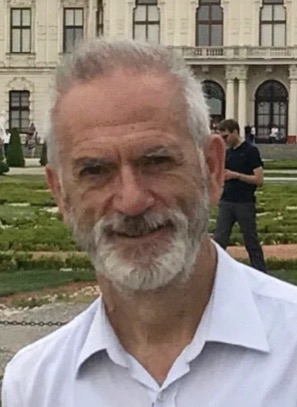 Angelo Albini合作论文数Department of Chemistry, University of Pavia73
 Davide Ravelli合作论文数Department of Organic Chemistry, University of Pavia56
 Daniele Merli合作论文数31Raviola Carlotta合作论文数23
 Daniele Dondi合作论文数Department of Organic Chemistry, University of Pavia17Alberto Mezzetti合作论文数Laboratoire de Spectrochimie Infrarouge et Raman, Université de Sciences et Technologies de Lille16Lorenzo Di Terlizzi合作论文数15
 Antonella Profumo合作论文数Dipartimento di Chimica Generale, Università di Pavia15Sergio M Bonesi合作论文数Facultad de Ciencias Exactas y Naturales, Universidad de Buenos Aires14
 Valentina Dichiarante合作论文数11
 Alessandro Palmieri合作论文数Dipartimento di Scienze Chimiche, Università di Camerino10Mariella Mella合作论文数Dipartimento di Chimica Organica, Università10Luca Nicchio合作论文数9
 Stefano Crespi合作论文数PhotoGreen Lab, University of Pavia9Di Qiu合作论文数7
 Simone Lazzaroni合作论文数7Valentina Benazzi合作论文数6Xia Zhao合作论文数6
 Andrea Basso合作论文数6Adrián Luguera Ruiz合作论文数5Edoardo Torti合作论文数5
 卢奎合作论文数河南工业大学5
 Till Opatz合作论文数Institut für Organische Chemie, Universität Mainz5
 Giovanni Maestri合作论文数Dipartimento di Chimica Organica e Industriale and CIRCC, Università di Parma5Christine Lapouge合作论文数5
 Géraldine Masson合作论文数Institut de Chimie des Substances Naturelles, CNRS5Jean-Paul Cornard合作论文数Laboratoire de Spectrochimie Infrarouge et Raman (CNRS UPR A 2631 L), Université des Sciences et Technologies de Lille5Eirini M. M. Galathri合作论文数4Guanglu Yue合作论文数4
 Hawraz Ibrahim M. Amin合作论文数4Garbarino Silvia合作论文数4
 Eliana Quartarone合作论文数Dipartimento di Chimica, Università degli Studi di Pavia4
 Roberto Ballini合作论文数Dipartimento di Scienze Chimiche, University of Camerino4
 Alvise Perosa合作论文数Interuniversity Consortium “Chemistry for the Environment” (INCA), Dorsoduro 2137, 30123 Venezia, Italy4Barbara Mannucci合作论文数4
 Gioia Della Giustina合作论文数Mechanical Engineering Department - Materials Sector, University of Padova4
 Giancarla Alberti合作论文数Dipartimento di Chimica Generale, Università degli Studi di Pavia4
 Luc Neuville合作论文数Institut de Chimie des Substances Naturelles, CNRS4
 Christian Herrero合作论文数iBiTeC-S, CEA Saclay4
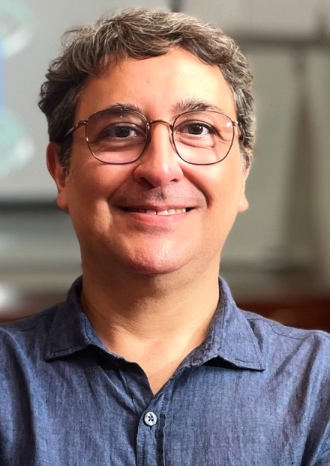 Flavio da Silva Emery合作论文数Department of Pharmaceutical Sciences, Faculty of Pharmaceutical Sciences of Ribeirão Preto, University of São Paulo4Winfried Leibl合作论文数3
 Sandra Monti合作论文数3Arianna Bini合作论文数3Ahmed A. Amin合作论文数3Jinshan Mao合作论文数3Reza Fallahpour合作论文数3
 Isabella Concina合作论文数3Chang Lian合作论文数3




