The second-order Fourier coefficients (v(2)) characterizing the azimuthal distributions of Y(1S) and Y(2S) mesons produced in PbPb collisions at root s(NN) = 5.02 TeV are studied. The Y mesons are reconstructed in their dimuon decay channel, as measured by the CMS detector. The collected data set corresponds to an integrated luminosity of 1.7 nb(-1). The scalar product method is used to extract the v2 coefficients of the azimuthal distributions. Results are reported for the rapidity range vertical bar y vertical bar < 2.4, in the transverse momentum interval 0 < pT < 50 GeV/c, and in three centrality ranges of 10-30%, 30-50% and 50-90%. In contrast to the J/psi mesons, the measured v(2) values for the Y mesons are found to be consistent with zero. (C) 2021 The Author(s). Published by Elsevier B.V.
A search is conducted for a low-mass charged Higgs boson produced in a top quark decay and subsequently decaying into a charm and a strange quark. The data sample was recorded in proton-proton collisions at s=13 TeV by the CMS experiment at the LHC and corresponds to an integrated luminosity of 35.9 fb-1. The search is performed in the process of top quark pair production, where one top quark decays to a bottom quark and a charged Higgs boson and the other to a bottom quark and a W boson. With the W boson decaying to a charged lepton (electron or muon) and a neutrino, the final state comprises an isolated lepton, missing transverse momentum, and at least four jets, of which two are tagged as b jets. To enhance the search sensitivity, one of the jets originating from the charged Higgs boson is required to satisfy a charm tagging selection. No significant excess beyond standard model predictions is found in the dijet invariant mass distribution. An upper limit in the range 1.68%–0.25% is set on the branching fraction of the top quark decay to the charged Higgs boson and bottom quark for a charged Higgs boson mass between 80 and 160 GeV.
A measurement is presented of electroweak (EW) production of a W boson in association with two jets in proton-proton collisions at s = 13 Te . The data sample was recorded by the CMS Collaboration at the LHC and corresponds to an integrated luminosity of 35.9 fb - 1 . The measurement is performed for the l ν jj final state (with l ν indicating a lepton-neutrino pair, and j representing the quarks produced in the hard interaction) in a kinematic region defined by invariant mass m jj \u003e 120 Ge and transverse momenta p T j \u003e 25 Ge . The cross section of the process is measured in the electron and muon channels yielding σ EW ( W jj ) = 6.23 ± 0.12 (stat) ± 0.61 (syst) pb per channel, in agreement with leading-order standard model predictions. The additional hadronic activity of events in a signal-enriched region is studied, and the measurements are compared with predictions. The final state is also used to perform a search for anomalous trilinear gauge couplings. Limits on anomalous trilinear gauge couplings associated with dimension-six operators are given in the framework of an effective field theory. The corresponding 95% confidence level intervals are - 2.3 c W W W / Λ 2 2.5 Te - 2 , - 8.8 c W / Λ 2 16 Te - 2 , and - 45 c B / Λ 2 46 Te - 2 . These results are combined with the CMS EW Zjj analysis, yielding the constraint on the c W W W coupling: - 1.8 c W W W / Λ 2 2.0 Te - 2 .
A search is conducted for a low-mass charged Higgs boson produced in a top quark decay and subsequently decaying into a charm and a strange quark. The data sample was recorded in proton-proton collisions at $\\sqrt{s}=$ 13 TeV by the CMS experiment at the LHC and corresponds to an integrated luminosity of 35.9 fb$^{-1}$. The search is performed in the process of top quark pair production, where one top quark decays to a bottom quark and a charged Higgs boson, and the other to a bottom quark and a W boson. With the W boson decaying to a charged lepton (electron or muon) and a neutrino, the final state comprises an isolated lepton, missing transverse momentum, and at least four jets, of which two are tagged as b jets. To enhance the search sensitivity, one of the jets originating from the charged Higgs boson is required to satisfy a charm tagging selection. No significant excess beyond standard model predictions is found in the dijet invariant mass distribution. An upper limit in the range 1.68-0.25% is set on the branching fraction of the top quark decay to the charged Higgs boson and bottom quark for a charged Higgs boson mass between 80 and 160 GeV.
Anisotropies in the initial energy density distribution of the quark-gluon plasma created in high energy heavy ion collisions lead to anisotropies in the azimuthal distributions of the final-state particles known as collective anisotropic flow. Fourier harmonic decomposition is used to quantify these anisotropies. The higher-order harmonics can be induced by the same order anisotropies (linear response) or by the combined influence of several lower order anisotropies (nonlinear response) in the initial state. The mixed higher-order anisotropic flow and nonlinear response coefficients of charged particles are measured as functions of transverse momentum and centrality in collisions at nucleon-nucleon center-of-mass energies and 5.02 with the CMS detector. The results are compared with viscous hydrodynamic calculations using several different initial conditions, as well as microscopic transport model calculations. None of the models provides a simultaneous description of the mixed higher-order flow harmonics and nonlinear response coefficients.
Events with no charged particles produced between the two leading jets are studied in proton-proton collisions at
Anisotropies in the initial energy density distribution of the quark-gluon plasma created in high energy heavy ion collisions lead to anisotropies in the azimuthal distributions of the final-state particles known as collective anisotropic flow. Fourier harmonic decomposition is used to quantify these anisotropies. The higher-order harmonics can be induced by the same order anisotropies (linear response) or by the combined influence of several lower order anisotropies (nonlinear response) in the initial state. The mixed higher-order anisotropic flow and nonlinear response coefficients of charged particles are measured as functions of transverse momentum and centrality in PbPb collisions at nucleon-nucleon center-of-mass energies $\\sqrt{S}$$_{NN}$=2.76 and 5.02TeV with the CMS detector. The results are compared with viscous hydrodynamic calculations using several different initial conditions, as well as microscopic transport model calculations. None of the models provides a simultaneous description of the mixed higher-order flow harmonics and nonlinear response coefficients.
Abstract Anisotropies in the initial energy density distribution of the quark-gluon plasma created in high energy heavy ion collisions lead to anisotropies in the azimuthal distributions of the final-state particles known as collective anisotropic flow. Fourier harmonic decomposition is used to quantify these anisotropies. The higher-order harmonics can be induced by the same order anisotropies (linear response) or by the combined influence of several lower order anisotropies (nonlinear response) in the initial state. The mixed higher-order anisotropic flow and nonlinear response coefficients of charged particles are measured as functions of transverse momentum and centrality in $$\mathrm {PbPb}$$ PbPb collisions at nucleon-nucleon center-of-mass energies $$\sqrt{\smash [b]{s_{_{\mathrm {NN}}}}} = 2.76$$ sNN=2.76 and 5.02$$\,\text {TeV}$$ TeV with the CMS detector. The results are compared with viscous hydrodynamic calculations using several different initial conditions, as well as microscopic transport model calculations. None of the models provides a simultaneous description of the mixed higher-order flow harmonics and nonlinear response coefficients.
The second-order Fourier coefficients ($v_2$) characterizing the azimuthal distribution of $\Upsilon$(1S) and $\Upsilon$(2S) mesons arising from PbPb collisions at $\sqrt{s_\mathrm{NN}} =$ 5.02 TeV are studied. The $\Upsilon$ mesons are reconstructed in their dimuon decay channel, as measured by the CMS detector. The data set was collected in 2018 and corresponds to an integrated luminosity of 1.7 nb$^{-1}$. The scalar product method is used to extract the $v_2$ coefficients of the azimuthal distribution. Results are reported for the rapidity range $|y|\lt$ 2.4, with the transverse momentum 0 $\lt p_\mathrm{T} \lt$ 50 GeV/$c$, and in three centrality ranges of 10-30, 30-50 and 50-90%. In contrast to the J/$\psi$ mesons, no azimuthal anisotropy is observed for the $\Upsilon$ mesons.
Central exclusive and semiexclusive production of [see pdf] pairs is measured with the CMS detector in proton-proton collisions at the LHC at center-of-mass energies of 5.02 and 13TeV. The theoretical description of these nonperturbative processes, which have not yet been measured in detail at the LHC, poses a significant challenge to models. The two pions are measured and identified in the CMS silicon tracker based on specific energy loss, whereas the absence of other particles is ensured by calorimeter information. The total and differential cross sections of exclusive and semiexclusive central [see pdf] production are measured as functions of invariant mass, transverse momentum, and rapidity of the [see pdf] system in the fiducial region defined as transverse momentum [see pdf] and pseudorapidity [see pdf] . The production cross sections for the four resonant channels , [see pdf] , , and are extracted using a simple model. These results represent the first measurement of this process at the LHC collision energies of 5.02 and 13TeV.
Events with no charged particles produced between the two leading jets are studied in proton-proton collisions at
Article history: Received 3 October 2019 Received in revised form 31 March 2020 Accepted 1 April 2020 Available online 7 April 2020 Editor: M. Doser
A measurement is presented of differential cross sections for t-channel single top quark and antiquark production in proton-proton collisions at a centre-of-mass energy of 13 Te by the CMS experiment at the LHC. From a data set corresponding to an integrated luminosity of 35.9 fb - 1 , events containing one muon or electron and two or three jets are analysed. The cross section is measured as a function of the top quark transverse momentum ( p T ), rapidity, and polarisation angle, the charged lepton p T and rapidity, and the p T of the W boson from the top quark decay. In addition, the charge ratio is measured differentially as a function of the top quark, charged lepton, and W boson kinematic observables. The results are found to be in agreement with standard model predictions using various next-to-leading-order event generators and sets of parton distribution functions. Additionally, the spin asymmetry, sensitive to the top quark polarisation, is determined from the differential distribution of the polarisation angle at parton level to be 0.440 ± 0.070 , in agreement with the standard model prediction.
Using a data sample of proton-proton collisions at sqrt[s]=13 TeV, corresponding to an integrated luminosity of 140 fb^{-1} collected by the CMS experiment in 2016-2018, the B_{s}^{0}→X(3872)ϕ decay is observed. Decays into J/ψπ^{+}π^{-} and K^{+}K^{-} are used to reconstruct, respectively, the X(3872) and ϕ. The ratio of the product of branching fractions B[B_{s}^{0}→X(3872)ϕ]B[X(3872)→J/ψπ^{+}π^{-}] to the product B[B_{s}^{0}→ψ(2S)ϕ]B[ψ(2S)→J/ψπ^{+}π^{-}] is measured to be [2.21±0.29(stat)±0.17(syst)]%. The ratio B[B_{s}^{0}→X(3872)ϕ]/B[B^{0}→X(3872)K^{0}] is found to be consistent with one, while the ratio B[B_{s}^{0}→X(3872)ϕ]/B[B^{+}→X(3872)K^{+}] is two times smaller. This suggests a difference in the production dynamics of the X(3872) in B^{0} and B_{s}^{0} meson decays compared to B^{+}. The reported observation may shed new light on the nature of the X(3872) particle.
Two related searches for phenomena beyond the standard model (BSM) are performed using events with hadronic jets and significant transverse momentum imbalance. The results are based on a sample of proton-proton collisions at a center-of-mass energy of 13 Te , collected by the CMS experiment at the LHC in 2016-2018 and corresponding to an integrated luminosity of 137 fb - 1 . The first search is inclusive, based on signal regions defined by the hadronic energy in the event, the jet multiplicity, the number of jets identified as originating from bottom quarks, and the value of the kinematic variable M T 2 for events with at least two jets. For events with exactly one jet, the transverse momentum of the jet is used instead. The second search looks in addition for disappearing tracks produced by BSM long-lived charged particles that decay within the volume of the tracking detector. No excess event yield is observed above the predicted standard model background. This is used to constrain a range of BSM models that predict the following: the pair production of gluinos and squarks in the context of supersymmetry models conserving R-parity, with or without intermediate long-lived charginos produced in the decay chain; the resonant production of a colored scalar state decaying to a massive Dirac fermion and a quark; or the pair production of scalar and vector leptoquarks each decaying to a neutrino and a top, bottom, or light-flavor quark. In most of the cases, the results obtained are the most stringent constraints to date.
 Xavier Janssen合作论文数Universiteit Antwerpen189
 F. Blekman合作论文数Vrije Universiteit Brussel187
 W. Waltenberger合作论文数Univ Vienna187
 Jorgen D'Hondt合作论文数187
 Marko Dragicevic合作论文数Institut für Hochenergiephysik der OeAW, Wien, Austria187
 Christophe Delaere合作论文数Centre for Cosmology, Particle Physics and Phenomenology, Institut de Recherche en Mathématique et Physique, Université Catholique de Louvain;Ecole de Physique, Faculté des Sciences, Université Catholique de Louvain186
 Steven Lowette合作论文数Interuniversity Institute for High Energies, Vrije Universiteit Brussel186
 Andrea Giammanco合作论文数Université Catholique de Louvain185
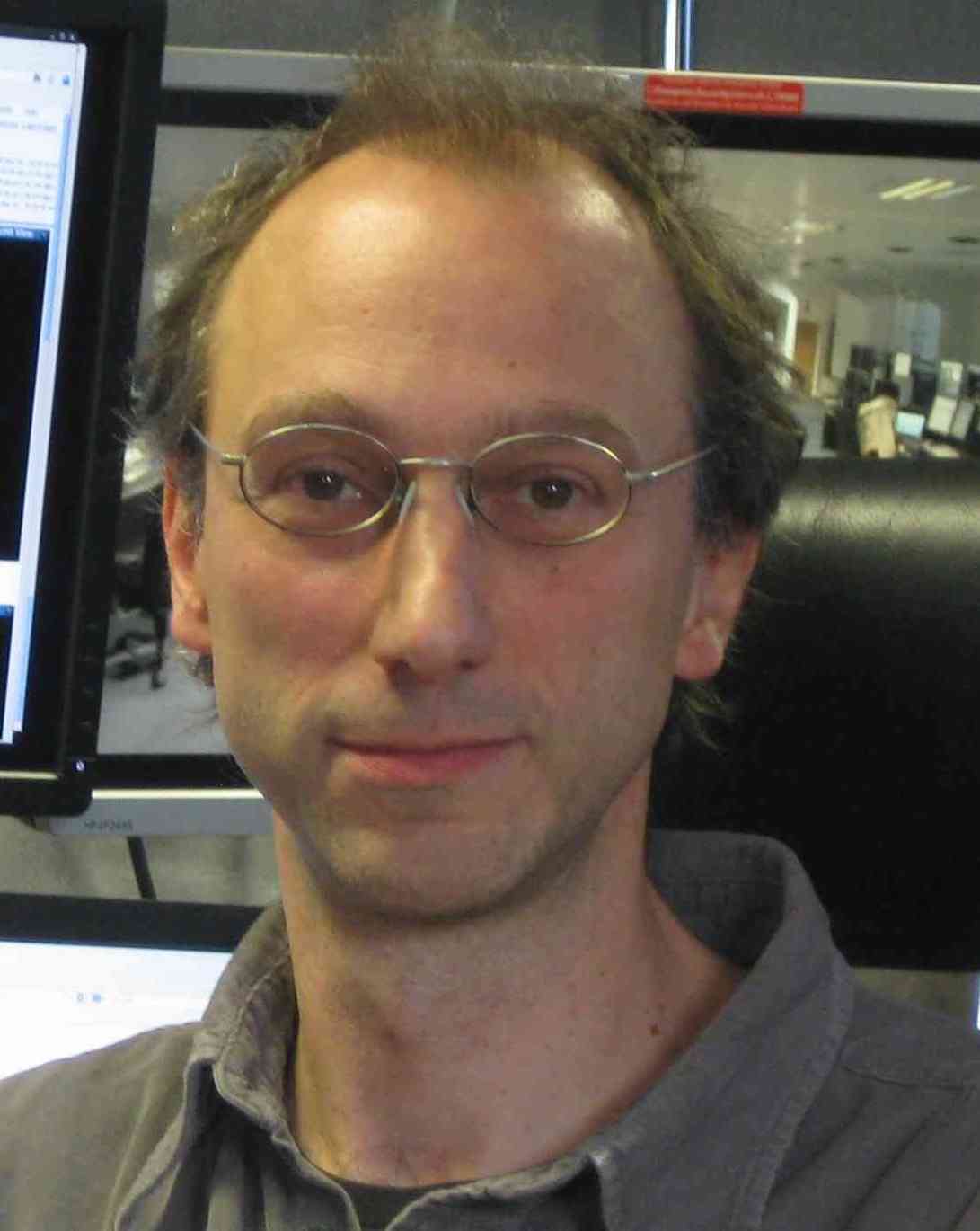 Laurent Favart合作论文数Faculté des Sciences, Université Libre de Bruxelles185
 Thomas Bergauer合作论文数Department for Detector Development, Institute of High Energy Physics, Austrian Academy of Sciences184A. Grebenyuk合作论文数183
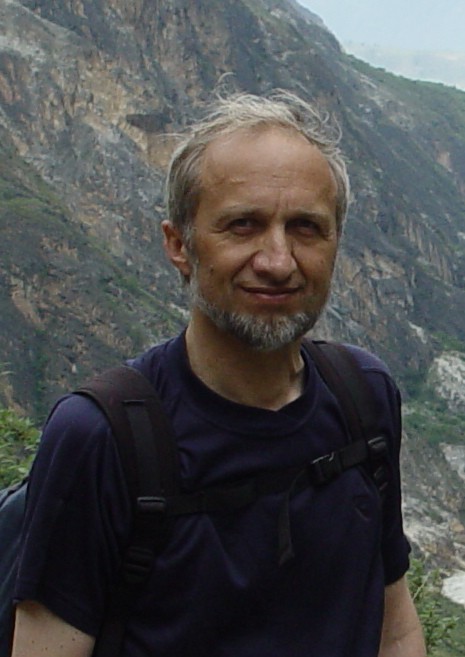 Stefaan Tavernier合作论文数Petsys Electronics SA183
 Tom Cornelis合作论文数Bizzcontrol182M. Gul合作论文数182Pascal Vanlaer合作论文数182D Liko合作论文数180
 Andre Sznajder合作论文数Instituto de Fisica, Departamento de Física Nuclear e Altas Energias, Universidade do Estado do Rio de Janeiro180
 Luiz Mundim合作论文数Instituto de Física Armando Dias Tavares, Universidade do Estado do Rio de Janeiro;Departamento de Física Nuclear e Altas Energias, Universidade do Estado do Rio de Janeiro180
 Didar Dobur合作论文数Department of Physics and astronomy, Faculty of Sciences, Ghent University179
 Nikola Godinovic合作论文数Department of Physics, University of Split179G. Sultanov合作论文数178Alexandros Attikis合作论文数Department of Physics, University of Cyprus178
 Efe Yazgan合作论文数National Taiwan University;European Organization for Nuclear Research178M. Jeitler合作论文数Institut für Hochenergiephysik der OeAW, Wien, Austria178
 Armen Tumasyan合作论文数A.I. Alikhanyan's National Science Laboratory, Yerevan Physics Institute178I Mikulec合作论文数177
 Plamen Stoyanov Iaydjiev合作论文数Institute of Nuclear Research and Nuclear Energy, Bulgarian Academy of Sciences177W. Carvalho合作论文数177A. Dimitrov合作论文数177
 Jose Augusto Chinellato合作论文数Universidade do Estado do Rio de Janeiro177R. Hadjiiska合作论文数177Z. Antunovic合作论文数176
 Marko Kovač合作论文数Department of physics, Faculty of Science, University of Split176
 Fotios Ptochos合作论文数Department of Physics, University of Cyprus176
 Peicho Petkov合作论文数Department of Atomic Physics, Faculty of Physics, University of Sofia176
 B. Pavlov合作论文数University of Sofia176Kadija K合作论文数176
 Junquan Tao (陶军全)合作论文数Institute of High Energy Physics, Chinese Academy of Sciences;University of Chinese Academy of Sciences176A. F. Aleksandrov合作论文数176
 Vincent Lemaitre合作论文数Faculty of Science, Université catholique de Louvain;Institut De Recherche En Mathématique Et Physique, Université Catholique De Louvain, Université catholique de Louvain175C. Nicolaou合作论文数175N. Van Remortel合作论文数Universiteit Antwerpen, Antwerpen, Belgium175
 Gilles de Lentdecker合作论文数Université Libre de Bruxelles;CERN175H. Nogima合作论文数174
 Michael Tytgat合作论文数High-Energy Physics Research Centre, Vrije Universiteit Brussel;Universiteit Gent174
 Ivica Puljak合作论文数City of Split173C. Vander Velde合作论文数IIHE, ULB-VUB, CP230, Boulevard de la Plaine, 1050 Brussels, Belgium173
 Matthew Herndon合作论文数Department of Physics, University of Wisconsin–Madison172
 Sandro Fonseca De Souza合作论文数Department of Nuclear and High Energy Physics, Universidade do Estado do Rio de Janeiro172




