Question generation, the task of automatically creating questions that can be answered by a certain span of text within a given passage, is important for question-answering and conversational systems in digital assistants such as Alexa, Cortana, Google Assistant and Siri. Recent sequence to sequence neural models have outperformed previous rule-based systems. Existing models mainly focused on using one or two sentences as the input. Long text has posed challenges for sequence to sequence neural models in question generation – worse performances were reported if using the whole paragraph (with multiple sentences) as the input. In reality, however, it often requires the whole paragraph as context in order to generate high quality questions. In this paper, we propose a maxout pointer mechanism with gated self-attention encoder to address the challenges of processing long text inputs for question generation. With sentence-level inputs, our model outperforms previous approaches with either sentence-level or paragraph-level inputs. Furthermore, our model can effectively utilize paragraphs as inputs, pushing the state-of-the-art result from 13.9 to 16.3 (BLEU 4).
Question generation, the task of automatically creating questions that can be answered by a certain span of text within a given passage, is important for question-answering and conversational systems in digital assistants such as Alexa, Cortana, Google Assistant and Siri. Recent sequence to sequence neural models have outperformed previous rule-based systems. Existing models mainly focused on using one or two sentences as the input. Long text has posed challenges for sequence to sequence neural models in question generation - worse performances were reported if using the whole paragraph (with multiple sentences) as the input. In reality, however, it often requires the whole paragraph as context in order to generate high quality questions. In this paper, we propose a maxout pointer mechanism with gated self-attention encoder to address the challenges of processing long text inputs for question generation. With sentence-level inputs, our model outperforms previous approaches with either sentence-level or paragraph-level inputs. Furthermore, our model can effectively utilize paragraphs as inputs, pushing the state-of-the-art result from 13.9 to 16.3 (BLEU 4).
Understanding conversations is crucial to enabling conversational search in technologies such as chatbots, digital assistants, and smart home devices that are becoming increasingly popular. Conventional search engines are powerful at answering open domain queries but are mostly capable of stateless search. In this paper, we define a conversational query as a query that depends on the context of the current conversation, and we formulate the conversational query understanding problem as context-aware query reformulation, where the goal is to reformulate the conversational query into a search engine friendly query in order to satisfy users» information needs in conversational settings. Such context-aware query reformulation problem lends itself to sequence to sequence modeling. We present a large scale open domain dataset of conversational queries and various sequence to sequence models that are learned from this dataset. The best model correctly reformulates over half of all conversational queries, showing the potential of sequence to sequence modeling for this task.
Conversational or multi-turn question understanding using web intelligence is provided. An intelligent query understanding system is provided for receiving a context-dependent query from a user, obtaining contextual information related to the context-dependent query, and reformatting the context-dependent query as one or more reformulations based on the contextual information. The intelligent query understanding system is further operative to query a search engine with the one or more reformulations, receive one or more candidate results, and select a highest ranked reformulation based on the candidate results. The system can provide the highest ranked reformulation of the highest ranked reformulation as a response.
Product quantization (PQ) is an effective vector quantization method. A product quantizer can generate an exponentially large codebook at very low memory/time cost. The essence of PQ is to decompose the high-dimensional vector space into the Cartesian product of subspaces and then quantize these subspaces separately. The optimal space decomposition is important for the PQ performance, but still remains an unaddressed issue. In this paper, we optimize PQ by minimizing quantization distortions w.r.t the space decomposition and the quantization codebooks. We present two novel solutions to this challenging optimization problem. The first solution iteratively solves two simpler sub-problems. The second solution is based on a Gaussian assumption and provides theoretical analysis of the optimality. We evaluate our optimized product quantizers in three applications: (i) compact encoding for exhaustive ranking [1], (ii) building inverted multi-indexing for non-exhaustive search [2], and (iii) compacting image representations for image retrieval [3]. In all applications our optimized product quantizers outperform existing solutions.
This paper investigates the problem of modeling Internet images and associated text or tags for tasks such as image-to-image search, tag-to-image search, and image-to-tag search (image annotation). We start with canonical correlation analysis (CCA), a popular and successful approach for mapping visual and textual features to the same latent space, and incorporate a third view capturing high-level image semantics, represented either by a single category or multiple non-mutually-exclusive concepts. We present two ways to train the three-view embedding: supervised, with the third view coming from ground-truth labels or search keywords; and unsupervised, with semantic themes automatically obtained by clustering the tags. To ensure high accuracy for retrieval tasks while keeping the learning process scalable, we combine multiple strong visual features and use explicit nonlinear kernel mappings to efficiently approximate kernel CCA. To perform retrieval, we use a specially designed similarity function in the embedded space, which substantially outperforms the Euclidean distance. The resulting system produces compelling qualitative results and outperforms a number of two-view baselines on retrieval tasks on three large-scale Internet image datasets.
In distributed data-parallel computing, a user program is compiled into an execution plan graph (EPG), typically a directed acyclic graph. This EPG is the core data structure used by modern distributed execution engines for task distribution, job management, and fault tolerance. Once submitted for execution, the EPG remains largely unchanged at runtime except for some limited modifications. This makes it difficult to employ dynamic optimization techniques that could substantially improve the distributed execution based on runtime information. This paper presents Optimus, a framework for dynamically rewriting an EPG at runtime. Optimus extends dynamic rewrite mechanisms present in systems such as Dryad and CIEL by integrating rewrite policy with a high-level data-parallel language, in this case DryadLINQ. This integration enables optimizations that require knowledge of the semantics of the computation, such as language customizations for domain-specific computations including matrix algebra. We describe the design and implementation of Optimus, outline its interfaces, and detail a number of rewriting techniques that address problems arising in distributed execution including data skew, dynamic data re-partitioning, handling unbounded iterative computations, and protecting important intermediate data for fault tolerance. We evaluate Optimus with real applications and data and show significant performance gains compared to manual optimization or customized systems. We demonstrate the versatility of dynamic EPG rewriting for data-parallel computing, and argue that it is an essential feature of any general-purpose distributed dataflow execution engine.
Henrik Aanæs Surpreeth Achar Andrew Adams Lourdes Agapito Alexander Agathos Karteek Alahari Alexandre Alahi Andres Almansa Nicolas Alt Mohamed Aly Mohamed Amer Laurent Amsaleg Bjoern Andres Mykhaylo Andriluka Borislav Antic Ognjen Arandjelovic Relja Arandjelovic P. A. Arbelaez Antonis Argyros Kalle Astrom Vassilis Athitsos Mathieu Aubry Jean-Francois Aujol Alireza Bab-Hadiashar Francis Bach Andrew Bagdanov Xiang Bai Atsuhiko Banno Francesco Banterle Yingze Bao Olga Barinova K. Barnard Peter Barnum Loris Bazzani Stephen Becker Robert Benavente Abhijit Bendale Yannick Benezeth Tamara Berg James Bergstra Stefano Berretti Silvia Biasotti Arijit Biswas Gabriele Bleser Aaron Bobick Piotr Bojanowski Matias Nicolas Bossa Lukas Bossard Thierry Bouwmans Al Bovik Steve Branson Kristian Bredies Alex Bronstein M. J. Brooks Gabriel Brostow Marcus Brubaker Ricardo S. Cabral Charles Cadieu Simone Calderara Liangliang Cao Gustavo Carneiro Guillaume Caron Oya Çeliktutan Antoni Chan
Over the past couple of years micro blogging platforms, such as Twitter, have become extremely popular for information generation and dissemination. Each day hundreds of millions of tweets are being published, containing fresh and trending information that is highly valuable for online users. However, discovering relevant information from such sources is becoming harder due to their rapid growth and the fact that social fragments are often short and noisy. Aggregation techniques such as clustering are often used for extracting this relevant information, since interesting signals begin to emerge when these fragments are grouped together. Clustering large amount of short tweets with limited features is however a challenging task in itself. In this paper, we propose to aggregate tweets by pivoting on entities and mapping them to topics that are already defined in websites such as Wikipedia and Freebase. This allows us to aggregate tweets in a more reliable and feasible way while providing interesting aggregated information about entities present in these fragments. Our analysis using large amounts of tweets shows that such an approach indeed works well. We present encouraging results and various interesting applications centered on entities.
In this paper, we present a framework, SocialWatch, to detect attacker-created accounts and hijacked accounts for online services at a large scale. SocialWatch explores a set of social graph properties that effectively model the overall social activity and connectivity patterns of online users, including degree, PageRank, and social affinity features. These features are hard to mimic and robust to attacker counter strategies. We evaluate SocialWatch using a large, real dataset with more than 682 million users and over 5.75 billion directional relationships. SocialWatch successfully detects 56.85 million attacker-created accounts with a low false detection rate of 0.75% and a low false negative rate of 0.61%. In addition, SocialWatch detects 1.95 million hijacked accounts---among which 1.23 million were not detected previously---with a low false detection rate of 2%. Our work demonstrates the practicality and effectiveness of using large social graphs with billions of edges to detect real attacks.
The bag-of-features(BOF) image representation [7] is popular in largescale image retrieval. With BOF, the memory to store the inverted index file and the search complexity are both approximately linearly increased with the number of images. To address the retrieval efficiency and the memory constraint problem, besides some improvement work based on BOF, there come alternative approaches which aggregate local descriptors in one image into a single vector using Fisher Vector [6] or Vector of Local Aggregated Descriptor (VLAD) [1]. It has been shown in [1] that with as few as 16 bytes to represent an image, the retrieval performance is still comparable to that of the BOF representation. In this paper, we illustrate that Fisher Vector, VLAD and BOF can be uniformly derived in two steps: i Encoding – separately map each local descriptor into a code, and ii Pooling – aggregate all codes from one image into a single vector. Motivated by the success of these two-step approaches, we propose to use sparse coding(SC) framework to aggregate local feature for image retrieval. SC framework is firstly introduced by [10] for the task of image classification. It is a classical two-step approach: Step 1: Encoding. Each local descriptor x from an image is encoded into an N-dimensional vector u = [u1,u2, ...,uN ] by fitting a linear model with sparsity (L1) constraint:
Product quantization is an effective vector quantization approach to compactly encode high-dimensional vectors for fast approximate nearest neighbor (ANN) search. The essence of product quantization is to decompose the original high-dimensional space into the Cartesian product of a finite number of low-dimensional subspaces that are then quantized separately. Optimal space decomposition is important for the performance of ANN search, but still remains unaddressed. In this paper, we optimize product quantization by minimizing quantization distortions w.r.t. the space decomposition and the quantization codebooks. We present two novel methods for optimization: a non-parametric method that alternatively solves two smaller sub-problems, and a parametric method that is guaranteed to achieve the optimal solution if the input data follows some Gaussian distribution. We show by experiments that our optimized approach substantially improves the accuracy of product quantization for ANN search.
 Takeo Kanade合作论文数Robotics Institute, Carnegie Mellon University13
 Jian Sun (孙剑)合作论文数Megvii Technology Inc.11
 Jonathan J. Hull合作论文数Bay Area Research Associates9
 Yinglian Xie合作论文数DataVisor, Inc.8
 Zhong Wu合作论文数7
 Fang Yu合作论文数7
 Michael Isard合作论文数Google DeepMind7
 Harry Heung-Yeung Shum (沈向洋)合作论文数Jockey Club Institute for Advanced Study, The Hong Kong University of Science and Technology;The Chinese University of Hong Kong, Shenzhen;Institute for Advanced Study, Tsinghua University6eliot c gillum合作论文数5Zhiyong Yang合作论文数5
 Songde Ma (马颂德)合作论文数National Laboratory of Pattern Recognition, Institute of Automation, Chinese Academy of Sciences5Berna Erol合作论文数Ricoh California Research Center;Multimedia Document Analysis Group 5
 Yuan Yu合作论文数Microsoft4
 Anitha Kannan合作论文数Curai Health4
 Simon Baker合作论文数NVidia Corporation4hidenobu kishi合作论文数3
 Tiezheng Ge (葛铁铮)合作论文数Alibaba Group3
 Martín Abadi合作论文数Department of Computer Science and Engineering, Baskin School of Engineering, University of California, Santa Cruz;Google3
 Jorge Moraleda合作论文数Ricoh Innovations, Inc., California Research Center3Xiaochuan Ni合作论文数Microsoft Research Asia3andrew lookingbill合作论文数2Yuanyuan Ding合作论文数2
 Z. Morley Mao (茅斫青)合作论文数Department of Electrical Engineering and Computer Science, College of Engineering, University of Michigan;Michigan Institute for Data Science, University of Michigan2
 Yi Li (李祎)合作论文数Institute of Information Storage Materials and Devices, School of Integrated Circuits, Huazhong University of Science and Technology;Hubei Yangtze Memory Laboratories2
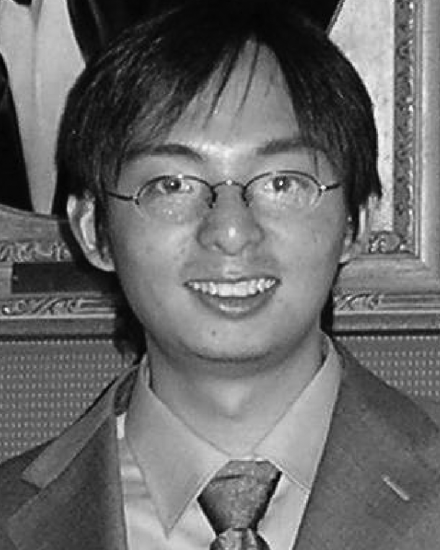 Yao Zhao合作论文数2Ming Liu合作论文数2
 David A. Maltz合作论文数Microsoft Research2
 David B. Johnson合作论文数School of Computer Science, Carnegie Mellon University2
 Nikhil Rasiwasia合作论文数Meta2
 Junxian Huang (黄君贤)合作论文数College of Artificial Intelligence, Nanjing Agricultural University2
 Zhengyou Zhang (张正友)合作论文数Tencent2
 Kaiming He (何恺明)合作论文数Department of Electrical Engineering & Computer Science, Schwarzman College of Computing, Massachusetts Institute of Technology2
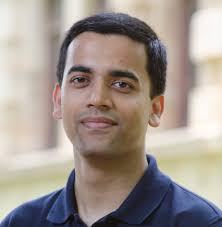 Partha Talukdar合作论文数Google Research;Department of Computational and Data Sciences, Indian Institute of Science;Department of Computer Science and Automation, Indian Institute of Science2
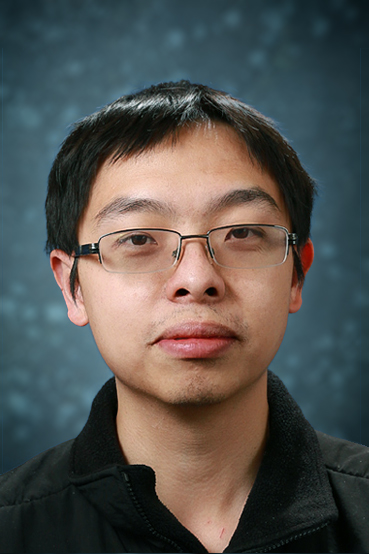 Dahua Lin (林達華)合作论文数Department of Information Engineering, The Chinese University of Hong Kong;Shanghai Artificial Intelligence Laboratory2Emilio R. Antúnez合作论文数2A. Banno合作论文数1
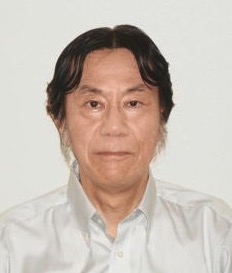 Kenichi Kanatani (金谷健一)合作论文数Okayama University1krishna c vitaldevara合作论文数1jason d walter合作论文数1Jing Wang合作论文数1Rama Chellappa合作论文数1Hiroshi Kawasaki合作论文数1Jorge Batista合作论文数1Liefeng Bo合作论文数1Xiang Bai合作论文数1LIXIN WANG (汪力新)合作论文数1
 Francois Bernard Lauze合作论文数Department of Computer Science, Faculty of Science, University of Copenhagen1




