Angular distributions of the decay B$^+$ $\to$ K$^*$(892)$^+\mu^+\mu^-$ are studied using events collected with the CMS detector in $\sqrt{s}=$ 8 TeV proton-proton collisions at the LHC, corresponding to an integrated luminosity of 20.0 fb$^{-1}$. The forward-backward asymmetry of the muons and the longitudinal polarization of the K$^*$(892)$^+$ meson are determined as a function of the square of the dimuon invariant mass. These are the first results from this exclusive decay mode and are in agreement with a standard model prediction.
The first measurement of the dependence of $\\gamma\\gamma \\to \\mu^{+}\\mu^{-}$ production on the multiplicity of neutrons emitted very close to the beam direction in ultraperipheral heavy ion collisions is reported. Data for lead-lead interactions at $\\sqrt{s_\\mathrm{NN}} =$ 5.02 TeV, with an integrated luminosity of approximately 1.5 nb$^{-1}$, were collected using the CMS detector at the LHC. The azimuthal correlations between the two muons in the invariant mass region 8 $\\lt m_{\\mu\\mu} \\lt$ 60 GeV are extracted for events including zero, one, or at least two neutrons detected in the forward pseudorapidity range $|\\eta| \\lt$ 8.3. The back-to-back correlation structure from leading-order photon-photon scattering is found to be significantly broader for events with a larger number of emitted neutrons from each nucleus, corresponding to interactions with a smaller impact parameter. This observation provides a data-driven demonstration that the average transverse momentum of photons emitted from relativistic heavy ions has an impact parameter dependence. These results provide new constraints on models of photon-induced interactions in ultraperipheral collisions. They also provide a baseline to search for possible final-state effects on lepton pairs caused by traversing a quark-gluon plasma produced in hadronic heavy ion collisions.
The strong Coulomb field created in ultrarelativistic heavy ion collisions is expected to produce a rapidity-dependent difference ($\Delta v_2$) in the second Fourier coefficient of the azimuthal distribution (elliptic flow, $v_2$) between $\mathrm{D}^0$ ($\mathrm{\bar{u}c}$) and $\overline{\mathrm{D}}^0$ ($\mathrm{u\bar{c}}$) mesons. Motivated by the search for evidence of this field, the CMS detector at the LHC is used to perform the first measurement of $\Delta v_2$. The rapidity-averaged value is found to be $\langle\Delta v_2 \rangle =$ 0.001 $\pm$ 0.001 (stat) $\pm$ 0.003 (syst) in PbPb collisions at $\sqrt{s_\mathrm{NN}} =$ 5.02 TeV. In addition, the influence of the collision geometry is explored by measuring the $\mathrm{D}^0$ and $\overline{\mathrm{D}}^0$ mesons $v_2$ and triangular flow coefficient ($v_3$) as functions of rapidity, transverse momentum ($p_\mathrm{T}$), and event centrality (a measure of the overlap of the two Pb nuclei). A clear centrality dependence of prompt $\mathrm{D}^0$ meson $v_2$ values is observed, while the $v_3$ is largely independent of centrality. These trends are consistent with expectations of flow driven by the initial-state geometry.
The $CP$-violating weak phase $\phi_\mathrm{s}$ and the decay width difference $\Delta\Gamma_\mathrm{s}$ between the light and heavy B$^0_\mathrm{s}$ mass eigenstates are measured with the CMS detector at the LHC in a sample of 48500 reconstructed B$^0_\mathrm{s}\to$ J$/\psi\, \phi$(1020) $\to \mu^+\mu^-$K$^+$K$^-$ events. The measurement is based on a data sample corresponding to an integrated luminosity of 96.4 fb$^{-1}$, collected in proton-proton collisions at $\sqrt{s} =$ 13 TeV in 2017-2018. To extract the values of $\phi_\mathrm{s}$ and $\Delta\Gamma_\mathrm{s}$, a time-dependent and flavor-tagged angular analysis of the $ \mu^+\mu^-$K$^+$K$^-$ final state is performed. The analysis employs a dedicated tagging trigger and a novel opposite-side muon flavor tagger based on machine learning techniques. The measurement yields $\phi_\mathrm{s} = -$11 $\pm$ 50 (stat) $\pm$ 10 (syst) mrad and $\Delta\Gamma_\mathrm{s} =$ 0.114 $\pm$ 0.014 (stat) $\pm$ 0.007 (syst) ps$^{-1}$, in agreement with the standard model predictions. When combined with the previous CMS measurement at $\sqrt{s} =$ 8 TeV, the following values are obtained: $\phi_\mathrm{s} = -$21 $\pm$ 45 mrad, $\Delta\Gamma_\mathrm{s} =$ 0.1073 $\pm$ 0.0097 ps$^{-1}$, a significant improvement over the 8 TeV result.
Results of the Model Unspecific Search in CMS (MUSiC), using proton-proton collision data recorded at the LHC at a centre-of-mass energy of 13 TeV, corresponding to an integrated luminosity of 35.9 fb$^{-1}$, are presented. The MUSiC analysis searches for anomalies that could be signatures of physics beyond the standard model. The analysis is based on the comparison of observed data with the standard model prediction, as determined from simulation, in several hundred final states and multiple kinematic distributions. Events containing at least one electron or muon are classified based on their final state topology, and an automated search algorithm surveys the observed data for deviations from the prediction. The sensitivity of the search is validated using multiple methods. No significant deviations from the predictions have been observed. For a wide range of final state topologies, agreement is found between the data and the standard model simulation. This analysis complements dedicated search analyses by significantly expanding the range of final states covered using a model independent approach with the largest data set to date to probe phase space regions beyond the reach of previous general searches.
Combined measurements of the production and decay rates of the Higgs boson, as well as its couplings to vector bosons and fermions, are presented. The analysis uses the LHC proton-proton collision data set recorded with the CMS detector in 2016 at $\sqrt{s} =$ 13 TeV, corresponding to an integrated luminosity of 35.9 fb$^{-1}$. The combination is based on analyses targeting the five main Higgs boson production mechanisms (gluon fusion, vector boson fusion, and associated production with a W or Z boson, or a top quark-antiquark pair) and the following decay modes: H $\to$ $\gamma\gamma$, ZZ, WW, $\tau\tau$, bb, and $\mu\mu$. Searches for invisible Higgs boson decays are also considered. The best-fit ratio of the signal yield to the standard model expectation is measured to be $\mu$ $=$ 1.17 $\pm$ 0.10, assuming a Higgs boson mass of 125.09 GeV. Additional results are given for parametrizations with varying assumptions on the scaling behavior of the different production and decay modes, including generic ones based on ratios of cross sections and branching fractions or coupling modifiers. The results are compatible with the standard model predictions in all parametrizations considered. In addition, constraints are placed on various two Higgs doublet models.
A search for new physics using events containing an imbalance in transverse momentum and one or more energetic jets arising from initial-state radiation or the hadronic decay of W or Z bosons is presented. A data sample of proton-proton collisions at $\sqrt{s} = $ 13 TeV, collected with the CMS detector at the LHC and corresponding to an integrated luminosity of 35.9 fb$^{-1}$, is used. The observed data are found to be in agreement with the expectation from standard model processes. The results are interpreted as limits on the dark matter production cross section in simplified models with vector, axial-vector, scalar, and pseudoscalar mediators. Interpretations in the context of fermion portal and nonthermal dark matter models are also provided. In addition, the results are interpreted in terms of invisible decays of the Higgs boson and set stringent limits on the fundamental Planck scale in the Arkani-Hamed, Dimopoulos, and Dvali model with large extra spatial dimensions.
Abstract A search for a new high-mass resonance decaying to a τ lepton and a neutrino is reported. The analysis uses proton-proton collision data collected by the CMS experiment at the LHC at s = 13 TeV , corresponding to an integrated luminosity of 35.9 fb − 1 . The search utilizes hadronically decaying τ leptons. No excess in the event yield is observed at high transverse masses of the τ and missing transverse momentum. An interpretation of results within the sequential standard model excludes W ′ boson masses below 4.0 TeV at 95% confidence level. Existing limits are also improved on models in which the W ′ boson decays preferentially to fermions of the third generation. Heavy W ′ bosons with masses less than 1.7–3.9 TeV, depending on the coupling in the non-universal G(221) model, are excluded at 95% confidence level. These are the most stringent limits on this model to date.
Modifications of the properties of jets in PbPb collisions, relative to those in pp collisions, are studied at a nucleon-nucleon center-of-mass energy of $\sqrt{s_\mathrm{NN}} =$ 5.02 TeV via correlations of charged particles with the jet axis in relative pseudorapidity ($\Delta \eta$), relative azimuth ($\Delta \phi$), and relative angular distance from the jet axis $\Delta \mathrm{r} = \sqrt{{(\Delta\eta)^{2}+(\Delta\phi)^{2}}}$. This analysis uses data collected with the CMS detector at the LHC, corresponding to integrated luminosities of 404 $\mu$b$^{-1}$ and 27.4 pb$^{-1}$ for PbPb and pp collisions, respectively. Charged particle number densities, jet fragmentation functions, and jet shapes are presented as a function of PbPb collision centrality and charged-particle track transverse momentum, providing a differential description of jet modifications due to interactions with the quark-gluon plasma.
 F. Blekman合作论文数Vrije Universiteit Brussel56
 W. Waltenberger合作论文数Univ Vienna56
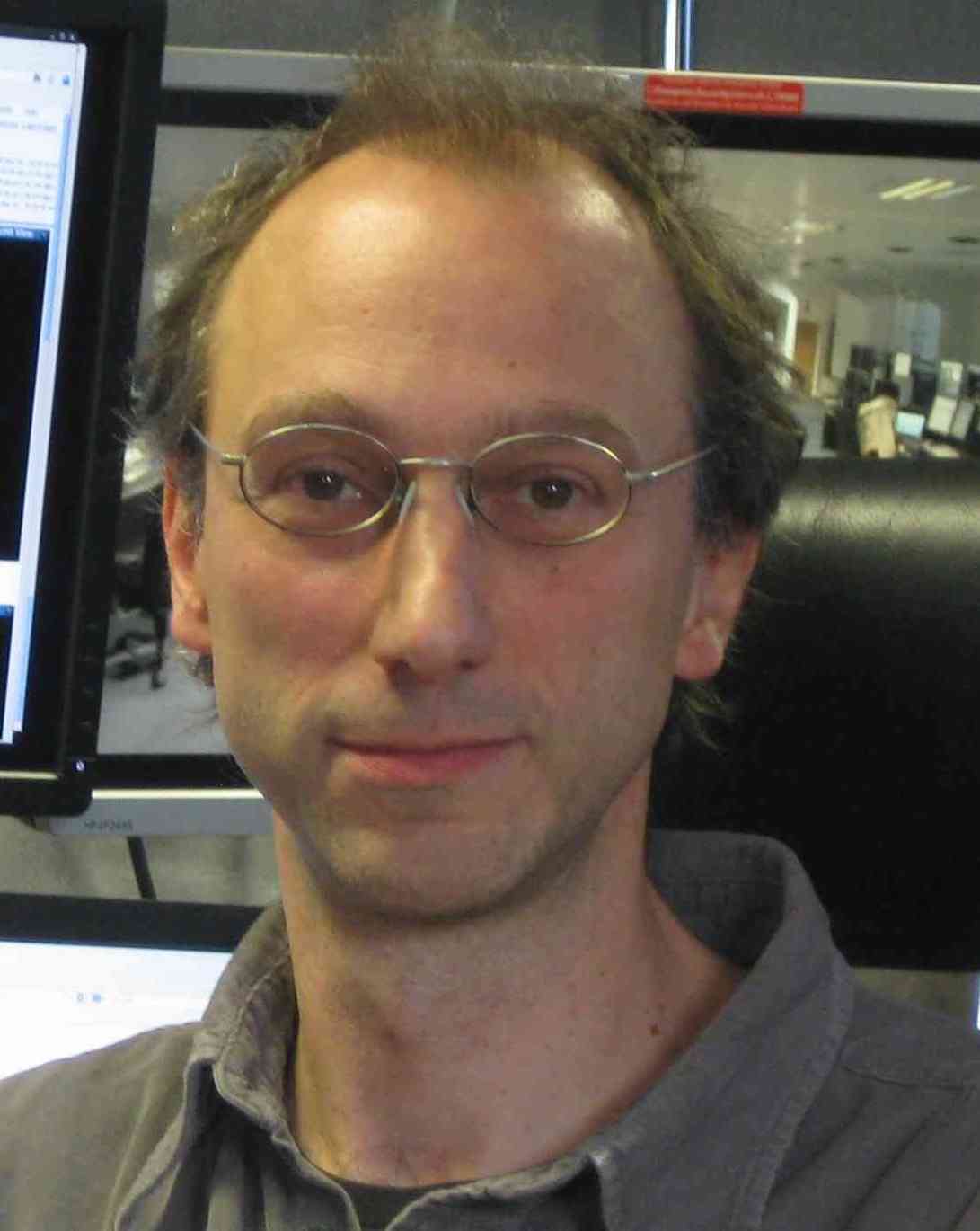 Laurent Favart合作论文数Faculté des Sciences, Université Libre de Bruxelles56
 Armen Tumasyan合作论文数A.I. Alikhanyan's National Science Laboratory, Yerevan Physics Institute56
 Thomas Bergauer合作论文数Department for Detector Development, Institute of High Energy Physics, Austrian Academy of Sciences56
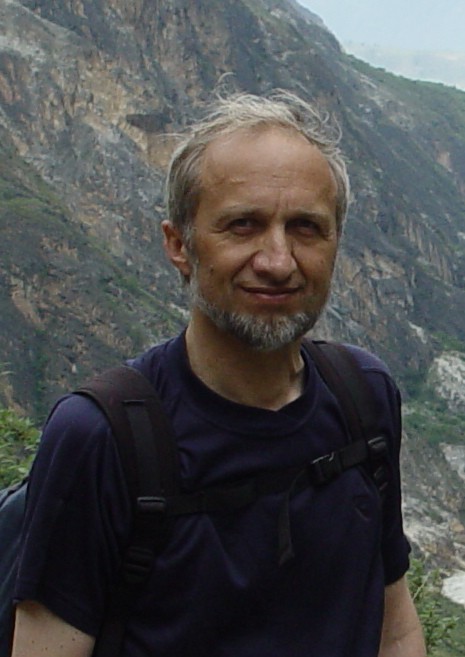 Stefaan Tavernier合作论文数Petsys Electronics SA55
 M. Jeitler合作论文数Institut für Hochenergiephysik der OeAW, Wien, Austria55
 Barbara Clerbaux合作论文数Faculté des Sciences, Université Libre de Bruxelles55
 Xavier Janssen合作论文数Universiteit Antwerpen55Marko Dragicevic合作论文数Institut für Hochenergiephysik der OeAW, Wien, Austria55
 Christophe Delaere合作论文数Centre for Cosmology, Particle Physics and Phenomenology, Institut de Recherche en Mathématique et Physique, Université Catholique de Louvain;Ecole de Physique, Faculté des Sciences, Université Catholique de Louvain54
 Claudia-Elisabeth Wulz合作论文数Institute of High Energy Physics, Austrian Academy of Sciences;CERN52
 Michael Tytgat合作论文数High-Energy Physics Research Centre, Vrije Universiteit Brussel;Universiteit Gent50C. Vander Velde合作论文数IIHE, ULB-VUB, CP230, Boulevard de la Plaine, 1050 Brussels, Belgium50
 Steven Lowette合作论文数Interuniversity Institute for High Energies, Vrije Universiteit Brussel49
 Efe Yazgan合作论文数National Taiwan University;European Organization for Nuclear Research48
 Jorgen D'Hondt合作论文数47
 Giacomo Bruno合作论文数Institut de Recherche en Mathématique et Physique, Ecole de Physique, Faculté des Sciences, Université Catholique de Louvain;Centre for Cosmology, Particle Physics and Phenomenology, Université Catholique de Louvain46
 Ivan Marchesini合作论文数RavenPack46Escalante Del Valle A合作论文数46Hugues Brun合作论文数Universidad de Oviedo(Universidad de Oviedo,University of Oviedo),Oviedo,Spain46
 Marco Musich合作论文数Université Catholique de Louvain46
 N. Rad合作论文数Institut für Hochenergiephysik45Juan Suarez Gonzalez合作论文数44S. Abu Zeid合作论文数44
 Mikko Voutilainen合作论文数44Carlos Avila合作论文数44Sami Lehti合作论文数Helsinki Institute of Physics, Faculty of Science, University of Helsinki44K Lipka合作论文数44
 Panos Razis合作论文数44
 Pedro Galli Mercadante合作论文数Centro de Ciências Naturais e Humanas, Universidade Federal do ABC44
 Houmani El Mamouni合作论文数Institut De Physique Des Deux Infinis De Lyon, Institut National De Physique Nucléaire Et De Physique Des Particules, CNRS;Institut de Physique Nucléaire de Lyon44Alan Campbell合作论文数44
 R. K. Dewanjee合作论文数Birla Institute of Technology44
 Stéphanie Beauceron合作论文数Laboratoire Physique Nucléaire Et Hautes Energies, Institut National De Physique Nucléaire Et De Physique Des Particules, Centre National De La Recherche Scientifique;Institut De Physique Nucléaire De Lyon;Université Claude Bernard Lyon 144
 Luigi Calligaris合作论文数Universidade Estadual Paulista Júlio de Mesquita Filho44
 Jose Augusto Chinellato合作论文数Universidade do Estado do Rio de Janeiro44
 Johannes Haller合作论文数Institut für Experimentalphysik, Department of Physics, Faculty of Mathematics, Informatics and Natural Sciences, Universität Hamburg44
 Matthias Kasemann合作论文数Deutsche Elektronen-Synchrotron44
 Fotios Ptochos合作论文数Department of Physics, University of Cyprus44
 B. Pavlov合作论文数University of Sofia44
 Luiz Mundim合作论文数Instituto de Física Armando Dias Tavares, Universidade do Estado do Rio de Janeiro;Departamento de Física Nuclear e Altas Energias, Universidade do Estado do Rio de Janeiro44Fabrice Couderc合作论文数Particle Physics Division, CEA Paris-Saclay44
 Hannes Jung合作论文数University of Antwerp;Deutsches Elektronen-Synchrotron DESY;Institut für Theoretische Physik, University of Hamburg44
 Martti Raidal合作论文数National Institute of Chemical Physics and Biophysics44
 Martin Erdmann合作论文数Physics Institute III A, RWTH Aachen University44
 Gautier Hamel de Monchenault合作论文数Département de Physique des Particules, CEA44Dilson de Jesus Damião合作论文数Departamento de Física Nuclear e Altas Energias, Universidade do Estado do Rio de Janeiro44M. Aldaya Martin合作论文数Deutsches Elektronen-Synchrotron, Hamburg, Germany44




